
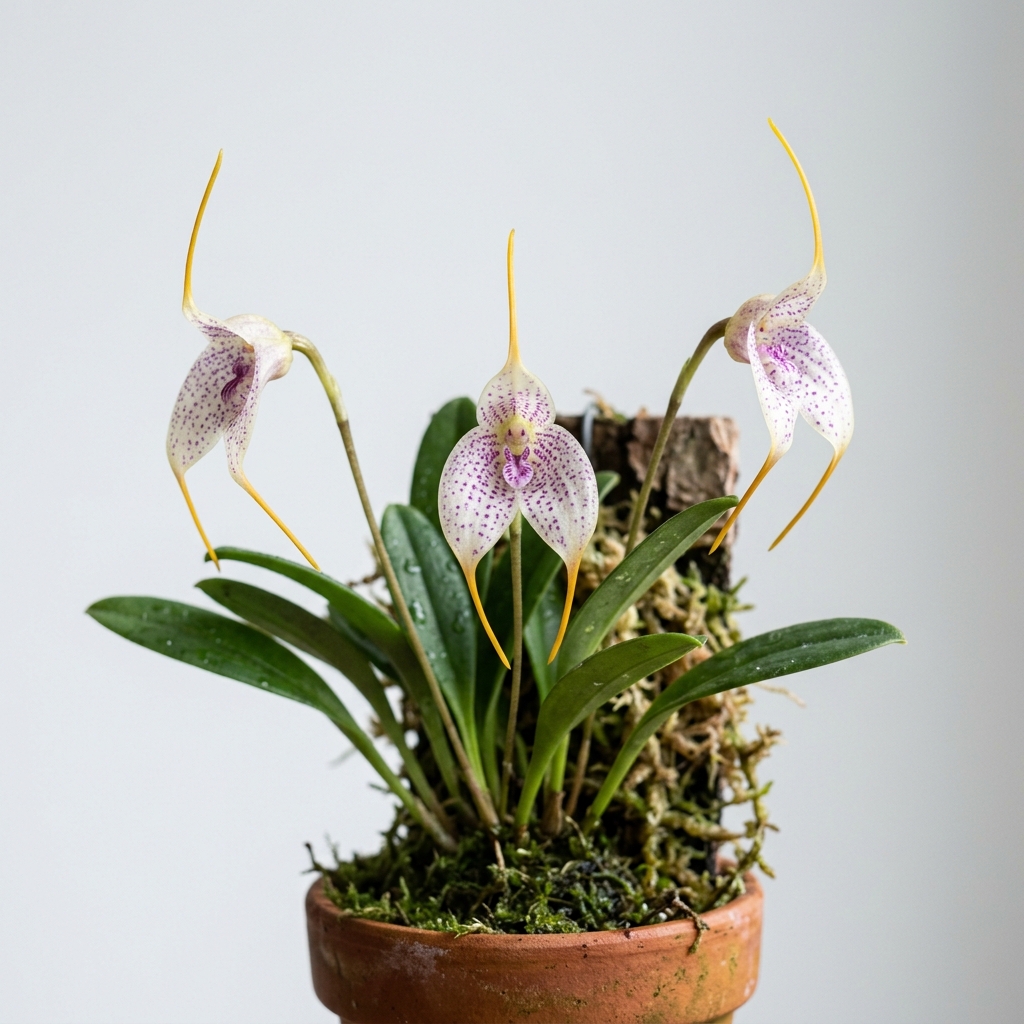
Masdevallia Picturata is a captivating miniature orchid species highly prized by collectors for its intricate, painted blossoms and compact growth habit. Native to the cool, cloud forests of Central and South America, this epiphytic gem thrives in high-humidity environments where it produces striking, translucent flowers adorned with delicate purple spotting and elongated sepaline tails. Its diminutive size makes it an excellent candidate for terrarium culture or specialized indoor growing setups where moisture and temperature can be carefully regulated.
Unlike many larger, showier orchids, Masdevallia Picturata charms growers with its subtle, detailed beauty and elegant, tufted foliage. While it requires a bit more attention to humidity and watering than standard household orchids, dedicated enthusiasts find its frequent blooming cycles and unique botanical presentation deeply rewarding. Providing the cool temperatures and consistent moisture it craves is the key to unlocking the full potential of this exquisite miniature species.
💡 Did You Know?
Masdevallia Picturata belongs to the Masdevallia orchid group, where flower presentation is often just as important as . White-flowered cultivars are especially valued indoors because their pale blooms reflect well and pair easily with many home, greenhouse, and display settings.
🌿 Botanical Overview
Masdevallia Picturata belongs to the diverse Pleurothallidinae subtribe, a group of orchids known for lacking pseudobulbs. Instead of storing water in thick pseudobulbs like Cattleyas, this species relies on its tufted, fleshy, obovate leaves to manage moisture. The leaves grow from short ramicauls, forming a dense, neat clump that remains attractive even when the plant is not in bloom.
In its natural habitat, Masdevallia Picturata grows as an epiphyte on moss-covered tree branches or occasionally as a lithophyte on damp rocks. These environments are characterized by constant air movement, high humidity, and frequent mist or rainfall. Understanding this cloud forest origin is essential for successfully replicating its preferred growing conditions in a domestic setting.
🌸 Flower Characteristics
The flowers of Masdevallia Picturata are a masterclass in miniature botanical architecture. Each bloom is dominated by its fused sepals, which form a shallow cup before tapering into long, slender, tail-like extensions known as caudae. The base color of the sepals is typically a translucent white or pale cream, dramatically patterned with fine purple or reddish-brown spots that give the species its name, “picturata” (meaning painted or pictured).
The actual petals and lip (labellum) are extremely small and hidden deep within the sepaline tube, a common trait among Masdevallia species designed to attract specific insect pollinators. The flowers are borne singly on slender, erect to suberect inflorescences that rise just above or level with the foliage, presenting the blooms beautifully against the green leaves.
Fragrance & Bloom Profile
Fragrance is not a primary feature of Masdevallia Picturata, and most growers report that the flowers are unscented or possess a very faint, indiscernible aroma. The primary appeal of the bloom profile lies entirely in its visual complexity and the elegant posture of the flowering spikes.
Individual flowers can last for several weeks if the plant is kept in cool, humid conditions. Because the species lacks pseudobulbs, maintaining high humidity during the blooming cycle is critical; dry air can cause the developing buds to blast or the open flowers to wither prematurely.
Parentage & Hybrid Lineage
As a naturally occurring species rather than a man-made hybrid, Masdevallia Picturata does not have a complex hybrid lineage or registered parentage. It is a distinct species within the genus Masdevallia, which contains over 500 species recognized for their diverse and often bizarre floral structures.
While it is primarily grown as a species by collectors, it has occasionally been used in hybridizing programs to introduce compact growth habits, spotted patterns, and cool-tolerance to new Masdevallia grexes. However, these hybrid lines are not as widely documented in standard commercial databases, and the plant is most celebrated in its pure, wild form.
🌱 Growing Conditions
Replicating a cloud forest environment is the secret to success with Masdevallia Picturata. It requires cool to intermediate temperatures, ideally ranging from 50°F to 65°F (10°C to 18°C) at night, with daytime temperatures peaking around 70°F to 75°F (21°C to 24°C). Prolonged exposure to temperatures above 80°F (27°C) can cause severe heat stress, leaf drop, and eventual decline.
💡 Care Tip
For best results, grow Masdevallia Picturata in bright filtered with steady and gentle airflow. Avoid placing the plant in harsh midday sun, but do not keep it in a dark corner; weak is one of the most common reasons cultivated orchids refuse to rebloom.
Light should be kept low to moderate, similar to the light levels preferred by Phalaenopsis or Jewel Orchids. Direct sunlight will quickly scorch the thin leaves. High humidity of 70% to 90% is vital, paired with constant, gentle air movement to prevent stagnant moisture from encouraging fungal or bacterial pathogens on the foliage.
Watering, Feeding & Potting Media
Because Masdevallia Picturata lacks pseudobulbs to store water, its roots must never be allowed to dry out completely. The potting medium should remain consistently damp but never soggy or waterlogged. Watering frequency will depend on your local environment, but daily misting or watering every few days is common for plants grown in open baskets or mounted on cork.
A potting medium of high-quality New Zealand sphagnum moss or a fine-grade orchid bark mix works best to retain moisture while allowing adequate oxygen to reach the roots. If grown in pots, plastic pots with ample drainage holes are preferred. Fertilize very lightly with a highly diluted, balanced orchid fertilizer (such as 1/4 or 1/8 strength) every two weeks, as the delicate roots are highly sensitive to salt buildup. Flush the pot with pure, distilled, or rainwater regularly to prevent mineral accumulation.
Blooming Season & Care Notes
Masdevallia Picturata is a flush-bloomer that can produce flowers at various times of the year, though peak blooming typically occurs during the cooler months of spring and autumn. When flower spikes begin to emerge from the base of the leaves, avoid changing the plant’s environmental conditions, as sudden shifts in temperature or humidity can cause the buds to drop.
After the blooms fade, the flower spikes can be cut back to the base of the plant. Repotting is best done in late winter or early spring when new root growth is just beginning. This minimizes transplant shock and allows the orchid to establish itself before the warmer summer months arrive.
⚠️ Common Issues
⚠️ Common Mistake
The most common mistake is by calendar instead of root and potting-media condition. Masdevallia roots need moisture and air at the same time, so constantly wet bark or sphagnum can lead to root loss even when the leaves still look healthy.
- Leaf Spotting: Often caused by poor air circulation combined with high humidity, leading to fungal or bacterial infections. Ensure gentle fan movement around the growing area.
- Root Rot:
Occurs when the potting medium degrades and becomes compacted, trapping too much water and suffocating the roots. Repot annually to keep the media fresh. - Bud Blast:
The premature drying and dropping of flower buds, usually triggered by sudden drops in humidity, drafts, or underwatering. - Heat Stress: Indicated by yellowing leaves, leaf drop, and a general lack of vigor when temperatures consistently exceed 80°F (27°C).
- Pests:
Spider mites, aphids, and mealybugs can occasionally target the tender new growth. Treat promptly with a gentle insecticidal soap or neem oil solution, avoiding direct application to open flowers.
❓ Frequently Asked Questions
Can Masdevallia Picturata be grown in a terrarium?
Yes, Masdevallia Picturata is exceptionally well-suited for terrarium or vivarium culture. The enclosed environment naturally helps maintain the high humidity levels this species requires. However, it is crucial to install small internal fans to provide adequate air circulation, as stagnant air in a closed terrarium can quickly lead to leaf rot and fungal issues.
What type of water should I use for Masdevallia Picturata?
This orchid is highly sensitive to dissolved minerals and salts in tap water. It is strongly recommended to use distilled water, reverse osmosis (RO) water, or clean rainwater. Using hard tap water can lead to root burn, leaf tip dieback, and a rapid decline in the plant’s overall health.
How do I know if my Masdevallia Picturata is getting too much light?
If the orchid is receiving too much light, its leaves will often turn a pale yellow or develop a reddish-purple tint as a protective pigment response. In severe cases, direct sun will cause dry, white, or brown scorch patches on the leaves. Healthy leaves should be a vibrant, medium green.
Why are the leaf tips of my Masdevallia turning black?
Black or dieback leaf tips are usually a sign of either low humidity, underwatering, or mineral buildup in the potting media. Ensure you are using pure water, flush the pot thoroughly during waterings, and keep the ambient humidity consistently above 70% to prevent this issue.
⭐ Final Growing Notes
While Masdevallia Picturata requires a more disciplined approach to humidity and temperature management than common hybrid orchids, its unique visual appeal makes it a crown jewel for any cool-growing collection. By mimicking its native cloud forest habitat with pure water, cool air, and high humidity, you will be rewarded with a delightful display of “painted” miniature blossoms that bring a touch of wild montane beauty into your home.
⚕️ Health, Safety & Edibility
Understanding how a plant interacts with people, pets, and the surrounding environment is part of responsible cultivation. This section uses conservative, general guidance and does not replace professional medical or veterinary advice.
Human Safety: No published evidence currently identifies species-specific toxicity concerns for Masdevallia Picturata during normal handling. As with most ornamental plants, it should not be intentionally consumed.
Pet Safety: Published information does not indicate that this orchid commonly poses a toxicity concern for cats or dogs. However, chewing leaves, flowers, roots, or potting media may still cause mild digestive upset.
Edibility: This orchid is cultivated for ornamental display rather than food. Ornamental plants may carry fertilizers, pesticides, or other horticultural treatments that make them unsuitable for consumption.
Skin Contact: Routine handling is not generally associated with skin irritation. Gardeners with sensitive skin may prefer wearing gloves when repotting, pruning, or handling potting media.
🌱 Propagation Tip
Propagation should be approached patiently. Most home growers should wait for natural keikis or divide only mature, healthy plants when the orchid type allows it. Never remove a young growth until it has strong roots and enough leaves to support itself away from the parent plant.
⭐ Expert Advice
Repot after flowering when fresh root tips begin to appear. This timing helps the plant anchor quickly into new bark or sphagnum and reduces stress, especially for orchids grown indoors where airflow, , and drying speed can change from season to season.

Leave A Comment