
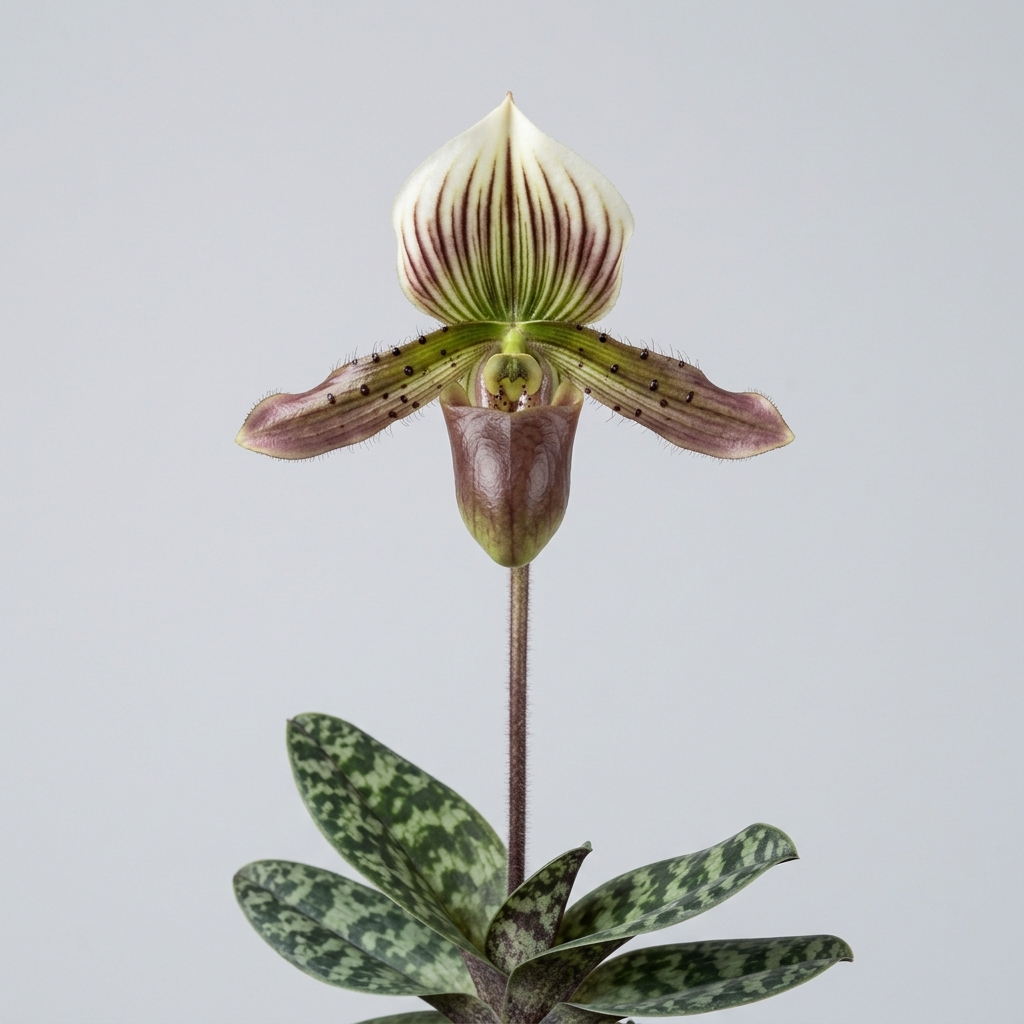
Paphiopedilum Papuanum is a highly sought-after slipper orchid species native to the montane forests of New Guinea. Prized by collectors for its striking mottled foliage and distinctively shaped flowers, this terrestrial orchid brings a touch of wild, exotic elegance to indoor collections. Its compact growth habit and fascinating pouch-like labellum make it an exceptional representative of the subgenus Sigmatopetalum.
Growers value this species not only for its unique floral presentation but also for its attractive vegetative state. Unlike many orchids that lack visual interest when out of bloom, the beautifully tessellated leaves of Paphiopedilum Papuanum provide year-round ornamental appeal. While it requires attentive care to mimic its humid, montane habitat, successful cultivation rewards the enthusiast with long-lasting blooms that exemplify the intricate beauty of the slipper orchid family.
💡 Did You Know?
The pouch-like lip of Paphiopedilum Papuanum is a sophisticated pollination trap. Insects are lured inside by the flower's colors and textures, and their only escape route forces them to squeeze past the orchid's reproductive organs, effectively transferring pollen to the next flower they visit.
🌿 Botanical Overview
Paphiopedilum Papuanum is naturally distributed across the mountainous regions of New Guinea, where it thrives as a terrestrial or lithophytic plant. It is typically found growing in thick layers of leaf litter, moss, and decaying organic matter on the forest floor or nestled in mossy rock crevices. These natural microhabitats provide a highly humid, shaded, and constantly moist environment with excellent drainage.
The vegetative structure of this species is characterized by a fan of lanceolate, mottled leaves. The variegation features a striking contrast between dark green and pale grey-green or yellowish-green patches, which helps the plant maximize light absorption under the dense forest canopy. Understanding this natural habitat is key to establishing a successful cultivation routine in a home or greenhouse setting.
🌸 Flower Characteristics
The inflorescence of Paphiopedilum Papuanum is typically solitary, arising from the center of the mature leaf fan on an erect, purple-brown, finely pubescent scape. The flower itself is a masterpiece of complex morphology, featuring a prominent dorsal sepal that is generally ovate, greenish, and adorned with darker longitudinal veins. The lateral petals spread horizontally or slightly downward, often displaying a blend of brownish-purple, green, and distinctive dark spots or cilia along the margins.
The defining feature of the bloom is the pouch-shaped labellum, or lip, which is designed to temporarily trap pollinators. This pouch typically shows a brownish-green or dull purple coloration with subtle veining. The overall flower presentation is sturdy and long-lasting, often remaining in pristine condition for several weeks due to the heavy substance of the floral segments.
Fragrance & Bloom Profile
Unlike some orchid genera renowned for intense perfumes, Paphiopedilum Papuanum is generally considered to be unscented. There are no consistent grower reports of a noticeable fragrance associated with this species. The lack of scent is compensated for by the exceptional longevity of the individual blooms, which can remain fresh on the plant for six to eight weeks under optimal conditions.
The blooming cycle typically produces one flower per growth, though exceptionally strong plants may occasionally produce a second bud. Because the flowers open slowly and hold their form remarkably well, they provide an extended period of visual interest. The absence of fragrance also makes this orchid an excellent choice for indoor spaces where strong floral scents might be undesirable.
Parentage & Hybrid Lineage
As a naturally occurring species rather than a man-made hybrid, Paphiopedilum Papuanum possesses a pure genetic lineage. It is classified within the genus Paphiopedilum, which is native to Southeast Asia and the surrounding islands. While it is a distinct species in its own right, it has been used occasionally in specialized breeding programs to introduce its compact growth habit, mottled foliage, and unique floral coloration to new slipper orchid hybrids.
Because documentation on specific commercial hybrids utilizing Paphiopedilum Papuanum can be limited in general grower literature, collectors usually seek out the pure species to preserve its natural form. When purchasing this orchid, it is highly recommended to acquire plants from reputable nurseries that propagate them via seed or tissue culture, rather than wild-collected specimens, to support conservation efforts.
🌱 Growing Conditions
Replicating the montane forest environment of New Guinea is essential for keeping Paphiopedilum Papuanum healthy. This species thrives in low to medium light conditions, similar to those preferred by mottled-leaf Phalaenopsis. Direct sunlight must be avoided, as it can easily scorch the sensitive foliage; instead, provide bright, filtered light or grow under standard LED horticultural lights.
💡 Care Tip
To keep your orchid thriving, maintain a relative of at least 60% and place a small, low-powered fan nearby to ensure gentle, continuous air movement. This simple setup prevents stagnant air and drastically reduces the risk of fungal issues on the damp foliage and roots.
Temperature: wise, this orchid prefers intermediate to cool-intermediate conditions. Ideal daytime temperatures range from 70°F to 80°F (21°C to 27°C), with a night-time drop to 55°F to 65°F (13°C to 18°C). This diurnal temperature fluctuation is crucial for stimulating bud development. High relative humidity of 60% to 80% should be maintained, accompanied by gentle, continuous air movement to prevent stagnant air pockets that encourage fungal pathogens.
Watering, Feeding & Potting Media
Paphiopedilum Papuanum does not possess pseudobulbs to store water, meaning it must never be allowed to dry out completely. The potting medium should remain consistently damp but never waterlogged. Water the plant thoroughly when the top layer of the medium begins to feel slightly dry to the touch, using rainwater, distilled water, or reverse osmosis water to avoid mineral buildup.
A well-draining, moisture-retentive potting mix is vital. A classic blend of fine-grade fir bark, chopped sphagnum moss, perlite, and a small amount of horticultural charcoal works exceptionally well. Feed the orchid with a highly diluted, balanced orchid fertilizer (such as a quarter-strength 20-20-20 formula) every two to three weeks during active growth, flushing the pot with pure water between feedings to wash away residual salts.
Blooming Season & Care Notes
The primary blooming season for Paphiopedilum Papuanum typically occurs in the spring or autumn, though variations can happen depending on local growing conditions. As the new leaf fan reaches maturity, a flower spike will begin to emerge from the center. During this active bud-development phase, maintain stable humidity and avoid moving the plant to prevent bud blast.
Once the bloom fades, the flower spike can be cut back close to the base of the leaves. The old fan will not bloom again; instead, it will direct its energy into producing new vegetative leads from the base. Repotting is best performed every one to two years, immediately after the blooming cycle concludes, using fresh media to prevent root suffocation as the organic components decompose.
⚠️ Common Issues
⚠️ Common Mistake
Allowing the potting medium to dry out completely is a frequent mistake. Unlike many common orchids that possess water-storing pseudobulbs, Paphiopedilum species have no internal water storage organs and will suffer severe, often irreversible root damage if left dry for even a few days.
- Root Rot:
Caused by overwatering or compacted, poorly draining potting media. Ensure the mix remains airy and never let the pot sit in standing water. - Bud Blast:
The sudden drying and dropping of unopened buds, often triggered by low humidity, drafty conditions, or sudden temperature swings. - Leaf Scorch: Bleached or brown patches on the foliage resulting from exposure to direct, unfiltered sunlight.
- Mealybugs and Scale: Common pests that hide in the tight crevices of the leaf fans and under the flower bracts. Treat promptly with insecticidal soap or neem oil.
- Bacterial Soft Rot: Appears as wet, dark spots on the leaves, often spreading rapidly in warm, stagnant air. Remove affected tissue with sterile tools and improve air circulation.
❓ Frequently Asked Questions
How often should I water my Paphiopedilum Papuanum?
Watering frequency depends on your home’s temperature and humidity, but generally, this orchid should be watered every 5 to 7 days. The goal is to keep the potting medium consistently moist but not soggy. Never allow the roots to dry out completely, as this species lacks water-storing pseudobulbs.
Can I grow Paphiopedilum Papuanum under artificial LED lights?
Yes, this species adapts exceptionally well to artificial lighting. Place the plant under standard horticultural LED lights at a distance that provides moderate, indirect light. Monitor the leaves; if they turn pale or develop reddish-purple edges, the light may be too intense.
Why are the tips of my orchid’s leaves turning brown?
Brown leaf tips are usually a sign of low humidity, mineral buildup from tap water, or underwatering. Ensure your humidity levels remain above 60%, use pure water sources like rainwater or distilled water, and flush the pot thoroughly to remove fertilizer salts.
When is the best time to repot Paphiopedilum Papuanum?
The ideal time to repot is during the spring, shortly after the plant has finished blooming and when new root growth is just beginning. Repotting every 12 to 18 months prevents the potting mix from breaking down and suffocating the roots.
⭐ Final Growing Notes
Paphiopedilum Papuanum is a rewarding species that brings the enchanting beauty of New Guinea’s montane forests directly into the home of the dedicated orchid enthusiast. While its moisture and humidity requirements demand a bit more attention than common mass-market hybrids, its stunning mottled foliage and long-lasting, sculptural blooms make every effort worthwhile. By maintaining consistent moisture, moderate temperatures, and gentle air movement, you can enjoy this remarkable slipper orchid for many years to come.
⚕️ Health, Safety & Edibility
Understanding how a plant interacts with people, pets, and the surrounding environment is part of responsible cultivation. This section uses conservative, general guidance and does not replace professional medical or veterinary advice.
Human Safety: No published evidence currently identifies species-specific toxicity concerns for Paphiopedilum Papuanum during normal handling. As with most ornamental plants, it should not be intentionally consumed.
Pet Safety: Published information does not indicate that this orchid commonly poses a toxicity concern for cats or dogs. However, chewing leaves, flowers, roots, or potting media may still cause mild digestive upset.
Edibility: This orchid is cultivated for ornamental display rather than food. Ornamental plants may carry fertilizers, pesticides, or other horticultural treatments that make them unsuitable for consumption.
Skin Contact: Routine handling is not generally associated with skin irritation. Gardeners with sensitive skin may prefer wearing gloves when repotting, pruning, or handling potting media.
🌱 Propagation Tip
Slipper orchids like this species are propagated by division rather than stem cuttings. Wait until the plant has grown into a large specimen with at least six healthy leaf fans, then carefully divide it into clumps of no fewer than three fans each during spring repotting.
⭐ Expert Advice
To trigger reliable blooming each year, ensure your orchid experiences a slight drop in night-time temperatures of about 10 to 15 degrees Fahrenheit during the autumn months. This natural drop mimics its native montane habitat and signals the plant to initiate flower spikes.

Leave A Comment