
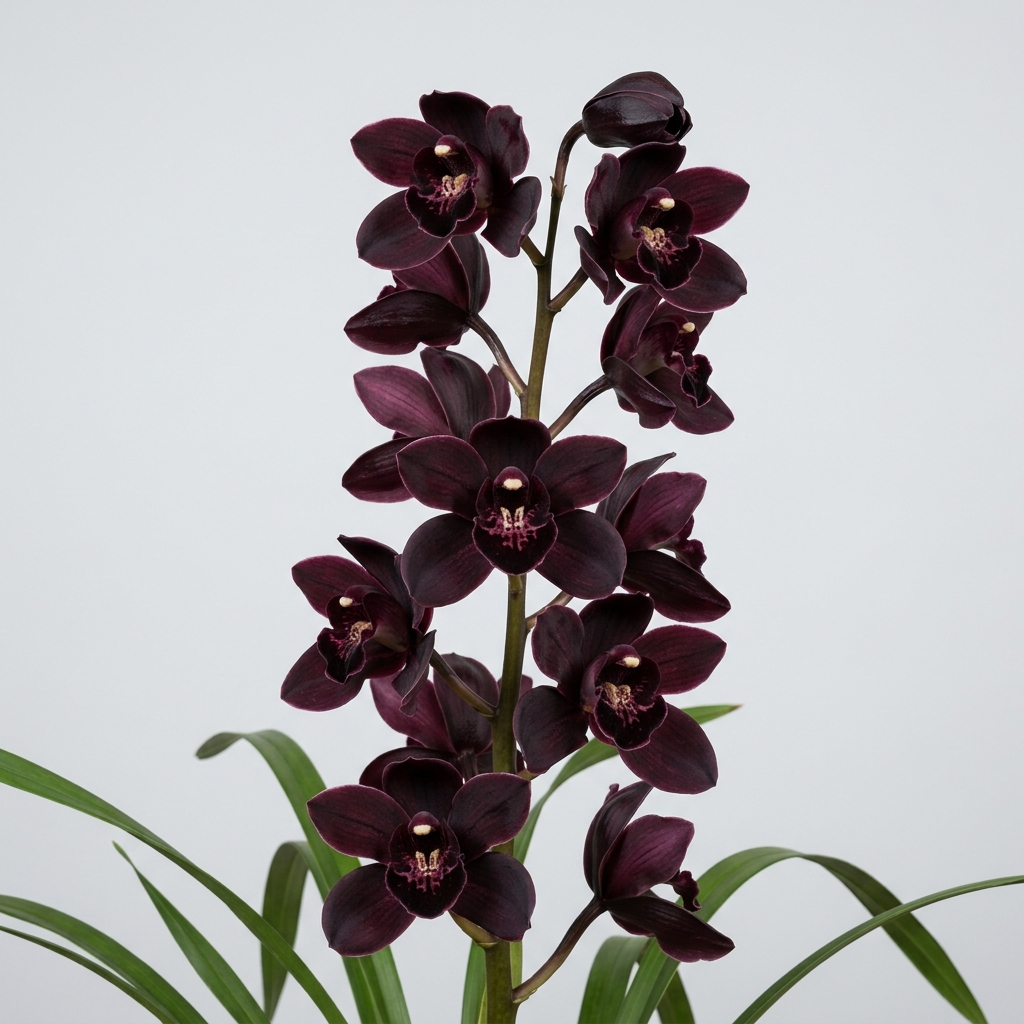
The orchid cultivar
Cymbidium Kiwi Midnight is highly sought after by collectors and enthusiasts for its dramatic, near-black flowers. Belonging to the popular Cymbidium genus, this evergreen perennial hybrid is prized for its robust growth habit and its ability to produce striking, dark-pigmented blooms that stand out in any collection. Unlike traditional pastel-colored orchids, this cultivar offers a sophisticated, moody aesthetic that adds a touch of dramatic elegance to indoor spaces and temperate gardens alike.
In addition to its unique visual appeal, growers value this cultivar for its relatively straightforward care requirements compared to more delicate orchid species. It features strap-like, arching green leaves that emerge from prominent pseudobulbs, providing year-round structural interest even when the plant is not in bloom. When properly cultivated, it rewards the grower with long-lasting flower spikes that remain vibrant for several weeks, making it a highly rewarding addition to a dedicated orchid collection.
💡 Did You Know?
The near-black color of Cymbidium Kiwi Midnight is not actually black, but an extremely high concentration of red and purple pigments called anthocyanins. In nature, true black flowers do not exist because plants rely on color to attract pollinators, and black absorbs too much heat. This cultivar represents a masterclass in selective hybridizing to push the boundaries of floral pigmentation.
🌿 Botanical Overview
Cymbidium Kiwi Midnight is a sympodial orchid, meaning it grows horizontally along a rhizome, producing new pseudobulbs each season. These pseudobulbs serve as vital storage organs for water and nutrients, allowing the plant to survive periods of environmental stress. The foliage consists of long, narrow, strap-like leaves that are leathery in texture and can grow up to two feet in length, creating a dense, grassy clump over time.
As an intermediate-sized hybrid, this cultivar is more compact than some of the giant standard Cymbidium species, making it far more suitable for indoor cultivation or greenhouse benches. The root system is thick, fleshy, and covered in velamen, a spongy layer that aids in the rapid absorption of water and atmospheric moisture. Understanding this root structure is key to providing the correct potting medium and watering schedule.
🌸 Flower Characteristics
The defining feature of this cultivar is its extraordinary floral coloration. The petals and sepals exhibit an intense, saturated shade of deep maroon-purple that absorbs light, giving the illusion of a true black flower under certain lighting conditions. The texture of the blooms is thick and waxy, which contributes to their long-lasting nature and gives them a polished, reflective sheen.
The lip, or labellum, is typically slightly lighter or features subtle contrasting patterns, often with dark red spotting or a velvety texture that enhances the depth of the flower. The flowers are arranged along upright or slightly arching spikes that emerge from the base of the newest pseudobulbs. A single mature spike can carry numerous blooms, creating a dense and highly dramatic presentation.
Fragrance & Bloom Profile
While some Cymbidium cultivars are highly fragrant, the scent profile of Kiwi Midnight is not consistently documented across all growing environments. Many growers report a very light, subtly sweet fragrance that is most noticeable during the warmest hours of the day, while others find the blooms to be virtually unscented. This variability suggests that fragrance expression may be highly dependent on temperature, humidity, and light levels.
The blooming cycle typically begins in late autumn as flower spikes emerge, with the buds fully opening in winter or early spring. Once open, the individual flowers are exceptionally durable, often remaining in pristine condition for six to eight weeks if kept in a cool, draft-free location. This long bloom shelf-life makes the cultivar highly desirable for exhibition and home display.
Parentage & Hybrid Lineage
Cymbidium Kiwi Midnight is a complex hybrid, representing generations of selective breeding aimed at intensifying dark floral pigments. While the exact registration details and full ancestral lineage are subject to variation in general grower references, it is widely recognized as part of a modern wave of breeding programs focused on producing “black” orchids. Many of these hybrids trace their lineage back to species native to the cool, mountainous regions of Asia.
Because it is a hybrid, Kiwi Midnight shows hybrid vigor, often proving more adaptable and resilient than its wild ancestors. However, because its genetic background is complex, growers should rely on general Cymbidium care principles rather than trying to mimic a single specific wild habitat.
🌱 Growing Conditions
To thrive and bloom successfully, this cultivar requires bright, filtered light. In northern climates, some direct morning sun is beneficial, but hot afternoon sun should be avoided to prevent leaf scorch. A light green leaf color indicates the plant is receiving adequate light; dark green leaves suggest the light is too low, which may prevent future blooming.
💡 Care Tip
To ensure successful blooming, place your orchid outdoors in a semi-shaded area during late summer and early autumn. The natural drop in night temperatures is the primary trigger for flower spike development.
Temperature management is crucial for this orchid. It prefers cool to intermediate conditions, with daytime temperatures ranging from 65°F to 75°F (18°C to 24°C). Crucially, to initiate flower spikes in the autumn, the plant requires a distinct drop in night temperatures, ideally down to 50°F to 55°F (10°C to 13°C) for several weeks. Good air circulation is also essential to prevent stagnant air from harboring fungal pathogens.
Watering, Feeding & Potting Media
During the active growing season in spring and summer, Cymbidium Kiwi Midnight should be watered thoroughly and kept evenly moist. The potting medium should never be allowed to dry out completely, but it must drain rapidly to prevent waterlogging. In the winter, after flowering has finished, watering should be reduced, allowing the medium to dry out slightly more between waterings.
Feeding should align with the growth cycle. Apply a balanced, water-soluble orchid fertilizer at quarter or half strength every two weeks during the spring and summer. As autumn approaches, transition to a low-nitrogen, high-phosphorus formula to encourage spike development. Always flush the pot with pure water once a month to prevent harmful mineral salt buildup.
The ideal potting medium is a coarse, well-aerated mix. A combination of medium-grade fir bark, perlite, and horticultural charcoal works well, as it retains light moisture while allowing excellent drainage and airflow around the roots.
Blooming Season & Care Notes
The primary blooming window occurs from winter to early spring. As the flower spikes begin to emerge from the base of the pseudobulbs in autumn, they should be carefully staked to support the weight of the developing buds. Avoid moving the plant to a different orientation once the buds have formed, as sudden changes in light direction can cause the stems to twist or the buds to drop.
Once the flowers have faded, cut the spike down to the base of the pseudobulb using sterilized shears. Repotting is best done in late spring, immediately after flowering has concluded and before new growth begins. Choose a pot that allows for two years of future growth, as Cymbidiums prefer to be slightly root-bound and may not bloom well if given too much empty space.
⚠️ Common Issues
⚠️ Common Mistake
A common error is keeping the orchid in a warm room year-round. Without a distinct cool period in autumn, the plant will continue to grow foliage but will fail to produce its signature dark flower spikes.
- Root Rot:
Caused by overwatering or a decomposing potting medium that holds too much water. Ensure the pot has excellent drainage. - Bud Blast:
The sudden dropping of unopened buds, often triggered by rapid temperature fluctuations, low humidity, or drafts. - Spider Mites:
These pests thrive in warm, dry conditions. Increase humidity and wipe the long leaves regularly to prevent infestations. - Leaf Tip Burn: Often a sign of mineral salt buildup from tap water or over-fertilizing. Flush the medium thoroughly with rainwater or distilled water.
❓ Frequently Asked Questions
How do I trigger my Cymbidium Kiwi Midnight to bloom?
To trigger blooming, ensure the plant experiences a consistent drop in night temperatures during the autumn, ideally down to 50°F to 55°F (10°C to 13°C) for four to six weeks, combined with bright, filtered light.
Can I grow this orchid cultivar indoors?
Yes, it can be grown indoors near a bright east- or south-facing window. However, providing the necessary cool autumn night temperatures can be challenging indoors, so placing it outside in a shaded spot during late summer and autumn is highly recommended.
What potting mix is best for Cymbidium Kiwi Midnight?
A well-draining mix composed of medium-grade fir bark, perlite, and horticultural charcoal is ideal. This combination retains the necessary moisture while ensuring the thick, fleshy roots receive plenty of oxygen.
How often should I repot this orchid?
Repotting should be done every two to three years, immediately after the spring blooming cycle has finished. Avoid repotting too frequently, as this cultivar blooms best when it is relatively snug in its container.
⭐ Final Growing Notes
Cymbidium Kiwi Midnight remains one of the most captivating orchid cultivars available to modern growers. While its near-black flowers require a bit of patience and attention to seasonal temperature shifts to emerge, the dramatic reward is well worth the effort. By providing bright light, consistent moisture during the growing season, and the essential autumn chill, you can enjoy these velvety, dark blooms year after year.
⚕️ Health, Safety & Edibility
Understanding how a plant interacts with people, pets, and the surrounding environment is part of responsible cultivation. This section uses conservative, general guidance and does not replace professional medical or veterinary advice.
Human Safety: No published evidence currently identifies species-specific toxicity concerns for Cymbidium Kiwi Midnight during normal handling. As with most ornamental plants, it should not be intentionally consumed.
Pet Safety: Published information does not indicate that this orchid commonly poses a toxicity concern for cats or dogs. However, chewing leaves, flowers, roots, or potting media may still cause mild digestive upset.
Edibility: This orchid is cultivated for ornamental display rather than food. Ornamental plants may carry fertilizers, pesticides, or other horticultural treatments that make them unsuitable for consumption.
Skin Contact: Routine handling is not generally associated with skin irritation. Gardeners with sensitive skin may prefer wearing gloves when repotting, pruning, or handling potting media.
🌱 Propagation Tip
Propagate during repotting by dividing mature clumps. Ensure each new division has at least three active, healthy pseudobulbs with leaves, plus one old backbulb, to provide enough energy for the plant to recover and bloom.
⭐ Expert Advice
When staking the heavy flower spikes, do so gradually as they grow. Staking too late can cause the rigid stems to snap, while staking too early can disrupt the natural, elegant arch of the blooms.

Leave A Comment