
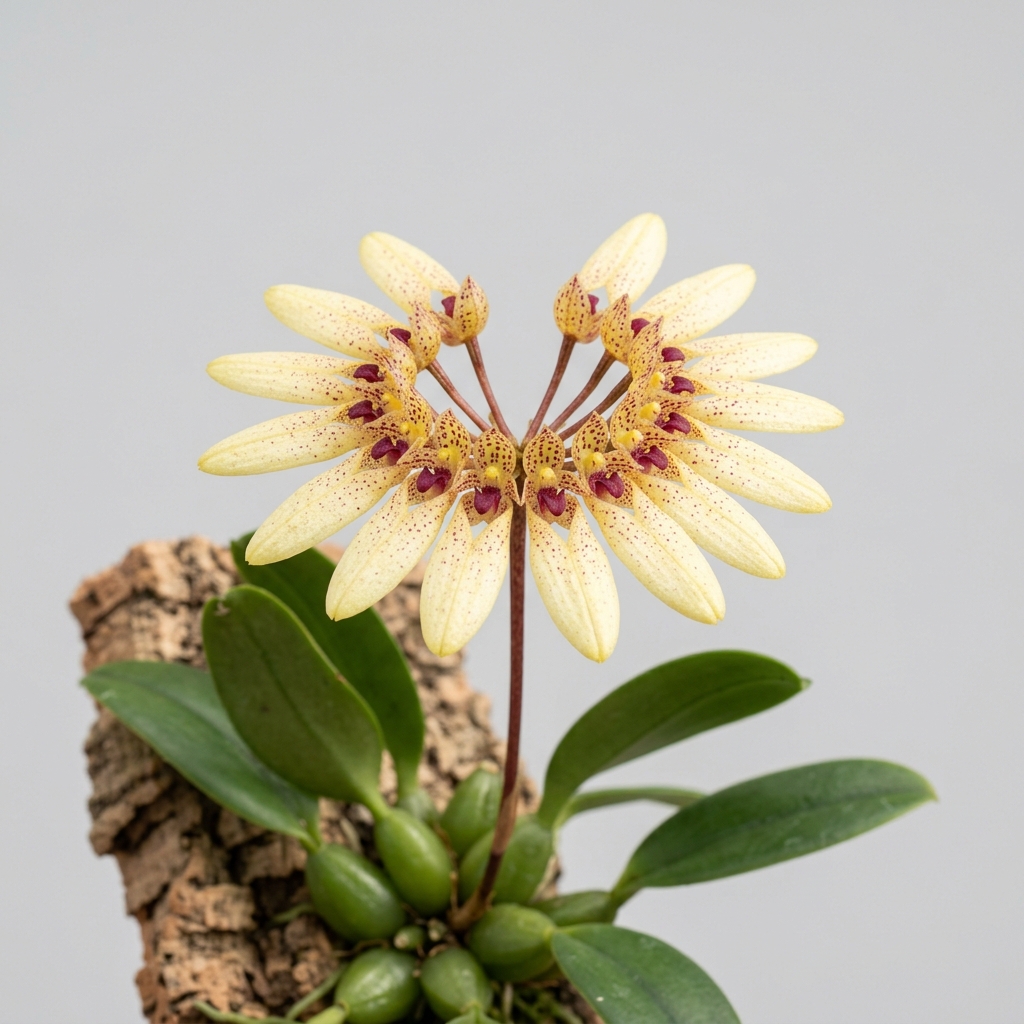
Bulbophyllum Makoyanum, commonly referred to as the daisy orchid, is a captivating epiphytic species celebrated for its unique, fan-shaped inflorescences. Belonging to the vast and diverse genus Bulbophyllum, this orchid produces clusters of small flowers arranged in a circular pattern that closely mimics the appearance of a daisy. Its intriguing growth habit and distinct floral presentation make it a highly sought-after addition for collectors specializing in miniature and unusual orchid species.
Native to the warm, humid tropical forests of Southeast Asia, this species thrives in conditions that replicate its natural canopy habitat. While it requires consistent moisture and high humidity, its compact size and adaptable nature make it well-suited for terrarium culture, mounted displays, or shallow basket cultivation. Growers value Bulbophyllum Makoyanum not only for its striking floral geometry but also for its relatively manageable care requirements compared to more temperamental members of its genus.
💡 Did You Know?
Bulbophyllum Makoyanum is often called the daisy orchid because its individual flowers arrange themselves in a perfect circle, with the elongated lateral sepals pointing outward to mimic the petals of a daisy. This clever evolutionary design helps the plant attract specific insect pollinators in its native Southeast Asian canopy.
🌿 Botanical Overview
Bulbophyllum Makoyanum is characterized by its sympodial growth habit, producing small, egg-shaped pseudobulbs along a creeping rhizome. Each pseudobulb is topped by a single, leathery, dark green leaf that remains attractive year-round. The plant spreads relatively quickly under optimal conditions, forming a dense mat of foliage that makes it ideal for mounting on cork bark or tree fern slabs.
The root system of this orchid is fine and shallow, adapted for clinging to mossy tree branches in its native habitat. Because the roots do not penetrate deeply, the plant relies heavily on atmospheric moisture and frequent watering to sustain its growth. Understanding this growth habit is essential for selecting the appropriate container and media, as deep pots can easily lead to stagnant moisture and root rot.
🌸 Flower Characteristics
The defining feature of Bulbophyllum Makoyanum is its remarkable inflorescence, which arises from the base of the pseudobulb on a slender, arching spike. Each spike bears a radiating cluster of ten to twelve flowers arranged in a circular umbel. The individual flowers are highly modified, with elongated lateral sepals that point outward to form the “petals” of the daisy-like structure.
These lateral sepals are typically a pale yellow or cream color, heavily speckled with fine red or purple dots near the base. The dorsal sepal and petals are much smaller, forming a hood-like structure over the tiny, hinged lip. This mobile lip is designed to move with the slightest breeze, a mechanical adaptation that helps attract specific insect pollinators in the wild.
Fragrance & Bloom Profile
Unlike some members of the Bulbophyllum genus that emit strong, unpleasant odors to attract carrion flies, Bulbophyllum Makoyanum has a relatively mild fragrance profile. Many growers report a faint, slightly sweet or musty scent that is only noticeable in close proximity to the blooms. However, fragrance intensity and quality can vary based on environmental factors such as temperature, light, and humidity.
The blooms typically last for one to two weeks, depending on the growing conditions. While individual flowers are relatively short-lived compared to some other orchid genera, a mature specimen can produce multiple flower spikes sequentially, extending the overall blooming display over several weeks.
Parentage & Hybrid Lineage
Bulbophyllum Makoyanum is a naturally occurring species rather than a man-made hybrid. In botanical literature, it is sometimes treated as a synonym of Bulbophyllum fimbriatum or associated with the Cirrhopetalum section of the genus, which is characterized by fan-shaped flower clusters.
Because of its distinct floral arrangement and compact growth habit, it has been used occasionally in hybridizing programs within the Bulbophyllum genus. However, documented registered hybrids are relatively limited, and the species is most commonly grown and appreciated in its pure, natural form by orchid enthusiasts.
🌱 Growing Conditions
To cultivate Bulbophyllum Makoyanum successfully, growers must provide intermediate to warm temperatures, ideally ranging from 65°F to 85°F (18°C to 29°C) during the day, with a slight drop at night. The plant prefers low to medium indirect light, similar to the dappled shade of its native forest canopy. Direct sunlight should be avoided, as it can easily scorch the thin leaves.
💡 Care Tip
To maintain the high Bulbophyllum Makoyanum craves without risking fungal issues, pair your frequent misting routine with a small oscillating fan. Gentle, continuous air movement is essential for keeping the damp foliage healthy and preventing leaf-spotting diseases.
High humidity is critical for this species, with a target range of 60% to 80%. Good air movement is equally important to prevent fungal pathogens from establishing on the damp foliage. If grown indoors, a humidity tray, room humidifier, or placement in a dedicated orchid case or terrarium can help maintain the necessary atmospheric moisture.
Watering, Feeding & Potting Media
Consistent moisture is key to keeping Bulbophyllum Makoyanum healthy. The fine roots should never dry out completely, but they must not sit in soggy, stagnant water. Watering frequency will depend heavily on the growing method; mounted plants may require daily misting or soaking, while those in shallow pots or baskets will need watering as soon as the media surface begins to dry.
A high-quality New Zealand sphagnum moss or a fine-grade bark mix is highly recommended to retain moisture while allowing adequate aeration. During the active growing season, apply a balanced, highly diluted orchid fertilizer weekly or bi-weekly. Flushing the media with pure water periodically is recommended to prevent mineral salt buildup, which can damage the sensitive roots.
Blooming Season & Care Notes
Bulbophyllum Makoyanum typically initiates its blooming cycle in the autumn or winter months, though well-established plants under stable conditions may bloom at other times of the year. The development of the flower spikes is often triggered by slight seasonal changes in temperature and day length.
Once the blooming period concludes, the old flower spikes can be cut back to the base of the pseudobulb. Repotting or remounting is best done in the spring, just as new root growth begins to emerge from the base of the newest pseudobulbs. Minimize disturbance to the root system during this process to avoid stalling the plant’s growth.
⚠️ Common Issues
⚠️ Common Mistake
A frequent error is planting Bulbophyllum Makoyanum in a deep, standard orchid pot with coarse bark. Because of its shallow, creeping root system, the plant will struggle to access moisture in deep pots, and the lower media will remain wet for too long, leading to root rot.
- Root Rot:
Caused by overwatering, poor drainage, or decomposing potting media that suffocates the fine root system. - Leaf Spotting: Fungal or bacterial spots can develop if humidity is high but air circulation is inadequate.
- Dehydration:
Shriveled pseudobulbs and wrinkled leaves indicate insufficient watering or low humidity. - Pests:
Mealybugs and spider mites can occasionally target the tender new growth and the undersides of leaves.
❓ Frequently Asked Questions
How often should I water Bulbophyllum Makoyanum?
Watering frequency depends on your growing setup. Mounted specimens usually require daily misting or soaking, while plants grown in shallow pots or baskets with sphagnum moss should be watered just as the top layer of moss begins to feel slightly dry, ensuring the media remains consistently damp but not waterlogged.
Can I grow Bulbophyllum Makoyanum under LED grow lights?
Yes, this orchid adapts well to artificial lighting. Because it prefers low to medium light levels, place it near the outer edges of your LED setup or at a moderate distance to prevent leaf scorch. Monitor the foliage color; a healthy plant should maintain a rich, medium-green hue.
Why are the pseudobulbs on my orchid shriveling?
Shriveled pseudobulbs are a classic sign of dehydration, which can be caused by underwatering, extremely low ambient humidity, or a damaged root system that can no longer absorb water. Check the roots first; if they are healthy, increase your watering frequency and humidity levels.
Is Bulbophyllum Makoyanum suitable for beginners?
While it requires more attention to humidity and moisture than common grocery store orchids, it is considered one of the more forgiving and accessible Bulbophyllum species. Beginners who can commit to maintaining consistent moisture and high humidity will find it a rewarding plant to grow.
⭐ Final Growing Notes
Bulbophyllum Makoyanum is a rewarding and visually spectacular orchid that brings a touch of tropical wonder to any collection. By mimicking its native forest habitat with high humidity, consistent moisture, and filtered light, growers can enjoy its unique daisy-like blooms year after year. Its compact size and manageable growth habit make it an excellent choice for both space-conscious hobbyists and dedicated orchid collectors alike.
⚕️ Health, Safety & Edibility
Understanding how a plant interacts with people, pets, and the surrounding environment is part of responsible cultivation. This section uses conservative, general guidance and does not replace professional medical or veterinary advice.
Human Safety: No published evidence currently identifies species-specific toxicity concerns for Bulbophyllum Makoyanum during normal handling. As with most ornamental plants, it should not be intentionally consumed.
Pet Safety: Published information does not indicate that this orchid commonly poses a toxicity concern for cats or dogs. However, chewing leaves, flowers, roots, or potting media may still cause mild digestive upset.
Edibility: This orchid is cultivated for ornamental display rather than food. Ornamental plants may carry fertilizers, pesticides, or other horticultural treatments that make them unsuitable for consumption.
Skin Contact: Routine handling is not generally associated with skin irritation. Gardeners with sensitive skin may prefer wearing gloves when repotting, pruning, or handling potting media.
🌱 Propagation Tip
This orchid is best propagated by division during the spring repotting cycle. Ensure each division has at least three to four healthy pseudobulbs with active root growth. Gently separate the rhizome with a sterile blade and secure the new division firmly to its new mount or pot.
⭐ Expert Advice
If your Bulbophyllum Makoyanum is reluctant to bloom, try lowering the night by a few degrees in the early autumn. This subtle seasonal drop, combined with slightly reduced , often mimics natural cues and triggers the development of new flower spikes.




Leave A Comment