
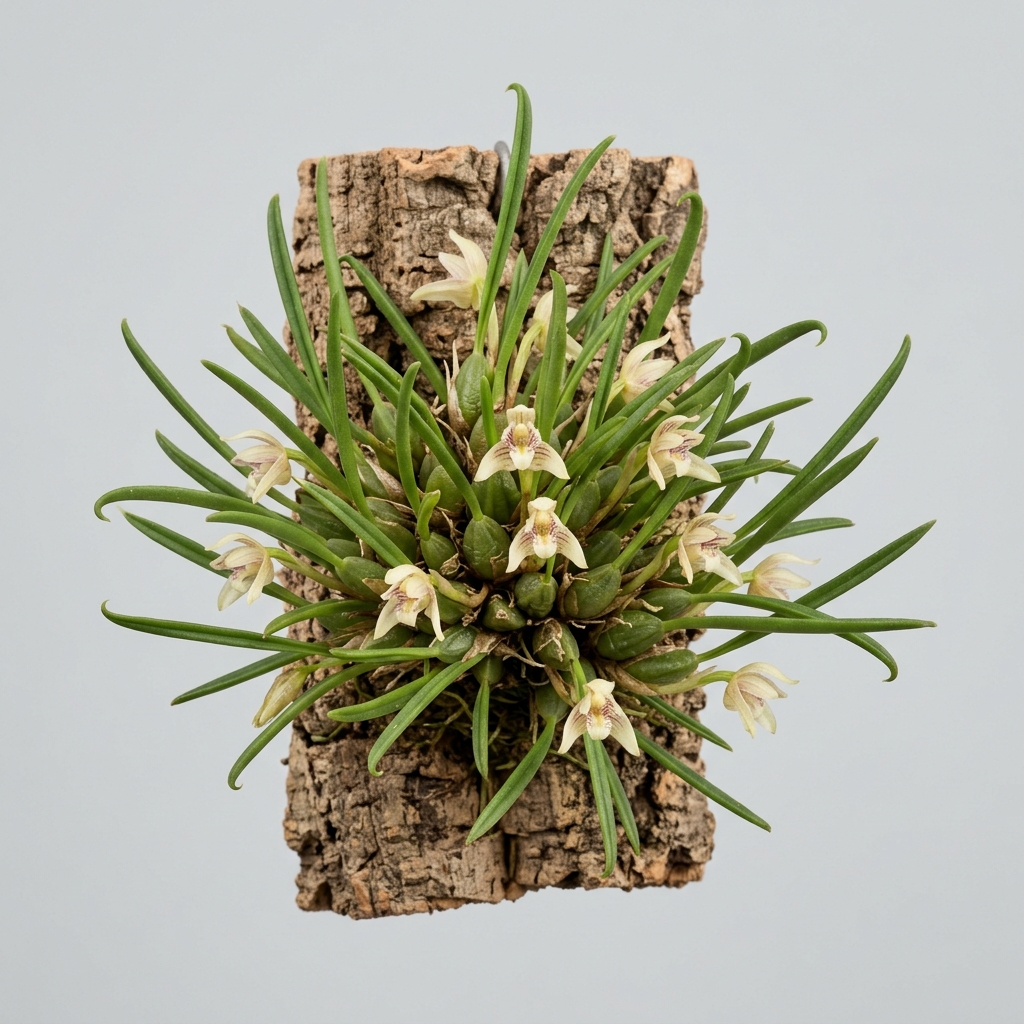
Maxillaria Uncata is a fascinating miniature epiphytic orchid species native to the tropical forests of Central and South America. Highly prized by orchid enthusiasts for its unique growth habit and compact size, this species is ideal for terrarium culture or mounting on cork bark. Its creeping rhizomes and needle-like foliage create a dense, moss-like mat over time, making it a visually striking addition to any specialized collection.
Unlike larger, showier orchids, this miniature species charms growers with its subtle elegance and intricate, small-scale flowers. It produces delicate, single blooms nestled close to the base of its pseudobulbs, offering a rewarding experience for those who appreciate the finer details of botanical oddities. Its relatively straightforward care requirements make it an accessible entry point into the world of miniature orchid cultivation.
💡 Did You Know?
The specific epithet uncata is derived from the Latin word for hooked, which directly references the unique, slightly curved tips of this orchid's needle-like leaves. This distinctive foliage characteristic helps distinguish it from other closely related miniature species in the Maxillaria , making it a fascinating study in botanical adaptation.
🌿 Botanical Overview
Maxillaria Uncata is characterized by its distinctive vegetative structure, which sets it apart from many of its larger congeners. The plant features tiny, cylindrical pseudobulbs that are tightly clustered along a creeping rhizome. Each pseudobulb is topped by a single, fleshy, linear leaf that is slightly curved or hooked at the tip, giving rise to the specific epithet uncata, which translates to hooked.
In its natural habitat, this species grows as an epiphyte on tree trunks and branches in wet tropical forests, ranging from sea level up to moderate elevations. This environment provides the plant with constant air movement, high humidity, and frequent moisture, which are critical factors to replicate in a home or greenhouse setting. Over time, a healthy specimen will spread laterally, forming a lush, green carpet of foliage.
🌸 Flower Characteristics
The flowers of Maxillaria Uncata are small, typically measuring less than half an inch in diameter. They emerge individually from the base of the pseudobulbs on very short peduncles, often appearing to sit directly on the rhizome or nestled among the leaves. The sepals and petals are generally translucent cream, pale yellow, or light green, frequently adorned with delicate reddish-purple stripes or flushes.
The lip, or labellum, is relatively prominent for the size of the flower and often features a darker coloration or distinct markings that guide pollinators. Because the flowers are produced close to the plant’s base and can be partially obscured by the dense foliage, they encourage close inspection, rewarding the observant grower with their intricate, hood-like structure.
Fragrance & Bloom Profile
The fragrance of Maxillaria Uncata is not consistently documented in common horticultural literature, and grower reports vary. Some hobbyists report a very faint, sweet, or slightly musky scent that is only noticeable in warm, humid conditions or during the peak of the day. Others find the flowers to be entirely scentless.
Because fragrance can be highly dependent on environmental factors such as temperature, humidity, and light intensity, growers should not acquire this species solely for its olfactory appeal. Instead, its primary draw remains its intriguing miniature growth habit and the delicate, jewel-like appearance of its small blooms.
Parentage & Hybrid Lineage
Maxillaria Uncata is a naturally occurring species rather than a man-made hybrid or cultivar. It belongs to a complex group of orchids within the subtribe Maxillariinae, and some taxonomists have proposed transferring it to the genus Christensonella based on molecular and morphological studies.
Because it is a species, there is no hybrid parentage or registered hybridizer history associated with it. In the orchid trade, it is occasionally used in specialized breeding programs to introduce miniature growth habits or unique foliage characteristics to new intergeneric hybrids, though such registered crosses remain relatively rare and are not widely documented in commercial trade.
🌱 Growing Conditions
To cultivate Maxillaria Uncata successfully, growers must mimic its native tropical forest canopy. It thrives in medium to bright, filtered light, similar to the conditions preferred by many Phalaenopsis orchids. Direct, unfiltered sunlight should be avoided, as it can easily scorch the thin, fleshy leaves and dry out the plant too quickly.
💡 Care Tip
To maintain the high this miniature orchid craves without risking root rot, place its pot or mount over a tray filled with pebbles and water. Ensure the bottom of the container or mount does not sit directly in the water, allowing the evaporating moisture to naturally envelope the foliage.
Temperature: wise, this orchid is quite adaptable, preferring intermediate to warm conditions. Ideal daytime temperatures range from 70°F to 85°F (21°C to 29°C), with a slight drop at night to around 60°F to 65°F (15°C to 18°C). High relative humidity, ideally between 60% and 80%, is essential for maintaining healthy foliage and preventing the pseudobulbs from shriveling. Good air circulation is equally important to prevent stagnant air from encouraging fungal pathogens.
Watering, Feeding & Potting Media
Due to its epiphytic nature and small pseudobulbs, Maxillaria Uncata has limited water storage capacity and should never be allowed to dry out completely. Watering should be frequent enough to keep the growing medium or mount consistently damp but not soggy. If grown on a mount, daily misting or soaking may be required during the warmer months.
A high-quality, free-draining medium is critical. Many growers prefer mounting this species on cork bark or tree fern plaques with a small pad of sphagnum moss around the roots to retain moisture. Alternatively, it can be grown in small pots or shallow baskets using a mix of fine-grade fir bark, perlite, and chopped sphagnum moss. Fertilize weakly during the active growing season with a balanced, diluted orchid fertilizer, applying it every second or third watering.
Blooming Season & Care Notes
Maxillaria Uncata can bloom at various times throughout the year, but it most commonly produces flowers in the winter and early spring. The blooming cycle is often triggered by slight seasonal shifts in temperature and watering frequency. Unlike some orchids that produce long-lasting flower spikes, the individual blooms of this species are relatively short-lived, typically lasting one to two weeks.
However, a mature, well-established specimen can produce multiple flowers sequentially or simultaneously from different pseudobulbs, extending the overall display. After blooming, the old flower stems will naturally wither and can be gently removed. Repotting or remounting is best done in the spring, just as new root growth begins to emerge from the base of the newest pseudobulbs.
⚠️ Common Issues
⚠️ Common Mistake
A frequent error is allowing the potting medium to break down and become compacted. Because this orchid requires consistent moisture, organic media like sphagnum moss can decompose rapidly, leading to soggy, anaerobic conditions that quickly suffocate and rot the plant's delicate root system.
- Shriveled Pseudobulbs: Often caused by chronic under-watering or low humidity, indicating the plant is drawing on its water reserves.
- Root Rot:
Occurs when the potting medium degrades or lacks proper drainage, suffocating the delicate roots. - Leaf Scorch: Yellowing or bleaching of the leaves, typically resulting from exposure to direct, intense sunlight.
- Bud Blast:
Premature dropping or drying of flower buds, usually triggered by sudden changes in temperature, drafty conditions, or low humidity. - Pests:
Mealybugs and spider mites can occasionally hide in the dense foliage; treat promptly with insecticidal soap or neem oil.
❓ Frequently Asked Questions
Can Maxillaria Uncata be grown in a terrarium?
Yes, this miniature orchid is exceptionally well-suited for terrariums, vivariums, and orchidariums. Its compact size, creeping growth habit, and appreciation for high humidity and consistent moisture make it an ideal candidate for enclosed glass environments, provided there is adequate internal air movement to prevent rot.
How often should I water a mounted Maxillaria Uncata?
Mounted specimens dry out much faster than potted ones. In typical household or greenhouse conditions, a mounted plant may require daily misting or soaking, especially during the warm summer months. During the winter, watering can be scaled back slightly, but the roots should never be allowed to remain bone-dry for extended periods.
Why are the leaves on my orchid turning yellow?
Yellowing leaves can indicate a few different issues. Most commonly, it is a sign of excessive light or direct sun exposure. However, if the yellowing is accompanied by soft, mushy roots or pseudobulbs, it may be a symptom of over-watering and root rot. Assess your light levels and medium moisture to determine the cause.
Does this species require a winter rest period?
No, Maxillaria Uncata does not require a strict, dry winter rest like some other orchid genera. However, it does benefit from a slight reduction in watering frequency and fertilizer during the cooler winter months when plant growth naturally slows down due to shorter daylight hours.
⭐ Final Growing Notes
Maxillaria Uncata is a delightful miniature orchid that rewards attentive growers with its unique, mat-forming growth habit and charming, delicate flowers. While it requires consistent humidity and moisture, its adaptability to terrarium culture and mounting makes it a versatile addition to any collection. By providing bright, filtered light, steady moisture, and good air movement, you can enjoy this fascinating Neotropical species for many years to come.
⚕️ Health, Safety & Edibility
Understanding how a plant interacts with people, pets, and the surrounding environment is part of responsible cultivation. This section uses conservative, general guidance and does not replace professional medical or veterinary advice.
Human Safety: No published evidence currently identifies species-specific toxicity concerns for Maxillaria Uncata during normal handling. As with most ornamental plants, it should not be intentionally consumed.
Pet Safety: Published information does not indicate that this orchid commonly poses a toxicity concern for cats or dogs. However, chewing leaves, flowers, roots, or potting media may still cause mild digestive upset.
Edibility: This orchid is cultivated for ornamental display rather than food. Ornamental plants may carry fertilizers, pesticides, or other horticultural treatments that make them unsuitable for consumption.
Skin Contact: Routine handling is not generally associated with skin irritation. Gardeners with sensitive skin may prefer wearing gloves when repotting, pruning, or handling potting media.
🌱 Propagation Tip
This species is easily propagated by division once the plant has formed a dense mat. Carefully divide the rhizome using a sterile blade, ensuring each new division contains at least three to four healthy pseudobulbs and an active growth point, then secure the division to a new mount or pot.
⭐ Expert Advice
For the best aesthetic display and healthiest growth, mount this orchid on a piece of rough cork bark or a tree fern plaque. The creeping rhizomes will naturally cling to the textured surface, mimicking its wild epiphytic habit and allowing the tiny flowers to be viewed more easily.

Leave A Comment