
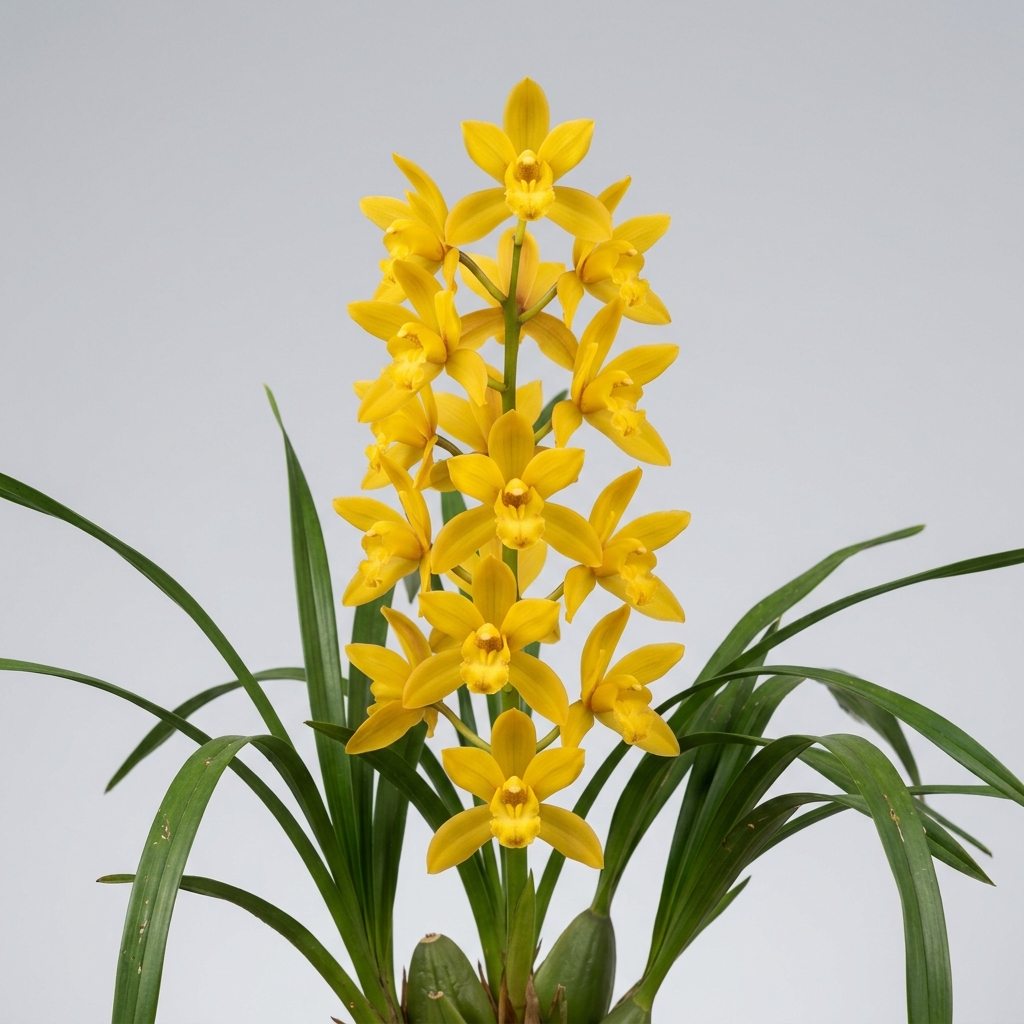
Cymbidium Golden Elf is a highly celebrated orchid cultivar renowned for its bright, cheerful blooms and exceptional adaptability. Unlike traditional members of its genus that require distinct autumn chill to trigger flowering, this hybrid is celebrated for its remarkable warmth tolerance, making it an excellent choice for indoor growers and those in temperate or subtropical climates.
Cultivated for its compact growth habit and elegant, grass-like foliage, this orchid produces upright spikes adorned with multiple golden-yellow blossoms. Its reliable performance, combined with a delightful fragrance, has secured its place as a staple in modern orchid collections.
💡 Did You Know?
Unlike most traditional Cymbidium orchids that require chilly autumn nights below fifty degrees Fahrenheit to trigger blooming, Cymbidium Golden Elf inherits warmth tolerance from its Cymbidium ensifolium ancestry, allowing it to flower reliably in warm, tropical, and indoor environments.
🌿 Botanical Overview
Cymbidium Golden Elf shows a sympodial growth habit, characterized by tightly clustered, egg-shaped pseudobulbs that support long, arching, strap-like leaves. The foliage remains attractive year-round, presenting a lush, grassy appearance that fits well on windowsills or greenhouse benches.
The root system is typically robust, consisting of thick, fleshy roots that require a well-draining yet moisture-retentive medium. Because of its compact stature compared to standard, large-flowered Cymbidium species, it is often classified as a miniature or novelty hybrid, making it highly manageable for space-conscious hobbyists.
🌸 Flower Characteristics
The flowers of this cultivar are a striking, uniform golden-yellow, occasionally featuring subtle pale green or cream undertones near the base of the segments. The sepals and petals are relatively narrow and starry, framing a prominent, slightly ruffled lip that may display faint, delicate spotting. The blooms are arranged elegantly along upright or slightly arching spikes, presenting a vibrant display that stands clear of the foliage.
Fragrance & Bloom Profile
One of the most appealing traits of Cymbidium Golden Elf is its sweet, citrus-like fragrance, which is most pronounced during the morning hours when exposed to warmth and light. The individual flowers are long-lasting, often remaining fresh for several weeks, and a mature, healthy specimen can produce multiple flower spikes simultaneously, extending the overall display.
Parentage & Hybrid Lineage
This cultivar is widely recognized as a primary or complex hybrid involving Cymbidium ensifolium, a species native to East Asia known for its warmth tolerance and sweet scent. While the exact registration details and complete hybrid lineage can sometimes vary across historical registries, the influence of its ancestral species is clearly visible in its growth habit, fragrance, and ability to bloom without a prolonged cold period.
🌱 Growing Conditions
To thrive, Cymbidium Golden Elf requires bright, filtered light, similar to the conditions preferred by Cattleyas; a slight yellow-green tint to the leaves indicates optimal light levels. It adapts well to standard household temperatures, ideally ranging from 65°F to 80°F during the day, with a mild drop at night to encourage spike development. Adequate air circulation is essential to prevent stagnant air and minimize the risk of fungal pathogens.
💡 Care Tip
Place your orchid in a location with bright, filtered where the leaves maintain a grassy-green color. If the foliage turns dark green, the plant is likely receiving insufficient to produce flowers.
Watering, Feeding & Potting Media
During the active growing season, this orchid should be watered thoroughly to keep the medium consistently damp but never waterlogged. A high-quality potting mix consisting of fine fir bark, perlite, and a small amount of sphagnum moss or peat works exceptionally well to retain moisture while ensuring excellent drainage. Apply a balanced, diluted orchid fertilizer weekly or bi-weekly during spring and summer, flushing the pot with pure water periodically to prevent salt buildup.
Blooming Season & Care Notes
While its primary blooming season typically occurs in late summer and early autumn, well-established plants can bloom at other times of the year. Once the flower spike begins to emerge from the base of the pseudobulb, avoid moving the plant to a location with drastically different light or temperature, as this can cause stress. Repotting is best performed in the spring, immediately after the flowering cycle has concluded and new vegetative growth is observed.
⚠️ Common Issues
⚠️ Common Mistake
Avoid letting the potting medium dry out completely for extended periods. While they dislike soggy roots, these orchids prefer consistent moisture and can suffer from pseudobulb shriveling if kept too dry.
- Root rot caused by overwatering or compacted, poorly draining potting media.
- Leaf tip burn, which often indicates excessive fertilizer salts or low humidity.
- Bud blast, where developing buds yellow and drop due to sudden temperature fluctuations or drafts.
- Pest infestations, particularly spider mites and scale insects, which target the undersides of the strap-like leaves.
❓ Frequently Asked Questions
How do I get my Cymbidium Golden Elf to rebloom?
To encourage reblooming, ensure the plant receives bright, indirect light and a slight drop in night temperatures during the late summer. Regular feeding during the active spring growth phase also provides the energy needed to produce strong flower spikes.
Why are the leaf tips turning brown on my orchid?
Brown leaf tips are commonly caused by a buildup of mineral salts from tap water or fertilizer. Flushing the potting medium thoroughly with distilled or rainwater once a month can help resolve this issue.
Can this cultivar be grown successfully indoors?
Yes, its warmth tolerance and compact size make it highly suitable for indoor cultivation on a bright east or south-facing windowsill, provided adequate humidity and air movement are maintained.
When is the best time to repot Cymbidium Golden Elf?
The ideal time to repot is during the spring, just as new growth begins to emerge and after the previous season’s blooms have faded. This allows the roots to establish quickly in the fresh medium.
⭐ Final Growing Notes
Cymbidium Golden Elf remains a premier choice for both novice and experienced orchid enthusiasts seeking a reliable, fragrant, and warm-tolerant plant. By providing bright light, consistent moisture, and routine feeding, growers can enjoy a spectacular display of golden blossoms and delightful citrus fragrance year after year.
🌱 Propagation Tip
Propagate this cultivar during spring repotting by dividing mature clumps. Ensure each division contains at least three healthy, active pseudobulbs with an active growth point to guarantee successful establishment.
⭐ Expert Advice
To maximize bloom production, feed your orchid with a weak, balanced fertilizer weekly during the spring and summer. Flush the pot with pure water every fourth to prevent harmful mineral salt accumulation.




Leave A Comment