
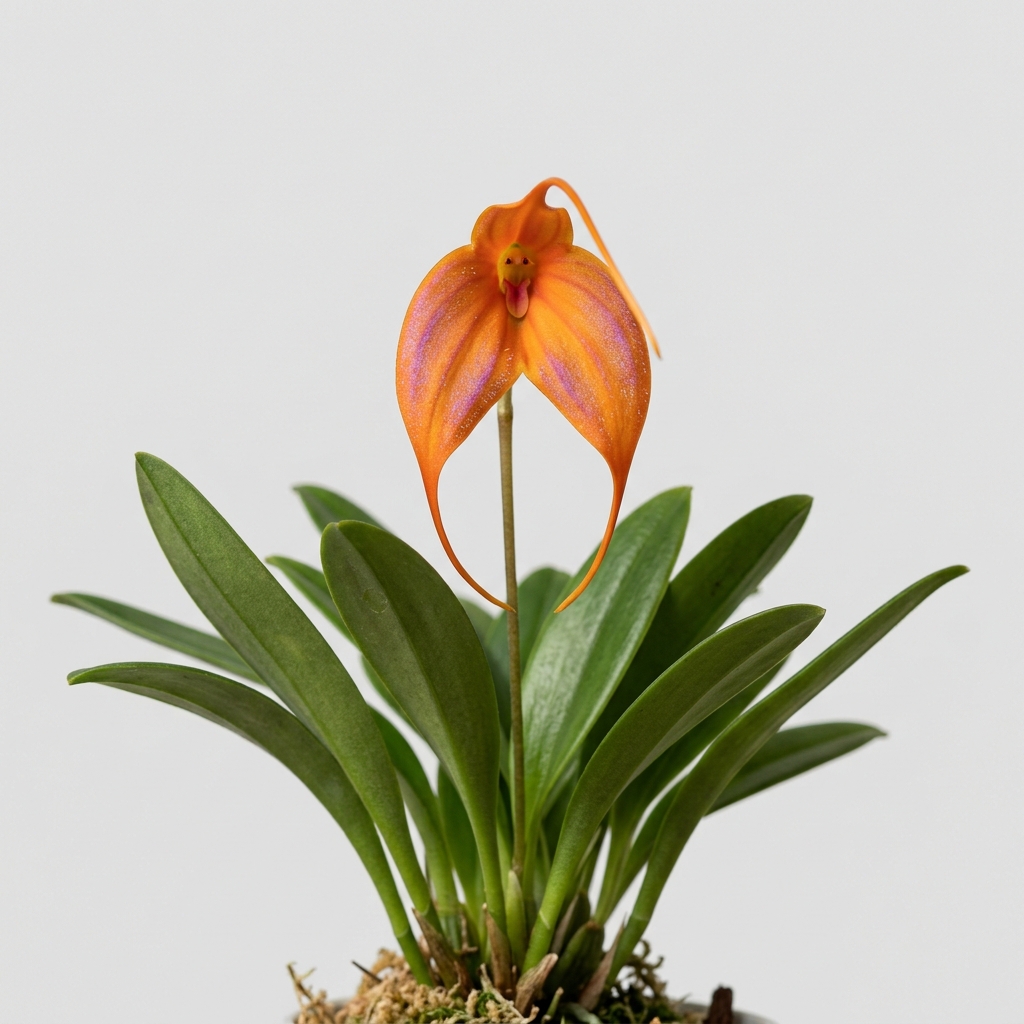
Masdevallia veitchiana is a highly celebrated orchid species renowned for its brilliant, shimmering orange blooms and striking architectural form. Often referred to as the King of the Masdevallias, this cool-growing terrestrial or lithophytic orchid is native to the high-altitude cloud forests of the Peruvian Andes, where it clings to steep, rocky slopes. Orchid enthusiasts highly prize this species for its vibrant floral display and its ability to bring a dramatic splash of color to cool-temperate collections.
Cultivating this remarkable orchid requires a careful balance of high humidity, consistent moisture, and cool temperatures that mimic its native montane habitat. Unlike many lowland orchids, it lacks pseudobulbs, meaning it relies on a continuous supply of moisture and high-quality potting media to thrive. When these specific environmental needs are met, growers are rewarded with long-lasting, iridescent flowers that appear to glow under proper lighting.
💡 Did You Know?
In its native Peru, Masdevallia veitchiana is known as waqanki, a Quechua word meaning you will cry, which stems from an ancient Inca legend of forbidden love. The brilliant orange flowers are said to represent the tears of a princess, forever preserved in the high-altitude cloud forests near Machu Picchu.
🌿 Botanical Overview
Masdevallia veitchiana is characterized by its tufted growth habit, producing erect, leathery leaves that emerge from a short creeping rhizome. Because the plant lacks pseudobulbs, each leaf acts as a primary water-storage organ, making the orchid highly sensitive to dry spells. The foliage is typically a deep, healthy green, providing a lush backdrop for the dramatic flowering spikes.
In its native Peruvian habitat, this species grows at elevations between 2,000 and 4,000 meters, frequently near historic sites like Machu Picchu. This high-altitude origin dictates its strict preference for cool, damp, and breezy conditions. Understanding this ecological niche is key to successfully maintaining the plant in a domestic greenhouse or indoor setup.
🌸 Flower Characteristics
The flowers of Masdevallia veitchiana are a marvel of botanical structure, dominated by large, fused sepals that taper into long, slender tails. The actual petals and lip are tiny and hidden deep within the floral tube. The most striking feature of the bloom is its coloration: a brilliant orange base covered in microscopic, light-refracting purple hairs.
These trichomes create an iridescent, shimmering effect that shifts from orange to magenta depending on the angle of the light. Each flower is borne singly on an erect, slender inflorescence that can reach up to 18 inches in height, holding the bloom well above the foliage for maximum visibility.
Fragrance & Bloom Profile
While some members of the Orchidaceae family are highly scented, a distinct fragrance is not consistently documented for Masdevallia veitchiana. The species relies primarily on its intense visual presentation to attract pollinators in the wild.
The blooms are exceptionally long-lasting, often remaining in pristine condition for several weeks. Under optimal growing conditions, a mature specimen can produce multiple spikes sequentially, extending the overall blooming period significantly.
Parentage & Hybrid Lineage
Masdevallia veitchiana is a naturally occurring species rather than a man-made hybrid. However, its outstanding color and robust flower size have made it a cornerstone of Masdevallia hybridization.
It has been used extensively as a parent in breeding programs to introduce vibrant orange tones, larger flower sizes, and improved temperature tolerance to its progeny. When evaluating hybrid offspring, growers often look for the characteristic iridescent sheen inherited from this legendary species.
🌱 Growing Conditions
Replicating the cool, misty environment of the Andes is essential for keeping Masdevallia veitchiana healthy. It thrives in cool to cold temperatures, ideally ranging from 50°F to 65°F at night, with daytime temperatures preferably staying below 75°F. High temperatures, especially when combined with dry air, can quickly lead to leaf drop and decline.
💡 Care Tip
Always maintain active air movement around your orchid. A small, gentle fan running nearby prevents stagnant air, which is crucial for keeping fungal diseases at bay in the high- environments this species requires.
Light levels should be moderate and diffused, similar to the dappled light of a cloud forest canopy. Direct sunlight will easily scorch the delicate leaves. Additionally, constant, gentle air movement is critical to prevent fungal pathogens from taking hold in the highly humid environment this orchid requires.
Watering, Feeding & Potting Media
Because Masdevallia veitchiana lacks water-storing pseudobulbs, the potting medium must remain consistently damp but never waterlogged. High-quality New Zealand sphagnum moss or a fine-grade bark mix blended with perlite works exceptionally well to retain moisture while allowing adequate oxygen to reach the roots.
Watering should be done with pure water, such as rainwater, distilled water, or reverse osmosis water, as this species is highly sensitive to dissolved salts. Fertilize very weakly with a balanced orchid fertilizer every two to three weeks, flushing the pot thoroughly with pure water between feedings to prevent salt buildup.
Blooming Season & Care Notes
While the primary blooming seasons are spring and autumn, Masdevallia veitchiana can opportunistically produce flowers at almost any time of the year if conditions remain stable. Once a flower spike finishes blooming, it should be cut back to the base of the plant to encourage new vegetative growth.
Repotting is best done in late winter or early spring, just as new root growth begins and before the heat of summer sets in. Avoid disturbing the root system unnecessarily, but ensure the potting medium is refreshed before it begins to decompose and lose its airy structure.
⚠️ Common Issues
⚠️ Common Mistake
Using standard tap water is a frequent mistake that leads to leaf tip burn and root decline. This orchid is highly sensitive to dissolved minerals, so always use rainwater, distilled water, or reverse osmosis water.
- Leaf drop: Often caused by excessively high temperatures or low humidity levels.
- Root rot: Occurs when the potting medium degrades or lacks proper drainage, suffocating the roots.
- Black spots on leaves: Typically a sign of fungal or bacterial infection due to poor air circulation in high-humidity environments.
- Tip burn: Usually indicates a buildup of fertilizer salts or the use of tap water high in mineral content.
- Pests: Aphids and spider mites can occasionally target the tender new growth and flower buds.
❓ Frequently Asked Questions
How do I prevent my Masdevallia veitchiana from dropping its leaves in summer?
To prevent summer leaf drop, keep the orchid in the coolest room of your home, use evaporative cooling or fans to lower ambient temperatures, and maintain high humidity levels above 70%.
Can I grow Masdevallia veitchiana under artificial LED lights?
Yes, this species adapts well to LED grow lights. Position the plant at a distance where it receives moderate, diffused light, and monitor the leaves to ensure they do not become warm to the touch.
What type of water is best for watering this orchid?
Always use pure water sources such as rainwater, distilled water, or reverse osmosis water. This species is highly sensitive to the minerals and chlorine found in typical tap water.
How often should I repot Masdevallia veitchiana?
Repotting is generally recommended every one to two years, preferably in the cool spring months, to ensure the potting media remains fresh, well-aerated, and free of decay.
⭐ Final Growing Notes
Though Masdevallia veitchiana demands more attention to temperature and humidity than standard grocery-store orchids, its breathtaking, iridescent orange blooms make it an incredibly rewarding species to cultivate. By providing cool conditions, pure water, and constant air movement, you can successfully recreate a slice of the Andean cloud forest in your own home.
🌱 Propagation Tip
This species is best propagated by division during repotting in early spring. Ensure each division has at least five to eight healthy leaves and a robust root system to support successful establishment in its new container.
⭐ Expert Advice
If your summer temperatures regularly exceed seventy-five degrees Fahrenheit, place ice cubes made from distilled water on top of the potting medium. This helps cool the root zone safely without shocking the plant.




Leave A Comment