
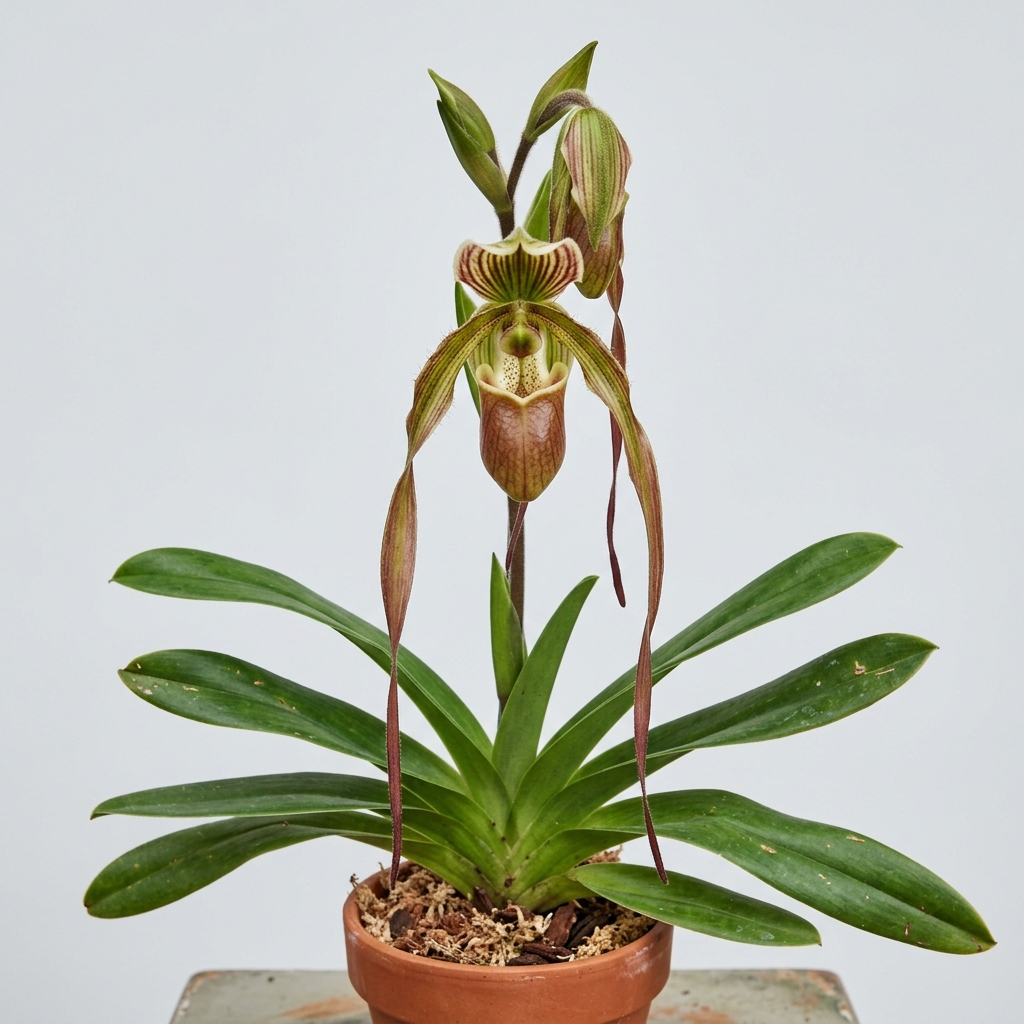
Phragmipedium Grande is a legendary slipper orchid cultivar celebrated for its dramatic, sweeping floral display and robust growth habit. As one of the most iconic hybrids within the Phragmipedium genus, this orchid stands out with its extraordinarily long, ribbon-like petals that drape elegantly below the pouch. Orchid enthusiasts highly value this cultivar for its architectural foliage and its ability to produce multiple large, striking blossoms on a single upright spike.
Cultivating Phragmipedium Grande offers a rewarding experience for growers who can provide the consistent moisture and high humidity these South American slipper orchid relatives naturally crave. Unlike many epiphytic orchids, this terrestrial or lithophytic hybrid thrives in damp, well-aerated media, making it an excellent choice for indoor growers and greenhouse hobbyists alike. Its vigorous nature and reliable blooming cycle have secured its place as a cornerstone cultivar in modern orchid collections.
💡 Did You Know?
Phragmipedium Grande is part of the Phragmipedium orchid group, a favorite among growers because its flowers, growth habit, and care needs make it useful for comparing cultivated orchids within the same . Observing its leaves, roots, and bloom spikes can help growers understand how this cultivar responds to indoor conditions.
🌿 Botanical Overview
Phragmipedium Grande shows a classic slipper orchid growth habit, characterized by fans of strap-shaped, leathery green leaves. The foliage grows in a neat, acaulescent rosette, with individual leaves reaching up to fifteen inches in length, providing an attractive, lush green presence even when the plant is not in bloom. The root system is typically fleshy and fuzzy, adapted to absorb moisture and nutrients continuously from damp organic matter.
This cultivar is highly regarded for its vigorous growth rate, often producing multiple new leads or offsets from the base of mature fans. Over time, a single specimen can develop into a magnificent specimen plant with several active growth points. The inflorescence emerges from the center of the mature leaf fan, rising gracefully above the foliage to present its remarkable flowers.
🌸 Flower Characteristics
The flowers of Phragmipedium Grande are a marvel of botanical architecture, dominated by incredibly elongated, twisting petals that can reach lengths of twelve inches or more. These ribbon-like petals typically exhibit a gradient of colors, transitioning from a pale greenish-yellow near the column to rich shades of bronze, copper, and mahogany toward the tips. The dorsal sepal is upright, slightly wavy, and decorated with delicate vertical striping.
The defining feature of the bloom is the pouch-like lip, or labellum, which is characteristic of the slipper orchid group. This pouch is generally a soft cream or greenish-yellow color, often adorned with fine reddish-brown spots or marbling along the interior rim. The flowers are presented sequentially or simultaneously on a sturdy, dark-colored spike, creating a cascading visual effect that is highly prized in exhibitions.
Fragrance & Bloom Profile
While Phragmipedium Grande is visually spectacular, a noticeable fragrance is not consistently documented in common grower references. Most specimens are considered unscented, relying entirely on their dramatic form and contrasting colors to attract pollinators in their ancestral habitats. The lack of scent does not detract from their appeal, as the sheer size and longevity of the blooms more than compensate for the absence of perfume.
The blooming cycle of this cultivar is notably long-lasting. Individual flowers can remain in pristine condition for several weeks, and because the spike can produce multiple buds that open in succession, the overall flowering period can extend over several months. This sequential blooming habit ensures a prolonged and dynamic display throughout the primary flowering season.
Parentage & Hybrid Lineage
Phragmipedium Grande is widely recognized as a classic hybrid, historically documented as a cross between Phragmipedium caudatum and Phragmipedium longifolium. This pairing successfully combines the extreme petal length of the caudatum parent with the robust growth habit and sequential blooming nature of longifolium. The resulting offspring exhibit a remarkable hybrid vigor that makes them significantly easier to grow than either parent species.
While this lineage is well-established in historical orchid literature, growers should note that variations in flower color and petal length can occur depending on the specific parent clones used in the breeding process. Some modern selections may exhibit deeper mahogany tones or slightly wider petals, but all retain the signature cascading silhouette that defines the Grande grex.
🌱 Growing Conditions
To cultivate Phragmipedium Grande successfully, providing the correct balance of light, temperature, and air movement is essential. This hybrid thrives in bright, filtered indirect light, similar to the dappled sunlight found in its ancestral forest canopies. Direct afternoon sun should be avoided, as it can easily scorch the leathery leaves, while insufficient light may result in weak growth and a failure to initiate flower spikes.
💡 Care Tip
For best results, grow Phragmipedium Grande in bright filtered with steady and gentle airflow. Avoid placing the plant in harsh midday sun, but do not keep it in a dark corner; weak is one of the most common reasons cultivated orchids refuse to rebloom.
Temperature: wise, Phragmipedium Grande is highly adaptable, preferring intermediate to warm conditions. Ideal daytime temperatures range between 70°F and 85°F, with a slight drop of 10°F to 15°F at night to mimic natural diurnal cycles. High relative humidity, ideally between 60% and 80%, is crucial for maintaining leaf turgor and supporting healthy root development, and should always be accompanied by gentle, continuous air movement to prevent fungal pathogens.
Watering, Feeding & Potting Media
Unlike many other orchid genera, Phragmipedium Grande must never be allowed to dry out completely. The roots require constant moisture, but they also demand excellent drainage to prevent stagnation and rot. Watering should be frequent, using high-quality water such as rainwater, distilled water, or reverse osmosis water, as this cultivar is highly sensitive to dissolved mineral salts and chlorine.
A suitable potting medium typically consists of a moisture-retentive yet airy mix, such as fine-grade fir bark blended with chopped sphagnum moss, perlite, and a small amount of charcoal. Feeding should be light but consistent; a balanced, highly diluted orchid fertilizer applied every two to three weeks during the active growing season is generally recommended. Flushing the pot with pure water between fertilizer applications helps prevent harmful salt buildup.
Blooming Season & Care Notes
The primary blooming season for Phragmipedium Grande typically spans from spring through autumn, though well-established plants in optimal conditions may bloom at other times of the year. As the flower spike develops, it may require gentle staking to support the weight of the large, cascading blossoms. Care should be taken not to disturb the developing buds, as sudden environmental changes can lead to premature drop.
Repotting is best performed every one to two years, ideally just after the blooming cycle has concluded and new root growth is visible at the base of the fans. Because Phragmipediums prefer fresh, clean media, regular repotting prevents the mix from breaking down and becoming acidic, which can quickly damage the delicate, fuzzy root system.
⚠️ Common Issues
⚠️ Common Mistake
The most common mistake is by calendar instead of root and potting-media condition. Phragmipedium roots need moisture and air at the same time, so constantly wet bark or sphagnum can lead to root loss even when the leaves still look healthy.
- Root rot:
Caused by compacted, poorly draining media or stagnant water at the bottom of the pot. - Leaf tip burn: Often a result of using water with high mineral content or over-fertilizing.
- Bud blast:
Premature dropping of flower buds, usually triggered by sudden drops in humidity, drafts, or temperature fluctuations. - Bacterial rot: Soft, watery spots on leaves, typically caused by water sitting in the crown of the plant overnight.
- Pests:
Mealybugs and spider mites can occasionally colonize the undersides of the leaves or the crevices of the leaf fans.
❓ Frequently Asked Questions
How long do the petals of Phragmipedium Grande grow?
The ribbon-like petals of Phragmipedium Grande are famous for their extreme length, typically reaching between eight and twelve inches, though exceptional specimens grown under ideal conditions can produce petals that drape even longer.
Can I grow Phragmipedium Grande under LED lights?
Yes, Phragmipedium Grande adapts very well to indoor cultivation under modern LED grow lights. Position the plant so it receives bright, diffused light, ensuring the leaves remain a healthy light-green color without turning yellow or scorching.
What is the best water source for Phragmipedium Grande?
This cultivar is highly sensitive to minerals and salts. It is best to water with rainwater, distilled water, or reverse osmosis water. Avoid hard tap water, which can cause leaf tip burn and root damage.
How do I know when to repot my Phragmipedium Grande?
Repotting is recommended every one to two years, or when the potting medium begins to break down and retain too much water. The best time to repot is right after flowering, when new root growth is emerging from the base.
⭐ Final Growing Notes
Phragmipedium Grande remains one of the most rewarding slipper orchids for dedicated hobbyists. By mimicking its natural affinity for consistent moisture, high humidity, and pure water, growers can enjoy a spectacular, long-lasting display of cascading, ribbon-like flowers year after year.
🌱 Propagation Tip
Propagation should be approached patiently. Most home growers should wait for natural keikis or divide only mature, healthy plants when the orchid type allows it. Never remove a young growth until it has strong roots and enough leaves to support itself away from the parent plant.
⭐ Expert Advice
Repot after flowering when fresh root tips begin to appear. This timing helps the plant anchor quickly into new bark or sphagnum and reduces stress, especially for orchids grown indoors where airflow, , and drying speed can change from season to season.




Leave A Comment