
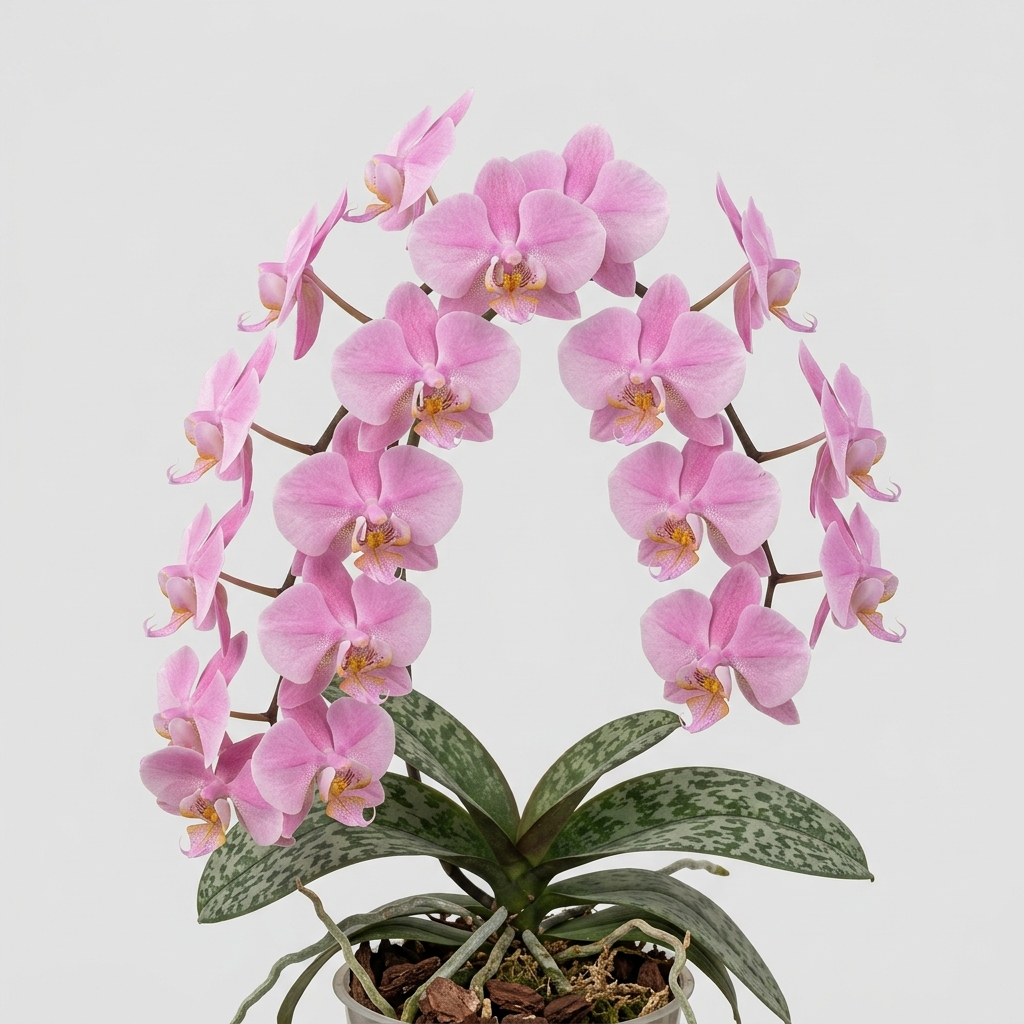
Phalaenopsis schilleriana is a legendary species orchid native to the Philippines, highly celebrated among collectors for its breathtaking displays of cascading pink blossoms and its exceptionally beautiful foliage. Unlike many standard moth orchids that feature plain green leaves, this species boasts striking, mottled silver-green patterns that make it an attractive houseplant even when it is not in bloom. Its elegant, branching flower spikes can carry dozens of delicate, fragrant flowers, creating a spectacular visual feast during its peak blooming season.
As an epiphytic grower, this orchid naturally clings to the branches of trees in warm, humid forest canopies. This natural growth habit dictates its care requirements in cultivation, where it thrives with high humidity, excellent air circulation, and filtered light. Whether you are an experienced orchid enthusiast or a dedicated hobbyist looking to expand your collection with a classic species, understanding the specific cultural preferences of this plant is the key to unlocking its full blooming potential.
💡 Did You Know?
Phalaenopsis schilleriana is part of the Phalaenopsis orchid group, a favorite among growers because its flowers, growth habit, and care needs make it useful for comparing cultivated orchids within the same . Observing its leaves, roots, and bloom spikes can help growers understand how this cultivar responds to indoor conditions.
🌿 Botanical Overview
Phalaenopsis schilleriana is endemic to the island of Luzon and other nearby islands in the Philippines. In its native habitat, it grows as an epiphyte on tree trunks and branches, typically at elevations from sea level up to several hundred meters. The environment is characterized by warm temperatures year-round, high atmospheric humidity, and seasonal rainfall patterns. These conditions have shaped the orchid’s unique physical adaptations.
The root system of this species is particularly distinctive. The roots are typically flat, rough, and silvery-gray when dry, designed to cling tightly to rough tree bark and absorb moisture rapidly from passing rain showers. The leaves are thick, oblong, and leathery, displaying a gorgeous marbled pattern of silver-gray bands over a dark green background, with a deep purplish-red coloration on the undersides. This variegation is a natural adaptation to maximize light absorption in the shaded forest understory.
🌸 Flower Characteristics
The flowers of Phalaenopsis schilleriana are a true marvel of the orchid world. They are typically two to three inches in diameter and are borne on long, pendulous, and often highly branched inflorescences. A single mature, well-grown specimen can produce a cascading cloud of dozens, or in exceptional cases, over a hundred blooms. The petals and sepals are delicate, ranging from a soft pastel pink to a deeper rose-purple, creating a soft and elegant aesthetic.
The lip, or labellum, of the flower is three-lobed and features a unique anchor-like or whisker-like appendage at the apex. The center of the lip is often adorned with yellow and red-speckled callosities, which serve as visual guides for natural pollinators. The flowers are arranged symmetrically along the branching spike, presenting a beautifully organized, cascading display that lasts for several weeks.
Fragrance & Bloom Profile
One of the most delightful attributes of Phalaenopsis schilleriana is its fragrance, a trait that is often missing from modern mass-market hybrid moth orchids. The blooms emit a sweet, delicate scent that is frequently described as rose-like with subtle hints of citrus. This fragrance is highly dependent on environmental conditions and is typically most pronounced during warm, sunny mornings when the plant’s metabolic activity peaks.
The blooming cycle typically begins in late winter and extends through the spring months. Individual flowers are long-lasting, often remaining fresh for six to eight weeks if kept in a stable environment. The sheer volume of flowers on a single spike ensures a prolonged and highly rewarding display for the grower.
Parentage & Hybrid Lineage
As a true species orchid, Phalaenopsis schilleriana does not have parentage in the sense of a hybrid. However, its historical and modern contribution to orchid hybridization is monumental. It is one of the foundational species used by breeders to introduce pink coloration, branching flower spikes, and leaf variegation into modern Phalaenopsis hybrids. Almost all pink-flowered moth orchids found in nurseries today carry genes derived from this species.
While the wild-type species is highly sought after, growers may also encounter select line-bred cultivars. Breeders have selectively self-pollinated and sibling-crossed exceptional wild clones over generations to produce cultivars with larger flowers, more intense pink coloration, and even more pronounced silver leaf variegation. These line-bred specimens often exhibit improved vigor and ease of growth in home environments.
🌱 Growing Conditions
To cultivate Phalaenopsis schilleriana successfully, growers should aim to replicate its warm, humid forest home. It thrives in bright, filtered indirect light. Direct midday sunlight must be avoided, as it will quickly scorch the delicate variegated leaves. A east-facing window or a shaded south-facing window is often ideal. If the silver patterning on the leaves begins to fade or turn solid green, it may be an indication that the light levels are too low.
💡 Care Tip
For best results, grow Phalaenopsis schilleriana in bright filtered with steady and gentle airflow. Avoid placing the plant in harsh midday sun, but do not keep it in a dark corner; weak is one of the most common reasons cultivated orchids refuse to rebloom.
Temperature control is crucial for this species. It prefers warm daytime temperatures between 75°F and 85°F, with a night-time drop to around 65°F. High humidity is essential, ideally maintained between 60% and 80%. To prevent fungal and bacterial issues in such humid conditions, constant, gentle air movement from a small fan is highly recommended.
Watering, Feeding & Potting Media
Watering should be approached with care, balancing the orchid’s need for moisture with its requirement for rapid drying around the roots. Water the plant thoroughly when the potting medium is nearly dry. A reliable way to check is by observing the roots: dry roots appear silvery-gray, while hydrated roots turn a vibrant green. Use tepid water and avoid splashing water into the crown of the plant, as trapped water can lead to fatal rot.
The choice of potting medium depends heavily on your growing environment. A coarse, well-draining mix of fir bark, charcoal, and perlite works exceptionally well in standard plastic or clay pots. Alternatively, high-quality New Zealand sphagnum moss can be used, provided it is not packed too tightly. For those with high-humidity grow rooms or greenhouses, mounting the orchid on a slab of cork bark allows the roots to grow naturally and dry quickly, mimicking its wild habitat. Feed the plant with a balanced, diluted orchid fertilizer at one-quarter strength weekly during the active growing season.
Blooming Season & Care Notes
The primary blooming season for Phalaenopsis schilleriana is late winter to spring. The initiation of the flower spike is triggered by natural seasonal cues in autumn, specifically a combination of shorter day lengths and a consistent night-time temperature drop of 10°F to 15°F for several weeks. Providing this cool down is essential for growers who keep their plants in climate-controlled indoor environments.
Once the flower spike begins to emerge, maintain stable conditions and avoid moving the plant, as sudden changes in light direction or temperature can cause the developing buds to drop. Unlike some hybrid Phalaenopsis, this species rarely produces secondary flower spikes from the nodes of old spikes. Once the blooms have completely faded, it is best to cut the spike back to the base of the plant to allow it to redirect its energy into leaf and root growth during the summer.
⚠️ Common Issues
⚠️ Common Mistake
The most common mistake is by calendar instead of root and potting-media condition. Phalaenopsis roots need moisture and air at the same time, so constantly wet bark or sphagnum can lead to root loss even when the leaves still look healthy.
- Root Rot:
Caused by overwatering, poor drainage, or compacted potting media that suffocates the roots. - Crown Rot:
Occurs when water is allowed to sit in the center of the leaf crown overnight, leading to rapid bacterial decay. - Bud Blast:
The drying and dropping of flower buds before they open, usually triggered by low humidity, cold drafts, or sudden environmental shifts. - Leaf Scorch: Bleached or blackened patches on the leaves resulting from exposure to direct, unfiltered sunlight.
- Pests:
Mealybugs and spider mites can occasionally hide in the crevices of the variegated leaves or under the flower buds.
❓ Frequently Asked Questions
How do I trigger blooming on my Phalaenopsis schilleriana?
To initiate flower spikes, expose the orchid to a consistent night-time temperature drop of 10°F to 15°F (down to about 60°F to 65°F) for three to four weeks in the early autumn, alongside slightly reduced watering and bright, indirect light.
Why are the leaves on my orchid losing their silver pattern?
If the distinctive silver-gray mottling on the leaves begins to fade or turn solid green, the plant is likely not receiving enough light. Gradually move the orchid to a brighter location with filtered, indirect sunlight to restore the variegation.
Can Phalaenopsis schilleriana be grown mounted on cork bark?
Yes, this species is an excellent candidate for mounting on cork bark because of its natural epiphytic growth habit. However, mounted plants require very high humidity (above 70%) and must be misted or watered almost daily to prevent dehydration.
What causes the flower buds to dry up and fall off before opening?
This issue, known as bud blast, is typically caused by sudden environmental stress such as low humidity, cold drafts from windows or air vents, extreme temperature fluctuations, or underwatering while the spike is developing.
⭐ Final Growing Notes
Phalaenopsis schilleriana remains one of the most rewarding species orchids any grower can add to their collection. By providing it with bright, filtered light, high humidity, and a distinct temperature drop in autumn, you will be rewarded with an unparalleled display of fragrant pink blossoms and gorgeous variegated foliage year-round. Its classic beauty and historical significance make it a true crown jewel of the orchid world.
🌱 Propagation Tip
Propagation should be approached patiently. Most home growers should wait for natural keikis or divide only mature, healthy plants when the orchid type allows it. Never remove a young growth until it has strong roots and enough leaves to support itself away from the parent plant.
⭐ Expert Advice
Repot after flowering when fresh root tips begin to appear. This timing helps the plant anchor quickly into new bark or sphagnum and reduces stress, especially for orchids grown indoors where airflow, , and drying speed can change from season to season.




Leave A Comment