
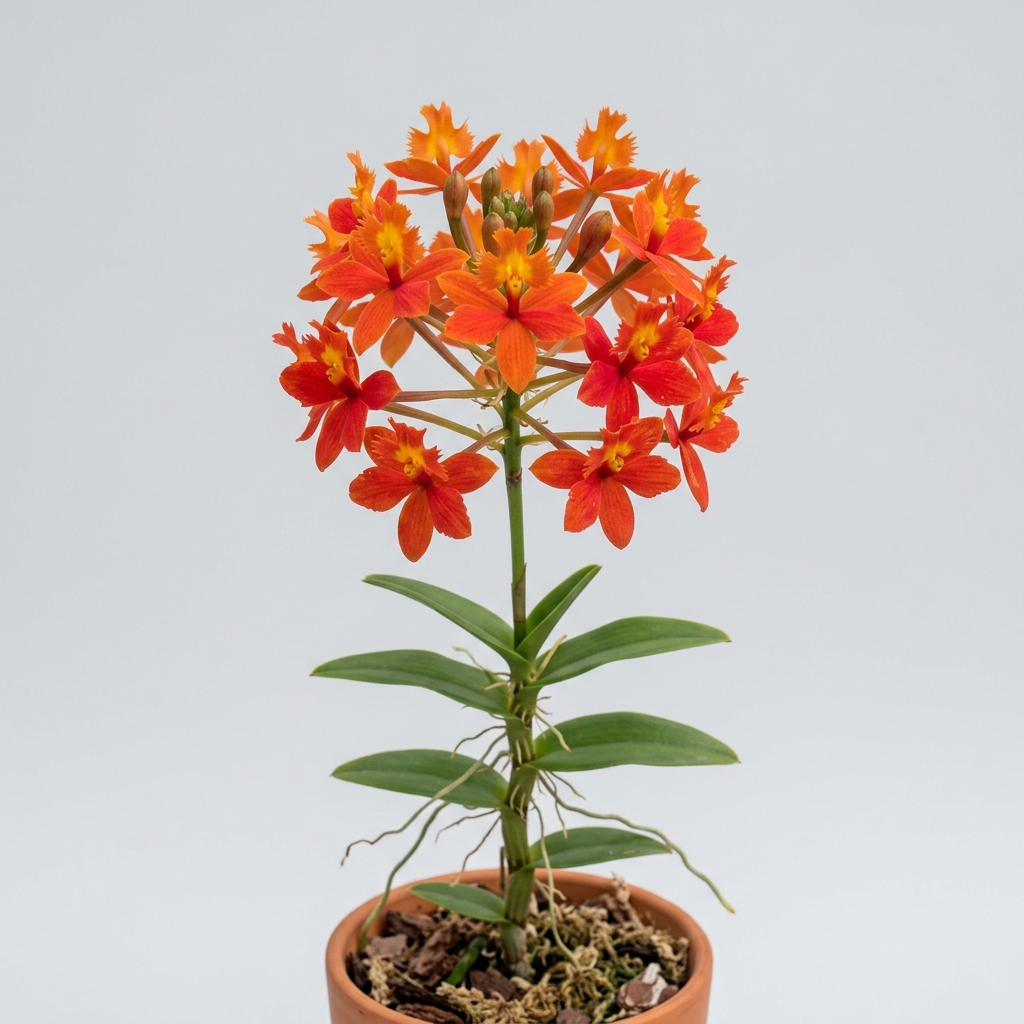
Epidendrum radicans is a vibrant, reed-stem orchid species highly valued by enthusiasts for its brilliant clusters of fiery orange and red blooms. Known commonly as the fire-star orchid or ground-rooting epidendrum, this resilient plant is celebrated for its scrambling growth habit and exceptional adaptability. Unlike many epiphytic orchids, it displays a vigorous terrestrial nature, making it a standout addition to both indoor collections and warm-climate landscapes.
Cultivators appreciate this orchid for its nearly year-round blooming potential and low-maintenance requirements. Its sprawling stems produce numerous aerial roots, allowing it to anchor easily and absorb moisture from the surrounding air. Whether grown in a pot, a hanging basket, or integrated into a tropical garden bed, it offers a reliable display of color and a fascinating botanical form that appeals to beginners and seasoned growers alike.
💡 Did You Know?
Unlike most orchids that grow high up in the canopy of trees, Epidendrum radicans is primarily a terrestrial scrambler. Its species name, radicans, refers to its unique habit of producing roots all along its reed-like stems, allowing it to anchor itself to the ground or crawl over rocks in search of sunlight.
🌿 Botanical Overview
Epidendrum radicans is native to the seasonally dry forest regions of Central America, where it typically grows as a terrestrial or lithophytic plant. It is characterized by its long, reed-like stems that can reach several feet in height. These stems are clad in alternating, leathery green leaves that provide a lush backdrop for the vibrant inflorescences.
A defining botanical feature of this species is the prolific production of adventitious aerial roots along the entire length of its stems. In its natural habitat, these roots help the plant scramble over rocks, soil, and neighboring vegetation. This growth habit allows it to colonize open, sunny areas rapidly, distinguishing it from strictly epiphytic orchid relatives.
🌸 Flower Characteristics
The flowers of Epidendrum radicans are relatively small, usually measuring about one inch in diameter, but they make a dramatic impact due to their crowded, ball-like terminal clusters. Each inflorescence can carry dozens of individual blossoms that open sequentially, extending the overall display for weeks.
The blooms typically feature bright orange or red sepals and petals, contrasted by a prominent, deeply fringed three-lobed lip that is often yellow in the center. This lip is fused to the column, a classic characteristic of the genus Epidendrum. The overall appearance resembles a tiny, fiery star, which explains its popular common names.
Fragrance & Bloom Profile
Unlike some of its highly scented relatives in the orchid family, Epidendrum radicans is generally considered non-fragrant. While some growers occasionally report a very faint, clean scent under warm, humid conditions, a distinct fragrance profile is not consistently documented in common horticultural literature.
The primary appeal of this orchid lies entirely in its visual presentation. The lack of scent is amply compensated for by the sheer longevity of its blooms and the intense, saturated coloration of the petals, which remain vibrant from the moment they open until they finally fade.
Parentage & Hybrid Lineage
Epidendrum radicans is a naturally occurring species rather than a man-made hybrid. Because of its robust growth habit and striking color, it has been widely used in hybridization programs to introduce vigor, reed-stem growth habits, and bright orange-red tones to new Epidendrum cultivars.
In general grower references, the exact lineage of specific cultivated selections of this orchid is often simplified, as many plants sold under this name may represent line-bred color forms or natural variations. It remains a foundational species within the reed-stem group of the genus.
🌱 Growing Conditions
To thrive, this orchid requires bright light conditions. It can tolerate, and often prefers, direct morning sunlight, which helps stimulate robust stem growth and abundant flowering. Indoors, a south- or west-facing window is ideal, or it can be grown under high-intensity LED grow lights.
💡 Care Tip
Provide this orchid with as much bright as possible, including some direct morning sun. If the leaves develop a slight reddish or purple tint, it indicates the plant is receiving optimal for abundant blooming.
Temperature: wise, it prefers intermediate to warm conditions, ideally ranging from 60°F to 85°F during the day, with a slight drop at night. It is relatively tolerant of temperature fluctuations but should be protected from freezing conditions. Moderate humidity levels of 50% to 70% coupled with good air movement will prevent stagnant air issues.
Watering, Feeding & Potting Media
Because of its semi-terrestrial nature, Epidendrum radicans prefers to stay more consistently moist than typical epiphytic orchids. Water the plant thoroughly when the top inch of the media begins to dry, but ensure that the container has excellent drainage to prevent waterlogged roots.
A balanced, water-soluble orchid fertilizer applied at quarter or half strength every two weeks during the active growing season supports its rapid growth. For potting media, a highly porous mix consisting of medium fir bark, perlite, charcoal, and a small amount of peat moss or coco coir works exceptionally well to mimic its natural terrestrial substrate.
Blooming Season & Care Notes
While this orchid can bloom at almost any time of the year, its peak flowering period typically occurs from late winter through summer. Once a flower spike has finished blooming, it should be left intact until it naturally turns brown and dry, as secondary flower clusters can sometimes emerge from the same stem.
Repotting is best done in the spring when new growth and root activity are most vigorous. Due to its scrambling nature, the plant may eventually outgrow its pot or become top-heavy. Providing a small trellis, stake, or heavy clay pot can help stabilize the tall, reed-like stems.
⚠️ Common Issues
⚠️ Common Mistake
Avoid treating this species like a typical epiphytic orchid by letting it dry out completely for long periods. While it requires excellent drainage, its semi-terrestrial nature means it prefers consistent, moderate moisture to prevent stem shriveling.
- Root rot from overwatering or compacted, poorly draining media.
- Leaf spotting or sunburn if transitioned too quickly to intense direct sunlight.
- Bud blast, where developing buds shrivel and drop, often caused by sudden drafts or low humidity.
- Pests such as scale, mealybugs, and aphids, which can hide in the leaf axils or on tender new growth.
- Dehydration, indicated by shriveled stems and dry, brittle aerial roots.
❓ Frequently Asked Questions
How do I encourage my Epidendrum radicans to bloom?
The most common reason for a lack of flowers is insufficient light. Ensure your orchid receives bright, filtered light with some direct morning sun. A slight drop in night temperatures and regular feeding with a balanced fertilizer during the growing season will also stimulate bud production.
What should I do with the aerial roots growing along the stems?
These aerial roots are a natural and healthy feature of the plant’s scrambling growth habit. Do not cut them off, as they help the orchid absorb moisture and nutrients from the air. You can gently mist them during watering or allow them to naturally drape over the sides of the pot.
How do I propagate this orchid using keikis?
This species frequently produces keikis (baby plants) along its mature stems. Once a keiki has developed several roots that are at least two to three inches long, you can carefully snip it off the parent stem using sterile shears and pot it up individually in a fine bark mix.
Can Epidendrum radicans be grown outdoors?
Yes, in frost-free climates (USDA Zones 10 and 11), this orchid can be grown outdoors year-round. It can be planted directly in well-draining garden beds, rock gardens, or kept in large patio containers. Protect it from intense midday summer sun and freezing winter temperatures.
⭐ Final Growing Notes
Epidendrum radicans remains one of the most rewarding and forgiving orchids for growers of all experience levels. Its cheerful, fiery blooms, combined with its vigorous growth and ease of propagation, make it a classic staple in any collection. By providing ample light, consistent moisture, and room to climb, you will be rewarded with a spectacular, near-constant display of vibrant color.
🌱 Propagation Tip
Look for small plantlets, known as keikis, forming along the mature stems. Wait until these offsets have developed several strong roots at least two inches long before gently detaching and potting them in a fresh, well-draining orchid mix.
⭐ Expert Advice
To manage the sprawling, top-heavy growth of mature specimens, plant them in heavy clay pots rather than lightweight plastic. Use sturdy bamboo stakes or a small trellis to support the tall reeds and keep the display tidy.




Leave A Comment