
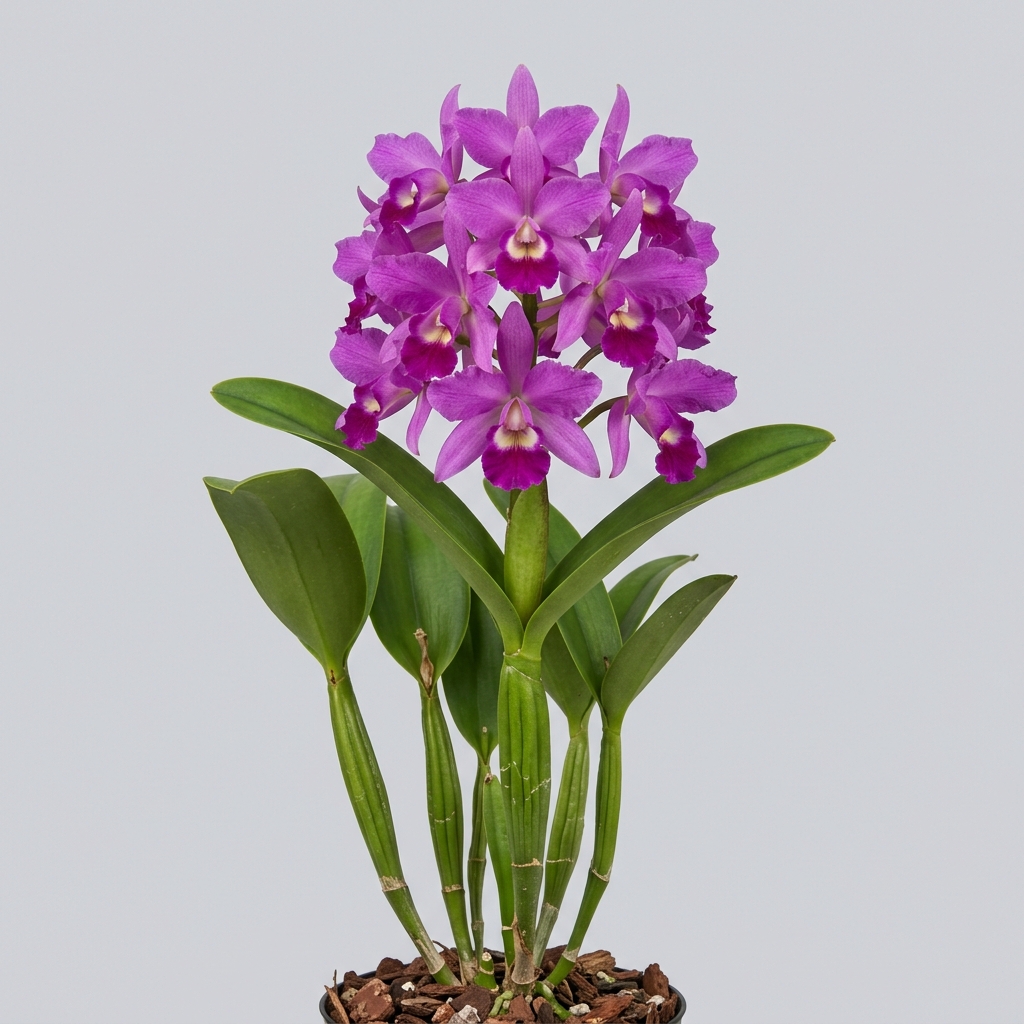
Cattleya bowringiana is a highly esteemed bifoliate orchid species celebrated for its robust growth habit and spectacular autumnal displays. Native to the rocky cliffs and forest canopies of Central America, this resilient orchid produces dense, multi-flowered clusters of vibrant purple to magenta blossoms that stand out in any collection. Its ability to produce dozens of flowers on a single upright inflorescence makes it a favorite among both novice growers and seasoned orchid judges.
Cultivated for over a century, this species is particularly valued for its vigorous nature and tolerance of varied environmental conditions. Unlike some of its more delicate relatives, it adapts readily to home and greenhouse cultivation, rewarding growers with reliable annual blooms. Its upright pseudobulbs and leathery dual leaves provide an attractive architectural presence even when the plant is not in flower.
💡 Did You Know?
Cattleya bowringiana is unique for the distinct, bulbous swelling at the very base of its pseudobulbs. This swollen, onion-like base serves as an efficient water storage organ, helping the orchid survive dry periods in its native Central American habitats where it often clings to exposed rocky cliffs.
🌿 Botanical Overview
Cattleya bowringiana is a lithophytic and epiphytic orchid species native to countries like Belize and Guatemala. It typically grows on damp rocks near watercourses or high in the forest canopy where it receives bright light and excellent air circulation. The species is characterized by its tall, club-shaped pseudobulbs that can reach up to twenty inches in height, each topped with two thick, leathery, oblong leaves.
Taxonomically, this species was moved by some botanists to the genus Guarianthe due to structural differences in the flowers and vegetative habits compared to classic labiate Cattleyas. However, it remains widely known and labeled under its traditional name, Cattleya bowringiana, in horticultural circles and orchid exhibitions worldwide.
🌸 Flower Characteristics
The defining feature of Cattleya bowringiana is its spectacular cluster-blooming habit. A single, strong inflorescence emerging from a double sheath can carry anywhere from ten to over thirty flowers, creating a dense ball of color. Each individual flower typically measures two to three inches in diameter.
The petals and sepals are usually a uniform shade of rose-purple or lavender, though rare color forms such as the blue-toned coerulea or pale albescens exist. The lip, or labellum, is trumpet-shaped with a deeper purple coloration on the anterior lobe and a pale yellow or white throat, often outlined with a darker purple band, directing pollinators toward the column.
Fragrance & Bloom Profile
Unlike many of the large-flowered, highly fragrant unifoliate Cattleya species, Cattleya bowringiana possesses a more subtle fragrance profile. Many growers report a faint, sweet, clover-like scent that is most noticeable on warm, sunny mornings. However, fragrance intensity can vary significantly between individual clones, and some specimens may exhibit no discernible scent at all. The blooms are relatively long-lasting for the genus, typically remaining fresh for three to four weeks if kept in cool, dry conditions.
Parentage & Hybrid Lineage
As a pure species, Cattleya bowringiana does not have hybrid parentage, but it has played a monumental role in orchid hybridization. It is a primary parent of many famous historic hybrids, most notably Cattleya Portia. Its genetic legacy contributes vigor, multi-flowered cluster habits, and strong, upright stems to its offspring. In modern breeding, it continues to be used to introduce cold tolerance and high flower count into complex Cattleya alliances.
🌱 Growing Conditions
To thrive, Cattleya bowringiana requires bright, filtered light. It can tolerate some direct morning sun, but midday light should be diffused to prevent leaf scorch. A light level of 2,500 to 3,500 foot-candles is ideal, which typically manifests as light green leaves; dark green leaves indicate insufficient light.
💡 Care Tip
To prevent fungal issues, always water Cattleya bowringiana early in the morning. This ensures that any water trapped in the new growth sheaths or leaf joints has ample time to evaporate before nightfall when temperatures drop.
Temperature: wise, this orchid prefers intermediate to warm conditions. Daytime temperatures should ideally range between 75F and 85F, with a nighttime drop to 60F or 65F. High humidity of 50% to 80% is beneficial, but it must be accompanied by continuous air movement to prevent fungal pathogens from settling on the foliage.
Watering, Feeding & Potting Media
During its active growth phase in spring and summer, Cattleya bowringiana requires frequent and abundant watering. The potting medium should be allowed to dry out almost completely between waterings to prevent root rot. In winter, after flowering is complete, water should be significantly reduced, providing just enough moisture to keep the pseudobulbs from shriveling.
A coarse, free-draining potting mix is essential. Large-grade fir bark mixed with charcoal and perlite works exceptionally well in clay pots, which help the roots dry quickly. Fertilize weekly with a balanced orchid fertilizer at quarter or half strength during the active growing season, flushing the pot with pure water once a month to remove accumulated salts.
Blooming Season & Care Notes
This species is a classic autumn bloomer, with flower spikes emerging from the newly matured pseudobulbs between September and November. As the flower sheath swells, avoid changing the plant’s orientation to the light source, as this can cause the developing buds to twist and present poorly. Once the flowers open, keeping the plant in a slightly cooler, drier location will extend the lifespan of the blossoms. Repotting should only be performed in the spring when new root tips begin to emerge from the base of the newest pseudobulb.
⚠️ Common Issues
⚠️ Common Mistake
A frequent error is repotting Cattleya bowringiana at the wrong time of year. Repotting when the plant is not actively producing new roots can cause severe shock, leading to root loss and a multi-year delay in blooming.
- Root rot: Caused by overwatering or compacted, decomposing potting media that retains too much moisture.
- Scale insects and mealybugs: These pests often hide in the dry sheaths surrounding the pseudobulbs or under the leaves.
- Leaf scorch: Yellow or black patches on the leaves resulting from sudden exposure to intense, direct sunlight.
- Bud blast: The premature yellowing and dropping of flower buds, often triggered by sudden temperature fluctuations, low humidity, or drafty conditions.
❓ Frequently Asked Questions
How often should I water my Cattleya bowringiana?
Water thoroughly when the potting medium is almost completely dry. During the active summer growth phase, this may be every 3 to 5 days, while in the dormant winter period, it may be reduced to once every 10 to 14 days.
Why is my Cattleya bowringiana not blooming?
The most common reason for a lack of flowers is insufficient light. Ensure your orchid receives bright, indirect light where the leaves maintain a healthy light-green color rather than a deep, dark green.
When is the best time to repot this orchid?
Repot Cattleya bowringiana in the spring when new root growth is just beginning to emerge from the base of the newest pseudobulb. Avoid repotting during the autumn blooming cycle.
Can Cattleya bowringiana be grown under LED lights?
Yes, it can be grown successfully under high-output LED grow lights. Position the plant close enough to the light source to receive adequate intensity, ensuring a 12 to 14-hour photoperiod during the active growing season.
⭐ Final Growing Notes
Cattleya bowringiana remains a cornerstone of any diverse orchid collection due to its spectacular cluster-blooming habit and forgiving nature. By providing bright light, excellent drainage, and a distinct winter rest, growers can enjoy a breathtaking display of autumnal color year after year.
🌱 Propagation Tip
Propagate this orchid by division during spring repotting. Ensure each division has at least three to four healthy, mature pseudobulbs with an active lead eye to guarantee the new plant has enough energy to establish itself.
⭐ Expert Advice
If you struggle with bud presentation, gently stake the inflorescence as it emerges from the sheath. Keep the plant facing the exact same direction relative to your source to ensure the flowers open in a neat, symmetrical cluster.




Leave A Comment