
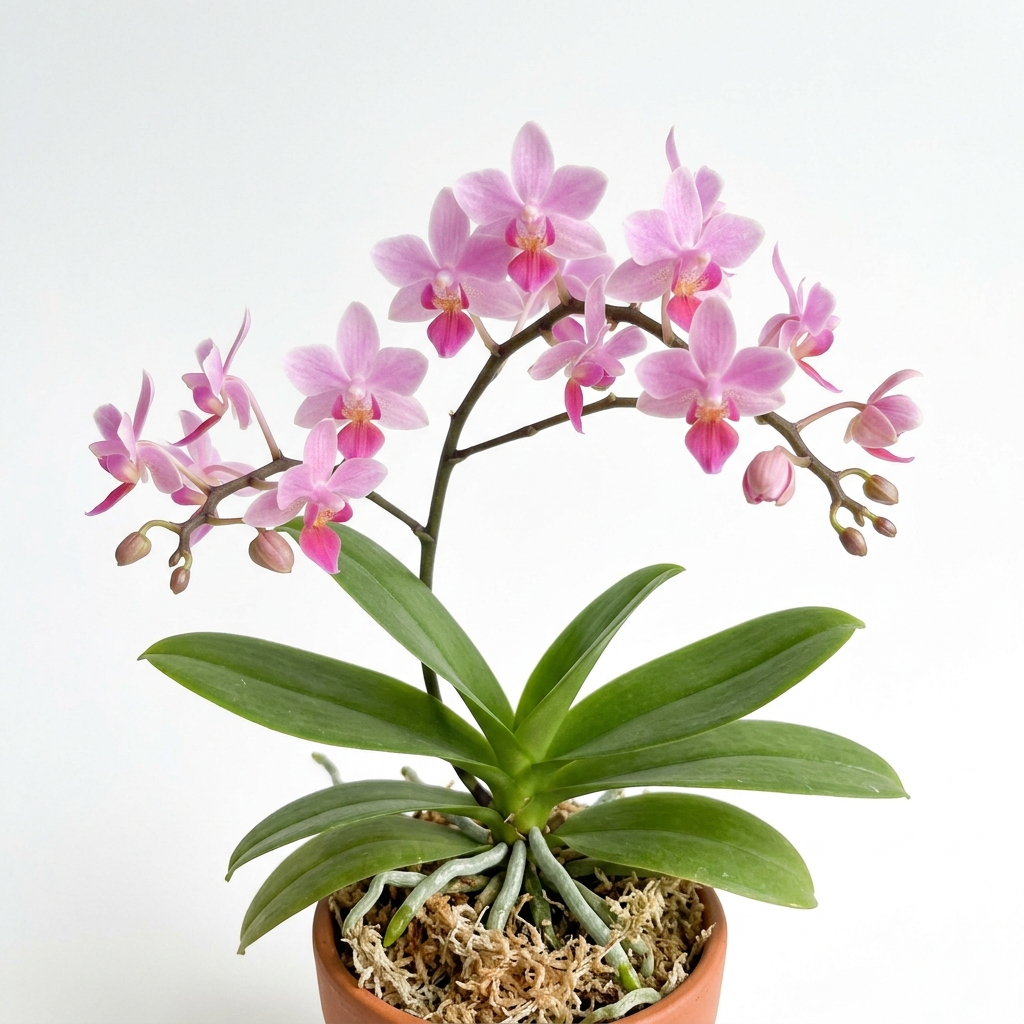
Phalaenopsis equestris is a highly celebrated species orchid native to the Philippines and Taiwan, cherished by collectors for its compact growth habit and exceptionally prolific blooming nature. Unlike many larger hybrid moth orchids, this species produces delicate, multi-flowered spikes that can branch and bloom sequentially over several months. Its charming presence and ease of care make it a staple in both beginner collections and advanced breeding programs.
Growers particularly value Phalaenopsis equestris for its remarkable ability to produce keikis—adventitious baby plants—directly on its flower spikes. This natural propagation habit, combined with its elegant, star-shaped flowers that range in color from soft pink to pure white, ensures a dynamic and rewarding display. Whether grown in a traditional pot or mounted on cork bark, this resilient species brings a touch of wild tropical elegance to any indoor growing space.
💡 Did You Know?
Phalaenopsis equestris is one of the most influential species in modern orchid hybridization. It has been used as a parent in thousands of registered crosses, passing down its desirable traits of compact growth, branching flower spikes, and multi-floral blooming habits to countless popular grocery-store moth orchids seen today.
🌿 Botanical Overview
Phalaenopsis equestris is a monopodial epiphytic orchid native to low-altitude, humid river valleys and tropical forests. In its natural habitat, it clings to tree trunks and branches where it receives dappled sunlight and frequent rainfall. The plant features fleshy, oblong-elliptic leaves that are typically dark green, occasionally displaying a subtle purple tint on the undersides when exposed to higher light levels.
This species is relatively small compared to standard commercial hybrids, making it an excellent choice for growers with limited space. Its root system is highly active, producing numerous silvery-green aerial roots that absorb moisture and nutrients directly from the surrounding air. Because of its epiphytic nature, it adapts beautifully to mounted culture or well-draining, airy potting mixtures.
🌸 Flower Characteristics
The flowers of Phalaenopsis equestris are small but striking, usually measuring between one and one and a half inches in diameter. They are arranged on arching, sometimes branched inflorescences that can carry dozens of blooms simultaneously. The petals and sepals are typically star-shaped, presenting a range of colors from delicate pastel pink to rich lavender-rose, with some rare alba forms exhibiting pure white petals.
A defining feature of the flower is its prominent, three-lobed lip, which often displays a contrasting dark rose, orange, or yellow coloration. The sequential blooming habit means that as older flowers fade, new buds continue to develop at the tip of the spike, extending the overall display for several months.
Fragrance & Bloom Profile
While some growers report a very faint, sweet scent under warm and humid conditions, fragrance is not consistently documented or prominent in Phalaenopsis equestris. The primary appeal of this orchid lies in its visual presentation rather than its aroma. The species is celebrated for its ability to bloom multiple times throughout the year, with the most intense flowering periods typically occurring in the spring and autumn.
Parentage & Hybrid Lineage
Phalaenopsis equestris is a primary species, meaning it is a naturally occurring orchid found in the wild rather than a man-made hybrid. However, its genetic influence on modern orchid breeding is immense. It has been used extensively as a parent plant to introduce compact growth, branching flower spikes, and multi-floral blooming habits to thousands of registered Phalaenopsis hybrids.
🌱 Growing Conditions
To cultivate Phalaenopsis equestris successfully, replicate its warm, humid tropical origin. It thrives in bright, filtered indirect light, such as that provided by an east-facing window or a shaded south-facing window. Direct afternoon sunlight should be avoided, as it can easily scorch the tender leaves.
💡 Care Tip
Position Phalaenopsis equestris in a location with gentle, continuous air movement. Good ventilation prevents water from pooling in the crown of the plant, which is a primary cause of crown rot, while also helping to maintain optimal leaf temperatures under bright, indirect .
Temperature ranges should ideally remain warm, with daytime temperatures between 75°F and 85°F, and nighttime temperatures dropping slightly to between 65°F and 70°F. Maintaining a relative humidity level of 50% to 70% is crucial for healthy leaf development and root growth. Gentle, continuous air movement is also essential to prevent stagnant air pockets around the foliage.
Watering, Feeding & Potting Media
This species prefers to remain evenly moist but never waterlogged. When grown in pots, use a highly porous medium such as fine fir bark mixed with perlite, or high-quality New Zealand sphagnum moss. Water the plant thoroughly when the top inch of the medium feels dry to the touch, or when the aerial roots turn from vibrant green to a silvery-gray color.
Feed Phalaenopsis equestris with a balanced, water-soluble orchid fertilizer diluted to one-quarter strength. Apply the fertilizer every second or third watering during the active growing season, and flush the pot with pure water occasionally to prevent salt buildup. If the orchid is grown mounted on cork bark, it will require daily misting or soaking to keep the roots hydrated.
Blooming Season & Care Notes
Phalaenopsis equestris can produce flower spikes at almost any time of year, though spring and fall remain the peak seasons. Once a flower spike emerges, avoid moving the plant to a different location, as sudden changes in light or temperature can cause the developing buds to drop. After the initial flowers fade, do not cut the green spike back unless it turns brown and dry, as it will often branch to produce more flowers or develop keikis.
⚠️ Common Issues
⚠️ Common Mistake
A frequent error is cutting back the flower spikes as soon as the initial flowers fade. Because Phalaenopsis equestris is a sequential bloomer and a prolific producer of keikis, cutting green, healthy spikes deprives the grower of secondary blooms and natural propagation opportunities.
- Root rot caused by overwatering or compacted potting media that retains too much moisture.
- Bud blast, where developing flower buds yellow and drop before opening, often triggered by drafts or low humidity.
- Spider mites and mealybugs, which can hide in the leaf joints and under the foliage.
- Crown rot resulting from water sitting in the center of the leaf crown overnight.
❓ Frequently Asked Questions
How do I encourage my Phalaenopsis equestris to produce keikis?
Keiki production is largely genetic in this species, but maintaining high humidity, warm temperatures, and consistent moisture encourages their development. Applying a small amount of keiki paste to the nodes of a spent, green flower spike can also stimulate growth.
Should I cut the flower spike after Phalaenopsis equestris finishes blooming?
No, you should leave the flower spike intact as long as it remains green. Phalaenopsis equestris is a sequential bloomer and will often produce new branches, additional flowers, or keikis from the existing spike.
Can Phalaenopsis equestris be grown mounted on wood or cork?
Yes, this species is highly suited to mounted culture due to its epiphytic nature. However, mounted plants dry out very quickly and will require daily watering or misting to maintain adequate root hydration.
Why are the leaves on my Phalaenopsis equestris turning yellow?
Yellowing leaves can indicate several issues, including natural aging of the lowest leaves, overwatering leading to root rot, or excessive direct sunlight. Inspect the roots to determine if they are healthy and firm or mushy and brown.
⭐ Final Growing Notes
Phalaenopsis equestris remains one of the most rewarding species orchids for indoor growers. Its compact size, continuous blooming potential, and fascinating habit of producing baby plants make it a dynamic addition to any collection. By providing warm temperatures, high humidity, and bright, indirect light, you can enjoy the delicate beauty of this tropical treasure for many years to come.
🌱 Propagation Tip
Allow keikis that develop on the flower spikes to grow until they have at least three healthy roots that are two to three inches long. Once they reach this size, carefully snip them from the parent spike with sterile shears and pot them in a fine, moisture-retentive orchid medium.
⭐ Expert Advice
When repotting Phalaenopsis equestris, opt for a slightly smaller pot than expected. This species thrives when its root system is snug, and a smaller pot helps the potting medium dry out at an optimal rate, reducing the risk of root rot.




Leave A Comment