
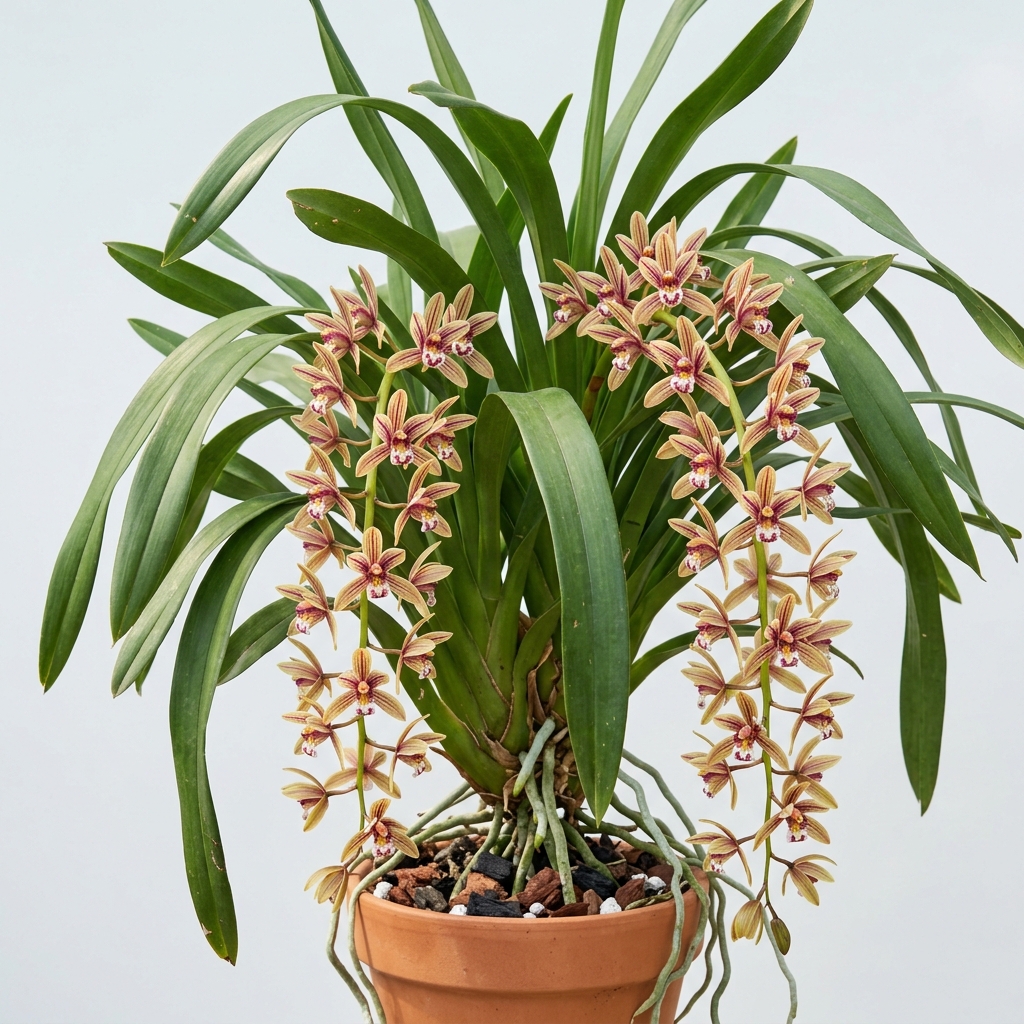
Cymbidium aloifolium, commonly known as the aloe-leafed Cymbidium, is a striking epiphytic orchid species highly valued by collectors for its robust, succulent-like foliage and dramatic cascading flower spikes. Native to the tropical and subtropical regions of East and Southeast Asia, this resilient orchid thrives in environments that would challenge more delicate species. Its long, arching inflorescences carry dozens of beautifully striped flowers, making it a spectacular focal point when in full bloom.
Unlike many of its cool-growing relatives within the Cymbidium genus, this species is exceptionally heat-tolerant, making it a favorite among warm-climate orchid enthusiasts. Its thick, leathery leaves not only provide year-round architectural interest but also serve as a practical moisture reservoir, allowing the plant to withstand brief periods of drought. For growers seeking a low-maintenance orchid with a wild, elegant presentation, this species is an outstanding choice.
💡 Did You Know?
Cymbidium aloifolium is part of the Cymbidium orchid group, a favorite among growers because its flowers, growth habit, and care needs make it useful for comparing cultivated orchids within the same . Observing its leaves, roots, and bloom spikes can help growers understand how this cultivar responds to indoor conditions.
🌿 Botanical Overview
Cymbidium aloifolium is primarily an epiphytic or lithophytic species, meaning it naturally grows on trees or rocky outcroppings rather than in soil. In its native habitats, which stretch from India through southern China and down into Malaysia, it can often be found clinging to the forks of large trees where it receives dappled sunlight and excellent air movement. This natural setting dictates its preference for open, highly aerated growing media in cultivation.
The plant features small, clustered pseudobulbs that are almost entirely enclosed by the overlapping bases of its leaves. These leaves are the source of its specific epithet, aloifolium, which translates to “aloe-leafed.” They are thick, rigid, strap-like, and deeply channeled, growing up to 90 centimeters in length. This succulent-like foliage is highly efficient at storing water, helping the orchid survive seasonal dry spells in its native environment.
🌸 Flower Characteristics
The blossoms of Cymbidium aloifolium are celebrated for their dramatic, cascading presentation. The orchid produces pendulous inflorescences that emerge from the base of the pseudobulbs and can drape downward for up to 75 centimeters. Each spike can carry anywhere from 15 to over 40 individual flowers, creating a dense, curtain-like display of color.
The individual flowers are typically medium-sized, measuring around 4 to 5 centimeters across. The sepals and petals are a pale yellowish-cream or greenish-yellow, highlighted by a bold, dark reddish-brown or purple stripe running down the center of each segment. The lip, or labellum, is three-lobed, recurved, and adorned with intense purple or red markings over a yellow base, serving as a striking visual guide for natural pollinators.
Fragrance & Bloom Profile
While some orchid species are grown primarily for intense perfumes, the fragrance of Cymbidium aloifolium is generally subtle and variable. Many growers report a faint, sweet, or slightly musky scent that is most noticeable during the warmest hours of midday. However, fragrance intensity can vary significantly from one specimen to another, and some clones may be virtually unscented.
The blooms are exceptionally long-lasting, often remaining fresh on the plant for several weeks if kept in cool, stable conditions. The flowering cycle typically begins in mid-spring and can extend well into the summer months, providing a reliable and highly decorative seasonal display.
Parentage & Hybrid Lineage
As a naturally occurring species, Cymbidium aloifolium does not have a man-made hybrid lineage or complex parentage. Instead, it represents a stable wild species that has adapted over millennia to its specific ecological niche. In the wider horticultural world, its exact wild origins are documented across regional botanical surveys rather than commercial hybrid registries.
However, plant breeders have occasionally utilized this species in hybridization programs. Its primary contributions to modern hybrids are its exceptional heat tolerance, robust growth habit, and pendulous flowering spikes. When crossed with cool-growing standard Cymbidiums, it helps introduce warmth-tolerance, allowing growers in tropical and subtropical zones to enjoy Cymbidium-style blooms.
🌱 Growing Conditions
To cultivate Cymbidium aloifolium successfully, providing bright, filtered light is essential. While it enjoys some direct morning sun, hot afternoon sunlight can scorch its thick leaves. A location with bright, indirect light—such as an east-facing window or a shaded greenhouse—is ideal. Healthy foliage should maintain a light, grassy-green color; dark green leaves often indicate insufficient light.
💡 Care Tip
For best results, grow Cymbidium aloifolium in bright filtered with steady and gentle airflow. Avoid placing the plant in harsh midday sun, but do not keep it in a dark corner; weak is one of the most common reasons cultivated orchids refuse to rebloom.
Temperature management is relatively straightforward, as this species is much more heat-tolerant than standard Cymbidium hybrids. It thrives in warm to intermediate temperatures, ideally ranging from 21°C to 30°C during the day, with a slight drop at night. It can tolerate higher summer temperatures provided that humidity levels and air circulation are increased accordingly.
Watering, Feeding & Potting Media
During the active growing season in spring and summer, Cymbidium aloifolium requires regular, thorough watering. The potting medium should be allowed to approach dryness but not dry out completely. In the winter, when growth slows, reduce watering frequency significantly, allowing the medium to dry out more thoroughly between waterings to mimic its natural seasonal rest period.
A balanced, water-soluble orchid fertilizer should be applied weekly at a diluted strength (often referred to as “weakly, weekly”) during the active growing phase. Flush the pot with pure water once a month to prevent harmful mineral salt buildup.
Because of its epiphytic nature, the potting medium must be exceptionally free-draining. A mix consisting of coarse fir bark, charcoal, and perlite works beautifully. Alternatively, because of its pendulous blooming habit, many growers prefer to cultivate this species in slatted wooden baskets or hanging pots, which allow the flower spikes to cascade naturally without obstruction.
Blooming Season & Care Notes
The primary blooming season for Cymbidium aloifolium spans from late spring through early summer. As the flower spikes begin to emerge from the base of the pseudobulbs, it is crucial to avoid staking them upright. Unlike standard Cymbidiums, this species is genetically programmed to cascade, and forcing the spikes upward can ruin the natural elegance of the display.
Repotting should be performed only when necessary, typically every two to three years, immediately after the flowering cycle has completed and new root growth is visible. This species dislikes root disturbance, so choose a pot or basket that allows room for at least two years of future growth to minimize transplant stress.
⚠️ Common Issues
⚠️ Common Mistake
The most common mistake is by calendar instead of root and potting-media condition. Cymbidium roots need moisture and air at the same time, so constantly wet bark or sphagnum can lead to root loss even when the leaves still look healthy.
- Root Rot:
Caused by overwatering or compacted, poorly draining potting media. Always ensure the medium is highly porous. - Leaf Tip Burn: Often a result of low humidity or excessive fertilizer salt accumulation in the potting mix.
- Spider Mites:
These pests thrive in warm, dry conditions. Maintain adequate humidity and wash the foliage periodically to deter them. - Scale and Mealybugs: These insects can hide in the tight crevices at the base of the leaves and pseudobulbs. Treat promptly with horticultural oil or insecticidal soap.
- Bud Blast:
Sudden changes in temperature, drafty conditions, or extreme dehydration can cause developing buds to yellow and drop before opening.
❓ Frequently Asked Questions
How do I encourage my Cymbidium aloifolium to bloom?
To trigger blooming, ensure the plant receives bright, filtered light throughout the year and a slight temperature drop of about 5°C to 8°C between day and night during the autumn and winter months. A brief reduction in watering during the winter rest period also helps stimulate spike production in the spring.
Can Cymbidium aloifolium be grown mounted on wood?
Yes, because of its epiphytic nature, it can be successfully grown mounted on large cork bark slabs or hardwood mounts. However, mounted plants dry out much faster than potted ones, requiring daily watering and high ambient humidity to thrive.
Why are the leaves on my orchid turning yellow?
Yellowing leaves can indicate several issues. If older leaves at the base of mature pseudobulbs turn yellow and drop gradually, it is likely a natural aging process. However, widespread yellowing can indicate overwatering, root rot, or excessive direct sunlight scorching the foliage.
Does Cymbidium aloifolium require a cold winter chill to bloom?
No. Unlike cool-growing Cymbidium hybrids, Cymbidium aloifolium is a warm-to-intermediate species that does not require a prolonged cold period to initiate flower spikes. This makes it highly suitable for indoor growers and tropical climates.
⭐ Final Growing Notes
Cymbidium aloifolium is a rewarding and resilient orchid that brings a touch of wild, tropical elegance to any collection. By mimicking its natural epiphytic habitat with a coarse, free-draining medium, bright indirect light, and excellent air circulation, growers can enjoy its spectacular cascading blooms and architectural foliage for many years. Its heat tolerance and robust nature make it an exceptional choice for both intermediate growers and experienced collectors alike.
🌱 Propagation Tip
Propagation should be approached patiently. Most home growers should wait for natural keikis or divide only mature, healthy plants when the orchid type allows it. Never remove a young growth until it has strong roots and enough leaves to support itself away from the parent plant.
⭐ Expert Advice
Repot after flowering when fresh root tips begin to appear. This timing helps the plant anchor quickly into new bark or sphagnum and reduces stress, especially for orchids grown indoors where airflow, , and drying speed can change from season to season.




Leave A Comment