
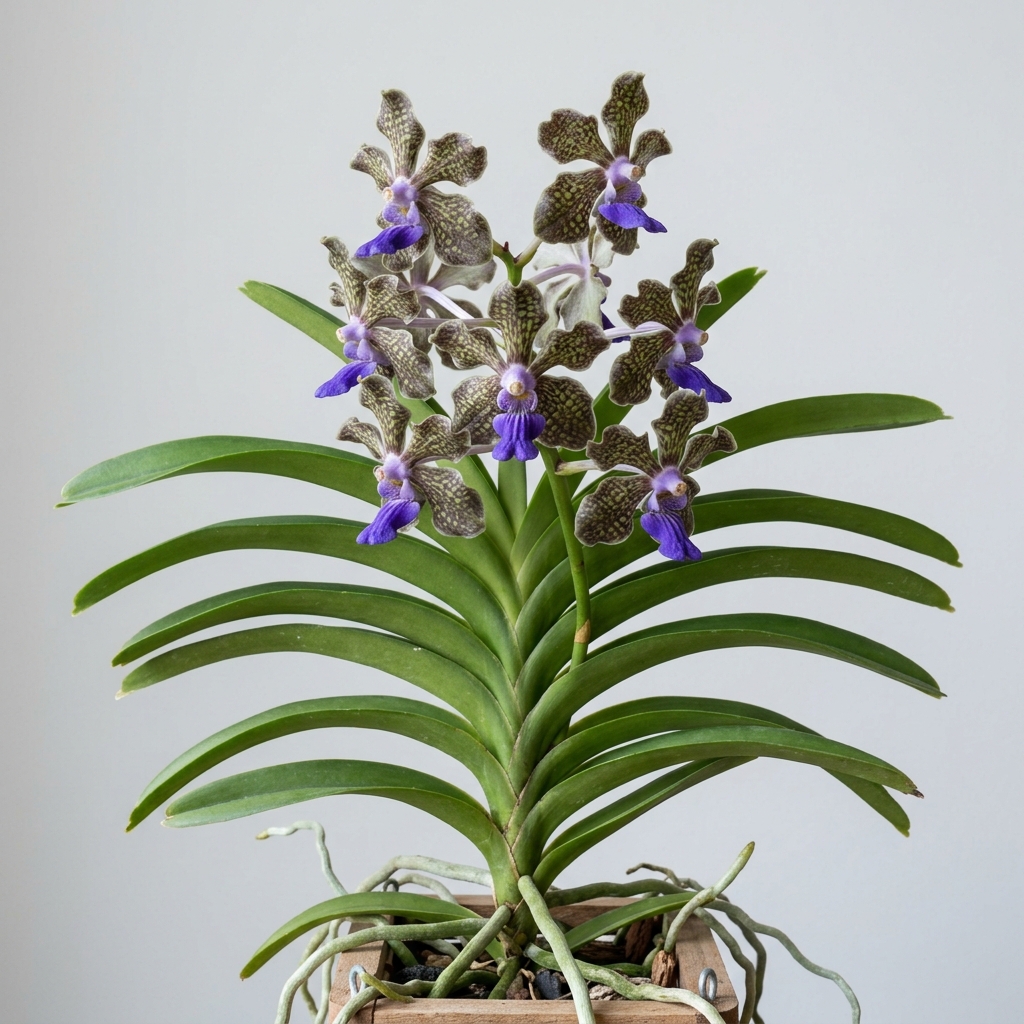
Vanda tessellata, commonly known as the grey orchid or tessellated Vanda, is a highly prized epiphytic orchid species native to the Indian subcontinent and parts of Southeast Asia. Renowned for its striking, intricately patterned flowers and robust growth habit, this species has captured the attention of orchid enthusiasts worldwide. Its unique color palette, featuring tessellated petals and a contrasting vibrant lip, makes it a standout addition to any tropical orchid collection.
Growers value this species not only for its exotic visual appeal but also for its exceptional resilience and vigorous aerial root system. As a monopodial orchid, it grows vertically, producing thick, leathery leaves that fan out symmetrically. When provided with the warm, humid conditions it craves, Vanda tessellata rewards cultivators with long-lasting blooms and a captivating fragrance that fills the growing space.
💡 Did You Know?
Vanda tessellata is one of the few orchid species known to produce flowers with a distinct greyish or bluish-grey hue. This unusual coloration, combined with its intense, spicy , has made it an incredibly valuable parent in orchid hybridization, passing down its unique color genetics and robust growth habits to countless modern Vanda hybrids.
🌿 Botanical Overview
Vanda tessellata is a medium to large-sized monopodial epiphyte. In its native habitats, which include India, Sri Lanka, and Myanmar, it typically grows on the trunks of rough-barked trees in dry deciduous forests. This environment subjects the plant to distinct seasonal shifts, which has contributed to its robust and highly adaptable nature in cultivation.
The plant features a stout stem clothed in strap-shaped, recurved leaves that are deeply channeled. Its extensive aerial root system is designed to cling to host trees while rapidly absorbing moisture and nutrients from the air and passing rainfall. These thick, velamen-covered roots are a crucial component of the plant’s overall health and hydration strategy.
🌸 Flower Characteristics
The inflorescence of Vanda tessellata is an axillary raceme that can carry up to ten or more flowers. Each bloom typically measures between two to three inches in diameter. The sepals and petals are characterized by a distinct wavy margin and a tessellated or checkered pattern of olive-green, greyish-brown, or dull yellow, which contrasts beautifully with the prominent, three-lobed lip.
The lip, or labellum, is the defining feature of the flower, often displaying a striking violet, bluish-purple, or pinkish-purple hue. This intense coloration serves as a visual guide for pollinators in the wild. The flowers are long-lasting, often remaining fresh on the spike for several weeks, providing a prolonged display of exotic beauty.
Fragrance & Bloom Profile
One of the most celebrated attributes of Vanda tessellata is its intense, complex fragrance. The scent is often described as a sophisticated blend of spicy carnation, sweet grape, and subtle musky undertones. This fragrance is typically most pronounced during the warmer hours of the day, filling the greenhouse or growing area with a rich, tropical aroma.
While the primary blooming period occurs during the summer and early autumn months, mature and well-established plants can bloom multiple times throughout the year. The initiation of flower spikes is highly dependent on light intensity and temperature fluctuations, making consistent cultural practices key to achieving multiple bloom cycles.
Parentage & Hybrid Lineage
As a naturally occurring species rather than a man-made hybrid, Vanda tessellata possesses a pure genetic lineage that has made it a cornerstone in Vanda breeding programs. It is highly valued by hybridizers for introducing fragrance, unique tessellated patterns, and cold-tolerance traits to its progeny.
While its exact contribution to modern complex hybrids is extensive, its role as a primary parent is well-documented in classic grexes. In common grower references, its wild variations—such as the rare blue-lipped forms—are highly sought after for specialized breeding, though individual cultivar variations within the species are often selected for their superior flower form and color intensity.
🌱 Growing Conditions
To cultivate Vanda tessellata successfully, growers must replicate its native tropical environment. This orchid requires high light levels, thriving in bright, filtered sunlight. While it can tolerate some direct morning sun, protection from intense midday rays is essential to prevent leaf scorch. High-output LED grow lights can be used successfully for indoor cultivation.
💡 Care Tip
Always water Vanda tessellata in the morning. This ensures that the extensive aerial root system and any water trapped in the leaf axils have ample time to dry completely before nightfall, significantly reducing the risk of crown rot and fungal infections.
Temperature ranges should remain warm to hot, with daytime temperatures ideally between 80°F and 95°F, and a slight drop at night to no lower than 60°F. Strong air movement is absolutely critical for this species; constant, gentle air circulation helps dry the roots quickly after watering and prevents fungal pathogens from settling on the foliage.
Watering, Feeding & Potting Media
Because Vanda tessellata is traditionally grown bare-root in wooden slat baskets or suspended in the air, its watering requirements differ significantly from potted orchids. During the active growing season in spring and summer, the roots should be thoroughly misted or soaked daily—sometimes twice daily during extreme heat. The roots should turn from a silvery-white to a vibrant green, indicating complete hydration.
Feeding should be frequent but dilute. A balanced, water-soluble orchid fertilizer applied at quarter-strength weekly (the weekly weakly method) works exceptionally well. Since there is no potting medium to retain nutrients, the fertilizer must be applied directly to the wet roots. During the cooler winter months, watering and feeding should be scaled back to match the plant’s slowed metabolism.
Blooming Season & Care Notes
The main blooming season spans from mid-summer to late autumn, triggered by the long, warm days of the growing season. When a flower spike emerges from the leaf axils, care should be taken not to change the plant’s orientation to the light source, as this can cause the developing buds to twist or fail to open properly.
Once the blooms have faded, the spike should be cut back close to the stem using sterilized shears. Repotting or basket maintenance is best performed in the spring when new root tips are actively emerging. If the plant has outgrown its basket, the entire basket can simply be placed inside a larger one, minimizing disturbance to the sensitive aerial roots.
⚠️ Common Issues
⚠️ Common Mistake
The most common mistake when growing Vanda tessellata is potting it in standard, fine-grade orchid mix. This species has highly specialized aerial roots that require rapid wet-dry cycles and constant exposure to fresh air; suffocating them in dense media will quickly lead to root rot and plant decline.
- Root Rot: Occurs if roots remain constantly wet without adequate airflow or if grown in dense, decomposing media.
- Dehydration: Indicated by shriveled, leathery leaves and dry, brittle roots; usually caused by insufficient watering frequency.
- Bud Blast: The sudden dropping or yellowing of buds before opening, often triggered by rapid changes in temperature, low humidity, or drafts.
- Leaf Spotting: Fungal or bacterial spots can develop on the foliage if water sits on the leaves overnight without sufficient air movement.
- Pests: Thrips, scale, and spider mites can occasionally target the tender flower buds and leaf crevices; treat promptly with insecticidal soap or neem oil.
❓ Frequently Asked Questions
How often should I water Vanda tessellata?
Under bare-root conditions, Vanda tessellata should be watered daily during the warm spring and summer months. In hot weather, a second daily misting may be required. In winter, reduce watering to every two to three days, ensuring the roots dry completely between applications.
Can Vanda tessellata be grown indoors?
Yes, but it requires high-intensity lighting, such as a south-facing window with sheer curtains or high-output LED grow lights. Maintaining the necessary 70% humidity and strong air circulation indoors can be challenging, so using a humidifier and a small fan is highly recommended.
Why are the leaf tips of my Vanda turning yellow?
Yellowing leaf tips can indicate several issues, including over-fertilization, mineral buildup from hard water, or sunburn from excessive direct light. Review your feeding schedule, flush the roots with pure rainwater or distilled water, and ensure the plant is protected from intense midday sun.
What is the best potting medium for this orchid?
Vanda tessellata performs best when grown without any traditional potting medium. Cultivating it bare-root in a wooden teak basket or hung from a wire hanger allows the roots to receive the maximum airflow they require. If media must be used, opt for extremely large chunks of charcoal or fir bark.
⭐ Final Growing Notes
Cultivating Vanda tessellata is a rewarding endeavor for any orchid enthusiast willing to meet its demands for high light, abundant water, and exceptional airflow. By mimicking its wild tropical habitat, growers are rewarded with a spectacular display of intricately patterned, highly fragrant blooms that exemplify the exotic allure of the Vanda genus.
🌱 Propagation Tip
While Vanda tessellata is typically grown from seed in laboratory settings, home growers can propagate it via keikis (offshoots). Wait until the keiki has developed at least three robust roots of its own, each at least two to three inches long, before carefully detaching it from the parent plant.
⭐ Expert Advice
To encourage reliable blooming, ensure your Vanda tessellata experiences a distinct drop of about 10 to 15 degrees Fahrenheit between day and night. This natural diurnal variation, combined with maximum safe exposure, is the primary trigger for flower spike initiation.




Leave A Comment