
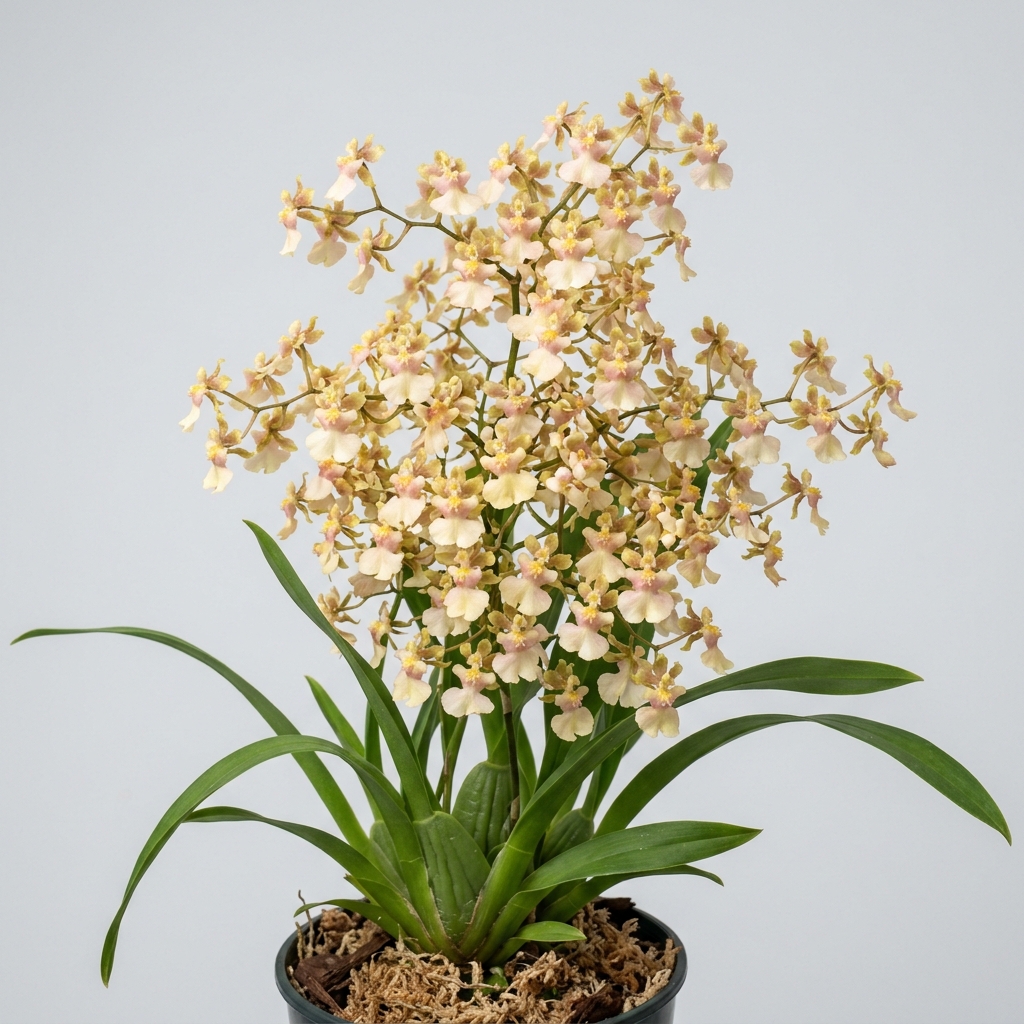
Oncidium Twinkle is a highly celebrated miniature hybrid orchid renowned for its profuse, delicate blooms and delightful fragrance. This compact sympodial orchid produces branching flower spikes crowded with dozens of tiny, jewel-like blossoms, making it a favorite choice for indoor growers with limited space.
Highly valued for its vigorous growth habit and ease of culture, this cultivar adapts exceptionally well to typical household environments. Its ability to produce multiple spikes simultaneously from a single pseudobulb ensures a spectacular floral display that can last for several weeks.
💡 Did You Know?
The delightful of Oncidium Twinkle is highly -dependent. The sweet, vanilla-like aroma is typically strongest in the morning hours when the plant is exposed to bright, indirect sunlight, which stimulates the release of its volatile scent compounds.
🌿 Botanical Overview
Oncidium Twinkle shows a classic sympodial growth pattern, characterized by tightly clustered, flattened pseudobulbs. Each pseudobulb is topped with one or two narrow, strap-like green leaves that arch gracefully. The compact stature of the plant makes it an ideal candidate for windowsill culture, as mature specimens rarely exceed a few inches in height, excluding the inflorescences.
The root system of this cultivar is notably fine and thread-like, requiring a potting medium that balances moisture retention with excellent drainage. New pseudobulbs emerge from the base of older ones, rapidly maturing during the active growing season to support the upcoming bloom cycle.
🌸 Flower Characteristics
The flowers of Oncidium Twinkle are miniature marvels, typically measuring less than an inch in diameter. They are borne on highly branched, arching spikes that can carry anywhere from twenty to over a hundred individual blossoms. The petals and sepals are relatively uniform in size, framing a prominent, flared lip or labellum that characterizes the Oncidium genus. Color variations are common among different clones, ranging from pristine white and soft cream to vibrant shades of pink, yellow, and deep brick red.
Fragrance & Bloom Profile
One of the most compelling attributes of Oncidium Twinkle is its intense, sweet fragrance, which is often described as reminiscent of vanilla, baking chocolate, or fresh honey. The scent is typically most pronounced during the morning hours when exposed to bright light and warmth. A single mature plant with multiple blooming spikes can easily fill an entire room with its rich, dessert-like aroma. The individual flowers are long-lasting, often remaining fresh for four to six weeks under optimal conditions.
Parentage & Hybrid Lineage
In horticultural literature, Oncidium Twinkle is widely recognized as a primary hybrid resulting from the cross between Oncidium cheirophorum and Oncidium sotoanum (historically referred to in older registration records as Oncidium ornithorhynchum). This cross successfully combined the compact, yellow-flowered nature of the former with the floriferous, fragrant, and pink-toned characteristics of the latter. While some variation exists among individual seedlings, modern micropropagation has stabilized several highly desirable clones that are widely distributed in the nursery trade.
🌱 Growing Conditions
To thrive, Oncidium Twinkle requires bright, filtered light, similar to the conditions preferred by many Cattleya or Miltoniopsis orchids. An east- or shaded south-facing window is ideal, providing sufficient light to encourage blooming without scorching the thin foliage. Ideal temperatures range from 60 to 80 degrees Fahrenheit during the day, with a slight drop at night to stimulate bud initiation. Maintaining moderate humidity levels between 50% and 70% is highly beneficial, along with gentle, continuous air movement to prevent fungal pathogens.
💡 Care Tip
Place your orchid in an east-facing window where it can receive gentle morning sun. If the leaves turn a very dark green, the plant is not getting enough to bloom; a healthy -green hue is the ideal target.
Watering, Feeding & Potting Media
Because of its fine root system, Oncidium Twinkle is sensitive to both extreme dehydration and prolonged waterlogging. The potting medium should be kept evenly moist but never soggy. A fine-grade fir bark mix blended with perlite or a high-quality New Zealand sphagnum moss works exceptionally well. During the active growing season, apply a balanced orchid fertilizer diluted to quarter-strength with every second or third watering. Flush the pot thoroughly with pure water periodically to prevent harmful salt buildup.
Blooming Season & Care Notes
The primary blooming season for Oncidium Twinkle occurs from late autumn through winter, though healthy plants may occasionally produce a secondary flush of flowers in the spring. Once the flower spikes begin to emerge from the base of the newest pseudobulbs, avoid moving the plant to a location with drastically different light or temperature, as this can cause bud drop. After the blossoms fade, the spent spikes should be cut back to the base of the pseudobulb using sterilized cutting tools. Repotting is best performed in spring, just as new root growth begins to emerge from the base of the developing pseudobulbs.
⚠️ Common Issues
⚠️ Common Mistake
Avoid overpotting this miniature orchid in a container that is too large. Excess potting medium retains too much moisture around the fine root system, which quickly leads to root rot and the decline of the plant.
- Shriveled pseudobulbs: Often indicates underwatering or root loss due to overwatering and later rot.
- Accordion-style leaf pleating: A classic sign of inconsistent watering or low humidity during the development of new leaves.
- Bud blast: Premature dropping of buds, usually caused by sudden temperature fluctuations, drafts, or low humidity.
- Spider mites and scale: Common pests that target the thin foliage, particularly in dry indoor environments.
- Leaf spotting: Fungal or bacterial spots can develop if water is allowed to sit on the leaves in stagnant air.
❓ Frequently Asked Questions
How often should I water my Oncidium Twinkle?
Watering frequency depends on your home environment, potting medium, and pot type. Generally, water when the top inch of the medium feels dry to the touch. For plants in fine bark, this may be every five to seven days, while those in sphagnum moss may require less frequent watering. Always assess the weight of the pot and the moisture level of the medium before watering.
Why are the leaves on my orchid wrinkling like an accordion?
Accordion-like pleating of new leaves is a physiological response to moisture stress. It occurs when the plant does not receive consistent moisture or when the ambient humidity is too low while the new leaf is actively growing. Once the leaf is pleated, it will not straighten out, but maintaining consistent watering and humidity will ensure future leaves grow normally.
Can Oncidium Twinkle be grown under artificial LED lights?
Yes, this cultivar adapts beautifully to artificial lighting systems. Broad-spectrum LED grow lights positioned approximately twelve to eighteen inches above the foliage can provide the necessary light intensity for robust growth and reliable blooming. Monitor the leaves; a light green color indicates optimal light, while dark green suggests insufficient light and reddish-purple spotting indicates maximum light tolerance.
When is the best time to repot Oncidium Twinkle?
The ideal time to repot is during the spring, immediately after the winter flowering cycle has finished and new green growths are beginning to emerge from the base of the pseudobulbs. Repotting at this stage allows the rapidly developing new roots to establish themselves quickly in the fresh medium, minimizing transplant shock.
⭐ Final Growing Notes
Oncidium Twinkle remains one of the most rewarding miniature orchids available to contemporary hobbyists. Its manageable size, delightful fragrance, and generous blooming habit make it an exemplary choice for both novice growers and seasoned collectors looking to maximize their growing space. By providing consistent moisture, bright indirect light, and adequate air circulation, you can enjoy its spectacular, sweet-scented floral displays year after year.
🌱 Propagation Tip
This sympodial orchid is best propagated by division during repotting. Ensure that each division contains at least three to four healthy, mature pseudobulbs with an active growth point to guarantee successful establishment.
⭐ Expert Advice
To prevent accordion-like leaf pleating on new growths, maintain a stable level of around sixty percent and never let the potting medium dry out completely while new leaves are actively expanding.




Leave A Comment