
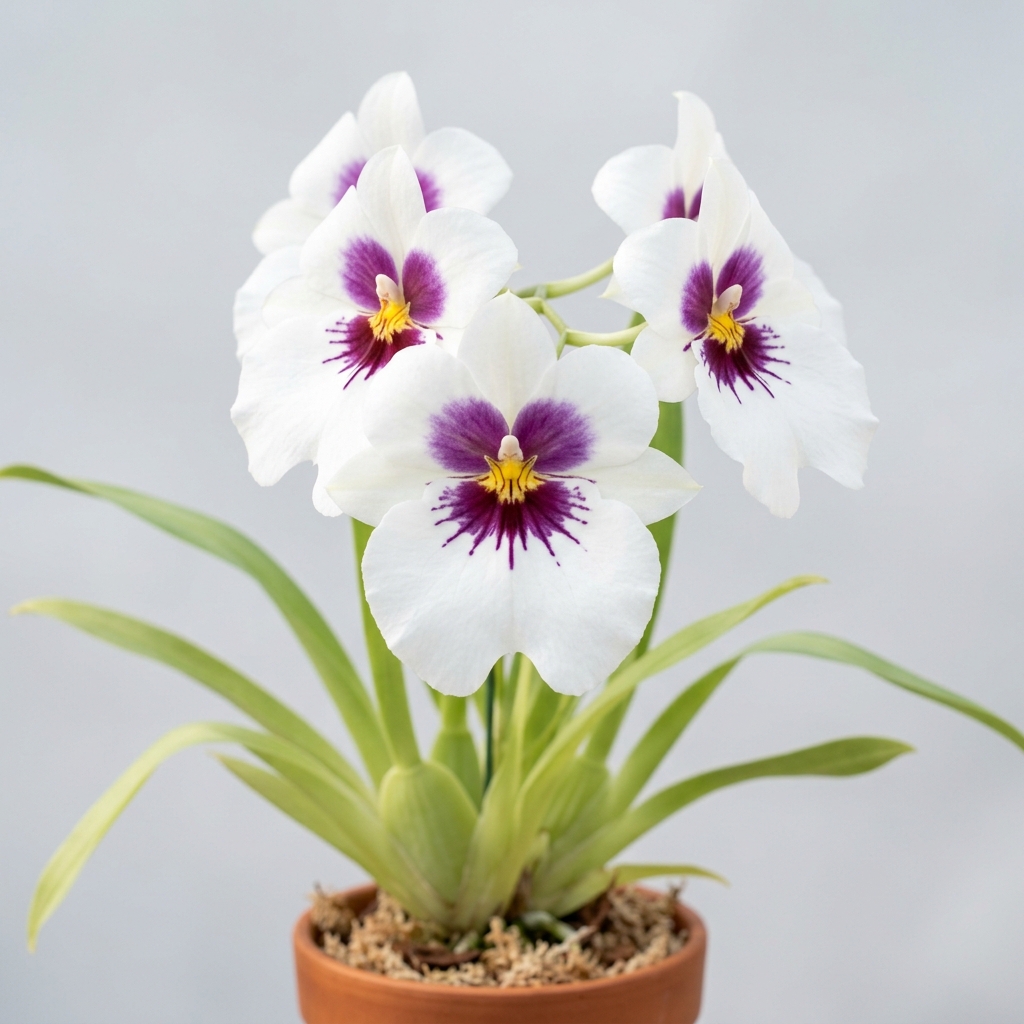
Miltoniopsis Herralexandre is a highly desirable pansy orchid cultivar, celebrated for its striking, flat-faced blooms that mimic the charm of garden pansies. This orchid is favored by indoor growers and greenhouse enthusiasts alike for its elegant presentation, vibrant contrasting patterns, and classic cool-climate orchid beauty.
Like many members of its genus, this cultivar features delicate, light-green pseudobulbs wrapped in fan-like foliage. Its growth habit is compact yet robust, making it an excellent choice for windowsill culture or dedicated orchid shelving where humidity and temperature can be carefully managed to replicate its native cloud forest environment.
💡 Did You Know?
Miltoniopsis Herralexandre belongs to the Miltoniopsis orchid group, where flower presentation is often just as important as . White-flowered cultivars are especially valued indoors because their pale blooms reflect well and pair easily with many home, greenhouse, and display settings.
🌿 Botanical Overview
Miltoniopsis Herralexandre is a sympodial epiphytic orchid that shows the classic growth characteristics of the pansy orchid group. It produces tightly clustered, flattened pseudobulbs of a pale, grayish-green hue. Each pseudobulb is topped by a single, thin, strap-like leaf, while several accessory leaves wrap the base of the bulb in a fan-like arrangement.
The root system of this cultivar is exceptionally fine and fibrous, lacking the thick, fleshy velamen layer found in more drought-tolerant genera like Phalaenopsis. This delicate root structure dictates much of the plant’s care requirements, as it is highly sensitive to both prolonged dryness and stagnant, oxygen-deprived moisture.
🌸 Flower Characteristics
The defining feature of this cultivar is its magnificent, flat-faced flowers. The blooms typically present a pristine white or soft cream base on the sepals and petals. This clean background is dramatically contrasted by a complex, radiating mask at the center of the broad, fan-shaped lip, often featuring rich tones of deep purple, crimson, and golden yellow.
The flowers are borne on arching inflorescences that emerge from the axils of the basal leaves of newly matured pseudobulbs. Each spike can carry multiple blooms, which open nearly simultaneously to create a dense, eye-catching display that lasts for several weeks under optimal conditions.
Fragrance & Bloom Profile
In addition to its visual appeal, Miltoniopsis Herralexandre is highly valued for its delightful fragrance. The blooms emit a sweet, rose-like scent that is typically most intense during the morning hours as temperatures rise and light levels increase. This fragrance can easily fill a small room or grow space with a fresh, floral perfume.
The blooming cycle generally occurs twice a year, with the primary flush in the spring and a secondary, often lighter bloom period in the autumn. Individual flowers can remain pristine for four to six weeks, provided they are kept cool and protected from water spotting.
Parentage & Hybrid Lineage
The exact registration details, hybridizer, and complete parentage of Miltoniopsis Herralexandre are not consistently documented in common grower references. However, it clearly inherits the genetic traits of cool-growing species native to the high-altitude cloud forests of the Andes in Colombia and Ecuador.
Growers should treat this cultivar as a classic Andean Miltoniopsis hybrid. Its lineage dictates a strong preference for stable, cool temperatures, high atmospheric humidity, and constant, gentle air movement, reflecting the misty mountain ridges of its ancestral origins.
🌱 Growing Conditions
To cultivate this orchid successfully, growers must replicate its native cloud forest environment. It thrives in bright, filtered light, similar to the dappled shade of a forest canopy. Direct sunlight must be avoided, as the thin, delicate leaves burn easily, turning yellow or developing dry, brown patches.
💡 Care Tip
For best results, grow Miltoniopsis Herralexandre in bright filtered with steady and gentle airflow. Avoid placing the plant in harsh midday sun, but do not keep it in a dark corner; weak is one of the most common reasons cultivated orchids refuse to rebloom.
Temperature management is crucial. Ideal daytime temperatures range between 70°F and 75°F, with a distinct drop at night to around 55°F to 60°F. High humidity of 60% to 70% is essential to support the thin foliage, and must be accompanied by continuous, gentle air circulation to prevent fungal pathogens from settling on the damp leaves.
Watering, Feeding & Potting Media
Watering is perhaps the most critical aspect of caring for Miltoniopsis Herralexandre. Because of its fine root system and lack of large water-storing pseudobulbs, the potting medium should remain evenly moist at all times. Water the plant thoroughly just as the medium approaches dryness, but never allow the pot to sit in standing water.
A potting mix composed of fine-grade fir bark blended with chopped sphagnum moss and perlite provides the ideal balance of moisture retention and drainage. Feed the orchid weekly with a highly diluted, balanced orchid fertilizer, flushing the pot with pure water once a month to prevent harmful mineral salt buildup.
Blooming Season & Care Notes
While spring is the peak blooming season, proper care can encourage a second flush of flowers in the autumn. Once the flowers fade, cut the spent spike back to the base of the pseudobulb using sterilized shears. This directs the plant’s energy toward producing new vegetative growth, which will support future blooms.
Repotting should be performed annually or biennially, ideally in the spring just as new root growth begins to emerge from the base of the developing pseudobulbs. Avoid repotting while the plant is in spike or flower, as the stress can cause the buds to blast or the open flowers to wilt prematurely.
⚠️ Common Issues
⚠️ Common Mistake
The most common mistake is by calendar instead of root and potting-media condition. Miltoniopsis roots need moisture and air at the same time, so constantly wet bark or sphagnum can lead to root loss even when the leaves still look healthy.
- Accordion-Folded Leaves: New leaves that grow in a crimped, accordion-like pattern indicate a lack of sufficient moisture, usually caused by low humidity or inconsistent watering.
- Root Rot: Mushy, brown roots are a sign of over-watering or a degraded potting medium that has lost its structure and oxygen capacity.
- Leaf Spotting: Small black or brown spots on the foliage often result from water droplets sitting on the leaves in stagnant air, leading to fungal or bacterial infections.
- Bud Blast: Unopened flower buds turning yellow and dropping off are typically caused by sudden environmental shocks, such as rapid temperature swings, drafts, or low humidity.
❓ Frequently Asked Questions
Why are the leaves on my orchid folding like an accordion?
Accordion folding is a classic sign of water stress. It occurs when the plant does not receive enough moisture during the active growth phase of new leaves, either due to low atmospheric humidity or letting the potting medium dry out too much between waterings.
How much light does this cultivar need to bloom?
This orchid requires bright, indirect light. A east-facing window or a shaded south-facing window is ideal. If the leaves turn a dark, dull green, the light is too low; if they turn yellow or reddish-bronze, the light is too intense.
Can I grow this orchid in a standard coarse bark mix?
Standard coarse bark is generally too dry for this cultivar. Because of its fine, delicate roots, it prefers a fine-grade bark mix blended with moisture-retaining materials like sphagnum moss and perlite to ensure even, consistent moisture.
What causes the flower buds to drop before opening?
Bud blast is usually triggered by sudden environmental changes. Common culprits include dry indoor air, cold drafts, sudden temperature spikes, or allowing the root zone to dry out completely while the flower spikes are developing.
⭐ Final Growing Notes
Miltoniopsis Herralexandre is a rewarding orchid that brings the unmatched elegance of pansy-like blooms and sweet fragrance into the home. While it requires a more attentive watering schedule and careful temperature management than some hardier orchid genera, the spectacular visual display of its contrasting, masked flowers makes it an absolute triumph for any dedicated grower.
🌱 Propagation Tip
Propagation should be approached patiently. Most home growers should wait for natural keikis or divide only mature, healthy plants when the orchid type allows it. Never remove a young growth until it has strong roots and enough leaves to support itself away from the parent plant.
⭐ Expert Advice
Repot after flowering when fresh root tips begin to appear. This timing helps the plant anchor quickly into new bark or sphagnum and reduces stress, especially for orchids grown indoors where airflow, , and drying speed can change from season to season.




Leave A Comment