
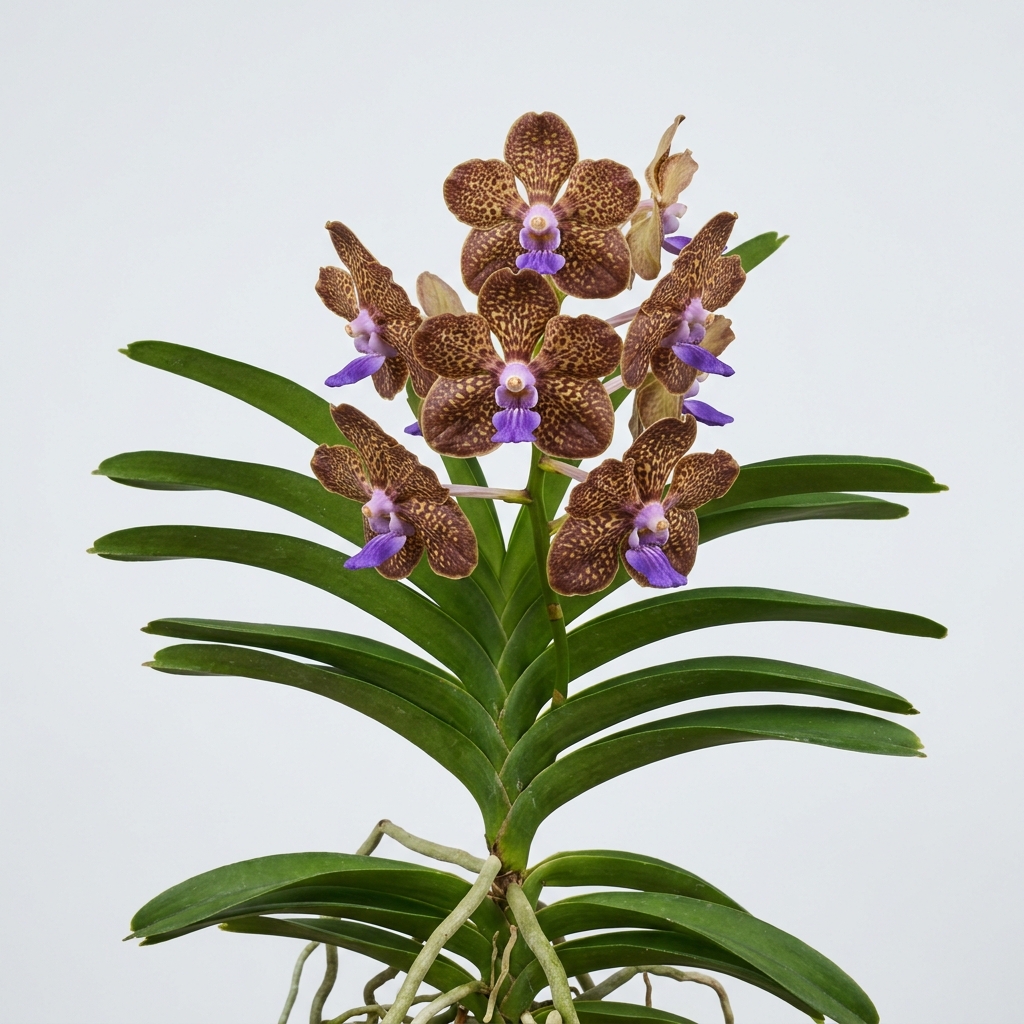
Vanda Mimi Palmer is a highly celebrated hybrid orchid renowned for its striking visual presentation and exceptionally powerful fragrance. This cultivar represents a classic achievement in Vandaceous breeding, combining a robust growth habit with unique floral aesthetics that capture the attention of both novice and experienced orchid enthusiasts. Its popularity in tropical and subtropical collections stems from its reliable blooming nature and its distinctively colored, patterned blossoms.
As a monopodial orchid, Vanda Mimi Palmer grows upward from a single stem, producing thick, leathery leaves in a v-shaped arrangement and a prolific system of thick aerial roots. Growers value this cultivar not only for its ease of cultivation under proper light and humidity but also for its ability to perfume an entire greenhouse or growing space. Understanding its specific cultural requirements is key to unlocking its full blooming potential and maintaining its vigorous vegetative growth.
💡 Did You Know?
Vanda Mimi Palmer is part of the Vanda orchid group, a favorite among growers because its flowers, growth habit, and care needs make it useful for comparing cultivated orchids within the same . Observing its leaves, roots, and bloom spikes can help growers understand how this cultivar responds to indoor conditions.
🌿 Botanical Overview
Vanda Mimi Palmer shows the classic vegetative morphology of the Vandaceae tribe. It is a monopodial epiphyte, meaning it grows continuously upward along a single vertical axis. Over time, the plant can reach impressive heights, supported by a sturdy stem clad in closely spaced, strap-like leaves that are deeply channeled and arranged in two opposing vertical rows.
The root system of this cultivar is particularly robust, producing thick, silvery-grey aerial roots covered in a specialized layer of spongy cells known as velamen. This velamen layer acts like a sponge, rapidly absorbing moisture and dissolved nutrients from the surrounding air and rain. Because of this specialized root structure, the plant is highly sensitive to stagnant moisture and requires constant, rapid drying cycles to thrive.
🌸 Flower Characteristics
The blossoms of Vanda Mimi Palmer are highly distinctive and immediately recognizable. The sepals and petals feature a prominent tessellated or checkered pattern of rich chocolate brown, bronze, or purplish-brown over a lighter greenish-yellow background. This intricate patterning creates a dramatic visual texture that contrasts beautifully with the rest of the flower.
Adding to this dramatic display is the prominent lip, or labellum, which typically showcases a vibrant shade of violet, purple, or bluish-purple. The flowers are moderately sized and are borne on upright or slightly arching axillary inflorescences that emerge from the leaf joints. A single healthy spike can carry numerous flowers, presenting a dense and eye-catching cluster that remains attractive for several weeks.
Fragrance & Bloom Profile
One of the primary reasons growers seek out Vanda Mimi Palmer is its extraordinary fragrance. The flowers emit a powerful, sweet, and spicy scent that is often compared to a blend of jasmine, musk, and warm spices. This fragrance is typically most intense during the morning hours, filling the surrounding growing area with a rich, pleasant perfume.
The blooms are remarkably long-lasting, often maintaining their color, structure, and scent for four to six weeks under optimal environmental conditions. Because this cultivar does not have a strict, singular blooming season, well-grown specimens can produce flower spikes multiple times throughout the year, particularly during the warmer months of spring, summer, and early autumn.
Parentage & Hybrid Lineage
Vanda Mimi Palmer is widely recognized in horticultural literature as a hybrid of Vanda Tan Chay Yan and Vanda tessellata. This specific pairing successfully combined the large flower size and robust growth of the former with the intricate tessellation and intense fragrance of the latter. Vanda tessellata, a species native to the Indian subcontinent, is famous for passing on its highly aromatic qualities to its progeny.
While the hybrid registration and history are well-documented in major orchid registries, individual specimens can still show slight variations in color intensity and pattern density. This variation is typical of hybrid populations, making each clone or seedling unique in its exact balance of brown tessellation and purple lip coloration.
🌱 Growing Conditions
To cultivate Vanda Mimi Palmer successfully, growers must mimic its native tropical canopy environment. It requires bright, filtered light to thrive. While it can tolerate some direct morning sun, harsh midday sunlight can scorch the foliage. A light green leaf color generally indicates the plant is receiving the correct amount of light; dark green leaves suggest insufficient light, while yellowing or bleached leaves indicate excess exposure.
💡 Care Tip
For best results, grow Vanda Mimi Palmer in bright filtered with steady and gentle airflow. Avoid placing the plant in harsh midday sun, but do not keep it in a dark corner; weak is one of the most common reasons cultivated orchids refuse to rebloom.
Temperature: wise, this orchid prefers warm to intermediate conditions. Ideal daytime temperatures range between 75°F and 85°F (24°C to 29°C), with a slight drop at night to no lower than 60°F to 65°F (15°C to 18°C). High relative humidity, ideally between 70% and 80%, is crucial for supporting the exposed aerial root system. Excellent air movement is equally vital to prevent stagnant moisture from settling on the foliage and roots.
Watering, Feeding & Potting Media
Watering is perhaps the most critical aspect of caring for Vanda Mimi Palmer. Because it is typically grown bare-root in wooden slat baskets or mounted on cork, it has no potting media to retain moisture. During the warm growing season, the roots should be thoroughly soaked daily—or even twice daily in hot, dry weather—until they turn completely green. In cooler winter months, watering frequency can be reduced, but the roots should never be allowed to shrivel or remain dry for extended periods.
Feeding should be frequent but light. A balanced, water-soluble orchid fertilizer applied weekly at a quarter or half strength is highly effective. It is best to water the plant thoroughly with pure water first to hydrate the roots before applying the fertilizer solution, which helps prevent root burn. Periodic flushing with clean water is also recommended to wash away any accumulated mineral salts.
Blooming Season & Care Notes
While Vanda Mimi Palmer can bloom at various times throughout the year, its primary flowering periods typically align with the warmer months. To encourage reliable reblooming, ensure the plant receives consistent light and temperature levels. Once a flower spike begins to emerge from the leaf axil, avoid changing the plant’s orientation to the light source, as this can cause the developing buds to twist or grow unevenly.
After the flowers have completely faded, the old spike should be cut back close to the main stem using a sterile cutting tool. Repotting or basket maintenance is rarely needed for bare-root plants, but if the wooden basket begins to decay, the entire basket can simply be placed inside a larger one, allowing the roots to grow undisturbed through the slats.
⚠️ Common Issues
⚠️ Common Mistake
The most common mistake is by calendar instead of root and potting-media condition. Vanda roots need moisture and air at the same time, so constantly wet bark or sphagnum can lead to root loss even when the leaves still look healthy.
- Root Rot:
Occurs rapidly if the orchid is planted in dense, moisture-retaining potting soil or bark that suffocates the aerial roots. - Dehydration:
Indicated by shriveled, silvery roots and limp, wrinkled leaves, usually caused by insufficient watering frequency in dry environments. - Leaf Spotting: Fungal or bacterial spots can develop on the foliage if water is allowed to sit in the leaf axils overnight or if air circulation is poor.
- Bud Blast:
The sudden yellowing and dropping of unopened flower buds, often triggered by abrupt changes in temperature, low humidity, or drafty conditions. - Pests:
Thrips, scale, and mealybugs can occasionally target the tender flower buds and leaf crevices; treat promptly with horticultural soap or neem oil.
❓ Frequently Asked Questions
How often should I water my Vanda Mimi Palmer?
When grown bare-root in a basket, Vanda Mimi Palmer should be watered daily during the warm spring and summer months. In extremely hot or dry conditions, twice-daily watering may be necessary. Ensure the roots turn completely green during watering, which indicates they have absorbed sufficient moisture.
Why are the leaves on my orchid turning yellow?
Yellowing leaves can indicate a few different issues. If the yellowing is uniform and accompanied by a bleached appearance, the plant may be receiving too much direct sunlight. If the lower leaves are yellowing and dropping one by one, it may be a natural aging process, but widespread yellowing can also signal root rot from poor drainage.
Can I grow Vanda Mimi Palmer indoors?
Yes, but it requires careful management. You must provide exceptionally bright light, such as from a south-facing window or high-output LED grow lights. Additionally, maintaining the necessary 70% to 80% humidity and ensuring adequate air circulation can be challenging in standard home environments, often requiring a humidifier and a small fan.
What is the best potting mix for this cultivar?
Vanda Mimi Palmer does not tolerate traditional potting mixes like dense bark or peat moss. It is best grown completely bare-root in a wooden slat basket or mounted on a cork slab. This allows the thick aerial roots to receive the constant airflow and rapid drying cycles they require to remain healthy.
⭐ Final Growing Notes
Vanda Mimi Palmer remains a crown jewel of the orchid world, offering a sensory experience that few other cultivars can match. By respecting its need for abundant light, high humidity, frequent watering, and unrestricted airflow around its roots, growers can enjoy its spectacular, chocolate-patterned blooms and intoxicating fragrance for many years. While it demands more active attention than some terrestrial or semi-terrestrial orchids, the reward of a fully blooming, highly fragrant specimen is well worth the effort.
🌱 Propagation Tip
Propagation should be approached patiently. Most home growers should wait for natural keikis or divide only mature, healthy plants when the orchid type allows it. Never remove a young growth until it has strong roots and enough leaves to support itself away from the parent plant.
⭐ Expert Advice
Repot after flowering when fresh root tips begin to appear. This timing helps the plant anchor quickly into new bark or sphagnum and reduces stress, especially for orchids grown indoors where airflow, , and drying speed can change from season to season.




Leave A Comment