
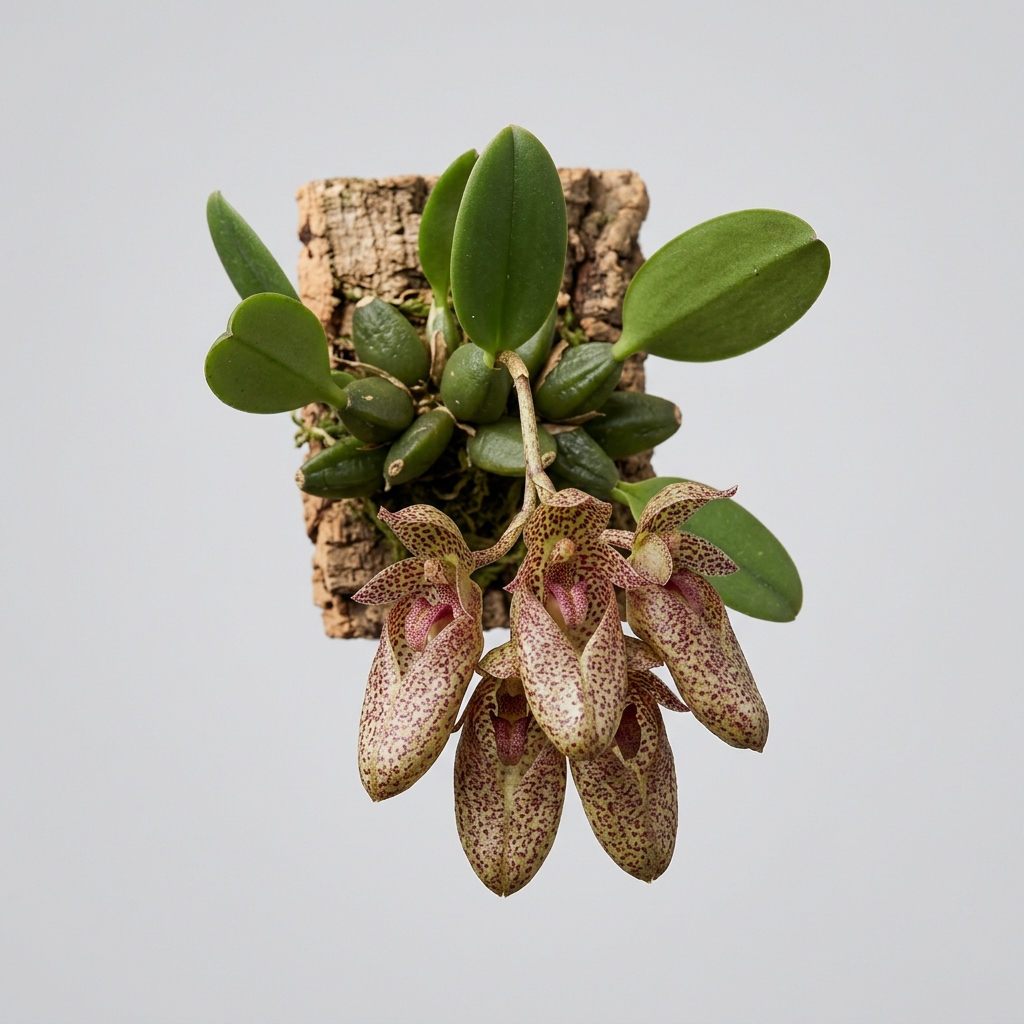
Bulbophyllum frostii, commonly known among orchid enthusiasts as the clog orchid, is a fascinating miniature species celebrated for its highly unusual, shoe-shaped flowers. Belonging to the vast and diverse genus Bulbophyllum, this epiphytic orchid is native to the warm, humid forests of Southeast Asia, particularly Vietnam. Growers highly prize this plant for its compact growth habit and its ability to produce clusters of whimsical, intricately patterned blooms that never fail to spark conversation in any collection.
As a miniature orchid, Bulbophyllum frostii features small, rounded pseudobulbs topped with a single, thick, leathery leaf. Its creeping growth habit makes it an useful selection for mounting on cork bark or growing in shallow baskets where it can freely spread. For indoor and greenhouse growers alike, this species offers a rewarding cultivation experience, combining relatively straightforward care requirements with a truly spectacular and eccentric floral display.
💡 Did You Know?
The common name clog orchid comes from the unique fusion of the lateral sepals, which form a hollow pouch resembling a traditional Dutch wooden shoe. This structural adaptation is designed to trap and guide specific insect pollinators toward the column, ensuring successful pollination in its native forest habitats.
🌿 Botanical Overview
Bulbophyllum frostii is characterized by its compact, sympodial growth habit. The plant produces small, clustered, ovoid pseudobulbs that are slightly flattened and dark green. Each pseudobulb supports a single, fleshy, elliptic leaf that is exceptionally rigid and durable, helping the plant conserve moisture in its natural canopy habitat.
The creeping rhizome allows the plant to quickly colonize its growing surface, forming a dense mat of foliage over time. In the wild, this species grows as an epiphyte on moss-covered tree trunks and branches, where it benefits from constant air movement and frequent rainfall. Understanding this natural habitat is key to successfully replicating its preferred conditions in a home or greenhouse environment.
🌸 Flower Characteristics
The flowers of Bulbophyllum frostii are the primary draw for collectors. They are produced in short, pendant inflorescences that emerge from the base of the pseudobulbs, typically carrying two to five flowers clustered closely together. The unique structure of the lateral sepals, which are fused along their lower edges, creates a hollow, pouch-like shape that strongly resembles a miniature wooden shoe or clog.
The base color of the blooms ranges from a pale olive green to a creamy yellow, heavily overlaid with dense, dark maroon or reddish-purple spots and flushes. The dorsal sepal and petals are much smaller, forming a hood over the column. A hallmark of this species is its tiny, hinged, tongue-like lip (labellum) that moves freely with the slightest breeze, an evolutionary adaptation designed to attract and guide specific insect pollinators.
Fragrance & Bloom Profile
The fragrance of Bulbophyllum frostii is a subject of much discussion among growers. While many species within the Bulbophyllum genus are notorious for producing strong, unpleasant odors to attract carrion flies, the scent of Bulbophyllum frostii is generally reported to be mild or faint. Some growers describe it as having a slightly musty, earthy, or mildly sweet aroma, while others find it virtually odorless unless smelled up close.
The blooms typically last for two to three weeks, depending on environmental conditions. To maximize the lifespan of the flowers, it is best to avoid spraying them directly with water and to maintain stable, moderate temperatures during the blooming cycle.
Parentage & Hybrid Lineage
Bulbophyllum frostii is a naturally occurring species rather than a man-made hybrid. In botanical nomenclature, it is recognized as a distinct species within the section Sestochilos of the genus Bulbophyllum. Because of its unique floral morphology and compact growth habit, it has occasionally been used in hybridizing programs to introduce the “clog” shape and spotting patterns to new Bulbophyllum grexes.
While some registered hybrids exist, their exact parentage and performance are not always consistently documented in common hobbyist references. Growers interested in hybrid lineage should consult official orchid registries, though the pure species remains highly sought after in its own right.
🌱 Growing Conditions
To cultivate Bulbophyllum frostii successfully, growers should aim to replicate a warm, humid forest canopy. This orchid thrives in intermediate to warm temperatures, ideally ranging from 70°F to 85°F during the day, with a slight drop of 10°F to 15°F at night. It can tolerate cooler temperatures down to 60°F for short periods, but prolonged cold should be avoided.
💡 Care Tip
To keep your Bulbophyllum frostii thriving, maintain a constant gentle breeze around the plant using a small fan. High combined with stagnant air is a recipe for fungal infections, but active air movement keeps the foliage dry and healthy.
Light levels should be kept in the medium range, providing bright, filtered light without direct afternoon sun, which can easily scorch the thick leaves. High humidity is crucial for this species, ideally maintained between 60% and 80%. Strong, continuous air movement is essential to prevent stagnant air pockets, which can lead to fungal infections in high-humidity environments.
Watering, Feeding & Potting Media
Because Bulbophyllum frostii lacks large water-storing pseudobulbs, it has a low tolerance for drying out completely. The potting medium should be kept consistently moist but never soggy or waterlogged. Mounted specimens will require daily watering or misting in warm weather, while plants grown in pots or shallow baskets will need watering every few days.
High-quality New Zealand sphagnum moss is an excellent medium for retaining moisture, either used alone or mixed with fine-grade fir bark and perlite. During the active growing season, apply a balanced, highly diluted orchid fertilizer weekly or bi-weekly. Flush the medium thoroughly with pure water once a month to prevent harmful mineral salt buildup.
Blooming Season & Care Notes
The primary blooming season for Bulbophyllum frostii typically occurs in the spring and early summer, though well-established plants in optimal conditions may occasionally bloom at other times of the year. Flower spikes emerge from the base of mature, fully formed pseudobulbs.
During the blooming period, avoid disturbing the plant or repotting, as environmental stress can cause the buds to blast. Repotting or remounting is best done in the spring, just as new root growth begins to emerge from the base of the newest pseudobulbs. This allows the plant to establish itself quickly in its new medium with minimal setback.
⚠️ Common Issues
⚠️ Common Mistake
The most common mistake is letting the potting medium dry out completely. Unlike some orchids with large pseudobulbs, Bulbophyllum frostii has limited water storage and will quickly suffer from dehydration, leading to leaf drop and stunted growth.
- Root Rot:
Caused by compacted, poorly draining media or overwatering, leading to soft, black roots and declining pseudobulbs. - Leaf Spotting: Fungal or bacterial spots can develop if water sits on the leaves overnight or if air circulation is inadequate.
- Bud Blast:
Sudden changes in temperature, low humidity, or drafty conditions can cause developing buds to yellow and drop. - Dehydration:
Shriveled pseudobulbs and wrinkled leaves indicate the plant is not receiving enough water or the humidity is too low. - Pests:
Mealybugs and spider mites can occasionally hide in the crevices of the pseudobulbs and under the leaves; treat promptly with insecticidal soap or neem oil.
❓ Frequently Asked Questions
How do I know if my Bulbophyllum frostii needs more water?
If the plant is dehydrated, the pseudobulbs will begin to shrivel and lose their plump, rounded appearance, and the leaves may become slightly wrinkled or less rigid. Healthy plants should have firm, smooth pseudobulbs and stiff leaves. Increase watering frequency or humidity if you notice these signs of moisture stress.
Can I grow Bulbophyllum frostii under LED grow lights?
Yes, this species adapts very well to indoor cultivation under LED grow lights. Position the plant in a zone that receives moderate light intensity, ensuring it is not too close to the fixtures to prevent heat stress or leaf scorch. Aim for a photoperiod of 12 to 14 hours daily.
Is Bulbophyllum frostii suitable for a terrarium or vivarium?
Absolutely. Due to its miniature size, creeping growth habit, and love for high humidity, this orchid is an excellent candidate for tropical terrariums or vivariums. Ensure the setup includes small fans to maintain adequate air circulation, which is vital to prevent rot in enclosed spaces.
Why are the flower buds on my orchid turning yellow and falling off?
This issue, known as bud blast, is typically caused by sudden environmental stress. Common culprits include a sharp drop in humidity, exposure to cold drafts, or allowing the potting medium to dry out completely while the flower spikes are developing. Maintain stable conditions to protect the buds.
⭐ Final Growing Notes
Bulbophyllum frostii is a captivating addition to any orchid collection, offering a delightful combination of bizarre floral aesthetics and manageable care. By providing consistent moisture, high humidity, and excellent air movement, growers can enjoy the unique spectacle of its clog-shaped blooms year after year. Whether mounted on cork bark or nestled in a moss-filled basket, this miniature marvel continues to be a favorite among those who appreciate the wonderfully weird side of the orchid family.
🌱 Propagation Tip
This orchid is best propagated by division during spring repotting. Ensure each division has at least three to four healthy pseudobulbs with active root growth, and keep the newly divided plants in slightly higher until they establish.
⭐ Expert Advice
For the best floral display, mount this species on a slab of cork bark with a small pad of high-quality sphagnum moss. Mounting allows the creeping rhizomes to spread naturally and prevents the roots from suffocating, mimicking its natural epiphytic habitat.




Leave A Comment