
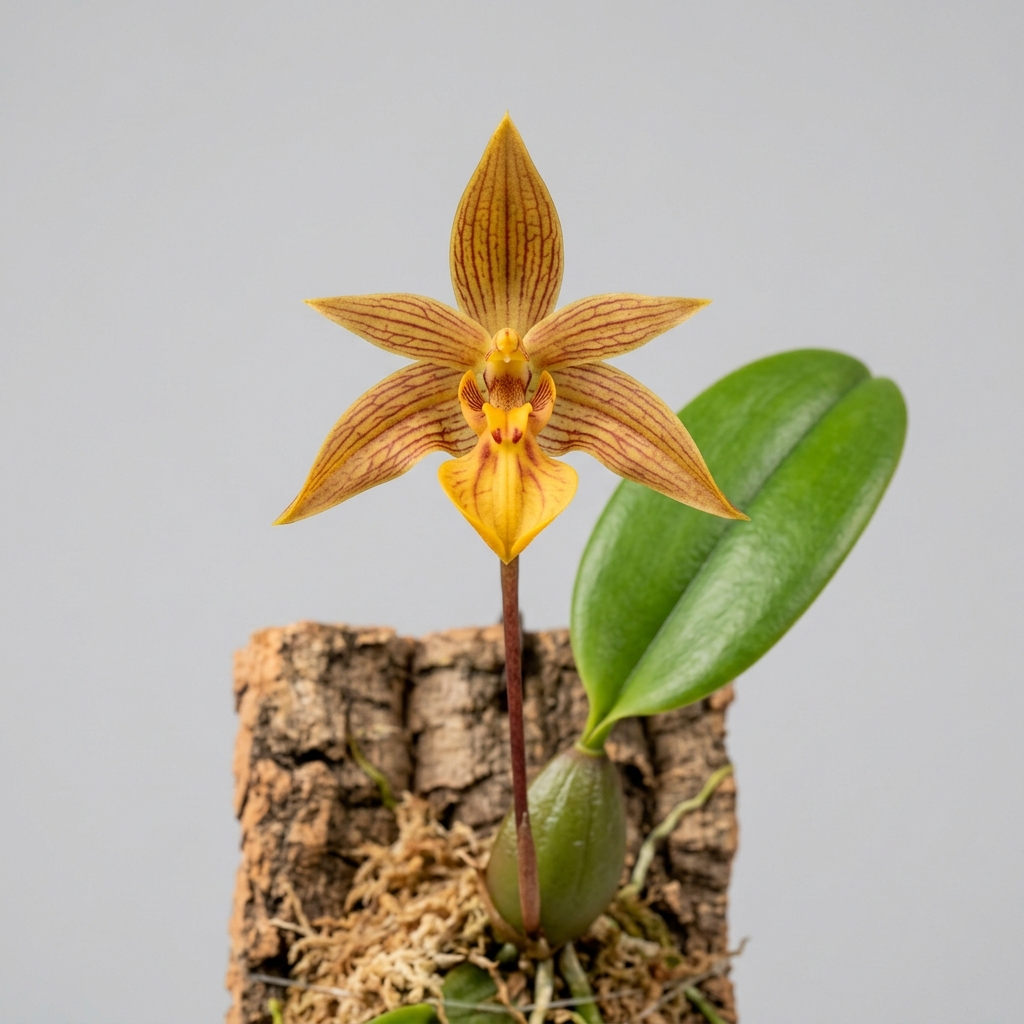
Bulbophyllum lobbii is a highly celebrated species within the vast Bulbophyllum genus, cherished by orchid enthusiasts for its striking, solitary flowers and intriguing growth habit. Native to the lush rainforests of Southeast Asia, this epiphytic orchid produces prominent, egg-shaped pseudobulbs along a creeping rhizome, each topped with a single leathery leaf. Collectors are particularly drawn to its unique floral mechanics and reliable blooming nature.
This species is widely recognized for its relatively large bloom size compared to the overall plant, making it a showstopper in any collection. It thrives in warm-to-intermediate conditions and is highly valued for its fascinating hinged labellum, which wiggles with the slightest movement of air. For growers seeking an exotic, dynamic addition to their greenhouse or indoor setup, this orchid offers an unparalleled botanical display.
💡 Did You Know?
The hinged lip of Bulbophyllum lobbii is an evolutionary adaptation designed for pollination. When a heavy insect lands on the lip, it tips backward, forcing the insect against the column to ensure the transfer of pollen. This motion-sensitive mechanism is highly responsive to even the gentlest breeze.
🌿 Botanical Overview
Bulbophyllum lobbii is native to a broad range across Southeast Asia, including Indonesia, Malaysia, Thailand, and the Philippines. In its natural habitat, it grows as an epiphyte on moss-covered tree trunks and branches in warm, humid rainforests. This environment provides the plant with constant air movement, high humidity, and dappled sunlight, which growers should aim to replicate in cultivation.
The growth habit of this species is characterized by a creeping rhizome that spreads relatively quickly. The pseudobulbs are spaced apart along the rhizome, meaning the plant can rapidly outgrow standard pots. Each pseudobulb produces a single, upright, thick leaf that is durable and capable of handling moderate light levels. Healthy pseudobulbs should remain plump and firm, serving as water storage organs during drier periods.
🌸 Flower Characteristics
The flowers of Bulbophyllum lobbii are produced individually on upright spikes that emerge from the base of the pseudobulbs. Each bloom is remarkably large, often reaching up to four inches in diameter. The sepals and petals are typically a warm yellow, buff, or ochre color, decorated with delicate, longitudinal lines of reddish-brown or purple dots that draw the eye toward the center of the flower.
The most distinctive feature of the flower is its hinged lip, or labellum. This structure is delicately balanced on a tiny joint, allowing it to swing freely back and forth. In the wild, this movement is triggered by wind or visiting insects, serving as a clever evolutionary mechanism to aid in pollination. The overall presentation of the flower is bold and architectural, standing proud of the foliage.
Fragrance & Bloom Profile
The fragrance of Bulbophyllum lobbii is generally described as pleasant, ranging from a mild, sweet floral scent to a slightly musky or fruity aroma. Unlike some members of the Bulbophyllum genus, which are notorious for producing unpleasant odors to attract carrion flies, this species is highly agreeable to grow indoors or in shared living spaces.
Individual blooms typically last between one and two weeks, depending on environmental conditions such as temperature and humidity. While the flowers are not as long-lived as those of some other orchid genera, a mature, well-grown specimen can produce multiple spikes in succession, extending the overall display over several weeks during the peak blooming season.
Parentage & Hybrid Lineage
As a naturally occurring species, Bulbophyllum lobbii does not have a hybrid parentage. It was originally collected and described in the 19th century, named in honor of the prolific plant collector Thomas Lobb. Because of its desirable traits, including large flower size and attractive coloration, it has been used extensively as a parent in orchid hybridization.
In hybrid lineage, it is a primary parent of several popular registered crosses, such as Bulbophyllum Elizabeth Ann. When crossed with other species, it frequently passes down its robust growth habit, large flower size, and the characteristic hinged lip. In common grower references, wild-collected variants and selected cultivars may exhibit slight differences in flower size and color intensity.
🌱 Growing Conditions
To cultivate Bulbophyllum lobbii successfully, growers should provide warm to intermediate temperatures. Daytime temperatures between 75°F and 85°F are ideal, with a slight drop at night to around 60°F to 65°F. High humidity is essential, ideally maintained between 60% and 80% to mimic its native rainforest canopy.
💡 Care Tip
Provide strong, continuous air circulation around your Bulbophyllum lobbii, especially when grown in high- environments. Good airflow prevents fungal leaf spotting and keeps the roots healthy.
Light should be bright but filtered. Direct afternoon sun can easily scorch the leaves, while too little light will result in dark green foliage and a lack of flowers. A location with strong, filtered light—similar to what is recommended for cattleyas—works well. Continuous, gentle air movement is critical to prevent stagnant air pockets, which can lead to fungal infections.
Watering, Feeding & Potting Media
This orchid prefers to remain consistently moist throughout the active growing season. Because it lacks the massive pseudobulbs of some other genera, it has less water-storage capacity and does not tolerate prolonged dry spells. Water thoroughly as soon as the potting medium begins to feel slightly dry to the touch.
A highly open, moisture-retentive medium is ideal. High-quality New Zealand sphagnum moss or a mix of fine fir bark and perlite works exceptionally well. Due to its creeping rhizome, many growers prefer to cultivate this species on cork mounts or in shallow, wide baskets where the plant can spread naturally. Feed weekly with a highly diluted, balanced orchid fertilizer during the spring and summer.
Blooming Season & Care Notes
Bulbophyllum lobbii typically initiates its blooming cycle in the late spring and throughout the summer months. Flower buds emerge from the base of the most recently matured pseudobulbs. During this time, it is important to maintain stable environmental conditions, as sudden drops in humidity or extreme temperature fluctuations can cause the developing buds to blast.
Repotting should only be performed when absolutely necessary, such as when the potting medium begins to break down or the plant has completely outgrown its container. The best time to repot or remount is in the early spring, just as new root growth is emerging from the base of the newest pseudobulbs. Minimize root disturbance as much as possible during this process.
⚠️ Common Issues
⚠️ Common Mistake
Allowing the potting medium to dry out completely is a common mistake. Unlike some orchids with large pseudobulbs, Bulbophyllum lobbii prefers consistent moisture and will quickly show stress through shriveled foliage.
- Root Rot:
Caused by compacted, poorly draining media or overwatering in stagnant air conditions. - Pseudobulb Shriveling: A sign of dehydration, which can occur from underwatering or because the roots have rotted and can no longer absorb moisture.
- Leaf Spotting: Fungal or bacterial spots can develop if water sits on the leaves overnight or if air circulation is inadequate.
- Bud Blast:
Developing flower buds may dry up and drop if the humidity levels drop suddenly or if the plant is moved to a new environment. - Pests:
Mealybugs and scale insects can occasionally hide under the dry sheaths of the pseudobulbs or on the undersides of the leaves.
❓ Frequently Asked Questions
Why does the lip of my Bulbophyllum lobbii move?
The hinged lip is a natural evolutionary adaptation designed to assist with pollination. When a pollinator lands on the lip, its weight causes the structure to tip backward, gently pressing the insect against the column where the pollen is located.
Can I grow Bulbophyllum lobbii on a mount?
Yes, mounting this species on a cork slab or tree fern plaque is highly recommended. Its creeping rhizome habit allows it to spread beautifully across a flat surface, though mounted plants will require more frequent watering and high humidity to thrive.
How do I prevent the pseudobulbs from shriveling?
Ensure the plant receives consistent moisture and high humidity. If the pseudobulbs continue to shrivel despite regular watering, check the root system; damaged or rotted roots cannot absorb water, leading to dehydration.
Does Bulbophyllum lobbii require a winter rest?
This species does not require a severe dry winter rest, but watering should be slightly reduced during the cooler winter months when plant growth naturally slows down. Maintain high humidity and bright light throughout the year.
⭐ Final Growing Notes
Bulbophyllum lobbii remains one of the most rewarding and accessible species within its genus for both intermediate and advanced orchid growers. By providing consistent moisture, high humidity, and excellent air movement, you can enjoy its spectacular, motion-sensitive blooms year after year. Its unique botanical features and robust growth habit make it a true conversation piece in any tropical plant collection.
🌱 Propagation Tip
Propagate Bulbophyllum lobbii by dividing the rhizome during the spring repotting cycle. Ensure each division has at least three to four healthy pseudobulbs with active root systems to support new growth.
⭐ Expert Advice
If your Bulbophyllum lobbii is outgrowing its container, consider mounting it on a cork slab or tree fern plaque. This mimics its natural epiphytic habit and allows the creeping rhizome to spread freely without frequent repotting.




Leave A Comment