
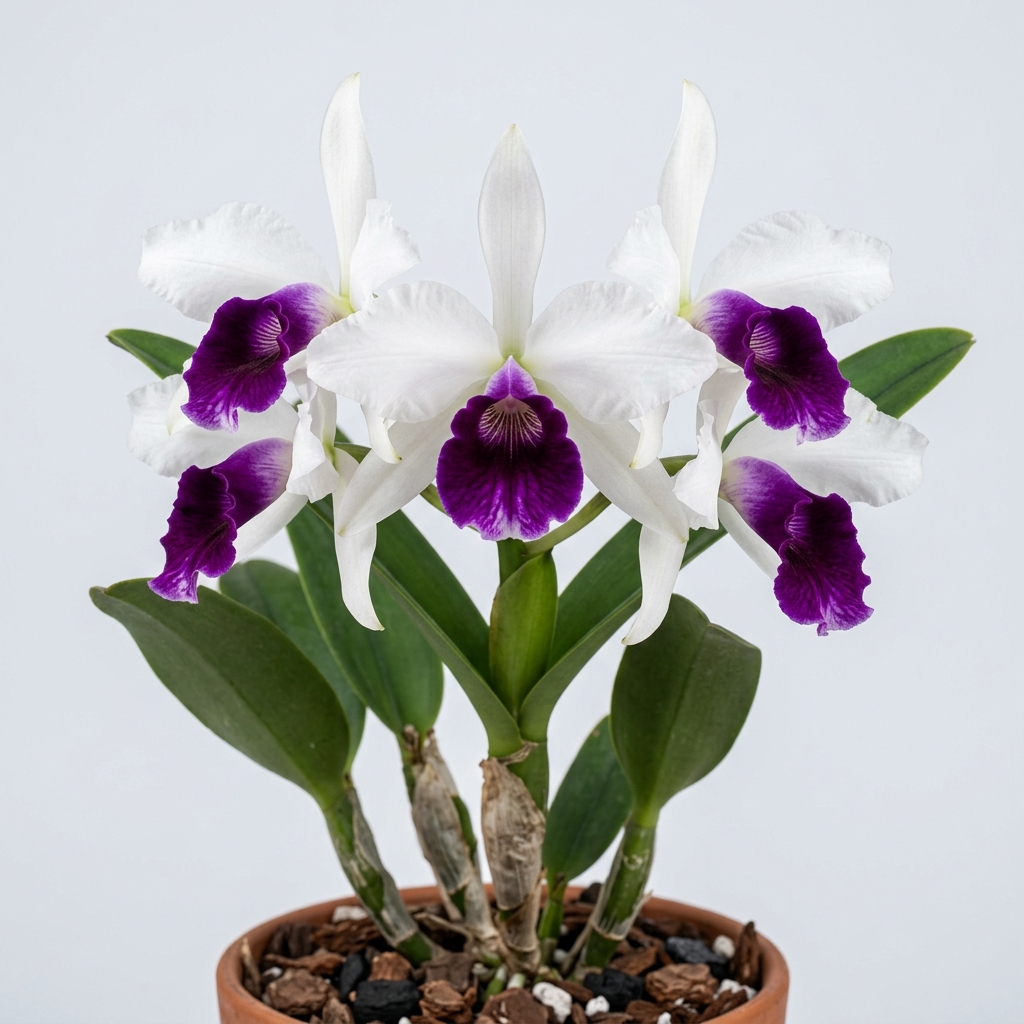
Cattleya purpurata, historically classified as Laelia purpurata, is one of the most magnificent and iconic orchid species in the Cattleya alliance. Renowned for its stately growth habit and striking, large blossoms, this Brazilian native has captivated orchid enthusiasts for generations. Its dramatic flowers, featuring contrasting white or pastel petals against a rich, velvety lip, make it a prized centerpiece in any serious orchid collection.
Cultivating this species offers a rewarding experience for growers who can accommodate its robust size and specific seasonal requirements. As a highly adaptable orchid, it thrives under bright light and intermediate to warm temperatures, rewarding proper care with a spectacular annual display. Understanding its natural growth cycle is key to unlocking its full blooming potential and maintaining long-term plant vigor.
💡 Did You Know?
Cattleya purpurata is so deeply revered in its native Brazil that it was declared the official state flower of Santa Catarina. Local orchid societies host dedicated exhibitions solely for this species, celebrating its incredible array of natural color variations and exceptional floral forms.
🌿 Botanical Overview
Cattleya purpurata is a medium-to-large epiphytic species native to the coastal rainforests of southern Brazil. In its natural habitat, it grows high in the canopy of trees or on rocky cliffs, where it is exposed to abundant sunlight, high humidity, and constant air movement. The plant features stout, club-shaped pseudobulbs that can reach up to twenty inches in height, each topped with a single, leathery, dark green leaf.
This species is highly variable, leading to numerous recognized color forms or varieties in cultivation, such as carnea, flamea, and semi-alba. Its robust root system is designed to cling tightly to surfaces, absorbing moisture rapidly from rain and dew before drying out quickly in the breeze.
🌸 Flower Characteristics
The flowers of Cattleya purpurata are exceptionally large, often measuring six to eight inches in diameter. They are produced on stout, erect inflorescences that emerge from a green sheath at the apex of mature pseudobulbs, typically carrying three to five blooms per spike. The sepals and petals are typically pristine white or blushed with pale lavender, providing a clean backdrop for the star of the show: the trumpet-shaped lip.
The lip, or labellum, is deeply saturated with rich shades of purple, magenta, or violet, often featuring intricate dark veining that guides pollinators toward the column. The throat of the lip is frequently brushed with yellow or cream, adding a warm contrast to the cool tones of the petals. The overall presentation is elegant and dramatic, with the flowers held well above the foliage.
Fragrance & Bloom Profile
Beyond its visual appeal, Cattleya purpurata is celebrated for its distinct and powerful fragrance. The blooms emit a sweet, complex scent that is often described as having strong notes of anise, licorice, or sweet clover. This fragrance is most intense during the morning hours when temperatures begin to rise and light levels increase, filling the growing space with a rich aroma.
Individual flowers are relatively long-lasting for a Cattleya species, typically remaining in prime condition for two to three weeks if kept in a cool, draft-free environment. The blooming cycle occurs once a year, with all flowers on a spike opening almost simultaneously to create a high-impact visual display.
Parentage & Hybrid Lineage
As a primary species rather than a man-made hybrid, Cattleya purpurata boasts a pure lineage that has been heavily utilized in orchid breeding. Historically classified under the genus Laelia due to having eight pollinia instead of four, modern DNA analysis has officially transferred it to the genus Cattleya. This botanical reclassification has renamed many classic hybrids that list this species in their parentage.
In hybridization, Cattleya purpurata is highly valued for imparting large flower size, strong stems, and intense lip coloration to its progeny. It has been crossed extensively with other Cattleya species to produce legendary primary hybrids, as well as complex intergeneric hybrids that inherit its robust growth habit and tolerance for varied cultural conditions.
🌱 Growing Conditions
To grow Cattleya purpurata successfully, providing bright, filtered light is paramount. It requires more light than many other Cattleya species, often tolerating direct morning sun. In a greenhouse or indoor setup, a light level of 3,000 to 4,500 foot-candles is ideal; leaves should be a light, grassy green rather than dark green, which indicates insufficient light.
💡 Care Tip
Position your Cattleya purpurata where it receives bright, filtered morning . If the leaves turn a dark forest green, the plant is not receiving enough to bloom; aim for a , grassy green color to ensure successful flowering.
Temperature: wise, this orchid prefers intermediate to warm conditions. Daytime temperatures should ideally range between 75°F and 85°F, with a nightly drop to 60°F or 65°F to stimulate healthy growth and future bud development. High humidity of 60% to 80% must be paired with excellent air circulation to prevent stagnant air from encouraging fungal pathogens.
Watering, Feeding & Potting Media
During the active growing season in spring and summer, Cattleya purpurata requires frequent and copious watering. The potting medium should be thoroughly saturated and then allowed to dry out almost completely before the next watering. A coarse, fast-draining medium is essential; a mix of large-grade fir bark, horticultural charcoal, and coarse perlite works exceptionally well in clay pots.
Fertilizing should be carried out weekly using a balanced orchid fertilizer diluted to quarter or half strength. As the plant transitions into its winter rest period, watering frequency should be significantly reduced, and fertilizer should be withheld entirely. During this cooler rest phase, only occasional misting or light watering is needed to keep the pseudobulbs from shriveling.
Blooming Season & Care Notes
The primary blooming season for Cattleya purpurata spans from late spring to early summer. The flower buds develop slowly inside a protective green sheath that forms at the base of the leaf during the previous autumn. It is crucial not to cut or damage this sheath, even if it appears dry or papery, as the buds will eventually push through when the seasonal cues are met.
Repotting is best performed immediately after flowering has finished and new root growth is observed emerging from the base of the lead pseudobulb. Because this species resents root disturbance, choose a pot size that allows for two to three years of future growth. Ensure the plant is secured firmly in the new container, as any movement can damage the tender, emerging root tips.
⚠️ Common Issues
⚠️ Common Mistake
Avoid this orchid on a strict calendar schedule, especially during the winter rest period. Allowing the potting medium to remain constantly wet during cool weather will quickly lead to root rot and the eventual decline of the plant.
- Root Rot: Caused by overwatering or a decomposing, compacted potting medium that suffocates the roots.
- Bud Blast: Sudden dropping or yellowing of buds before opening, often triggered by rapid temperature fluctuations or low humidity.
- Leaf Spotting: Fungal or bacterial spots arising from water remaining on the foliage overnight in stagnant air.
- Scale and Mealybugs: Common pests that hide in the dry sheaths of pseudobulbs; regular inspection and treatment with horticultural oil are recommended.
- Pseudobulb Shriveling: A sign of severe dehydration, either due to underwatering or a complete loss of the root system from rot.
❓ Frequently Asked Questions
Why is my Cattleya purpurata not blooming despite producing new sheaths?
The most common reason for a lack of blooms is insufficient light. Cattleya purpurata requires very bright, filtered light to trigger bud development inside the sheath. Ensure the foliage is a light, grassy green; if it is dark green, gradually move the plant to a brighter location.
How often should I water Cattleya purpurata during the winter?
During its winter rest, water should be drastically reduced. Only water lightly or mist the medium when the pseudobulbs show slight signs of wrinkling. Overwatering during this cool, inactive period is a primary cause of root rot.
Can I grow Cattleya purpurata mounted on wood or cork?
Yes, this species grows exceptionally well when mounted on cork bark or hardwood plaques, mimicking its natural epiphytic habit. However, mounted plants dry out very quickly and may require daily watering or misting during the hot summer months.
What causes the flower buds to turn yellow and die inside the sheath?
This is known as bud blast and is typically caused by environmental stress, such as sudden drafts, extreme temperature drops, or low humidity. Keep the orchid in a stable environment with high humidity and good airflow while the buds are developing.
⭐ Final Growing Notes
Cattleya purpurata remains a crowning achievement for any orchid grower, offering a classic, majestic beauty that modern hybrids struggle to replicate. By respecting its need for high light, distinct seasonal watering cycles, and excellent air movement, you can enjoy its spectacular, fragrant blooms year after year. It is a resilient and rewarding species that truly embodies the golden age of orchid cultivation.
🌱 Propagation Tip
Propagate this orchid by division only when the plant has outgrown its container and has at least six to eight healthy pseudobulbs. Ensure each new division has at least three active pseudobulbs and a strong lead growth to support rapid recovery.
⭐ Expert Advice
When repotting, secure the orchid firmly in its new container using a pot clip. Any wobbling or movement can shear off the delicate, green-tipped active roots as they attempt to penetrate the fresh, coarse bark medium.




Leave A Comment