
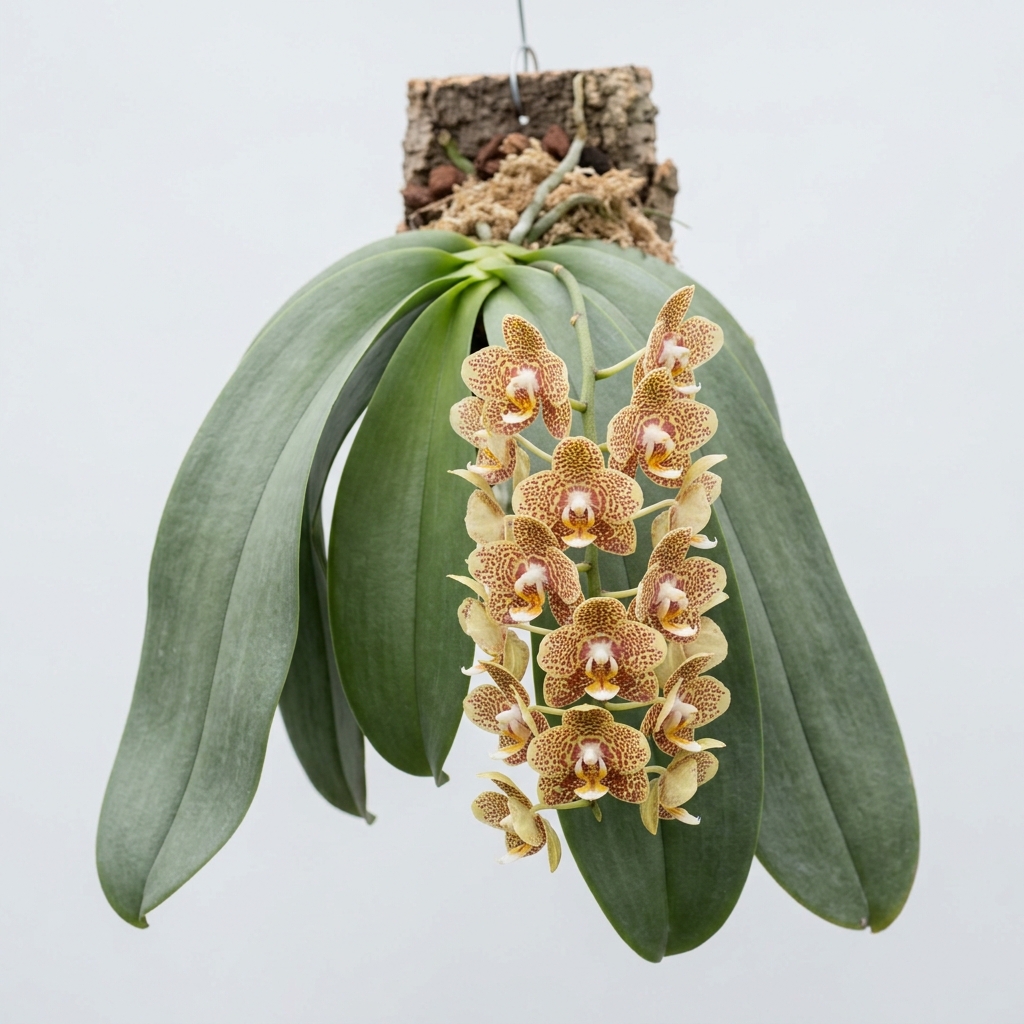
Phalaenopsis gigantea is an extraordinary epiphytic orchid species renowned among collectors for its immense size and striking floral display. Native to the tropical rainforests of Borneo, this species is celebrated for its massive, pendulous leaves that can easily exceed two feet in length, earning it the appropriate specific epithet. Unlike typical hybrid moth orchids, this botanical treasure demands patience and specialized care, making it a highly prized centerpiece in any serious orchid collection.
Beyond its impressive foliage, Phalaenopsis gigantea produces magnificent, densely packed inflorescences bearing cup-shaped flowers with intricate patterning. The blossoms feature a striking combination of cream, yellow, or greenish-white backgrounds covered in rich reddish-brown spots and bars. Cultivating this species successfully requires a commitment to maintaining high humidity, warm temperatures, and consistent moisture, rewarding dedicated growers with some of the most spectacular blooms in the orchid world.
💡 Did You Know?
Phalaenopsis gigantea earned its botanical name not because of its flowers, which are relatively modest in size, but due to its extraordinary, massive leaves. In the wild, these pendulous leaves can grow up to three feet long and over a foot wide, making it the largest species in the entire Phalaenopsis .
🌿 Botanical Overview
Phalaenopsis gigantea is the largest species in the Phalaenopsis genus, characterized by its slow growth rate and massive, leathery leaves. These leaves are pendulous, smooth, and possess a beautiful silvery-green sheen that distinguishes them from other members of the genus. In their natural habitat, these plants grow as epiphytes high on the trunks and branches of forest trees, where their roots can spread widely to absorb moisture and nutrients from the humid air.
Because of its slow-growing nature, a seedling can take anywhere from eight to twelve years to reach flowering maturity. This slow development, combined with its specific environmental demands, contributes to its rarity and high value in the horticultural trade. Once mature, however, the plant becomes a robust specimen capable of producing multiple pendulous spikes simultaneously.
🌸 Flower Characteristics
The flowers of Phalaenopsis gigantea are uniquely cup-shaped, fleshy, and highly durable, often lasting for several weeks in pristine condition. Each inflorescence is pendulous, growing up to fifteen inches long, and can carry up to forty closely spaced blossoms. The petals and sepals are broad and overlapping, creating a full, rounded flower shape that is highly sought after by breeders.
The base color of the blooms ranges from a pale cream to a warm yellow-green, which is heavily overlaid with concentric patterns of dark reddish-brown spots, blotches, or bars. The small, complex lip or labellum is typically white with purple or pink markings, providing a beautiful contrast to the heavily patterned tepals. The overall presentation is a dense, heavy cluster of flowers hanging gracefully beneath the massive leaves.
Fragrance & Bloom Profile
Phalaenopsis gigantea is highly valued not only for its visual appeal but also for its delightful fragrance. The flowers emit a distinct, sweet scent that many growers describe as citrusy, reminiscent of orange peel or sweet lemon, mixed with subtle spicy undertones. This fragrance is typically most pronounced during the morning hours when temperatures begin to rise and light levels increase.
The blooming cycle is highly dependent on environmental cues, with flowers most frequently appearing in the late summer and early autumn. Because the flowers are thick and waxy, they possess excellent longevity, remaining fresh on the spike for up to forty days if kept in a stable, humid environment.
Parentage & Hybrid Lineage
As a pure botanical species rather than a man-made hybrid, Phalaenopsis gigantea does not have parentage in the traditional sense. It was first described in the late 19th century and has since become one of the most influential parent species in Phalaenopsis breeding history. Hybridizers prize it for imparting heavy substance, round flower form, and intricate spotting to its offspring.
While pure specimens are highly sought after, numerous primary hybrids exist, such as Phalaenopsis Gigabell (gigantea x bellina) and Phalaenopsis David Lim (gigantea x amboinensis). When evaluating a specimen, growers should note that line-bred select clones of the species often exhibit superior flower size, deeper coloration, and faster growth rates compared to wild-type imports.
🌱 Growing Conditions
Replicating the warm, humid canopy of Borneo is essential for keeping Phalaenopsis gigantea healthy. This species thrives in warm temperatures, ideally ranging from 75°F to 85°F (24°C to 29°C) during the day, with a slight drop at night. Temperatures should never be allowed to fall below 60°F (15°C), as prolonged cold exposure can trigger leaf drop, root rot, or systemic decline.
💡 Care Tip
Always grow Phalaenopsis gigantea at a slight downward angle, or mount it on a plaque. This mimics its natural epiphytic habit and prevents water from pooling in the crown, which is the primary cause of fatal crown rot.
Light levels should be moderate to bright but strictly indirect. While it requires more light than standard grocery-store Phalaenopsis hybrids to trigger blooming, direct sunlight will quickly scorch the massive, sensitive leaves. High humidity of 70% to 85% is critical, paired with excellent, continuous air movement to prevent fungal pathogens from settling on the large leaf surfaces.
Watering, Feeding & Potting Media
Watering Phalaenopsis gigantea requires a careful balance; the plant should remain evenly moist but never waterlogged. Because of its large leaf surface area, it transpires water rapidly, meaning it can dehydrate quickly if left dry for too long. Water thoroughly with tepid, pure water (such as rainwater or reverse osmosis water) whenever the potting medium approaches dryness.
A coarse, highly draining potting medium is essential to protect the thick, fleshy roots from suffocating. A mix of large-grade New Zealand Pinus radiata bark, charcoal, and perlite works exceptionally well, often topped with a layer of high-quality sphagnum moss to retain humidity. Feed the plant weekly with a highly diluted, balanced orchid fertilizer, applying a “weakly, weekly” regimen, and flush the pot with pure water once a month to prevent salt buildup.
Blooming Season & Care Notes
The primary blooming season occurs in late summer, though mature, well-established plants may occasionally bloom at other times of the year. The flower spikes emerge from the base of the plant, often growing downward or horizontally beneath the leaves. Because of this pendulous growth habit, many experienced growers prefer to cultivate this species in hanging wooden baskets or mounted on large cork slabs to allow the spikes to cascade naturally.
If growing in a pot, ensure the container is heavy enough to prevent the massive, top-heavy leaves from tipping the pot over. Avoid cutting green flower spikes after the blooms fade, as they can sometimes produce secondary branches or bloom again in later seasons. Repotting should be done with extreme care and only when new root growth is active, as Phalaenopsis gigantea is notorious for sulking or dropping roots if disturbed.
⚠️ Common Issues
⚠️ Common Mistake
The most common mistake growers make is repotting this species too frequently or during the wrong season. Phalaenopsis gigantea hates root disturbance and can stall its growth for a year or more if repotted when not actively producing new roots.
- Crown Rot:
Water accumulating in the crown or leaf axils of these large, downward-hanging leaves can rapidly lead to fatal crown rot. Always water the medium directly, or grow the plant at an angle so water drains away from the crown. - Bacterial Brown Spot: High humidity combined with stagnant air can cause wet, sunken brown spots on the leaves. Increase air circulation and treat with a copper-based fungicide or bactericide if necessary.
- Root Loss: Overwatering or using a degraded, compacted potting medium will suffocate the roots, leading to rapid root loss and later leaf dehydration.
- Spider Mites and Mealybugs: The large undersides of the leaves provide an ideal hiding spot for pests. Inspect the foliage regularly and treat infestations promptly with insecticidal soap or horticultural oil.
- Bud Blast:
Sudden changes in temperature, low humidity, or drafts can cause developing flower buds to yellow and drop before opening.
❓ Frequently Asked Questions
Why are the leaves on my Phalaenopsis gigantea turning yellow?
Yellowing leaves can indicate several issues, most commonly overwatering, root rot, or excessive light exposure. If the lower leaves yellow and drop slowly over time, it may be natural senescence. However, if multiple leaves yellow rapidly, check the root system immediately for rot and ensure the plant is not receiving direct sunlight.
Can I grow Phalaenopsis gigantea under LED grow lights?
Yes, Phalaenopsis gigantea can be successfully grown under LED lights. Position the plant so it receives moderate to bright indirect light, aiming for about 1,500 to 2,500 foot-candles. Ensure the lights do not generate excessive heat, which can dry out the large leaves, and maintain high ambient humidity around the growing area.
How often should I repot my Phalaenopsis gigantea?
Repotting should be kept to a minimum, typically every two to three years, or only when the potting medium has degraded. This species is highly sensitive to root disturbance. Always repot during the active growth phase in spring or early summer when new roots are emerging, and handle the roots with extreme care to avoid breakage.
Why is my Phalaenopsis gigantea not blooming?
The most common reasons for a lack of blooms are insufficient light, immature plant age, or lack of a slight night-time temperature drop. Ensure the plant is mature enough to bloom (leaves should be at least 12 inches long), provide bright indirect light, and ensure a consistent 10°F to 15°F temperature drop at night during the late spring to stimulate spike production.
⭐ Final Growing Notes
Phalaenopsis gigantea is undoubtedly a challenging orchid to master, but its magnificent presence and sweet, citrus-scented blooms make it the crown jewel of any collection. By providing warm temperatures, high humidity, excellent air movement, and minimizing root disturbance, growers can successfully cultivate this spectacular Bornean giant and enjoy its breathtaking floral displays for decades to come.
🌱 Propagation Tip
Because Phalaenopsis gigantea is a slow-growing species, propagation is typically achieved through professional flasking of seeds or tissue culture. Home growers must wait patiently for rare basal keikis, which should only be separated once they have several robust roots of their own.
⭐ Expert Advice
To trigger blooming on a mature specimen, ensure the plant receives a consistent 10 to 15 degree Fahrenheit drop between day and night during late spring, combined with a slight increase in indirect levels.




Leave A Comment