
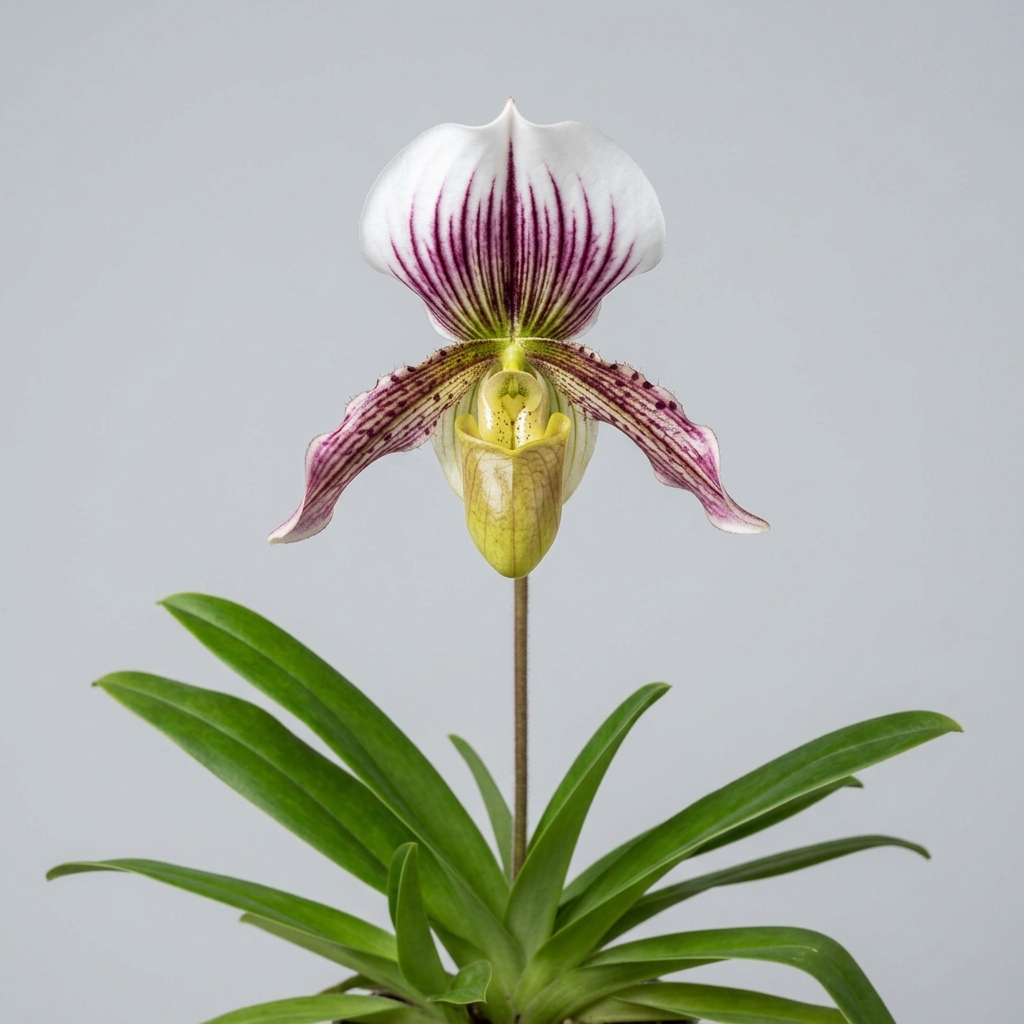
Paphiopedilum fairrieanum is a highly celebrated species within the slipper orchid group, widely admired for its distinctive, elegant flowers that evoke an almost mythical aesthetic. Unlike many of its relatives, this orchid features gracefully upswept petals and a prominent, heavily veined dorsal sepal that stands out in any collection. Growers particularly value its compact growth habit, making it an excellent choice for indoor cultivation where space may be limited.
Historically known as one of the most sought-after orchids in the world, this species has transitioned from a rare collector’s prize to an accessible favorite for dedicated hobbyists. Modern propagation techniques have ensured that healthy, nursery-grown specimens are readily available, allowing modern growers to experience the unique charm of its oriental-style blooms without the challenges of historical cultivation.
💡 Did You Know?
Paphiopedilum fairrieanum was once known as the Lost Orchid. After its initial introduction to Europe in the mid-nineteenth century, the exact wild location was lost to western botanists for decades. A substantial reward was offered for its rediscovery, which finally occurred in the early twentieth century in the steep, rocky gorges of Bhutan.
🌿 Botanical Overview
Paphiopedilum fairrieanum is native to the humid, mountainous regions of the eastern Himalayas, including parts of India and Bhutan. In its natural habitat, it is typically found growing as a lithophyte on steep, shaded limestone cliffs or as a terrestrial in leaf litter on grassy slopes. These environments provide the plant with constant moisture, excellent drainage, and a steady supply of calcium from the surrounding rock.
The growth habit of this orchid is characterized by compact, fan-shaped growths of strap-like, dull green leaves. Unlike some other slipper orchids, the foliage of this species lacks distinct mottling, presenting a clean, solid green appearance that serves as an elegant backdrop for the dramatic flowers. The root system is typical of the genus, consisting of thick, hairy roots that are highly sensitive to stagnant water and compaction.
🌸 Flower Characteristics
The flower of Paphiopedilum fairrieanum is a masterpiece of natural design, instantly recognizable by its unique structural features. The most striking element is the large, fan-shaped dorsal sepal, which features a white background adorned with bold, wavy vertical veins of deep purple and green. The margins of the sepal are beautifully ruffled, adding texture and depth to the bloom.
Equally distinctive are the lateral petals, which curve gracefully downward and then sweep upward at the tips, resembling a stylized mustache or the upturned brim of an elf’s hat. These petals are fringed with fine hairs and decorated with dark purple striping. The pouch, or labellum, is relatively small and slipper-shaped, typically displaying a yellowish-green hue overlaid with delicate brownish-purple veining. Each flower is presented singly on a tall, slender, purple-tinted peduncle that elevates the bloom well above the foliage.
Fragrance & Bloom Profile
This species is not known for its scent, and fragrance is not consistently documented in grower references. Instead, the plant directs all its energy into producing visually stunning, long-lasting flowers. A single bloom can remain in pristine condition for six to eight weeks, provided the growing environment remains stable and free of extreme drafts or temperature fluctuations.
Because the flowers are exceptionally durable, they are highly valued for exhibition and indoor display. The blooming cycle typically begins in the cool autumn months and can extend well into winter, offering a welcome splash of intricate color during the darker times of the year.
Parentage & Hybrid Lineage
As a pure species, Paphiopedilum fairrieanum does not have hybrid parentage. However, its unique morphology has made it an incredibly important parent in slipper orchid hybridization. Since its discovery, hybridizers have used this species to introduce the characteristic upswept petals and heavily veined dorsal sepal into a wide array of primary and complex hybrids.
When crossed with other species, it frequently dominates the flower shape, passing on its elegant, curved lines to its offspring. While historical registration records show a vast number of classic hybrids utilizing this species, modern growers still appreciate the pure species for its untamed, natural beauty and historical significance in the orchid world.
🌱 Growing Conditions
To cultivate Paphiopedilum fairrieanum successfully, growers should aim to replicate its cool, humid mountain habitat. It thrives in cool to intermediate temperatures, ideally ranging from 60 to 75 degrees Fahrenheit during the day, with a distinct drop of 10 to 15 degrees at night. This nocturnal temperature drop is particularly important for triggering the development of flower spikes in the autumn.
💡 Care Tip
Provide this orchid with bright, filtered similar to what a Phalaenopsis enjoys, but slightly cooler temperatures. Placing it near a north or east-facing window with a sheer curtain helps mimic its natural shaded cliffside habitat.
Light levels should be kept moderate. This orchid prefers bright, filtered indirect light, such as that provided by an east-facing window or a shaded greenhouse bench. Direct afternoon sun must be avoided, as it can easily scorch the thin, non-succulent leaves. Gentle, continuous air movement is also crucial to prevent stagnant air pockets around the foliage, which can encourage bacterial and fungal pathogens.
Watering, Feeding & Potting Media
Unlike many epiphytic orchids, Paphiopedilums do not possess pseudobulbs for water storage, meaning they have very little tolerance for drought. The potting medium should be kept evenly moist but never waterlogged. Water the plant thoroughly when the top layer of the medium begins to feel slightly dry to the touch, using rainwater, distilled water, or low-mineral tap water.
A well-draining, fine-grade potting mix is essential. A combination of fine fir bark, perlite, and horticultural charcoal works exceptionally well to maintain moisture while allowing oxygen to reach the roots. Because this species naturally grows on limestone, incorporating a small amount of calcium source, such as crushed oyster shells or dolomite lime, into the mix can highly benefit the plant’s long-term health. Feed lightly with a balanced, diluted orchid fertilizer every second or third watering during the active growing season.
Blooming Season & Care Notes
The primary blooming season for Paphiopedilum fairrieanum spans from mid-autumn through winter. As the days shorten and night temperatures begin to cool, the plant will initiate its flower spikes from the center of the mature leaf fans. Once the spike appears, maintain stable conditions and avoid moving the plant to prevent bud drop.
After the flower eventually fades, cut the spike back to the base of the fan using a sterile cutting tool. Repotting is best performed every one to two years in the spring, just as new root growth begins. This prevents the potting medium from breaking down and becoming acidic, which can quickly suffocate the delicate, hairy roots of this slipper orchid.
⚠️ Common Issues
⚠️ Common Mistake
Allowing the potting medium to dry out completely is a frequent mistake. Because Paphiopedilum fairrieanum lacks water-storing pseudobulbs, prolonged dryness can quickly damage the roots and lead to leaf loss or failed blooms.
- Root Rot:
Caused by overwatering or a degraded potting medium that holds too much water and lacks oxygen. - Bud Blast:
The premature drying and dropping of flower buds, often triggered by sudden temperature drops, low humidity, or drafts. - Leaf Tip Burn: Typically a sign of mineral buildup from hard water or excessive fertilizer application.
- Mealybugs and Scale: Common pests that tend to hide deep within the tight leaf joints and must be treated promptly with horticultural oil or insecticidal soap.
- Bacterial Soft Rot: Can develop if water is allowed to sit in the crown of the plant, especially in cool, stagnant conditions.
❓ Frequently Asked Questions
How often should I water my Paphiopedilum fairrieanum?
Watering frequency depends on your home’s humidity and temperature, but generally, this orchid should be watered every five to seven days. The goal is to keep the potting medium evenly moist, never allowing it to dry out completely or sit in standing water.
Does Paphiopedilum fairrieanum require limestone in its potting mix?
While not strictly mandatory, adding a small amount of crushed oyster shells or dolomite lime to the potting media is highly recommended. This mimics its natural limestone habitat, helps stabilize the pH of the mix, and provides essential calcium.
Why are the flower buds on my orchid dying before they open?
This issue, known as bud blast, is usually caused by environmental stress. Common culprits include sudden drafts, low ambient humidity, rapid temperature fluctuations, or allowing the root system to dry out completely while the spike is developing.
Can I grow Paphiopedilum fairrieanum under artificial LED lights?
Yes, this species adapts very well to artificial LED grow lights. Position the plant so it receives moderate light levels, ensuring the leaves do not become warm to the touch, and maintain a consistent day-night light cycle of twelve to fourteen hours.
⭐ Final Growing Notes
Paphiopedilum fairrieanum remains one of the most enchanting and rewarding slipper orchids a grower can cultivate. By providing consistent moisture, cool to intermediate temperatures, and a calcium-rich, well-draining medium, you can enjoy its whimsical, oriental-style blooms year after year. Its compact size and striking visual presence make it a true crown jewel for any dedicated orchid enthusiast’s collection.
🌱 Propagation Tip
Slipper orchids do not produce pseudobulbs or keikis, so propagation is achieved through division. Only divide healthy, mature specimens that have at least six to eight active fans, ensuring each new division has at least three healthy fans and an established root system.
⭐ Expert Advice
To encourage robust blooming, incorporate a small amount of crushed oyster shells or dolomite lime into your potting mix. This slowly releases calcium and magnesium, mimicking the limestone cliffs of its native Himalayan habitat and supporting strong cell wall development.




Leave A Comment