
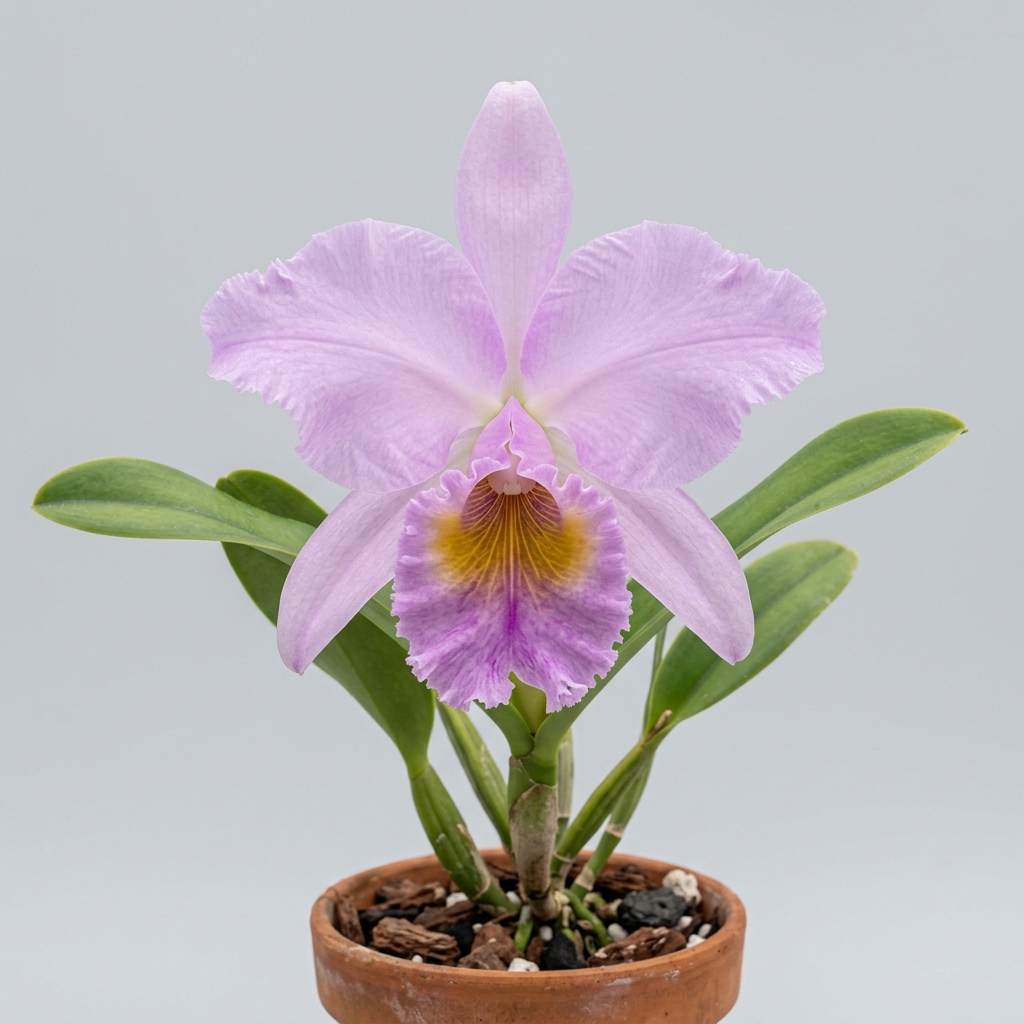
Cattleya gaskelliana is a highly esteemed species orchid within the Cattleya genus, celebrated for its large, fragrant blooms and robust growth habit. Often referred to as a classic summer-blooming Cattleya, this epiphyte is cherished by collectors for its elegant presentation and reliable flowering cycle. Its historical significance in orchid breeding makes it a cornerstone species for enthusiasts of classic orchid cultivars.
Cultivators value this orchid for its striking pastel lavender to white flowers, which feature a beautifully detailed lip with a rich yellow throat. Its manageable growth habit and adaptability to standard intermediate orchid care make it an excellent choice for both intermediate growers and dedicated orchid enthusiasts looking to expand their collection with a reliable, fragrant species.
💡 Did You Know?
Cattleya gaskelliana is native to Venezuela, where it grows as an epiphyte on trees or a lithophyte on exposed rocks. It is historically significant as one of the foundational species used by early hybridizers to create the large-flowered, showy Cattleya hybrids that dominated the cut-flower industry in the mid-twentieth century.
🌿 Botanical Overview
Cattleya gaskelliana is native to the mountainous regions of Venezuela, where it typically grows as an epiphyte on tree trunks and branches, or occasionally as a lithophyte on rocky cliffs. This natural habitat exposes the plant to excellent air circulation, high humidity, and distinct wet and dry cycles. Understanding these native conditions is key to successfully cultivating the orchid in a home or greenhouse environment.
The plant shows a sympodial growth habit, producing club-shaped, unifoliate pseudobulbs that support a single, leathery, oblong leaf. These pseudobulbs act as water and nutrient storage organs, helping the orchid survive periods of lower moisture. In cultivation, a healthy specimen will steadily produce new leads each spring, building a robust, multi-stemmed clump over time.
🌸 Flower Characteristics
The flowers of Cattleya gaskelliana are renowned for their impressive size, often reaching five to seven inches in diameter. The sepals and petals are typically a soft, pastel lavender or rose-pink, though highly prized alba (pure white) and semi-alba forms are also cultivated. The petals are broad and gently ruffled, creating a full, classic orchid silhouette.
The most striking feature of the bloom is its large, tubular lip, or labellum. The interior of the lip features a vibrant yellow or gold throat, which is often surrounded by a soft purple or magenta blotch on the midlobe. This contrasting color pattern serves as a natural guide for pollinators in the wild and provides a stunning visual focal point for growers.
Fragrance & Bloom Profile
This species is highly celebrated for its sweet, penetrating fragrance, which is often described as a mix of classic floral notes with a hint of spice. The scent is typically most intense during the morning hours, especially when the plant is exposed to warm temperatures and bright, indirect light. A single blooming spike can easily fill an entire growing room with its pleasant aroma.
Unlike some Cattleya species that bloom from dried sheaths, Cattleya gaskelliana typically initiates flowers from green, active sheaths on newly matured pseudobulbs. The blooms are presented on short spikes carrying two to five flowers, which are held well above the foliage for an elegant display. Individual flowers generally last between two to three weeks under optimal conditions.
Parentage & Hybrid Lineage
As a distinct, naturally occurring species, Cattleya gaskelliana does not have hybrid parentage. However, its outstanding floral traits and reliable summer-blooming habit have made it an invaluable parent in orchid hybridization. It has been used in hundreds of registered crosses, contributing its large flower size, sweet fragrance, and vigorous growth to modern Cattleya hybrids.
In historical breeding, it was frequently crossed with other large-flowered Cattleya species to produce hybrids that would bloom reliably during the summer gap when other species were dormant. While many modern growers prefer the charm of the pure species, its genetic legacy remains highly influential throughout the commercial orchid world.
🌱 Growing Conditions
To thrive, Cattleya gaskelliana requires bright, indirect light. In a home setting, an east- or shaded south-facing window is ideal. The leaves should maintain a light olive-green color; dark green leaves suggest the plant needs more light, while yellowing or reddish pigmentation indicates the light is too intense.
💡 Care Tip
Provide bright, filtered to encourage robust blooming. Healthy leaves should be a olive-green color; dark green leaves indicate insufficient , while yellowing or scorched spots suggest too much direct sun.
Temperature management is crucial for this intermediate-to-warm grower. Daytime temperatures should ideally range between 75°F and 85°F, with a nightly drop to 60°F or 65°F. This temperature differential is important for stimulating healthy growth and future bud development. High humidity of 50% to 70% should be maintained, accompanied by strong, continuous air movement to prevent fungal pathogens.
Watering, Feeding & Potting Media
Watering should be frequent and thorough during the active growing season in spring and summer. Allow the potting medium to dry out almost completely before watering again. During the cooler winter months, reduce watering frequency, allowing the plant to remain dry for longer periods while ensuring the pseudobulbs do not shrivel excessively.
A coarse, free-draining potting medium is essential to prevent root rot. A mix of medium-to-large fir bark, horticultural charcoal, and perlite works exceptionally well. Feed the orchid weekly with a weak solution of balanced orchid fertilizer during active growth, and flush the pot with pure water once a month to prevent harmful salt buildup.
Blooming Season & Care Notes
Cattleya gaskelliana typically blooms in late spring and early summer, often coinciding with the completion of the new season’s pseudobulb growth. Because it blooms on new growth, it is vital to support the plant with adequate water and nutrients as the new lead develops. Once the flowers fade, the spike should be cut back to the base of the sheath.
Repotting should only be performed when the orchid has outgrown its container or the potting medium has begun to decompose, usually every two to three years. The absolute best time to repot is when new root tips begin to emerge from the base of the newest pseudobulb. This ensures the plant establishes itself quickly in its new medium with minimal transplant shock.
⚠️ Common Issues
⚠️ Common Mistake
Avoid overwatering or letting the orchid sit in stagnant water. Cattleya gaskelliana is highly susceptible to root rot if the potting medium does not dry out sufficiently between waterings.
- Root Rot: Caused by overwatering or a decomposing, compacted potting medium that retains too much moisture.
- Bud Blast: Occurs when developing buds dry up and drop due to sudden changes in temperature, low humidity, or drafts.
- Leaf Sunburn: Appears as bleached or black patches on the leaves, caused by sudden exposure to direct, unfiltered sunlight.
- Pests: Scale insects and mealybugs can occasionally hide in the dry sheaths of the pseudobulbs; inspect regularly and treat with insecticidal soap.
❓ Frequently Asked Questions
How often should I water Cattleya gaskelliana?
Watering frequency depends on your environment, but typically ranges from once or twice a week during the active summer growing season to once every ten to fourteen days during the winter rest. Always check that the potting medium is nearly dry before watering again.
Why are the leaves on my Cattleya gaskelliana turning yellow?
Yellowing leaves can indicate a few different issues. If the yellowing is uniform and accompanied by scorched spots, the plant is likely receiving too much direct sunlight. If the leaves are yellowing and soft, it may be a sign of root rot from overwatering.
Does Cattleya gaskelliana require a winter rest period?
Yes, it benefits from a drier, cooler rest period during the winter months. While it does not require a complete dry spell, reducing water and withholding fertilizer during this time helps mimic its natural seasonal cycle and prepares the plant for spring growth.
Can I grow Cattleya gaskelliana under LED grow lights?
Yes, Cattleya gaskelliana can be grown successfully under high-output LED grow lights. Ensure the lights are positioned to provide bright, full-spectrum coverage, and monitor the leaf color to ensure the intensity is appropriate without causing heat stress.
⭐ Final Growing Notes
Cattleya gaskelliana remains a classic favorite for a reason, offering a rewarding combination of spectacular summer blooms, a delightful fragrance, and a resilient growth habit. By mimicking its native Venezuelan habitat with bright indirect light, excellent air movement, and a well-draining potting medium, growers of all levels can enjoy the timeless beauty of this exceptional species orchid for many years to come.
🌱 Propagation Tip
Propagate Cattleya gaskelliana by division during the repotting process. Ensure each division has at least three to four healthy, mature pseudobulbs with active eye buds to support new growth.
⭐ Expert Advice
Time your repotting carefully. The ideal window is immediately after flowering when new root growth begins to emerge from the base of the newest pseudobulb, allowing the plant to establish quickly.




Leave A Comment