
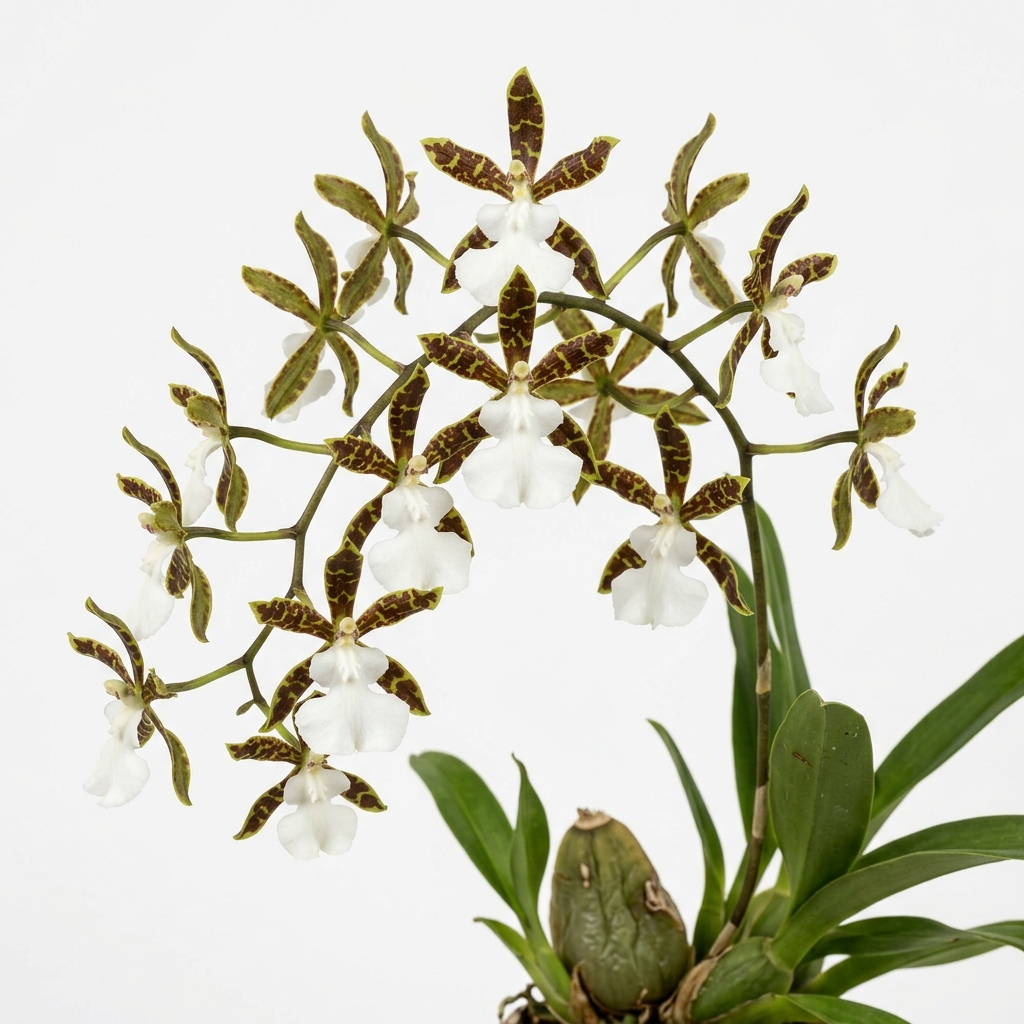
Oncidium leucochilum, commonly known as the white-lipped Oncidium, is a highly esteemed orchid species within the diverse Oncidium genus, celebrated by collectors for its dramatic, arching flower spikes and striking color contrast. Native to the mountainous regions of Mexico and Central America, this epiphytic orchid produces long, branched inflorescences that can carry dozens of elegant blossoms. Its distinctive appearance and robust growth habit make it a prized centerpiece in any temperate or intermediate orchid collection.
Growers particularly value this orchid for its reliable blooming nature and the architectural presence of its pseudobulbs and foliage. While it requires a bit of space to accommodate its expansive flower spikes, its relatively straightforward care requirements make it an accessible choice for intermediate hobbyists looking to expand their collection beyond standard mass-market hybrids.
💡 Did You Know?
Oncidium leucochilum is famous for producing some of the longest flower spikes in the , occasionally reaching up to ten feet in length in its natural habitat. This spectacular display allows the flowers to hang clear of the surrounding foliage, attracting natural pollinators in the breezy canopy of Central American forests.
🌿 Botanical Overview
Oncidium leucochilum is an epiphytic, or occasionally lithophytic, orchid species native to seasonally dry oak and pine-oak forests at elevations ranging from 600 to 2,000 meters. This elevation range gives the plant a adaptable nature, allowing it to tolerate a wider range of temperatures than strictly lowland tropical orchids. The plant features large, ovoid, slightly compressed pseudobulbs that are grooved with age, topped by two or three leathery, strap-shaped leaves.
The growth habit is sympodial, with new pseudobulbs emerging from the base of the previous season’s growth. Healthy root systems are extensive, characterized by thick, white roots covered in velamen, which helps the plant absorb moisture and nutrients rapidly from the air and surrounding bark. Understanding this natural habitat is key to providing the correct balance of moisture and air to the root zone.
🌸 Flower Characteristics
The defining feature of Oncidium leucochilum is its spectacular floral display. The inflorescence is a heavily branched panicle that can reach impressive lengths, sometimes exceeding several feet. Each spike can carry dozens of individual flowers, creating a cloud-like effect of blooms. The petals and sepals are narrow, slightly reflexed, and feature a base color of greenish-yellow heavily barred or spotted with rich mahogany or dark brown.
This dark, intricate patterning provides a dramatic backdrop for the prominent labellum, or lip. The lip is deeply lobed and a pristine, stark white or light cream color, which gives the species its botanical name (leucochilum translates to white lip). The contrast between the dark petals and the bright white lip makes the flowers highly visible and visually striking.
Fragrance & Bloom Profile
In addition to its visual appeal, Oncidium leucochilum is highly regarded for its fragrance. The flowers emit a pleasant, mildly sweet scent that many growers compare to vanilla or light spices. This fragrance is typically most pronounced during the morning hours when humidity is high and temperatures begin to rise, filling the growing space with a subtle, clean aroma.
The individual flowers are long-lasting, often remaining in pristine condition for six to eight weeks. Because the flowers open sequentially along the branched spike, the overall blooming period can extend over a couple of months, providing a long-lasting reward for the grower’s efforts.
Parentage & Hybrid Lineage
Unlike many of the complex intergeneric Oncidium hybrids found in garden centers, Oncidium leucochilum is a naturally occurring species. Because of its desirable traits—specifically its long, branched flower spikes, cold tolerance, and highly contrasting white lip—it has been used extensively as a parent in orchid hybridization. Breeders have utilized this species to introduce vigor, spike length, and unique color contrasts into modern Odontocidium, Colmanara, and Oncidium hybrids.
🌱 Growing Conditions
To grow Oncidium leucochilum successfully, aim to replicate its native montane forest environment. It thrives in bright, filtered light. A east- or shaded south-facing window is ideal. The leaves should be a light, grassy green; dark green leaves indicate insufficient light, while yellowing or reddish-purple tinting suggests too much direct sun.
💡 Care Tip
Provide this orchid with strong air circulation, especially when levels are high. Active air movement mimics its native mountain habitat, drying wet foliage quickly and preventing fungal leaf spot diseases.
Temperature: wise, this species prefers intermediate to cool conditions. Ideal daytime temperatures range from 70°F to 80°F, with a night drop to 55°F to 65°F. This nocturnal temperature drop is crucial for the overall health of the plant and is a primary trigger for flower spike initiation. Maintain relative humidity between 50% and 70%, accompanied by constant, gentle air movement to prevent stagnant air pockets.
Watering, Feeding & Potting Media
Watering should be adjusted according to the plant’s active growth cycle. During the spring and summer, when new pseudobulbs and roots are actively developing, water the plant thoroughly as soon as the potting medium approaches dryness. In the winter, when growth slows, reduce watering frequency, allowing the medium to dry out more completely between waterings, but do not allow the pseudobulbs to shrivel severely.
Feed the orchid with a balanced, water-soluble orchid fertilizer diluted to quarter or half strength every two to three waterings during the active growing season. Flush the pot with pure water once a month to wash away accumulated fertilizer salts. A coarse, free-draining potting mix based on fir bark, charcoal, and perlite works best. Alternatively, experienced growers with high-humidity environments can successfully mount this species on cork bark.
Blooming Season & Care Notes
Oncidium leucochilum typically initiates its flower spikes in late winter or early spring, with blooms opening in late spring through summer. Once the spike begins to emerge from the base of the newest mature pseudobulb, keep the plant in a stable position. Rotating the plant during spike development can cause the flowers to orient themselves haphazardly, ruining the natural presentation of the spike.
Support the heavy, arching spikes with stakes if necessary, taking care not to damage the developing buds. After the flowers have completely faded, cut the spike back to the base of the pseudobulb using sterilized shears. Repotting should only be done when new root growth is visible at the base of the newest pseudobulb, typically in the spring.
⚠️ Common Issues
⚠️ Common Mistake
A frequent error is keeping the potting medium constantly wet. Unlike some thin-leafed orchids, Oncidium leucochilum has thick pseudobulbs that store water, making it highly susceptible to root rot if the roots do not breathe between waterings.
- Root Rot:
Caused by overwatering or a degraded potting medium that retains too much moisture, leading to mushy, brown roots and shriveled pseudobulbs. - Leaf Spotting: Fungal or bacterial spots can develop on the leaves if humidity is high and air circulation is inadequate.
- Bud Blast:
Sudden drops in humidity, extreme temperature fluctuations, or drafts can cause developing flower buds to turn yellow and drop before opening. - Pests:
Scale, mealybugs, and spider mites can occasionally target the crevices of the pseudobulbs and the undersides of leaves.
❓ Frequently Asked Questions
How long do Oncidium leucochilum flowers last?
Individual flowers typically last between six to eight weeks. Because the branched spikes open sequentially, the entire blooming display can easily last for two months or more under cool, stable conditions.
Why are the pseudobulbs on my orchid wrinkling?
Wrinkled pseudobulbs indicate dehydration. This can be caused by underwatering or, conversely, by overwatering which has rotted the root system, leaving the plant unable to absorb moisture. Check the roots to determine the cause.
Does Oncidium leucochilum need a winter rest?
Yes, it benefits from a slight winter rest. Reduce watering frequency and withhold fertilizer during the darkest winter months, allowing the plant to experience cooler night temperatures to encourage spring blooming.
Can I grow Oncidium leucochilum indoors on a windowsill?
Yes, it can be grown successfully on an east- or shaded south-facing windowsill, provided you maintain adequate humidity levels and ensure the plant is not exposed to cold drafts or hot heating vents.
⭐ Final Growing Notes
Oncidium leucochilum is a rewarding and majestic species that brings a touch of wild elegance to any orchid collection. By respecting its preference for bright light, intermediate temperatures, and excellent drainage, growers can enjoy its spectacular, vanilla-scented floral displays year after year. Its architectural growth and reliable nature make it a true classic among orchid enthusiasts.
🌱 Propagation Tip
Propagate during repotting by dividing mature clumps. Ensure each division has at least three to four healthy, active pseudobulbs with a lead growth to guarantee the plant has enough energy to establish.
⭐ Expert Advice
To trigger a robust bloom cycle, provide a slight drop in night temperatures during the autumn and winter months, accompanied by a modest reduction in frequency to simulate its natural dry season.




Leave A Comment