
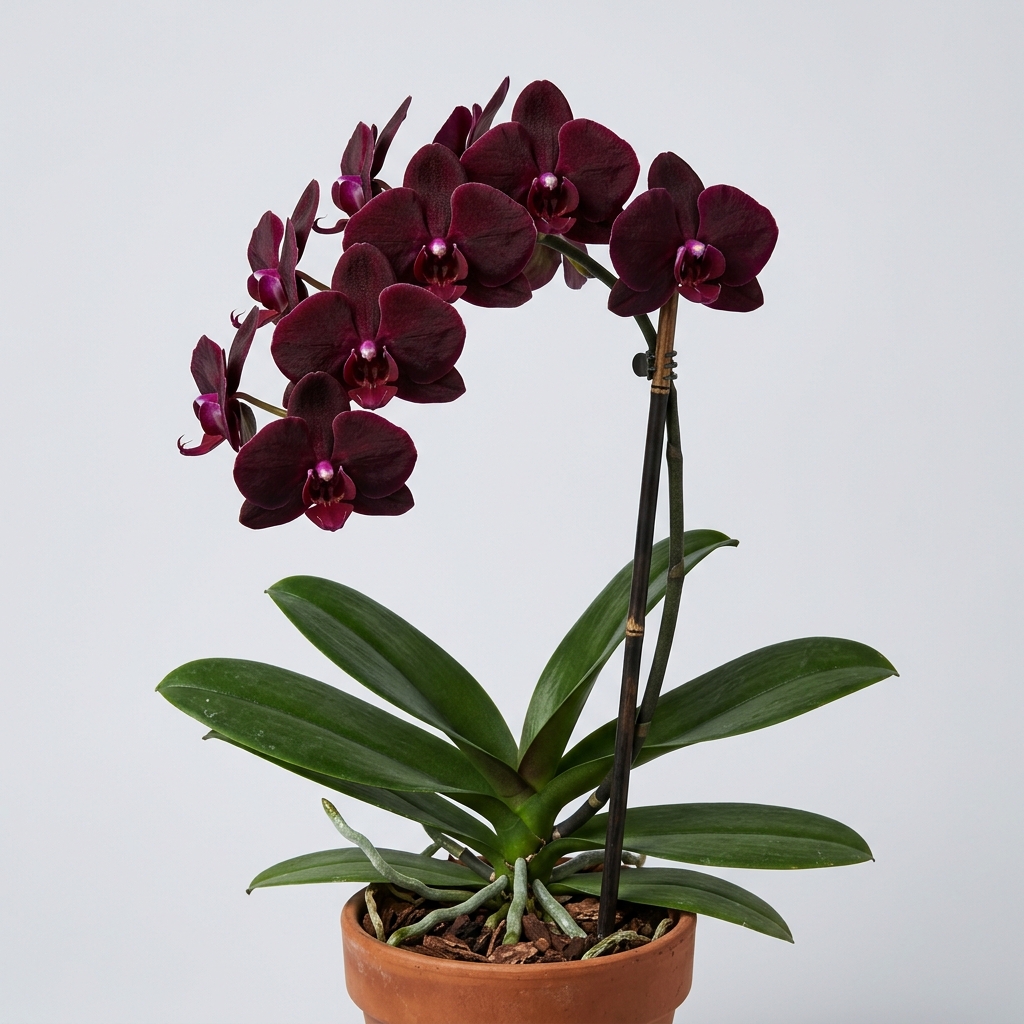
Phalaenopsis Black Jack is a striking moth orchid cultivar highly prized by collectors and casual growers alike for its dramatic, deeply saturated floral display. Belonging to the genus Phalaenopsis, this hybrid is celebrated for its compact growth habit and its ability to produce long-lasting blooms that command attention in any indoor space. Its ease of care makes it an excellent choice for those looking to add a touch of moody elegance to their orchid collection.
Unlike many traditional pink or white moth orchids, this cultivar stands out due to its intense coloration, which ranges from deep, velvety burgundy to near-black under certain lighting conditions. Cultivated for both its aesthetic appeal and robust nature, Phalaenopsis Black Jack adapts well to typical household environments, making it a rewarding subject for indoor horticulturalists seeking reliable blooming performance.
💡 Did You Know?
The exceptionally dark, near-black coloration of Phalaenopsis Black Jack is due to a high concentration of anthocyanins, the same natural pigments responsible for the deep hues in blueberries and blackberries. These pigments help protect the plant's delicate floral tissues from intense damage in its ancestral canopy environments.
🌿 Botanical Overview
Phalaenopsis Black Jack is an epiphytic hybrid characterized by its monopodial growth habit, meaning it grows upward from a single stem. It produces thick, fleshy, dark green leaves that are obovate to elliptic in shape. These leaves serve as water storage organs, helping the plant survive brief periods of dryness in its native-like environments.
The root system of this cultivar is typical of epiphytic orchids, featuring thick, silvery-green aerial roots covered in velamen. Velamen is a spongy, multi-layered epidermis that rapidly absorbs moisture and nutrients from the surrounding air. Healthy roots are crucial for the overall vigor of the plant, indicating proper hydration and aeration.
🌸 Flower Characteristics
The defining feature of Phalaenopsis Black Jack is its stunning, velvety flowers. The petals and sepals are broad, overlapping, and display a rich, dark burgundy-red hue that can appear almost black in low light. The lip, or labellum, is often slightly darker or may feature subtle highlights of gold or deep magenta at the column, creating a captivating focal point.
Blooms are typically arranged in a neat, arching spike that can carry multiple flowers simultaneously. The individual flowers generally measure between two to three inches in diameter. The texture of the petals is notably thick and waxy, which contributes to the exceptional longevity of the blossoms, often lasting for several months on the plant.
Fragrance & Bloom Profile
While some Phalaenopsis species and hybrids possess distinct scents, Phalaenopsis Black Jack is primarily grown for its visual impact rather than its aroma. A noticeable fragrance is not consistently documented in common grower references, and most specimens are considered unscented.
The blooming cycle of this cultivar is highly rewarding. A single flower spike can remain in bloom for eight to twelve weeks, and mature, healthy plants may produce secondary spikes from existing nodes. This extended display makes it a favorite for interior decoration and exhibition.
Parentage & Hybrid Lineage
As a complex horticultural hybrid, the exact parentage and registration history of Phalaenopsis Black Jack are not consistently documented in standard commercial grower databases. It is the result of generations of selective breeding aimed at intensifying the dark pigments, specifically anthocyanins, within the petals.
Because of this complex lineage, growers should treat it as a modern Phalaenopsis hybrid, focusing on standard warm-growing moth orchid care rather than trying to replicate the specific microclimate of a single wild species.
🌱 Growing Conditions
To maintain the deep coloration of the blooms and ensure robust leaf growth, Phalaenopsis Black Jack requires bright, indirect light. Direct sunlight should be avoided, as it can easily scorch the sensitive foliage. East- or shaded south-facing windows are typically ideal.
💡 Care Tip
To prevent water from pooling in the crown of your orchid, always water the plant in the morning. If water accidentally collects in the center where new leaves emerge, gently blot it dry with a paper towel to avoid crown rot.
Temperature ranges should mimic a comfortable home environment, ideally between 65°F and 80°F (18°C to 27°C) during the day, with a slight drop of 5°F to 10°F at night to help stimulate flower spike development. Adequate air movement is essential to prevent stagnant air pockets, which can harbor fungal pathogens.
Watering, Feeding & Potting Media
Watering should be approached with care; the potting medium should be allowed to dry out slightly, but not completely, between waterings. When watering, thoroughly drench the pot and allow all excess water to drain freely. Never let the plant sit in standing water, as this quickly leads to root rot.
A high-quality potting medium consisting of coarse fir bark, perlite, and charcoal, or pure premium sphagnum moss, is recommended to ensure excellent drainage and aeration. During the active growing season, feed the orchid bi-weekly with a balanced, diluted orchid fertilizer, using the “weakly, weekly” method.
Blooming Season & Care Notes
Phalaenopsis Black Jack typically initiates its blooming cycle in late autumn or winter, triggered by the natural drop in nighttime temperatures. Once the flower spike emerges, keep the plant in a stable environment, avoiding sudden temperature fluctuations, drafts, or dry air from heating vents.
After the primary blooms have faded, the spike can be cut back to the node just below the lowest flower. If the plant is healthy, this node may produce a secondary branch of flowers. Alternatively, cutting the spike back to the base of the plant allows the orchid to redirect its energy into leaf and root growth for the next season.
⚠️ Common Issues
⚠️ Common Mistake
A frequent error is potting this orchid in standard garden soil. Phalaenopsis Black Jack is an epiphyte that requires a highly porous medium like bark or moss. Soil suffocates the roots, leading to rapid decay and plant decline.
- Root Rot:
Caused by overwatering or compacted potting media that retains too much moisture. - Bud Blast:
The sudden dropping or drying of unopened flower buds, often triggered by drafts, low humidity, or sudden environmental changes. - Mealybugs and Scale: Common pests that hide in leaf joints or under flower bracts; treat promptly with insecticidal soap or rubbing alcohol.
- Leaf Sunburn: Appears as bleached or black patches on leaves exposed to direct sunlight.
❓ Frequently Asked Questions
How do I get my Phalaenopsis Black Jack to rebloom?
To encourage reblooming, expose the orchid to slightly cooler nighttime temperatures (around 55°F to 60°F) for a few weeks in autumn. This temperature drop, combined with bright indirect light, signals the plant to initiate a new flower spike.
Why are the leaves on my orchid turning yellow?
Yellowing leaves can indicate several issues. If it is only the oldest bottom leaf, it is likely natural shedding. If multiple leaves turn yellow, it may be a sign of overwatering, root rot, or excessive direct sunlight.
Should I cut off the aerial roots growing outside the pot?
No, aerial roots should not be cut off. They are a natural part of the orchid’s growth habit, helping the plant absorb moisture and oxygen from the air. Simply mist them occasionally to keep them hydrated.
Can I grow Phalaenopsis Black Jack under artificial LED lights?
Yes, this cultivar adapts exceptionally well to LED grow lights. Position the lights about 12 to 18 inches above the foliage, ensuring they run for 12 to 14 hours a day to simulate natural daylight cycles.
⭐ Final Growing Notes
Phalaenopsis Black Jack remains one of the most captivating dark-flowered orchids available to modern growers. By providing consistent moisture, bright indirect light, and gentle air circulation, enthusiasts can enjoy its dramatic, velvety blooms year after year, making it a true centerpiece of any indoor botanical collection.
🌱 Propagation Tip
While Phalaenopsis orchids do not divide like sympodial orchids, they occasionally produce small clonal plantlets called keikis along the flower spike. Once a keiki develops several roots at least two inches long, it can be carefully detached and potted independently.
⭐ Expert Advice
If your orchid is healthy but refuses to bloom, try moving it to a location with slightly brighter indirect . intensity is often the limiting factor for flower production, and a modest increase can trigger spike development.




Leave A Comment