
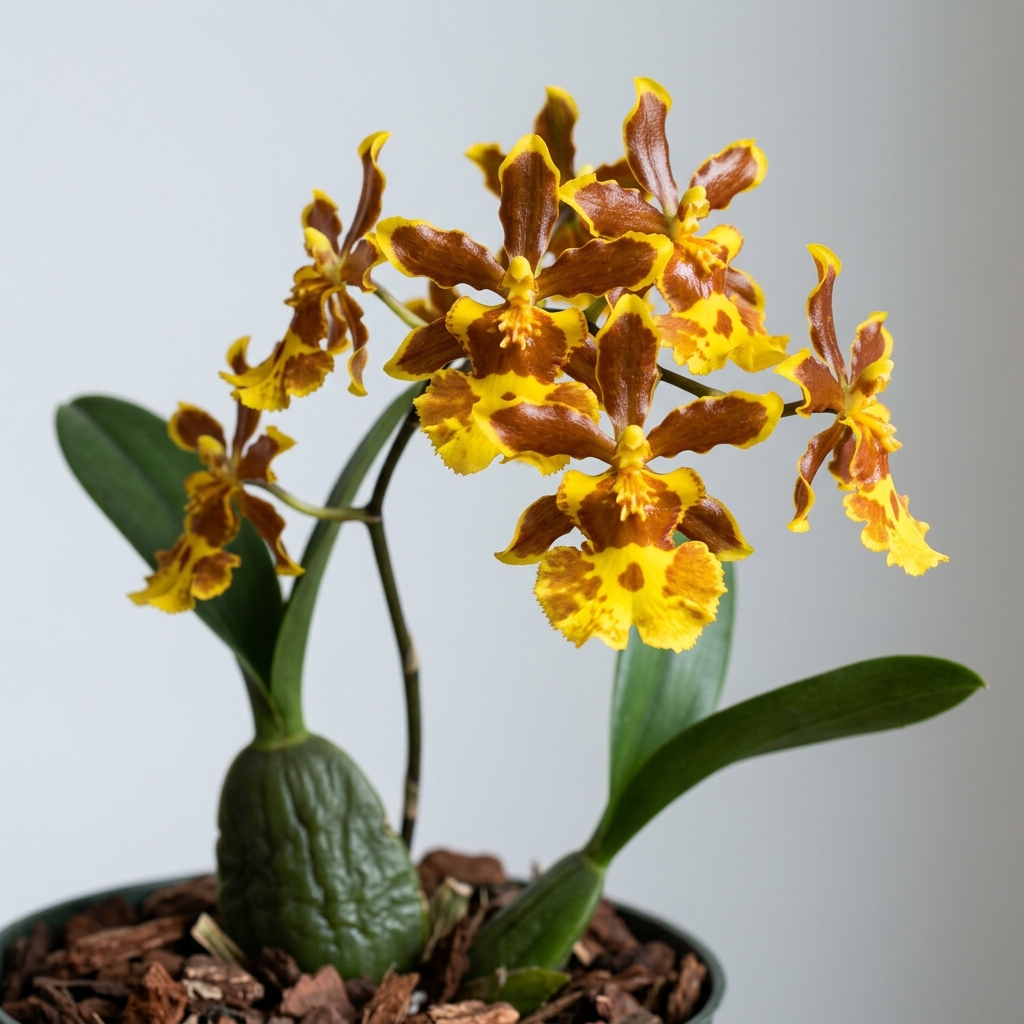
Oncidium forbesii, commonly known as Forbes’ Oncidium, is a highly prized epiphytic orchid native to the montane rainforests of Brazil. Renowned for its striking, glossy chestnut-brown flowers edged in brilliant golden yellow, this species captures the essence of the classic dancing lady orchid form while presenting a bolder, more dramatic color palette. Orchid enthusiasts highly value this plant for its robust growth habit, elegant arching inflorescences, and the exceptional longevity of its blooms.
As a member of the diverse Oncidium genus, this orchid adapts well to home and greenhouse cultivation when provided with conditions that mimic its native humid forest canopy. Its pseudobulbs store moisture and nutrients, allowing it to withstand minor variations in care, making it an excellent choice for intermediate growers looking to expand their collection with a classic species. The combination of rich, varnished textures and bright contrasting margins ensures that a well-grown specimen serves as a stunning focal point during its blooming cycle.
💡 Did You Know?
Oncidium forbesii is part of the Oncidium orchid group, a favorite among growers because its flowers, growth habit, and care needs make it useful for comparing cultivated orchids within the same . Observing its leaves, roots, and bloom spikes can help growers understand how this cultivar responds to indoor conditions.
🌿 Botanical Overview
Oncidium forbesii is characterized by its clustered, laterally compressed pseudobulbs that are typically oblong to ovate in shape. Each mature pseudobulb is topped by one or two leathery, dark green, lanceolate leaves that can reach up to twelve inches in length. The root system is relatively fine and fibrous, adapted for clinging to tree branches and absorbing moisture rapidly from passing rain showers and atmospheric humidity.
In its natural habitat within the Brazilian Atlantic Forest, this orchid grows as an epiphyte at elevations ranging from sea level up to approximately 3,000 feet. This elevation range exposes the plant to buoyant air movement and distinct seasonal shifts in temperature and moisture. Understanding this native environment is key to successfully managing its growth cycle in a home or greenhouse setting.
🌸 Flower Characteristics
The blossoms of Oncidium forbesii are the primary reason for its enduring popularity among orchid collectors. The flowers are relatively large for the genus, often measuring two to three inches across, and are produced on stout, arching inflorescences that can carry anywhere from ten to over thirty blooms. The petals and sepals are broad, overlapping, and display a rich, glossy chestnut or chocolate-brown hue, accented by a crisp, wavy border of bright golden yellow.
The prominent lip, or labellum, is three-lobed and echoes the dramatic coloration of the upper segments. It features a smaller, bright yellow central lobe with lateral lobes that are heavily marked with reddish-brown spots or bands. This intricate patterning creates a highly textured, almost lacquered appearance that catches the light beautifully, making each flower spike a spectacular visual display.
Fragrance & Bloom Profile
While some members of the Oncidium genus are famous for intense, sweet perfumes, the fragrance of Oncidium forbesii is more subtle and is not consistently documented across all cultivated specimens. Some growers report a faint, sweet, or honey-like scent that becomes noticeable during the warmest hours of midday, while others find the blooms to be virtually unscented.
The primary appeal of this orchid’s bloom profile lies in its visual impact and longevity rather than its aroma. Individual flowers are exceptionally long-lasting, often remaining fresh and vibrant for six to eight weeks under optimal environmental conditions. The entire blooming sequence, from the initial swelling of the buds to the fading of the final flower, can span nearly two months, providing a reliable and extended display of autumnal color.
Parentage & Hybrid Lineage
Oncidium forbesii is a naturally occurring species rather than a man-made hybrid, first described scientifically in the nineteenth century. In the wider world of orchid hybridization, it belongs to the Crispum section of the genus Oncidium. This group is highly valued by breeders for introducing large flower size, flat presentation, and rich, warm color tones into modern intergeneric hybrids.
Because it is a true species, its genetic lineage is pure, and plants purchased under this name should exhibit the classic characteristics of the wild population. However, growers should note that minor variations in color intensity and flower size can occur among different seed-grown individuals or select cultivars. When used in breeding, it passes on its distinctive yellow-margined petals and robust growth habit to its offspring.
🌱 Growing Conditions
To cultivate Oncidium forbesii successfully, providing the correct balance of light and temperature is essential. This orchid thrives in bright, filtered indirect light, similar to the dappled sunlight found in a forest canopy. A east- or shaded south-facing window is ideal; direct afternoon sun should be avoided as it can easily scorch the foliage. The leaves should maintain a healthy, medium-green color; dark green leaves suggest insufficient light, while yellowing or reddish-purple tinting indicates excessive exposure.
💡 Care Tip
For best results, grow Oncidium forbesii in bright filtered with steady and gentle airflow. Avoid placing the plant in harsh midday sun, but do not keep it in a dark corner; weak is one of the most common reasons cultivated orchids refuse to rebloom.
Temperature requirements fall into the intermediate to cool range. Ideal daytime temperatures should hover between 70°F and 80°F, with a night drop to around 55°F to 60°F. This nocturnal temperature drop is particularly important in late summer and early autumn, as it helps trigger the initiation of the flower spikes. Adequate air circulation must be maintained at all times to prevent stagnant air, which can lead to fungal infections on the leaves and roots.
Watering, Feeding & Potting Media
Proper watering is critical for this pseudobulbous orchid. During the active growing season in spring and summer, Oncidium forbesii should be watered thoroughly as soon as the potting medium approaches dryness. The pseudobulbs act as excellent indicators of hydration; plump, smooth pseudobulbs indicate a well-hydrated plant, while shriveling suggests the plant is under-watered or that the root system has rotted due to over-watering.
A high-quality, free-draining potting medium is essential to protect the fine roots from suffocation. A mix composed primarily of medium-grade fir bark, charcoal, and perlite works exceptionally well in plastic or clay pots. Alternatively, this species can be mounted on cork bark slabs if the grower can provide the high humidity (60% or higher) and frequent daily misting required by mounted plants. Feed the orchid with a balanced, diluted orchid fertilizer every two to three waterings during the active growth phase, flushing the pot with pure water periodically to prevent salt buildup.
Blooming Season & Care Notes
The typical blooming season for Oncidium forbesii occurs in the autumn, though variations can occur depending on local climate conditions and cultivation practices. As the new pseudobulbs mature in late summer, the flower spikes will begin to emerge from the base of the newest growth. During this period, avoid moving the plant excessively or changing its orientation to the light source, as this can cause the developing buds to twist or fail to open properly.
Once the blooming cycle is complete, the orchid enters a brief period of semi-dormancy during the winter months. During this rest phase, reduce watering frequency and suspend fertilizer application, allowing the potting medium to remain dry for longer periods between waterings. Repotting should only be performed in the spring when new root tips and vegetative growths begin to emerge from the base of the pseudobulbs, ensuring the plant establishes quickly in its new container.
⚠️ Common Issues
⚠️ Common Mistake
The most common mistake is by calendar instead of root and potting-media condition. Oncidium roots need moisture and air at the same time, so constantly wet bark or sphagnum can lead to root loss even when the leaves still look healthy.
- Root Rot:
Caused by over-watering or a compacted, decomposing potting medium that retains too much moisture around the fine root system. - Leaf Spotting: Small black or brown spots can develop on the leaves if water is allowed to sit on the foliage overnight or if air circulation is inadequate.
- Bud Blast:
Sudden drops in humidity, extreme temperature fluctuations, or exposure to drafts can cause developing flower buds to yellow and drop before opening. - Pseudobulb Shriveling: A sign of dehydration, which can be caused by either under-watering or a loss of roots due to over-watering.
- Pests:
Scale, mealybugs, and spider mites can occasionally target the tender new growth and the undersides of the leaves.
❓ Frequently Asked Questions
How do I trigger my Oncidium forbesii to bloom?
To encourage blooming, ensure the orchid receives bright, filtered light throughout the summer and a distinct drop in night temperatures (down to 55°F to 60°F) in the early autumn. This temperature differential, combined with the maturation of the season’s new pseudobulbs, acts as the primary signal for the plant to initiate flower spikes.
Can Oncidium forbesii be grown mounted on cork bark?
Yes, this species is an excellent candidate for mounting on cork bark due to its epiphytic nature. However, mounted plants dry out very rapidly and require high ambient humidity (above 60%) along with daily watering or misting, making this method best suited for greenhouses or dedicated humid grow spaces.
Why are the leaves on my orchid turning yellow?
Yellowing leaves can indicate several issues, most commonly excessive direct sunlight or natural aging of older foliage. If the yellowing occurs on the oldest pseudobulbs, it is likely a natural shedding process; however, if new leaves are yellowing, reduce light exposure and check the root system for signs of rot.
How often should I repot Oncidium forbesii?
Typically, this orchid should be repotted every two years, or when the potting medium begins to break down and retain too much moisture. The best time to repot is in the spring, just as new vegetative growths and fresh green root tips begin to emerge, allowing the plant to recover rapidly.
⭐ Final Growing Notes
Oncidium forbesii remains a classic and highly rewarding species for any orchid enthusiast willing to accommodate its preference for intermediate temperatures and high humidity. Its spectacular autumn display of varnished, golden-edged brown flowers provides a dramatic contrast to more common pastel-colored orchids, making it a standout addition to any collection. By paying close attention to watering cycles, maintaining buoyant air movement, and providing a cool autumn rest, growers can enjoy the elegant beauty of this Brazilian treasure for many years to come.
🌱 Propagation Tip
Propagation should be approached patiently. Most home growers should wait for natural keikis or divide only mature, healthy plants when the orchid type allows it. Never remove a young growth until it has strong roots and enough leaves to support itself away from the parent plant.
⭐ Expert Advice
Repot after flowering when fresh root tips begin to appear. This timing helps the plant anchor quickly into new bark or sphagnum and reduces stress, especially for orchids grown indoors where airflow, , and drying speed can change from season to season.




Leave A Comment