
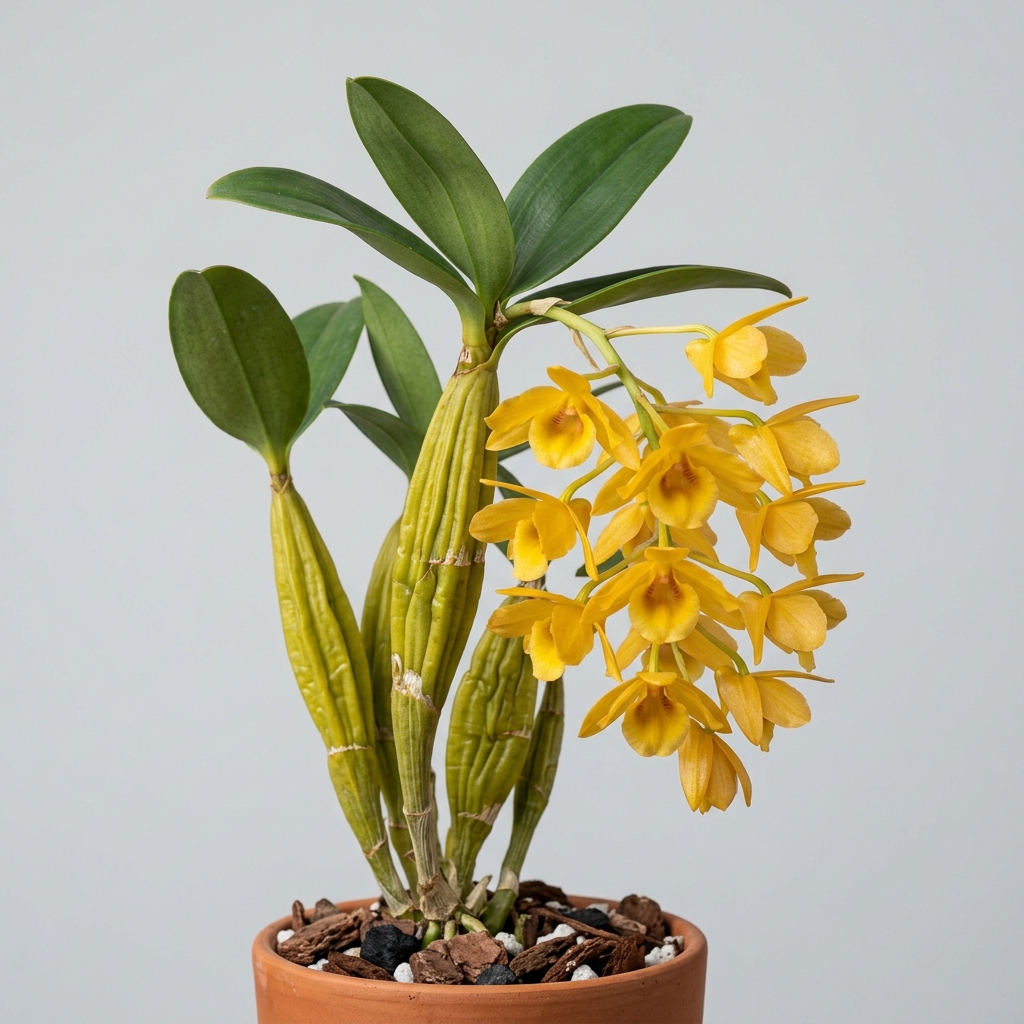
Dendrobium sulcatum is a striking epiphytic orchid species highly prized by collectors for its distinctive flattened pseudobulbs and vibrant floral displays. Belonging to the massive and diverse genus Dendrobium, this species stands out due to its architectural growth habit and pendulous clusters of golden-yellow blossoms. Orchid enthusiasts value it not only for its unique structural appeal but also for its rewarding, albeit seasonally specific, blooming cycle.
Cultivating this orchid successfully requires an understanding of its native monsoonal habitat in Southeast Asia, where it experiences distinct wet and dry seasons. When provided with bright, filtered light and a marked winter rest period, it rewards growers with dense, hanging inflorescences that emerge from the upper nodes of mature pseudobulbs. This guide details the essential care requirements, potting preferences, and environmental conditions needed to help this remarkable orchid thrive in a home or greenhouse collection.
💡 Did You Know?
The specific epithet sulcatum translates to furrowed or grooved, directly referencing the deep longitudinal ridges that develop on its unique, highly compressed pseudobulbs as they mature. This structural adaptation helps the orchid store moisture during the harsh dry seasons of its native Southeast Asian canopy.
🌿 Botanical Overview
Dendrobium sulcatum is native to the mountainous regions of Northeast India, Myanmar, Thailand, Laos, and southern China. It typically grows as an epiphyte on moss-covered tree trunks at moderate elevations, where it is exposed to high humidity and seasonal monsoon rainfall patterns.
The most defining vegetative feature of this species is its strongly compressed, flattened pseudobulbs, which feature deep longitudinal furrows as they mature. These club-shaped stems grow in clusters, carrying a few leathery, ovate leaves near the apex that persist for several seasons before shedding.
🌸 Flower Characteristics
The inflorescence of Dendrobium sulcatum is short, pendulous, and densely packed, arising from the nodes near the top of both leafy and leafless mature pseudobulbs. Each cluster can bear up to ten to fifteen tightly grouped flowers, creating a dramatic, grape-like bunch of color.
The individual flowers are typically bright yellow to golden-apricot, measuring about one inch across. The sepals and petals are relatively broad and overlapping, while the lip is cup-shaped, finely fringed or pubescent, and often marked with a deep reddish-purple or orange throat that guides pollinators.
Fragrance & Bloom Profile
While some growers report a faint, sweet, or slightly musty fragrance during the warmest hours of the day, the scent of Dendrobium sulcatum is not consistently prominent or documented across all cultivated specimens. Its primary appeal remains its highly concentrated visual display rather than intense perfume.
The blooms are relatively short-lived compared to some other Dendrobium species, typically lasting between one to two weeks. However, the sheer density of the flowers on a well-grown specimen ensures a spectacular show that defines the spring season in the greenhouse.
Parentage & Hybrid Lineage
As a naturally occurring species rather than a man-made hybrid, Dendrobium sulcatum does not have a complex pedigree of parental cultivars. It belongs to the section Densiflora, sharing close structural and cultural affinities with species like Dendrobium densiflorum and Dendrobium thyrsiflorum.
While it has been used occasionally in specialized breeding programs to introduce its unique flattened pseudobulb morphology and compact, dense blooming habit to new hybrids, such registered crosses remain relatively uncommon in mainstream commercial cultivation.
🌱 Growing Conditions
To replicate its native canopy environment, provide Dendrobium sulcatum with bright, filtered light. A location with strong eastern exposure or shaded southern exposure is ideal, aiming for light levels similar to those preferred by Cattleyas. Avoid direct midday sun, which can easily scorch the broad, leathery leaves.
💡 Care Tip
Provide strong air movement around your Dendrobium sulcatum, especially if you maintain high . Constant breeze prevents moisture from pooling in the tight crevices of its flattened pseudobulbs, significantly reducing the risk of fungal rot.
Temperature ranges should be kept warm to intermediate during the active growing season, ideally between 75°F and 85°F during the day, dropping to 60°F to 65°F at night. High humidity of 60% to 80% is essential, coupled with strong, continuous air movement to prevent fungal pathogens from settling on the dense foliage.
Watering, Feeding & Potting Media
During the spring and summer active growth phase, water the plant copiously, keeping the root zone consistently moist but never waterlogged. Apply a balanced, diluted orchid fertilizer weekly or bi-weekly to support the rapid development of new pseudobulbs.
This species performs exceptionally well when mounted on cork bark or tree fern plaques, which allows its roots to dry rapidly after watering. If grown in pots, use a highly porous, free-draining medium such as medium-grade fir bark mixed with perlite and charcoal to ensure excellent aeration.
Blooming Season & Care Notes
The primary blooming season occurs in spring, triggered by a cool, dry winter rest period. Starting in late autumn, significantly reduce watering and cease all fertilization. Only water occasionally to prevent the pseudobulbs from shriveling excessively.
Exposing the plant to cooler night temperatures (around 50°F to 55°F) during this winter rest is crucial for bud initiation. Once flower buds begin to emerge from the nodes in early spring, gradually resume regular watering and warmer temperatures to support the developing spikes.
⚠️ Common Issues
⚠️ Common Mistake
The most frequent error is continuing to water and fertilize normally throughout the winter. Without a strict dry and cool rest period, Dendrobium sulcatum will produce vegetative keikis instead of the highly anticipated spring flower clusters.
- Root rot caused by overwatering during the winter rest period or using a degraded, compacted potting medium.
- Lack of blooms due to insufficient light or failure to provide a distinct, cool dry rest during the winter months.
- Spider mites and scale insects, which can hide in the crevices of the flattened pseudobulbs and the undersides of leaves.
- Leaf spotting or fungal infections resulting from high humidity combined with stagnant, poor air circulation.
❓ Frequently Asked Questions
Why is my Dendrobium sulcatum not blooming?
The most common reason for a lack of flowers is the absence of a proper winter rest. This species requires a distinct period of reduced watering, cooler temperatures, and no fertilizer during the late autumn and winter to trigger bud development.
Can I grow Dendrobium sulcatum mounted on wood?
Yes, mounting this species on cork bark or tree fern is highly recommended. It mimics its natural epiphytic growth habit, allows the roots to breathe, and prevents the root rot that can occur in poorly draining pots.
How often should I water during the winter rest?
Water should be severely restricted. Only mist the plant or provide a light watering once every two to three weeks to prevent the pseudobulbs from shriveling to the point of collapse.
What causes the leaves of this orchid to turn yellow and drop?
Older leaves on mature pseudobulbs will naturally yellow and shed as the canes age. However, if new leaves are dropping, it may indicate overwatering, root rot, or a sudden drop in temperature below the plant’s tolerance.
⭐ Final Growing Notes
Dendrobium sulcatum is a rewarding species for intermediate orchid growers who can accommodate its seasonal rhythm. Its architectural, flattened canes provide year-round visual interest, while the spectacular, golden-yellow spring blooms make the winter dry spell well worth the effort.
🌱 Propagation Tip
Propagate this species by division during spring repotting, ensuring each new division has at least three to four healthy, mature pseudobulbs. Avoid dividing the plant too frequently, as larger specimens produce far more dramatic, multi-spiked floral displays.
⭐ Expert Advice
If growing in a pot, use a heavy clay pot rather than plastic. The top-heavy, arching growth habit of mature, flattened pseudobulbs can easily tip over lighter containers, potentially damaging the fragile emerging flower spikes in early spring.




Leave A Comment