
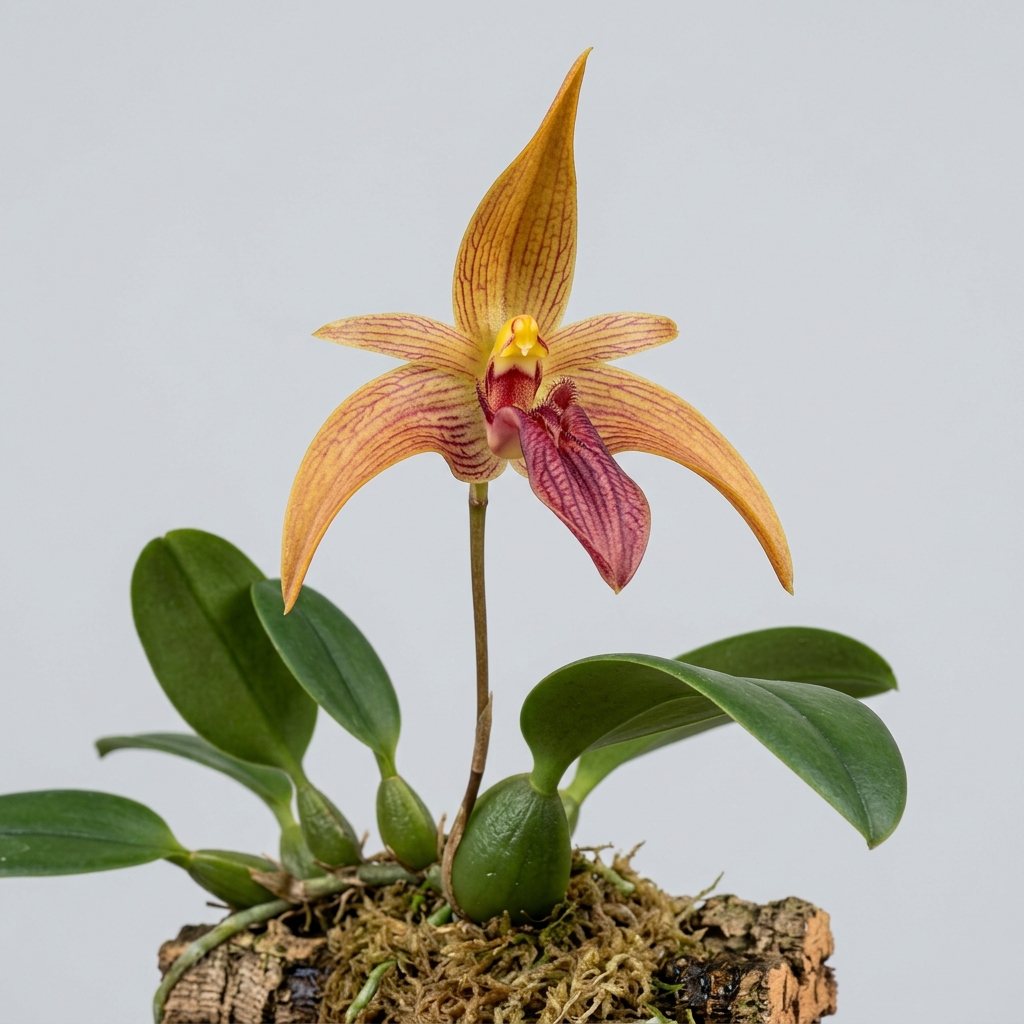
Bulbophyllum dearei is a highly sought-after species orchid within the diverse Bulbophyllum genus, celebrated by collectors for its intricate, animated floral structure and creeping growth habit. This epiphytic orchid produces striking, solitary flowers that command attention in any tropical collection, showcasing the evolutionary ingenuity of the orchid family.
Growers particularly value this orchid for its relatively large, warm-toned blooms and its fascinating hinged labellum, which moves dynamically with air currents. While it requires consistent moisture and high humidity to thrive, its rewarding blooming display and unique botanical features make it an excellent choice for intermediate to advanced orchid enthusiasts looking to expand their collection of exotic species.
💡 Did You Know?
The hinged lip, or labellum, of Bulbophyllum dearei is an evolutionary adaptation designed to assist in pollination. When a pollinating insect lands on the lip, the structure tips backward under the insect's weight, gently pushing it against the column of the flower to ensure the transfer of pollen.
🌿 Botanical Overview
Bulbophyllum dearei is characterized by its creeping rhizome growth habit, featuring distinct, egg-shaped pseudobulbs spaced along the rhizome. Each pseudobulb supports a single, leathery, oblong leaf that remains evergreen under proper care. This growth pattern allows the plant to spread horizontally, making it exceptionally well-suited for mount cultivation or shallow basket culture.
In its natural habitat, this epiphyte clings to tree trunks and branches in warm, humid forest environments. The root system is relatively fine and shallow, adapted to quickly absorbing moisture and nutrients from passing rain and organic debris. Understanding this epiphytic nature is key to successfully managing its moisture and aeration requirements in a home or greenhouse setting.
🌸 Flower Characteristics
The blossoms of Bulbophyllum dearei are a masterclass in floral architecture, typically measuring around two to three inches in size. The dominant features are the elongated, pointed dorsal sepal and the spreading lateral sepals, which exhibit a base color of warm yellow, cream, or amber. These sepals are beautifully detailed with intricate, reddish-purple veins and speckles that draw the eye toward the center of the flower.
The most captivating element is the hinged lip, or labellum, which is delicately balanced at the center of the bloom. This mobile structure reacts to the slightest movement of air, bobbing up and down to mimic an insect and attract potential pollinators. The flowers are borne singly on upright, slender spikes that emerge from the base of the pseudobulbs, presenting the bloom elegantly above the foliage.
Fragrance & Bloom Profile
Unlike some members of the Bulbophyllum genus that emit strong, unpleasant odors to attract carrion flies, Bulbophyllum dearei features a relatively mild fragrance profile. Growers often describe the scent as faintly sweet, musky, or slightly unusual, though it is rarely overpowering. The fragrance intensity can vary depending on temperature, humidity, and the time of day, often peaking during warm afternoon hours.
The individual flowers typically remain open for one to two weeks, depending on environmental conditions. While the blooms are not exceptionally long-lived compared to some other orchid genera, the plant can produce multiple spikes successively from different pseudobulbs over an extended blooming period, providing a prolonged display of its animated flowers.
Parentage & Hybrid Lineage
Bulbophyllum dearei is a naturally occurring species rather than a man-made hybrid, meaning its genetic lineage is preserved as it exists in the wild. In botanical nomenclature, it is recognized as a distinct species within the vast Bulbophyllum genus, which is one of the largest genera in the plant kingdom.
While it is primarily grown as a species, Bulbophyllum dearei has occasionally been used in hybridization programs to introduce its large flower size, warm coloration, and dynamic hinged lip to new grexes. However, registered hybrids utilizing this species are relatively uncommon, and most specimens found in cultivation are select line-bred clones or wild-type species selections valued for their pure botanical heritage.
🌱 Growing Conditions
To cultivate Bulbophyllum dearei successfully, growers must replicate its native tropical environment. It thrives in medium, filtered light, similar to the dappled shade of a forest canopy. Direct, intense sunlight should be avoided, as it can easily scorch the thin leaves, while excessively dark conditions will inhibit flowering and weaken pseudobulb development.
💡 Care Tip
Maintain a constant, gentle breeze around your Bulbophyllum dearei using a small fan. Good air circulation is vital for preventing fungal leaf spots and rot, especially given the high levels this species requires to thrive.
Temperature control is crucial, with the orchid preferring warm to intermediate conditions. Ideal daytime temperatures range between 75°F and 85°F, with a slight drop at night to around 65°F to 70°F. High relative humidity of 70% to 80% is essential for healthy growth; therefore, the use of humidifiers, humidity trays, or regular misting is highly recommended, paired with constant, gentle air movement to prevent stagnant air and fungal issues.
Watering, Feeding & Potting Media
Consistent moisture is the cornerstone of Bulbophyllum dearei care. Unlike orchids with large water-storing pseudobulbs, this species has a relatively low tolerance for drought. The potting medium should remain evenly moist but never waterlogged or soggy, which can quickly lead to root rot.
For potting media, high-quality New Zealand sphagnum moss is highly favored for its moisture-retention properties, often mixed with fine fir bark or perlite to improve drainage. Alternatively, growing this orchid on a cork bark or tree fern mount allows its creeping rhizomes to ramble naturally, though mounted plants will require daily watering in most indoor environments. During the active growing season, apply a balanced, highly diluted orchid fertilizer weekly, flushing the medium with pure water periodically to prevent salt buildup.
Blooming Season & Care Notes
The primary blooming season for Bulbophyllum dearei typically spans from late spring through autumn, though occasional blooms can appear at other times of the year if optimal growing conditions are maintained. Flower spikes emerge from the base of mature, fully developed pseudobulbs.
Once a flower spike is detected, avoid changing the plant’s orientation or environmental conditions abruptly, as this can cause the developing bud to blast. After the bloom fades, the spike can be cut back close to the base of the pseudobulb. Repotting or remounting should ideally be performed in the spring, just as new root growth begins to emerge from the base of the newest pseudobulbs, minimizing transplant shock.
⚠️ Common Issues
⚠️ Common Mistake
The most common mistake is letting the potting medium dry out completely between waterings. Unlike many other orchids, Bulbophyllum dearei lacks large water-storage capacity and will quickly suffer from dehydration and leaf drop if left dry.
- Root Rot:
Caused by overwatering or compacted, decomposing media that deprives the roots of oxygen. - Leaf Spotting: Fungal or bacterial spots can develop if water sits on the leaves overnight without adequate air circulation.
- Bud Blast:
Developing buds may dry up and drop due to sudden drops in humidity, drafts, or underwatering. - Dehydration:
Shriveled pseudobulbs and wrinkled leaves indicate insufficient watering or a compromised root system unable to take up moisture. - Pests:
Mealybugs, spider mites, and scale can occasionally target the tender new growth and the undersides of leaves.
❓ Frequently Asked Questions
How do I encourage my Bulbophyllum dearei to bloom?
To stimulate blooming, ensure the orchid receives bright, filtered light and consistent warm temperatures. A slight drop in nighttime temperatures during the late spring, combined with regular feeding during the active growth phase, helps mature the pseudobulbs necessary for producing strong flower spikes.
Can Bulbophyllum dearei be grown under LED grow lights?
Yes, this orchid adapts well to indoor cultivation under LED grow lights. Position the plant under moderate-intensity LEDs, ensuring the light is diffused or kept at a safe distance to prevent leaf scorch, and maintain a consistent 12-to-14-hour photoperiod.
Why are the pseudobulbs on my orchid shriveling?
Shriveling pseudobulbs are typically a sign of dehydration. This can occur either from underwatering or from root rot, where damaged roots can no longer absorb water. Check the root system; if the roots are healthy, increase watering frequency and humidity.
Is Bulbophyllum dearei suitable for a beginner orchid grower?
While not the easiest orchid for absolute beginners, it is highly manageable for those with some experience. Its strict requirements for high humidity and consistent moisture mean it demands more daily attention than common Phalaenopsis orchids, but it is an excellent introductory species for the Bulbophyllum genus.
⭐ Final Growing Notes
Bulbophyllum dearei remains a jewel of the orchid world, offering a captivating blend of unique botanical form and dynamic floral movement. By prioritizing high humidity, consistent moisture, and gentle air circulation, growers can successfully cultivate this remarkable species and enjoy its animated, warm-toned blossoms year after year.
🌱 Propagation Tip
Propagate this orchid by division only when the plant has outgrown its container and possesses at least three to four healthy pseudobulbs per division. Ensure each division has an active growing point and a viable root system before potting.
⭐ Expert Advice
If growing Bulbophyllum dearei on a mount, wrap a generous layer of high-quality sphagnum moss around the roots to help retain moisture. This mimics its natural epiphytic habitat while preventing the fine root system from drying out too rapidly indoors.




Leave A Comment