
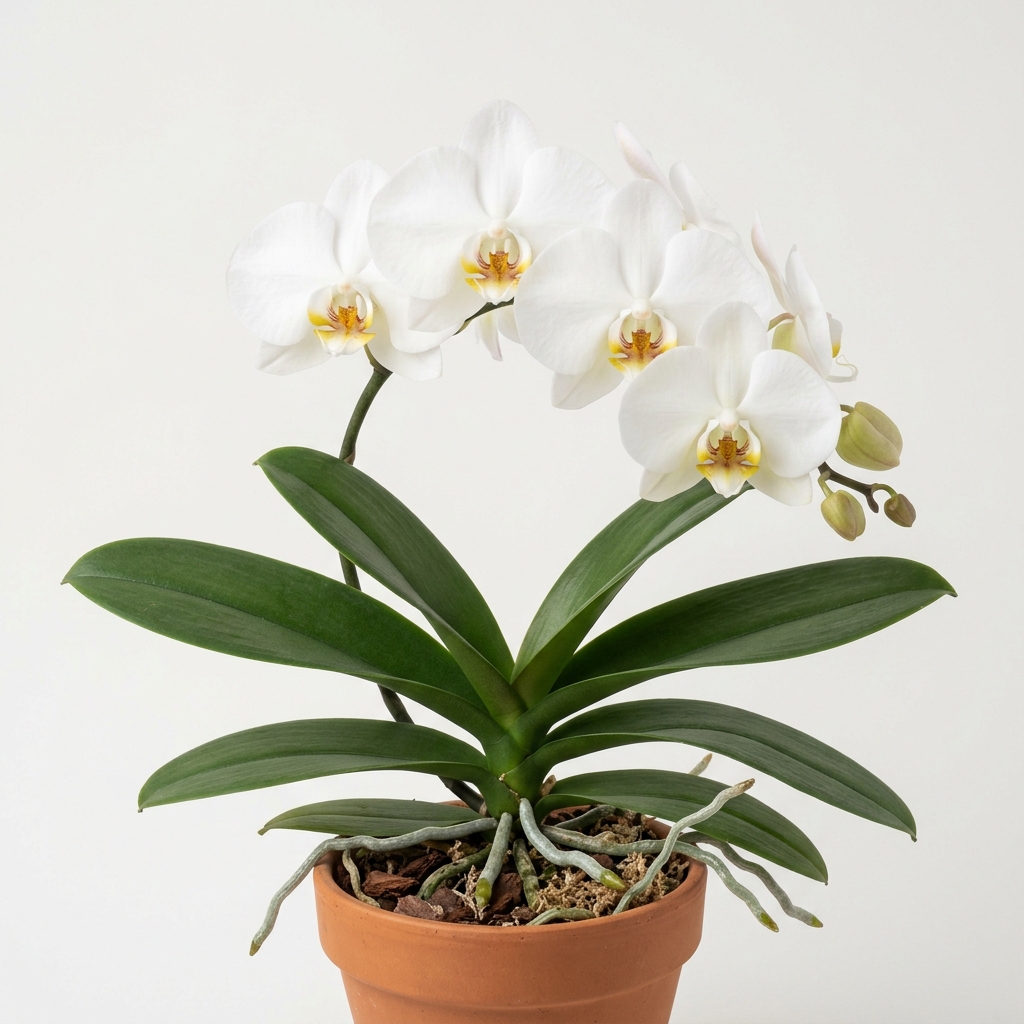
Phalaenopsis aphrodite is a highly revered species orchid, celebrated for its pristine white blossoms that gracefully arch on delicate spikes. As a foundational species within the Phalaenopsis genus, it has long been prized by both collectors and hybridizers for its elegant presentation, symmetrical flower form, and robust growth habit. Its classic beauty brings a sophisticated, natural elegance to any indoor growing space.
This epiphytic orchid features thick, leathery, dark green leaves that grow in an alternating pattern along a short stem. Highly adaptable and relatively easy to care for, Phalaenopsis aphrodite is an excellent choice for growers of all experience levels, offering a reliable and long-lasting floral display when its basic cultural needs are met.
💡 Did You Know?
Phalaenopsis aphrodite belongs to the Phalaenopsis orchid group, where flower presentation is often just as important as . White-flowered cultivars are especially valued indoors because their pale blooms reflect well and pair easily with many home, greenhouse, and display settings.
🌿 Botanical Overview
Phalaenopsis aphrodite is native to the humid lowland forests of the Philippines and southern Taiwan. In its natural habitat, it grows as an epiphyte, anchoring itself to the bark of trees where it enjoys dappled sunlight, high humidity, and frequent rainfall. This evolutionary background dictates its preference for excellent drainage and air circulation around its root system.
The plant shows a monopodial growth habit, meaning it grows upward from a single stem, producing new leaves from the crown. The roots are thick, fleshy, and covered in velamen, a silvery-gray spongy layer that absorbs moisture and nutrients from the air. These roots also contain chlorophyll, allowing them to perform photosynthesis when exposed to light.
🌸 Flower Characteristics
The flowers of Phalaenopsis aphrodite are the epitome of classic orchid elegance. They feature broad, flat, overlapping petals and sepals of a brilliant, paper-white hue. The three-lobed lip, or labellum, provides a stunning contrast, decorated with delicate yellow markings and fine reddish-purple stripes or spots near the column.
Individual flowers typically measure between two and three inches in diameter. They are arranged in two neat rows along an arching, sometimes branched, inflorescence that can reach up to two feet in length. A mature, healthy plant can produce dozens of blooms on a single spike, creating a spectacular, cascading floral display.
Fragrance & Bloom Profile
While some growers report a very faint, sweet scent under warm, humid conditions, Phalaenopsis aphrodite is generally considered to have no significant or consistent fragrance. Its primary appeal lies in the sheer beauty and longevity of its blossoms rather than its scent.
The blooms are remarkably long-lasting, often remaining fresh on the plant for two to three months. The blooming cycle typically begins in late winter and extends through the spring, providing a welcome splash of bright color during the cooler months of the year.
Parentage & Hybrid Lineage
Phalaenopsis aphrodite is a naturally occurring species rather than a man-made hybrid. However, its historical significance in the orchid world cannot be overstated. It is one of the primary ancestral pillars used to create almost all modern white Phalaenopsis hybrids available on the commercial market today.
Hybridizers have long utilized this species to pass down its flat, symmetrical flower form, pristine white coloration, and floriferous blooming habit. When purchasing a modern white moth orchid, you are almost certainly enjoying the genetic legacy of Phalaenopsis aphrodite.
🌱 Growing Conditions
To keep Phalaenopsis aphrodite thriving, mimic its natural tropical environment as closely as possible. It prefers bright, filtered indirect light. An east-facing window is ideal, or a shaded south- or west-facing window. Avoid direct midday sunlight, which can quickly scorch the fleshy leaves.
💡 Care Tip
For best results, grow Phalaenopsis aphrodite in bright filtered with steady and gentle airflow. Avoid placing the plant in harsh midday sun, but do not keep it in a dark corner; weak is one of the most common reasons cultivated orchids refuse to rebloom.
Temperatures should remain warm to intermediate, ideally between 70°F and 85°F during the day, with a slight drop to 60°F or 65°F at night. High humidity of 50% to 70% is preferred. If your indoor air is dry, use a humidifier or place the orchid pot on a tray filled with pebbles and water, ensuring the bottom of the pot does not touch the water.
Watering, Feeding & Potting Media
Watering should be done thoroughly, allowing water to run freely through the drainage holes. Always allow the potting medium to approach dryness before watering again. You can judge this by the weight of the pot or by observing the roots: bright green roots indicate sufficient moisture, while silvery-gray roots indicate it is time to water.
Use a well-draining potting medium such as high-quality New Zealand sphagnum moss or a medium-grade fir bark mix. Feed the orchid weekly with a balanced orchid fertilizer diluted to one-quarter strength, a practice often referred to as “weakly, weekly.” Flush the pot with pure water once a month to prevent salt buildup.
Blooming Season & Care Notes
The main blooming season occurs from late winter through spring. To trigger the initiation of flower spikes, expose the plant to slightly cooler night temperatures (around 60°F to 65°F) for a period of two to three weeks in the autumn. Once the spike emerges, return the plant to its normal warm growing conditions.
After the flowers have faded, you can cut the spike back to the base of the plant to allow it to focus its energy on leaf and root growth. Alternatively, if the spike remains green, you can cut it just above a viable node to encourage a secondary branch of flowers, though these blooms may be slightly smaller.
⚠️ Common Issues
⚠️ Common Mistake
The most common mistake is by calendar instead of root and potting-media condition. Phalaenopsis roots need moisture and air at the same time, so constantly wet bark or sphagnum can lead to root loss even when the leaves still look healthy.
- Root Rot:
Caused by overwatering or compacted, decomposing potting media that suffocates the roots. - Bud Blast:
Unopened flower buds yellow and drop due to sudden temperature swings, low humidity, or cold drafts. - Mealybugs and Scale: Common pests that hide in leaf joints and under flower bracts; treat with insecticidal soap or rubbing alcohol.
- Sunburn:
Bleached or blackened patches on leaves resulting from exposure to direct, intense sunlight.
❓ Frequently Asked Questions
How do I get my Phalaenopsis aphrodite to rebloom?
To encourage reblooming, expose the plant to cooler night temperatures of 60°F to 65°F for a few weeks in autumn. Ensure it receives adequate bright, indirect light and regular, diluted fertilizer to build up the energy required to produce a new flower spike.
Why are the leaves on my Phalaenopsis aphrodite turning yellow?
If only the oldest bottom leaf turns yellow and drops, it is a natural part of the plant’s aging process. However, if multiple leaves turn yellow, it may indicate overwatering, root rot, underwatering, or exposure to too much direct sunlight.
Should I cut off the aerial roots growing outside the pot?
No, do not cut off healthy aerial roots. These roots are vital for absorbing moisture and oxygen from the air. Only trim roots that are completely dry, brown, shriveled, or mushy using sterilized cutting tools.
Can Phalaenopsis aphrodite be grown under LED grow lights?
Yes, Phalaenopsis aphrodite thrives under moderate-strength LED grow lights. Position the lights 12 to 18 inches above the foliage, and run them for 12 to 14 hours a day to simulate natural daylight cycles.
⭐ Final Growing Notes
Phalaenopsis aphrodite remains a timeless masterpiece in the orchid world, combining classic elegance with a resilient nature. By providing bright indirect light, allowing the roots to breathe between waterings, and offering a slight temperature drop in autumn, you will be rewarded with spectacular cascades of pure white blossoms year after year.
🌱 Propagation Tip
Propagation should be approached patiently. Most home growers should wait for natural keikis or divide only mature, healthy plants when the orchid type allows it. Never remove a young growth until it has strong roots and enough leaves to support itself away from the parent plant.
⭐ Expert Advice
Repot after flowering when fresh root tips begin to appear. This timing helps the plant anchor quickly into new bark or sphagnum and reduces stress, especially for orchids grown indoors where airflow, , and drying speed can change from season to season.




Leave A Comment