
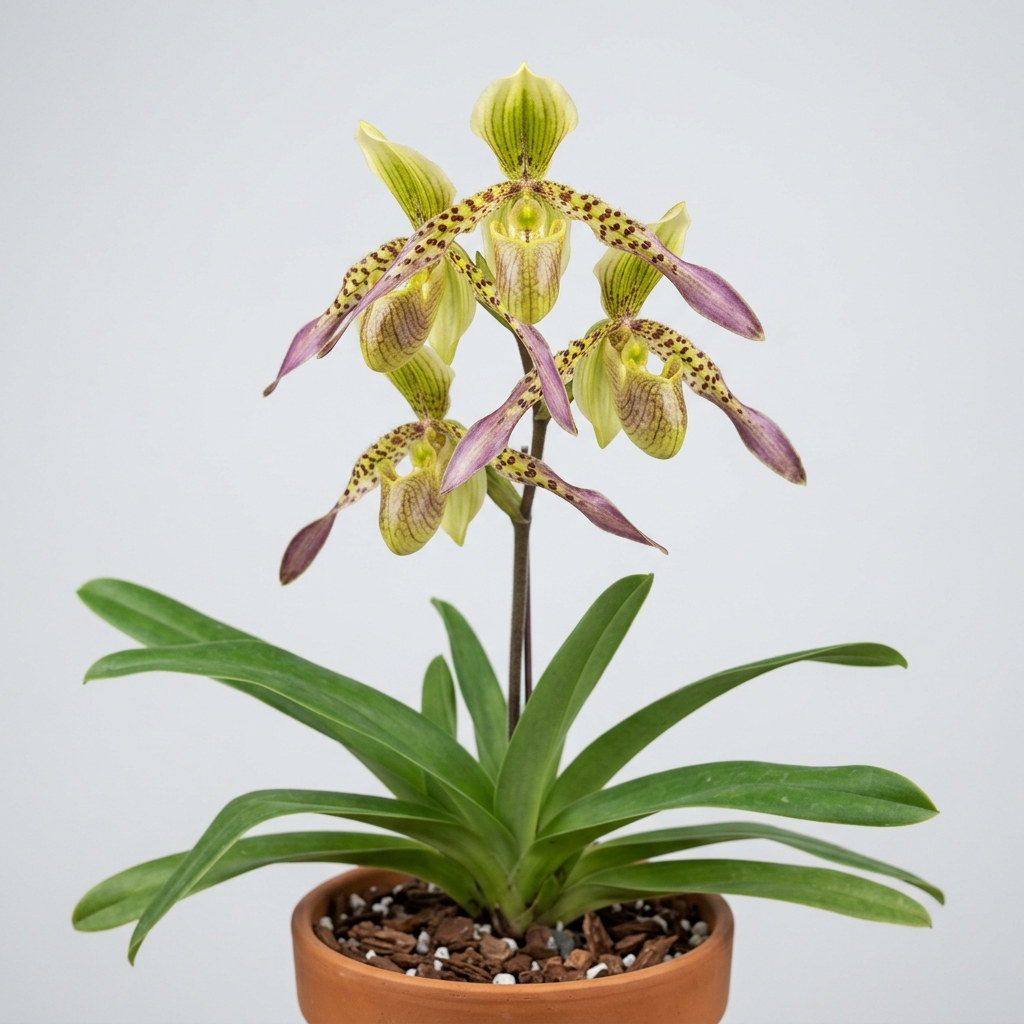
Paphiopedilum haynaldianum is a highly prized multifloral slipper orchid native to the Philippines. Known for its dramatic, exotic appearance, this species is characterized by its long, spreading petals adorned with bold spotting and its tall, arching flower spikes. It is a favorite among orchid enthusiasts who appreciate its architectural growth habit and the impressive, long-lasting floral displays it brings to indoor collections.
Unlike single-flowered slipper orchids, this robust species produces multiple large blossoms on a single stem, making it a spectacular centerpiece when in full bloom. It is relatively adaptable to intermediate and warm home environments, making it an excellent choice for growers looking to transition from common orchids to the fascinating world of multifloral Paphiopedilums.
💡 Did You Know?
Paphiopedilum haynaldianum belongs to the Paphiopedilum orchid group, where flower presentation is often just as important as . White-flowered cultivars are especially valued indoors because their pale blooms reflect well and pair easily with many home, greenhouse, and display settings.
🌿 Botanical Overview
Paphiopedilum haynaldianum is native to the islands of Luzon and Negros in the Philippines, where it typically grows at elevations ranging from sea level up to approximately 1,000 meters. In its natural habitat, it can be found growing as an epiphyte on mossy tree branches, a lithophyte on limestone cliffs, or occasionally as a terrestrial plant in leaf litter. This versatility in nature highlights its adaptability in cultivation.
Vegetatively, this orchid is characterized by its large, fan-shaped growth habit. The leaves are solid green, strap-like, and leathery, lacking the mottled or tessellated patterns found on many single-flowered Paphiopedilum species. The absence of leaf patterning is a common trait among multifloral slipper orchids, indicating their need for higher light levels to support their larger size and multiple blooms.
🌸 Flower Characteristics
The defining feature of Paphiopedilum haynaldianum is its spectacular multifloral bloom habit. A single, tall, purple-brown inflorescence can produce between three and six large flowers that open almost simultaneously. The flowers are beautifully arranged, presenting a striking architectural silhouette that stands out.
Each flower features long, narrow lateral petals that extend horizontally before gently drooping and twisting near the tips. These petals are yellowish-green at the base, heavily marked with large, dark maroon-brown spots, and transition to a lovely rose-purple shade at the spatulate tips. The dorsal sepal is broad and oval, displaying a pale green or yellow base with prominent dark spots and a clean white margin. The pouch, or labellum, is helmet-shaped and typically shows a yellowish-green hue suffused with soft brown or dull purple tones.
Fragrance & Bloom Profile
This species is generally considered non-fragrant, and any scent is not consistently documented in common grower references. Instead of fragrance, the primary appeal of this orchid lies in its visual impact and the remarkable longevity of its flowers.
The blooming cycle is highly rewarding. Individual flowers are exceptionally durable, often remaining fresh for six to eight weeks. Because the flowers on a single spike open in sequence or nearly all at once, the entire blooming display can easily last for two to three months, providing a long-lasting burst of color and form during its active blooming season.
Parentage & Hybrid Lineage
Paphiopedilum haynaldianum is a naturally occurring species rather than a man-made hybrid. However, its outstanding characteristics—such as its multifloral habit, long petals, and robust growth—have made it a highly valued parent in orchid hybridizing programs.
It has been crossed with numerous other Paphiopedilum species and hybrids to create elegant, free-flowering offspring. While specific line-bred cultivars and award-winning clones exist within the collector community, their individual registration details and precise parentage lines are best verified through official orchid registries, as they are not always consistently documented in general grower guides.
🌱 Growing Conditions
To grow this orchid successfully, it is important to replicate its intermediate to warm tropical origin. It thrives in temperatures ranging from 75°F to 85°F (24°C to 29°C) during the day, with a night drop to around 60°F to 65°F (15°C to 18°C). A distinct temperature differential between day and night is often beneficial for initiating flower spikes.
💡 Care Tip
For best results, grow Paphiopedilum haynaldianum in bright filtered with steady and gentle airflow. Avoid placing the plant in harsh midday sun, but do not keep it in a dark corner; weak is one of the most common reasons cultivated orchids refuse to rebloom.
Unlike mottled-leaf slipper orchids, Paphiopedilum haynaldianum requires bright, filtered light to thrive and bloom. It should be placed in a location that receives strong, indirect sunlight, such as an east-facing window or a shaded south-facing window. High humidity of 50% to 70% is ideal, and gentle, continuous air movement is essential to prevent stagnant air from causing leaf spotting or fungal issues.
Watering, Feeding & Potting Media
Because Paphiopedilums lack pseudobulbs for water storage, they must never be allowed to dry out completely. The potting medium should be kept evenly moist but never waterlogged. Water the plant thoroughly when the top of the medium begins to feel slightly dry to the touch, typically every five to seven days depending on your home’s environment.
Feed the orchid with a balanced, water-soluble orchid fertilizer diluted to quarter or half strength. Apply the fertilizer every two weeks during the active growing season, and flush the pot with pure, unfertilized water once a month to wash away any accumulated mineral salts. A well-draining potting mix is crucial; a blend of medium-grade fir bark, perlite, charcoal, and a small amount of chopped sphagnum moss works exceptionally well to retain moisture while ensuring excellent aeration for the roots.
Blooming Season & Care Notes
The typical blooming season for Paphiopedilum haynaldianum spans from late winter through spring. As the flower spike begins to emerge from the center of the leaf fan, it is important to keep the plant in a fixed position relative to the light source. Turning the plant during spike development can cause the buds to twist, resulting in a less orderly floral presentation.
Once the flowers have faded, allow the spike to turn completely brown and dry before cutting it back to the base of the plant. Repotting should be performed every one to two years, ideally in the spring after the blooming cycle has finished. This timing allows the orchid to settle into fresh media just as it begins its active period of new root and leaf growth.
⚠️ Common Issues
⚠️ Common Mistake
The most common mistake is by calendar instead of root and potting-media condition. Paphiopedilum roots need moisture and air at the same time, so constantly wet bark or sphagnum can lead to root loss even when the leaves still look healthy.
- Crown rot: This occurs when water is allowed to sit in the center of the leaf fan, especially overnight. Always water the pot directly and avoid wetting the foliage.
- Root rot: Caused by overwatering or a degraded, compacted potting medium that suffocates the roots. Ensure the mix drains rapidly.
- Bud blast: The premature drying and dropping of flower buds, usually triggered by sudden temperature fluctuations, low humidity, or dry drafts.
- Mealybugs and scale: These pests can hide deep within the tight leaf joints. Inspect the plant regularly and treat infestations promptly with insecticidal soap or horticultural oil.
- Leaf scorch: Yellowing or bleached patches on the leaves indicate the plant is receiving too much direct, unfiltered sunlight.
❓ Frequently Asked Questions
How often should I water Paphiopedilum haynaldianum?
Water this orchid when the top of the potting medium feels slightly dry, which is typically every 5 to 7 days. Because it does not have water-storing pseudobulms, the roots should remain consistently moist but never saturated in standing water.
Does Paphiopedilum haynaldianum require a winter rest?
No, it does not require a strict dry winter rest. However, slightly reducing water and allowing a natural drop in night temperatures during the autumn and winter months can help stimulate the development of its tall flower spikes.
Can I grow this orchid under artificial LED lights?
Yes, it adapts very well to LED grow lights. Position the plant where it receives moderate to high light levels, ensuring the leaves do not feel warm to the touch, and maintain a consistent 12-to-14-hour daily light cycle.
Why are the tips of my orchid’s leaves turning brown?
Brown leaf tips are commonly caused by low humidity, underwatering, or a buildup of fertilizer salts in the potting medium. Ensure humidity stays above 50% and flush the pot thoroughly with pure water once a month.
⭐ Final Growing Notes
While Paphiopedilum haynaldianum requires a bit more attention to watering consistency and light levels than common hybrid orchids, its spectacular multifloral display makes it an exceptionally rewarding species. By providing bright indirect light, steady moisture, and good air circulation, you can enjoy its dramatic, spotted blooms year after year, making it a true crown jewel of your orchid collection.
⚕️ Health, Safety & Edibility
Understanding how a plant interacts with people, pets, and the surrounding environment is part of responsible cultivation. This section uses conservative, general guidance and does not replace professional medical or veterinary advice.
Human Safety: Human Safety: Paphiopedilum haynaldianum is generally considered low risk during normal handling, although cultivar-specific safety documentation may be limited. Pet Safety: keep plant material away from curious cats, dogs, and other pets to avoid accidental chewing. Edibility: treat this orchid as ornamental and not intended for consumption unless edibility is well documented. Skin Contact: significant irritation is not commonly reported, but sensitive. Pet Safety: keep plant material away from.
🌱 Propagation Tip
Propagation should be approached patiently. Most home growers should wait for natural keikis or divide only mature, healthy plants when the orchid type allows it. Never remove a young growth until it has strong roots and enough leaves to support itself away from the parent plant.
⭐ Expert Advice
Repot after flowering when fresh root tips begin to appear. This timing helps the plant anchor quickly into new bark or sphagnum and reduces stress, especially for orchids grown indoors where airflow, , and drying speed can change from season to season.




Leave A Comment