
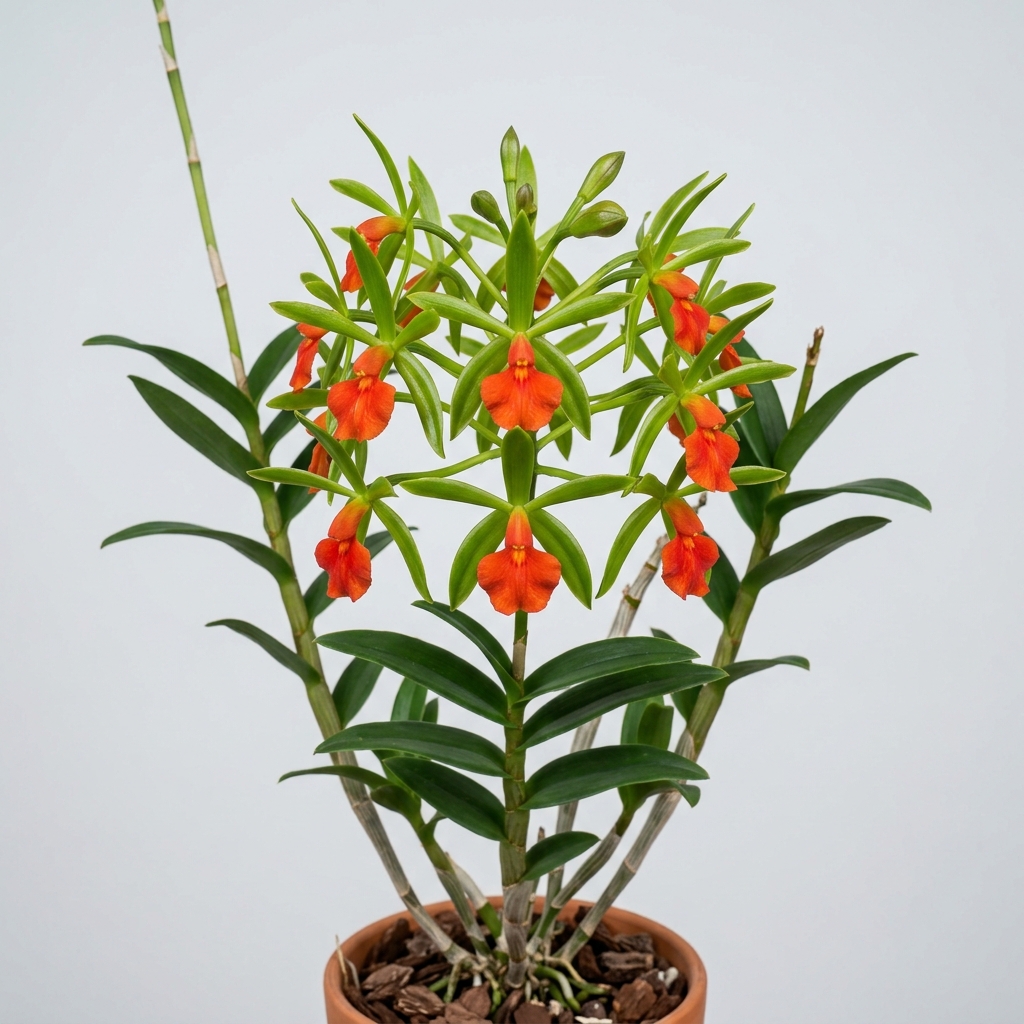
Epidendrum pseudepidendrum is a striking and highly sought-after reed-stem orchid species native to the tropical forests of Costa Rica and Panama. Renowned for its dramatic, contrasting color palette, this orchid produces upright, cane-like pseudobulbs that can reach impressive heights in optimal conditions. Orchid enthusiasts prize this species for its exotic, almost alien-looking flowers, which feature rich green tepals paired with a brilliant, waxy orange-to-red lip.
As a member of the diverse Epidendrum genus, this species is relatively robust but requires specific environmental conditions to truly thrive. Its unique growth habit and long-lasting blooms make it a standout specimen in intermediate to warm greenhouses and indoor collections. While it demands consistent moisture and high humidity, its rewarding floral display makes the precise care routine well worth the effort for dedicated growers.
💡 Did You Know?
Despite its name, which translates to 'false Epidendrum,' Epidendrum pseudepidendrum is indeed a true member of the Epidendrum . The name was given due to its superficial resemblance to other orchid genera when first discovered. Its unique combination of glossy green petals and a waxy, bright orange lip makes it one of the most color-contrasting species in the entire orchid .
🌿 Botanical Overview
Epidendrum pseudepidendrum is characterized by its tall, slender, cane-like pseudobulbs, often referred to as reeds, which grow closely together. These canes are covered in alternating, lanceolate leaves that are dark green and leathery, providing a lush backdrop even when the plant is not in bloom. In its natural habitat, it grows epiphytically on moss-covered tree trunks and branches, where it benefits from excellent air circulation and frequent rainfall.
Unlike some smaller orchid species, this plant can become quite large over time, with mature canes easily exceeding two to three feet in height. The root system is relatively fine but extensive, clinging tightly to its growing substrate. Understanding its epiphytic nature is key to replicating its native environment, where it experiences high humidity and rapid drainage.
🌸 Flower Characteristics
The flowers of Epidendrum pseudepidendrum are celebrated for their extraordinary color contrast and structural elegance. Each terminal inflorescence carries several blooms that open nearly simultaneously, presenting a spectacular cluster at the top of the cane. The sepals and petals are narrow, reflexed, and a deep, glossy green, which makes them blend seamlessly with the foliage.
The true focal point of the flower is the prominent, waxy labellum, or lip. This structure is a vibrant, saturated orange or reddish-orange, featuring a deeply lobed, almost rectangular shape with a yellow-tipped column. The contrast between the dark green tepals and the glowing orange lip is exceptionally rare in the orchid world, creating a visual impact that immediately draws the eye. Individual flowers are long-lasting, often remaining pristine for several weeks.
Fragrance & Bloom Profile
The fragrance profile of Epidendrum pseudepidendrum is a subject of some debate among growers, as it is not consistently documented in common horticultural references. Many growers report that the flowers are completely unscented, relying entirely on their vivid coloration to attract natural pollinators. However, some individuals note a very faint, sweet, or grassy aroma during the warmest hours of the day.
Because fragrance can be highly cultivar-dependent and influenced by environmental factors like temperature and humidity, growers should primarily cultivate this species for its visual appeal. The blooms are produced on terminal spikes arising from the apex of mature canes, with each spike bearing anywhere from three to ten flowers depending on the plant’s overall vigor.
Parentage & Hybrid Lineage
As a distinct, naturally occurring species rather than a man-made hybrid, Epidendrum pseudepidendrum does not have a complex parentage or hybrid lineage. It was formally described in the nineteenth century and has since been used as a parent in various intergeneric and intrageneric hybridization programs. Hybridizers value it for its intense lip coloration and upright growth habit.
When purchasing this orchid, growers will typically find it labeled as the pure species. However, some line-bred cultivars exist, selected for larger flower size, more intense lip coloration, or more compact growth habits. Because documentation on specific cultivar selections can be limited, buying from reputable orchid nurseries is recommended to ensure true-to-type specimens.
🌱 Growing Conditions
To cultivate Epidendrum pseudepidendrum successfully, growers must recreate the warm, humid conditions of Central American cloud forests. This orchid thrives in bright, filtered light, similar to the conditions preferred by many Cattleyas. While it can tolerate some direct morning sun, harsh afternoon sunlight will scorch the leaves and stress the plant. High-quality LED grow lights are an excellent option for indoor cultivation.
💡 Care Tip
Ensure your growing area has continuous, gentle air movement. This species thrives in high , but stagnant air can quickly lead to fungal leaf spot or crown rot. A small, oscillating fan placed nearby is highly beneficial.
Temperature control is critical for this species. It prefers intermediate to warm conditions, with daytime temperatures ranging from 75 to 85 degrees Fahrenheit and a slight drop at night to around 65 degrees Fahrenheit. Consistent air movement is essential to prevent stagnant air pockets, which can lead to fungal infections and leaf spotting in high-humidity environments. Aim to maintain relative humidity levels between 60% and 80%.
Watering, Feeding & Potting Media
Watering practices must balance the plant’s need for constant moisture with its requirement for rapid drainage. Unlike some orchids that prefer to dry out completely between waterings, Epidendrum pseudepidendrum should remain evenly moist, particularly during its active growth phase in spring and summer. Reduce watering slightly during the cooler winter months, but never allow the medium to become bone-dry.
A high-quality, free-draining potting medium is essential. A mix of medium-grade fir bark, perlite, and charcoal works well, often topped with a layer of sphagnum moss to retain moisture. Alternatively, some growers succeed with tree fern fiber or by mounting the plant on large cork slabs, provided they can maintain high humidity. Feed the orchid weekly with a balanced, diluted orchid fertilizer during the growing season, flushing the pot with pure water once a month to prevent salt buildup.
Blooming Season & Care Notes
Epidendrum pseudepidendrum typically blooms in the late winter through spring, though well-established plants in ideal conditions may produce flowers at other times of the year. The blooming cycle begins when a new cane reaches maturity and develops a terminal sheath. Once the flowers fade, do not cut the green spike immediately, as some reed-stem Epidendrums can occasionally produce secondary blooms or keikis from the nodes.
Repotting should be done with caution, as this species dislikes root disturbance. Only repot when the potting medium begins to break down or the plant completely outgrows its container. The best time to repot is in the spring, just as new root growth emerges from the base of the newest canes. Handle the fine roots gently to minimize transplant shock.
⚠️ Common Issues
⚠️ Common Mistake
A frequent mistake is allowing the potting medium to dry out completely. Unlike some orchids with thick pseudobulbs, this reed-stem species prefers consistent moisture and can suffer severe dehydration and leaf drop if left dry for too long.
- Root rot: Caused by overwatering or compacted, poorly draining potting media that suffocates the root system.
- Leaf spotting: Fungal or bacterial spots can develop if humidity is high but air circulation is inadequate.
- Bud blast: Sudden drops in humidity, drafts, or temperature fluctuations can cause developing buds to yellow and drop.
- Dehydration: Shriveled canes and wrinkled leaves indicate insufficient watering or a compromised root system unable to absorb moisture.
- Pests: Scale, mealybugs, and spider mites can occasionally target the tender new growth and the undersides of leaves.
❓ Frequently Asked Questions
How do I encourage my Epidendrum pseudepidendrum to bloom?
To encourage blooming, ensure the plant receives bright, filtered light and a slight drop in nighttime temperatures. Consistent watering and regular feeding during the active growing season are also crucial for the development of strong, mature canes capable of producing flowers.
Why are the leaves on my orchid turning yellow?
Yellowing leaves can be caused by several factors, including overwatering, underwatering, or excessive direct sunlight. Inspect the root system; if the roots are mushy and brown, root rot is the likely cause. If the roots are healthy, the plant may simply be receiving too much light or shedding older, lower leaves naturally.
Can I grow Epidendrum pseudepidendrum on a mount?
Yes, this species can be successfully grown on a mount, such as a cork slab or tree fern plaque, provided you can maintain high humidity and water the plant frequently. Mounted orchids dry out much faster than potted ones, often requiring daily watering or misting in warm weather.
What should I do with the cane after it finishes blooming?
After blooming is complete, leave the green cane intact. The plant uses the stored energy in older canes to support new growth. Only cut back canes that have turned completely brown, dry, and shriveled, using sterilized cutting tools to prevent the spread of disease.
⭐ Final Growing Notes
Epidendrum pseudepidendrum remains one of the most visually captivating species in the orchid hobby, offering a rewarding challenge for intermediate growers. By providing bright, filtered light, high humidity, and consistent moisture, you can enjoy its spectacular, long-lasting green and orange blooms year after year. Its unique architectural form and vibrant colors make it a true crown jewel in any tropical plant collection.
⚕️ Health, Safety & Edibility
Understanding how a plant interacts with people, pets, and the surrounding environment is part of responsible cultivation. This section uses conservative, general guidance and does not replace professional medical or veterinary advice.
Human Safety: Epidendrum pseudepidendrum is generally considered non-toxic. Pet Safety: No known toxicity to cats or dogs is reported. Edibility: This ornamental orchid is not edible. Skin Contact: Safe to handle, though sensitive individuals should wear gloves. Eye Contact: Avoid eye contact and wash hands after handling. Allergy Information: Pollen may cause mild seasonal sensitivities. Handling Advice: Use sterile tools when pruning to prevent plant.
🌱 Propagation Tip
Propagation is safest through division of mature clumps during repotting, ensuring each division has at least three to four healthy canes. Occasionally, this species may produce keikis along the canes, which can be gently removed and potted once they develop several roots of their own.
⭐ Expert Advice
To maximize bloom quality, avoid repotting this orchid unless absolutely necessary. It is highly sensitive to root disturbance and may skip a blooming season if its roots are disrupted. When repotting is required, use a high-quality, long-lasting medium to extend the time between repots.




Leave A Comment