
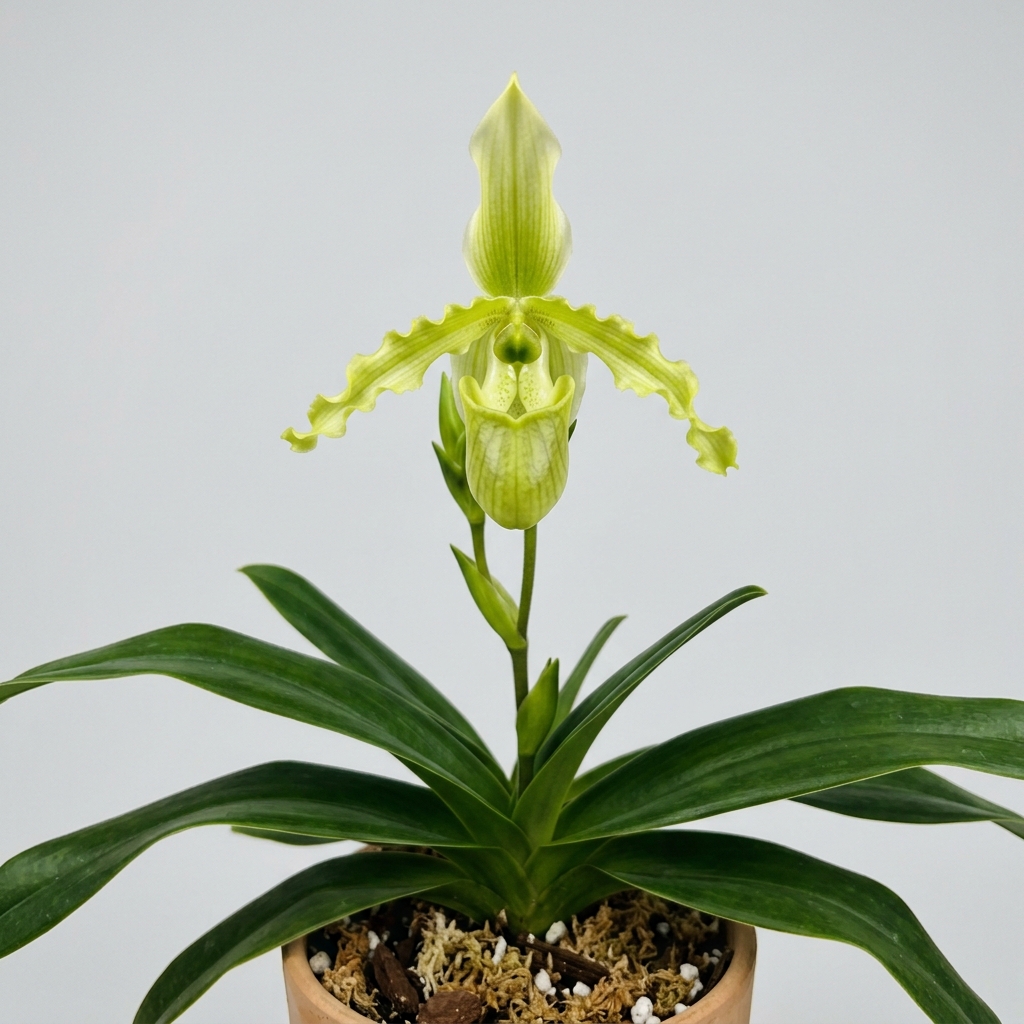
Phragmipedium boissierianum is a highly prized South American slipper orchid celebrated for its elegant, pale green blossoms and distinctively ruffled petals. Native to the wet, mountainous regions of Peru and Ecuador, this species thrives in cool to intermediate conditions, making it a captivating addition for dedicated orchid enthusiasts. Its striking architectural form and unique pouch-like lip command attention in any collection, embodying the exotic allure of wild Andean cloud forests.
Unlike many epiphytic orchids that require dry spells between waterings, this terrestrial and lithophytic orchid prefers a consistently moist root environment. Growers value it not only for its unusual, long-lasting flowers but also for its robust, fan-shaped foliage that remains attractive year-round. While it requires specific humidity and watering regimes to truly flourish, its rewarding growth habit makes it a classic representative of the Phragmipedium genus.
💡 Did You Know?
Phragmipedium boissierianum is known for its highly adapted pouch, which acts as a temporary trap for insect pollinators. Unlike some slipper orchids, its lateral petals feature distinctively ruffled, corkscrew-like twists that help guide crawling insects toward the fertile parts of the flower, showcasing a brilliant evolutionary design perfected in the misty Andean highlands.
🌿 Botanical Overview
Phragmipedium boissierianum naturally grows as a terrestrial or lithophytic plant, often found clinging to wet cliffs, steep embankments, or mossy road cuts in its native Andean habitats. It is typically found at elevations ranging from 400 to 1,500 meters, where it is constantly bathed in high humidity and frequent rainfall.
The plant features a classic sympodial growth habit, producing tight fans of strap-like, leathery green leaves that can reach up to 60 centimeters in length. The root system is adapted to constant moisture, consisting of thick, hairy roots that anchor the plant securely in organic debris or mossy rock crevices.
🌸 Flower Characteristics
The flowers of this species are renowned for their intricate, pale green to yellowish-green coloration, accented by delicate white and darker green veining. The most striking feature is the heavily ruffled or wavy margins of the lateral petals, which twist gracefully outward and downward.
The dorsal sepal is upright and slightly hooded, while the pouch-like labellum (the slipper) is deeply pocketed, serving as a specialized pollination mechanism. Individual flowers can measure up to 10 to 12 centimeters across, presented sequentially on an erect, sometimes branched inflorescence that rises well above the foliage.
Fragrance & Bloom Profile
This orchid is generally considered to be unscented, as fragrance is not consistently documented in common grower references. Instead of olfactory appeal, the species relies entirely on its complex visual architecture and vibrant green tones to attract natural pollinators.
The blooming cycle is sequential, meaning a single flower spike will produce and open flowers one after another over an extended period. This sequential habit ensures that while only one or two flowers may be open simultaneously, the overall display can last for several months.
Parentage & Hybrid Lineage
As a naturally occurring species rather than a man-made hybrid, Phragmipedium boissierianum possesses a pure genetic lineage that has been widely used in slipper orchid hybridization. It has contributed its desirable green coloration, ruffled petal margins, and robust growth habit to numerous popular primary and complex hybrids.
Its exact wild variants and regional forms are occasionally debated among taxonomists, but in the horticultural trade, it remains a distinct and stable species. When purchasing, growers should ensure they are sourcing plants from reputable nurseries that practice ethical propagation rather than wild collection.
🌱 Growing Conditions
To replicate its native mountain habitat, Phragmipedium boissierianum requires bright, filtered light without direct afternoon sun, which can easily scorch its tender foliage. An eastern or shaded southern exposure is typically ideal for maintaining healthy leaf color and encouraging flower spike development.
💡 Care Tip
Maintain constant air circulation around your orchid using a small personal fan. High combined with stagnant air is a recipe for leaf spotting and crown rot, so gentle, continuous air movement is essential for keeping the foliage dry and healthy.
Temperature control is crucial; the plant thrives in intermediate conditions, with daytime temperatures ranging from 20 to 26 degrees Celsius and a distinct drop at night to around 13 to 16 degrees Celsius. Constant air movement is essential to prevent stagnant air pockets, which can lead to bacterial or fungal infections in high-humidity environments.
Watering, Feeding & Potting Media
Watering is the most critical aspect of caring for this species, as it must never be allowed to dry out completely. The potting medium should remain consistently damp, resembling a wrung-out sponge, which requires watering multiple times a week depending on ambient humidity.
A well-draining, moisture-retentive potting mix is essential, typically composed of fine fir bark, sphagnum moss, perlite, and a small amount of charcoal to keep the medium sweet. Feed the plant weekly during the active growing season with a highly diluted, balanced orchid fertilizer, ensuring you flush the pot with pure water periodically to prevent mineral salt buildup.
Blooming Season & Care Notes
Blooming typically occurs from autumn through spring, though well-established plants can produce flower spikes at almost any time of the year. Once a flower spike emerges, avoid changing the plant’s orientation or environmental conditions, as sudden shifts can cause the developing buds to drop.
After the sequential blooming cycle is fully complete and the spike naturally turns brown, it can be cut back to the base of the fan. Repotting is best performed in the spring, just as new growth begins, ensuring the fresh media supports the plant’s high moisture requirements for the coming year.
⚠️ Common Issues
⚠️ Common Mistake
The most common mistake is allowing the potting medium to dry out completely between waterings. Unlike Phalaenopsis or Cattleya orchids, Phragmipedium boissierianum lacks pseudobulbs for water storage and will quickly suffer severe root damage if left dry.
- Root rot: Occurs if the potting medium degrades and loses its aeration, suffocating the roots despite the plant’s love for moisture.
- Leaf tip burn: Often caused by mineral accumulation from hard water or excessive fertilizer; using rainwater or distilled water is highly recommended.
- Bud blast: The premature dropping of flower buds, usually triggered by sudden drafts, low humidity, or drastic temperature fluctuations.
- Mealybugs and scale: Common pests that can hide in the tight crevices of the leaf fans; treat promptly with insecticidal soap or horticultural oil.
❓ Frequently Asked Questions
How often should I water Phragmipedium boissierianum?
This orchid should be watered frequently enough to keep the potting medium consistently moist but not waterlogged. Depending on your home’s humidity and temperature, this typically translates to watering two to three times per week. Never let the roots dry out completely, as this can cause immediate leaf stress and root loss.
What type of water is best for this slipper orchid?
Phragmipedium boissierianum is highly sensitive to dissolved minerals and salts in tap water. For optimal health and to prevent leaf tip burn, it is best to use rainwater, distilled water, or reverse osmosis water. If you must use tap water, ensure it has a very low mineral content.
Can I grow this orchid under artificial LED lights?
Yes, this species adapts exceptionally well to indoor cultivation under broad-spectrum LED grow lights. Position the lights to provide moderate intensity, ensuring the leaves maintain a healthy light-green color. If the leaves turn dark green, the light is too low; if they turn yellow or show bleached spots, move the lights further away.
When is the best time to repot my Phragmipedium?
The ideal time to repot is annually or biennially in the spring, right as new vegetative growth begins. Because this orchid requires constant moisture, the potting medium breaks down faster than it would for epiphytic orchids. Fresh, airy media is crucial to prevent root suffocation.
⭐ Final Growing Notes
While Phragmipedium boissierianum demands more consistent attention to moisture and water quality than standard grocery-store orchids, its unique, ruffled green blossoms make the effort profoundly rewarding. By maintaining high humidity, intermediate temperatures, and a constantly damp root zone, you can enjoy the elegant, sequential blooms of this Andean treasure for many years to come.
⚕️ Health, Safety & Edibility
Understanding how a plant interacts with people, pets, and the surrounding environment is part of responsible cultivation. This section uses conservative, general guidance and does not replace professional medical or veterinary advice.
Human Safety: Human Safety: Generally considered non-toxic to humans. Pet Safety: No significant reports of toxicity to dogs or cats are common. Edibility: This ornamental orchid is not intended for human or animal consumption. Skin Contact: Handling the foliage is generally safe, though sensitive individuals may experience mild irritation. Eye Contact: Avoid contact with eyes; flush with clean water if irritation occurs. Allergy Information: Pollen may cause mild. Pet Safety: keep plant material away from curious.
🌱 Propagation Tip
This orchid is best propagated by division during its spring repotting cycle. Ensure each division has at least three healthy, mature fans with active root systems to guarantee successful establishment. Avoid dividing the plant into single fans, as they struggle to recover.
⭐ Expert Advice
To prevent mineral buildup and subsequent leaf tip dieback, flush the potting medium thoroughly with pure rainwater or distilled water once a month. This leaching process washes away residual fertilizer salts, keeping the sensitive root system pristine and active.




Leave A Comment