
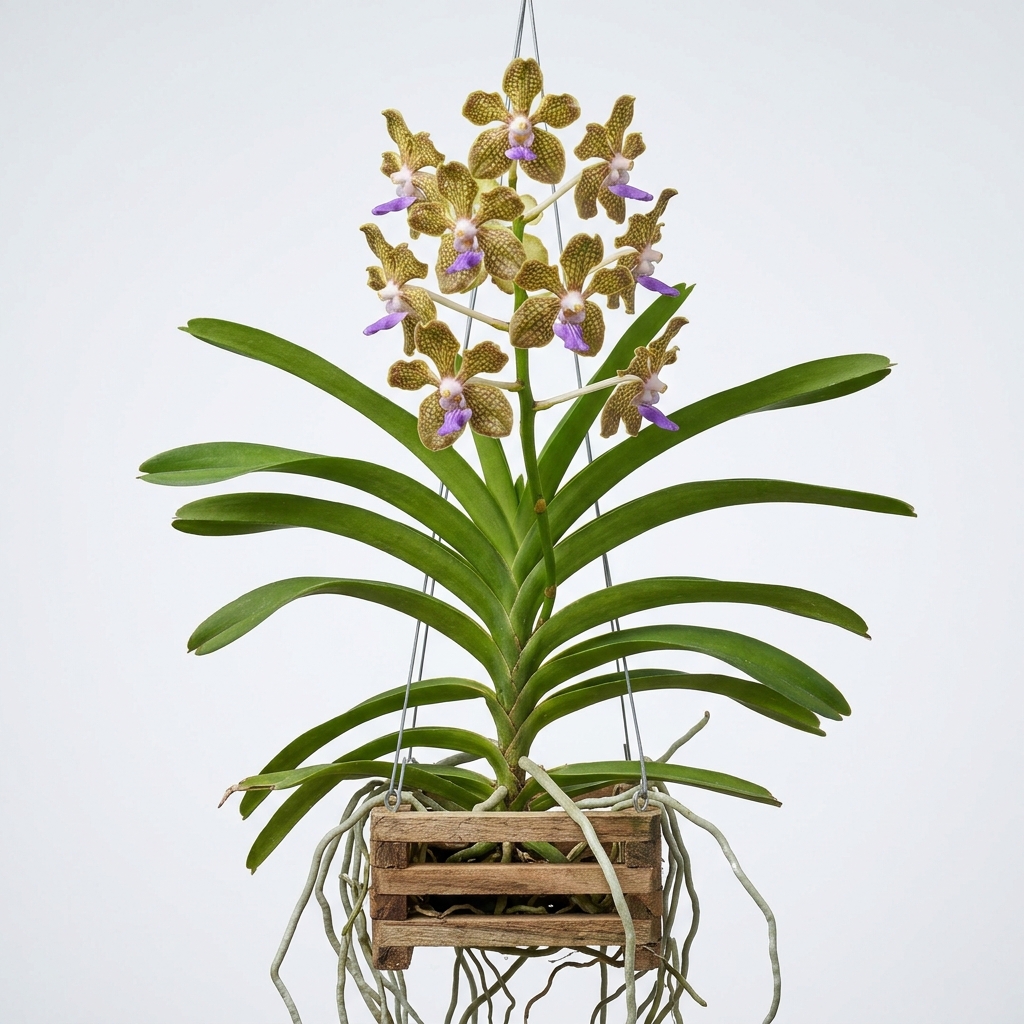
Vanda Bensonii is a highly esteemed monopodial orchid species, cherished by collectors for its distinctive tessellated flowers and elegant growth habit. Originating from the seasonally dry deciduous forests of Southeast Asia, this epiphytic orchid produces striking blooms that feature a captivating contrast between their patterned tepals and a colorful labellum. Its robust aerial root system and stately vegetative structure make it a classic representative of the Vanda genus, appealing to intermediate and advanced orchid enthusiasts.
In cultivation, Vanda Bensonii is celebrated for its reliable blooming nature and its ability to thrive in high-light, warm-temperature environments. While it requires attentive watering and high humidity to mimic its native monsoon-influenced habitat, its dramatic floral display rewards the disciplined grower. As a species that has also contributed to various modern hybrid lines, it remains a cornerstone of both historical orchid collections and contemporary hybridizing programs.
💡 Did You Know?
Vanda Bensonii is native to the seasonally dry forests of Myanmar and Thailand, where it has adapted to survive periods of drought by storing moisture in its thick, leathery leaves and spongy aerial roots. This natural adaptation makes it far more resilient to temporary dry spells in cultivation than many other tropical orchid species.
🌿 Botanical Overview
Vanda Bensonii is a medium-sized monopodial epiphyte characterized by its upright, strap-like leaves that grow in an alternating, fan-shaped arrangement along a central stem. The leaves are typically rigid, channeled, and recurved, helping the plant channel moisture toward its core while resisting desiccation in its native environments. In the wild, this species is found growing on tree trunks and branches where it is exposed to significant air movement and filtered, high-intensity sunlight.
The root system of Vanda Bensonii is exceptionally robust, producing thick, fleshy aerial roots covered in a spongy layer of velamen. This velamen layer acts as a rapid moisture absorber, drinking in humidity, dew, and rain before drying out quickly in the surrounding air currents. This specialized root structure dictates much of the plant’s cultural requirements in a domestic setting, necessitating an open, highly aerated environment.
🌸 Flower Characteristics
The inflorescence of Vanda Bensonii is an erect to sub-erect raceme that emerges from the leaf axils, typically carrying several well-spaced flowers. Each bloom is moderately sized, usually measuring between two to three inches in diameter. The sepals and petals are typically yellowish-green to olive-brown, adorned with a delicate network of darker brown tessellations or spots that give the flower a textured, patterned appearance.
The defining feature of the bloom is its prominent, contrasting labellum, or lip. The lip is generally trilobed, featuring a vibrant violet, pink, or magenta mid-lobe that draws the eye and serves as a visual guide for natural pollinators. The spur is short and slightly curved, completing a complex floral architecture that is highly admired by orchid judges and hobbyists alike.
Fragrance & Bloom Profile
Vanda Bensonii is widely celebrated for its fragrance, which is commonly described by growers as sweet, spicy, and occasionally carrying subtle metallic or honey-like undertones. The scent is typically most pronounced during the morning and early afternoon hours, coinciding with peak temperatures and light levels when pollinators are most active. However, fragrance intensity can vary based on individual plant genetics, environmental conditions, and overall cultural health.
The blooms are long-lasting, often remaining fresh and vibrant on the spike for several weeks under optimal conditions. To maximize the lifespan of the flowers, growers should avoid overhead misting once the buds begin to open, as excess moisture on the petals can encourage fungal spotting or premature senescence.
Parentage & Hybrid Lineage
As a naturally occurring species rather than a complex artificial hybrid, Vanda Bensonii possesses a pure genetic lineage that has evolved to suit its specific native habitat. In the taxonomic record, it is recognized as a distinct species within the Vanda genus. Because of its desirable flower color, tessellated patterning, and strong fragrance, it has been utilized by orchid breeders as a parent plant to introduce these traits into modern Vanda hybrids.
While its exact historical hybrid registration records are extensive, its influence is most visible in crosses aimed at producing compact, fragrant, and uniquely colored vandaceous orchids. When researching specific cultivars or offspring of Vanda Bensonii, growers should consult official registration databases, as parentage and hybrid names can occasionally be subject to taxonomic revisions and reclassifications.
🌱 Growing Conditions
To cultivate Vanda Bensonii successfully, replicating its native tropical environment is essential. This orchid thrives in bright, filtered light, requiring significantly more light than genera like Phalaenopsis. A location that receives strong morning sun with filtered afternoon shade is ideal. In northern climates, supplemental LED grow lights may be necessary during the winter months to maintain the high light levels required for robust growth and flowering.
💡 Care Tip
Ensure your Vanda Bensonii receives excellent air circulation, especially after . Hanging the plant near an open window with a gentle breeze or utilizing a small oscillating fan in your grow space will help dry the roots quickly, preventing fungal infections and root rot.
Temperature management is equally critical. Vanda Bensonii prefers warm to intermediate conditions, with daytime temperatures ideally ranging between 75°F and 85°F (24°C to 29°C) and a slight drop at night to stimulate blooming. High humidity levels of 60% to 80% must be maintained, accompanied by constant, gentle air movement to prevent stagnant air from settling on the foliage and roots, which can invite pathogens.
Watering, Feeding & Potting Media
Watering Vanda Bensonii requires a distinct approach compared to terrestrial or semi-terrestrial plants. Because it is typically grown bare-root in wooden slat baskets or suspended from wire hangers, the roots must be watered heavily and frequently—often daily during the hot summer months. The goal is to thoroughly saturate the aerial roots until they turn a vibrant green, and then allow them to dry completely within a few hours.
Feeding should be done regularly using a balanced, water-soluble orchid fertilizer diluted to quarter or half strength. A common grower practice is to fertilize “weakly, weekly” during the active growing season, flushing the root system with pure water periodically to prevent salt buildup. Traditional potting soil or dense moss should be avoided, as they suffocate the roots; if media must be used, extremely coarse fir bark or charcoal in a highly ventilated pot is recommended.
Blooming Season & Care Notes
Vanda Bensonii typically initiates its blooming cycle in the spring and summer, though variations can occur depending on local indoor climates and greenhouse conditions. The emergence of a flower spike from the leaf axils is a sign of proper light and temperature differentials. During this period, growers should keep the plant stable, avoiding sudden changes in orientation or environmental shifts that could stress the developing buds.
Once the blooming cycle is complete, the old flower spike should be cut back close to the stem using sterilized cutting tools. Repotting or basket maintenance is best performed during the active root-growth phase that follows flowering. When transferring the orchid to a larger basket, care must be taken to avoid breaking the active green root tips, as these are vital for the plant’s recovery and ongoing nutrient uptake.
⚠️ Common Issues
⚠️ Common Mistake
A frequent mistake is potting Vanda Bensonii in standard potting soil or dense sphagnum moss. This suffocates the thick aerial roots, which require constant exposure to air. Instead, grow the plant bare-root in an open wooden basket or use extremely coarse, free-draining bark media.
- Root Rot:
Occurs when roots remain wet for extended periods without adequate airflow, leading to mushy, black roots. - Bud Blast:
The premature drying and dropping of flower buds, often caused by sudden temperature drops, low humidity, or drafts. - Leaf Spotting: Fungal or bacterial pathogens can cause dark spots on the foliage, typically exacerbated by water remaining on the leaves overnight.
- Dehydration:
Indicated by shriveled, leathery leaves and dry, silvery roots that fail to turn green when watered. - Pests:
Mealybugs, scale, and spider mites can occasionally colonize the leaf axils and must be treated promptly with horticultural soap or neem oil.
❓ Frequently Asked Questions
How often should I water Vanda Bensonii when grown bare-root?
When grown bare-root in a basket, Vanda Bensonii typically requires daily watering during the warm spring and summer months, and sometimes twice daily during extreme heat. In the winter, watering can be reduced to every two to three days, provided the humidity remains high. Always ensure the roots turn green during watering and dry completely shortly after.
Why are the flower buds on my Vanda Bensonii falling off before opening?
This issue, known as bud blast, is usually triggered by environmental stress. Common culprits include sudden temperature fluctuations, low ambient humidity, dry indoor heating drafts, or moving the plant to a new location while the spike is developing. Maintaining stable conditions and high humidity can help prevent this.
Can I grow Vanda Bensonii indoors without a greenhouse?
Yes, Vanda Bensonii can be grown indoors, but it requires careful attention to light and humidity. Placing the orchid in a bright south- or east-facing window and utilizing a humidifier or humidity tray can help meet its requirements. Supplemental LED grow lights are highly recommended to provide the necessary light intensity indoors.
What is the best way to fertilize this orchid?
Vanda Bensonii benefits from a “weakly, weekly” fertilization routine. Apply a balanced, water-soluble orchid fertilizer diluted to one-quarter strength once a week during the active growing season. It is beneficial to flush the roots with plain water before fertilizing to prevent root burn and salt accumulation.
⭐ Final Growing Notes
Cultivating Vanda Bensonii is a rewarding endeavor that brings a touch of tropical elegance to any orchid collection. By respecting its monopodial growth habit, providing abundant light, and mastering the wet-dry cycle of its aerial roots, growers can enjoy its uniquely patterned, sweetly fragrant blooms year after year. While it demands more attention to humidity and watering than common houseplants, its striking botanical presence makes it a true prize for dedicated horticulturists.
⚕️ Health, Safety & Edibility
Understanding how a plant interacts with people, pets, and the surrounding environment is part of responsible cultivation. This section uses conservative, general guidance and does not replace professional medical or veterinary advice.
Human Safety: Vanda Bensonii is generally considered non-toxic to humans.
Pet Safety: This orchid species is widely reported as safe and non-toxic to dogs and cats.
Edibility: Ornamental orchids are not intended for human or animal consumption, and edibility is not well documented.
Skin Contact: Handling the plant is safe, though sensitive individuals should wash hands after contact.
Eye Contact: Avoid contact with eyes, as plant sap may cause mild,.
Pet Safety: keep plant material away from curious.
🌱 Propagation Tip
Monopodial orchids like Vanda Bensonii are typically propagated through the division of offshoots, known as keikis, which occasionally develop near the base of the main stem. Wait until the keiki has produced several robust roots of its own, at least two to three inches long, before carefully detaching it with a sterile blade.
⭐ Expert Advice
To stimulate reliable blooming in Vanda Bensonii, try to provide a distinct drop of about 10 to 15 degrees Fahrenheit between day and night during the autumn months. This natural thermal shift, combined with high levels, signals the plant to initiate flower spikes for the upcoming season.




Leave A Comment