
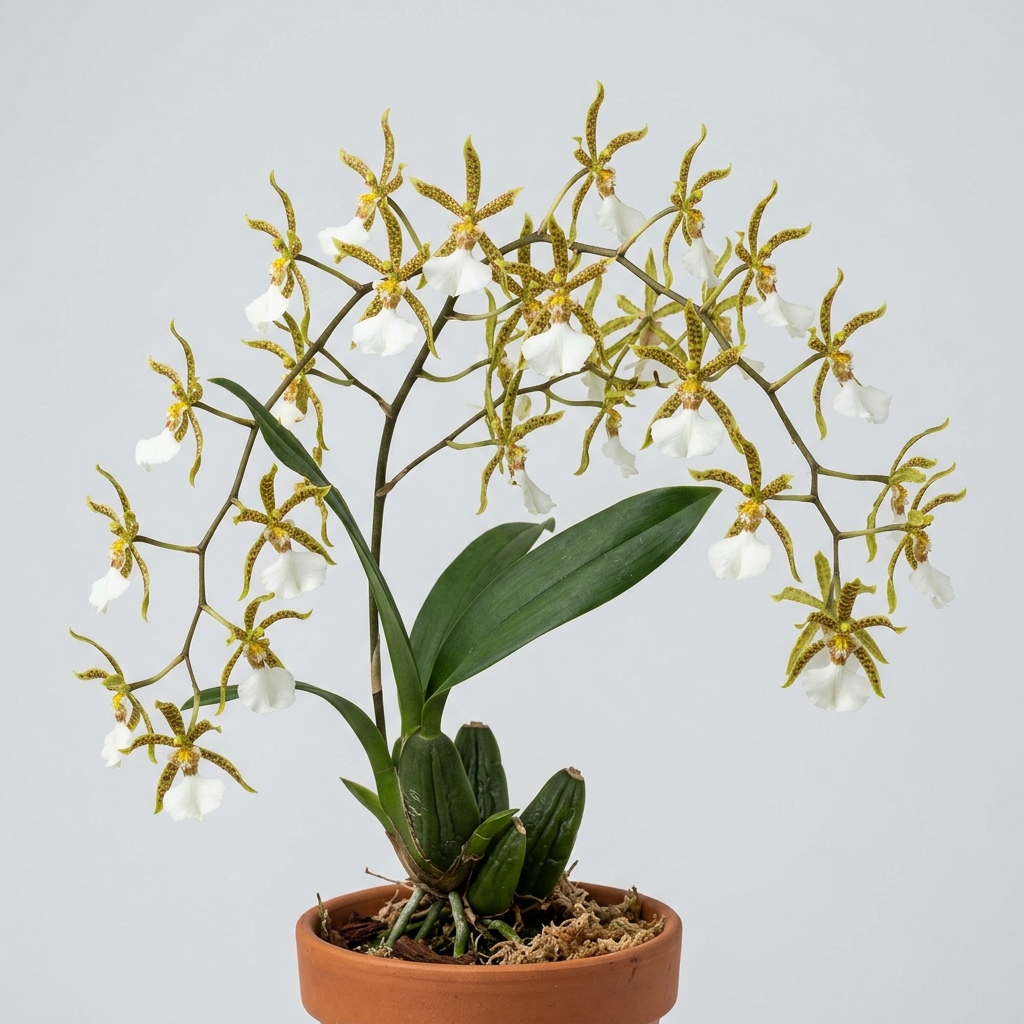
Oncidium Phymatochilum is a highly sought-after orchid species celebrated for its spectacular, cloud-like displays of delicate, spider-like blossoms. Originally native to the humid montane forests of Brazil, this epiphytic orchid produces large, branching inflorescences that can carry dozens of airy, star-shaped flowers. Its elegant growth habit and dramatic blooming presentation make it a prized centerpiece in any indoor orchid collection or greenhouse.
Cultivators value Oncidium Phymatochilum not only for its striking visual appeal but also for its relatively robust nature when provided with the correct environmental balance. While it shares some cultural requirements with standard Oncidium hybrids, its unique vegetative structure and delicate root system demand a slightly more tailored approach to watering and humidity. Understanding its natural habitat is key to unlocking its full blooming potential and enjoying its long-lasting floral displays.
💡 Did You Know?
Oncidium Phymatochilum is often referred to as a botanical master of disguise because its highly branched, airy inflorescences produce dozens of delicate, spidery flowers that sway gently in the slightest breeze, perfectly mimicking a swarm of hovering insects to attract natural pollinators in its native Brazilian canopy.
🌿 Botanical Overview
Oncidium Phymatochilum features a distinct growth habit characterized by compressed, dark green pseudobulbs that are typically topped by a single, leathery, lanceolate leaf. The pseudobulbs are often enveloped at the base by several leafy sheaths, which help protect the emerging growth. Over time, the plant forms tight clumps, with new pseudobulbs emerging from a short rhizome.
The root system of this species is relatively fine and highly sensitive to stagnant moisture, reflecting its epiphytic origin where roots are exposed to frequent wet-dry cycles. In its native Brazilian habitat, it grows on mossy tree trunks and branches, absorbing moisture from the humid air and frequent rainfall while enjoying rapid drainage.
🌸 Flower Characteristics
The defining feature of Oncidium Phymatochilum is its magnificent, arching inflorescence, which can reach up to three feet in length and branch extensively to form a loose panicle. Each inflorescence can support numerous small, intricately shaped flowers that resemble miniature dancing spiders or insects.
The sepals and petals are extremely narrow, elongated, and slightly reflexed, presenting a pale greenish-yellow hue adorned with reddish-brown spots or bars. In contrast, the prominent lip or labellum is pure white, three-lobed, and features a bright yellow, bumpy callus at its base. This striking contrast between the dark, spidery petals and the bright white lip creates a highly dynamic visual effect.
Fragrance & Bloom Profile
The fragrance of Oncidium Phymatochilum is a subject of delight among growers, though its intensity and exact scent profile can vary based on environmental conditions and individual plant genetics. Many cultivators report a soft, sweet, or subtly spicy scent that is most noticeable during the morning hours when temperatures begin to rise.
The blooms are remarkably long-lasting, often remaining fresh for six to eight weeks under optimal conditions. Because the flowers open sequentially or nearly simultaneously along the branching spike, the plant remains in peak beauty for an extended period, making the blooming season a highly anticipated annual event.
Parentage & Hybrid Lineage
As a distinct species rather than a complex artificial hybrid, Oncidium Phymatochilum carries a pure genetic lineage that has been preserved by orchid enthusiasts for generations. Taxonomists have occasionally debated its classification, sometimes placing it in its own monotypic genus as Phymatochilum brasiliense due to its unique floral morphology.
In hybridizing programs, this species has been used selectively to introduce its airy, multi-branched blooming habit and delicate, spidery flower form to new crosses. However, registered hybrids derived directly from this species remain relatively uncommon compared to more standard Oncidium intergenerics, preserving its status as a unique collector’s plant.
🌱 Growing Conditions
To cultivate Oncidium Phymatochilum successfully, growers should aim to replicate its native intermediate-to-warm forest environment. It thrives in bright, filtered light, similar to the conditions preferred by cattleya orchids, but should be shielded from direct midday sun, which can easily scorch the foliage. A east- or shaded south-facing window is often ideal.
💡 Care Tip
Provide constant, gentle air circulation around your Oncidium Phymatochilum using a small fan. Good airflow is critical for preventing fungal leaf spots and ensuring that the fine root system dries out rapidly after , mimicking its native forest canopy.
Temperature ranges should ideally remain between 65°F and 80°F (18°C to 27°C) during the day, with a slight drop of 10°F (5°C) at night to stimulate healthy growth and future spike initiation. High humidity levels of 60% to 80% are highly beneficial, accompanied by constant, gentle air movement to prevent fungal pathogens from settling on the leaves.
Watering, Feeding & Potting Media
Watering should be frequent but carefully managed. The potting medium should be allowed to become almost dry before watering again, but it should never be allowed to remain bone-dry for extended periods, especially during active growth. When watering, flush the pot thoroughly with tepid water, ensuring that excess moisture drains away immediately.
During the active spring and summer growing season, apply a balanced, diluted orchid fertilizer weekly at one-quarter strength. Reduce feeding significantly during the cooler winter months when growth slows. A well-draining potting mix consisting of fine to medium fir bark blended with perlite and a small amount of chopped sphagnum moss works exceptionally well to maintain moisture without suffocating the roots.
Blooming Season & Care Notes
Oncidium Phymatochilum typically initiates its blooming cycle in the spring or early summer, with flower spikes emerging from the base of the newly matured pseudobulbs. As the spike develops, it may require gentle staking to support the weight of the branching panicle, though many growers prefer to let it arch naturally for a more graceful display.
Once the blooming period concludes, allow the plant a brief period of rest with slightly reduced watering. Repotting should only be performed when new root growth begins to emerge from the base of the newest pseudobulb, usually in late spring or early summer. Avoid disturbing the root system unless the potting medium has begun to decompose.
⚠️ Common Issues
⚠️ Common Mistake
A frequent mistake is potting this species in heavy, dense soil or pure sphagnum moss without adequate drainage. This suffocates the fine, sensitive roots of Oncidium Phymatochilum, leading to rapid root rot, shriveled pseudobulbs, and eventual plant decline.
- Root Rot:
Caused by overwatering or compacted, poorly draining media that deprives roots of essential oxygen. - Leaf Spotting: Fungal or bacterial spots can develop if water sits on the foliage in stagnant, humid air.
- Bud Blast:
Sudden drops in humidity, drafts, or extreme temperature fluctuations can cause developing buds to yellow and drop. - Spider Mites and Mealybugs: Common pests that target the tender undersides of leaves and developing flower spikes.
- Pseudobulb Shriveling: A sign of dehydration, indicating either underwatering or a loss of roots due to rot.
❓ Frequently Asked Questions
How often should I water my Oncidium Phymatochilum?
Watering frequency depends heavily on your home environment and potting medium. Generally, water every 5 to 7 days during the active growing season, allowing the medium to dry out slightly between waterings. Reduce this frequency in winter when the plant is resting.
Can Oncidium Phymatochilum be grown mounted on cork?
Yes, this species thrives when mounted on cork bark or tree fern slabs, as this closely mimics its natural epiphytic growth habit. However, mounted plants require very high humidity and daily watering or misting to prevent the roots from drying out excessively.
Why are the leaves on my orchid turning yellow?
Yellowing leaves can indicate several issues, including overexposure to direct sunlight, overwatering leading to root rot, or natural aging of older leaves at the base of mature pseudobulbs. Assess the root health and light levels to determine the exact cause.
How do I encourage my Oncidium Phymatochilum to bloom?
To trigger blooming, ensure the plant receives bright, filtered light and experiences a distinct temperature drop of about 10 to 15 degrees Fahrenheit between day and night during the autumn and winter months, which helps stimulate spike development.
⭐ Final Growing Notes
Oncidium Phymatochilum is a rewarding and visually spectacular orchid that brings a touch of wild, natural elegance to any collection. By balancing bright, indirect light with high humidity and a highly porous potting medium, growers can enjoy its cloud-like sprays of spidery blooms year after year. While it requires a bit more attention to humidity and watering than common mass-market hybrids, the breathtaking reward of its delicate, fragrant blossoms makes every effort worthwhile.
⚕️ Health, Safety & Edibility
Understanding how a plant interacts with people, pets, and the surrounding environment is part of responsible cultivation. This section uses conservative, general guidance and does not replace professional medical or veterinary advice.
Human Safety: Oncidium Phymatochilum is generally considered non-toxic to humans, with no known.
Pet Safety: This orchid species is widely regarded as safe and non-toxic for dogs and cats,.
Edibility: Ornamental orchids are not intended for human or animal consumption, as they lack.
Skin Contact: Direct.
🌱 Propagation Tip
Propagate this orchid by division only when the plant has grown large, healthy, and has at least six to eight mature pseudobulbs. Carefully divide the rhizome using a sterile blade, ensuring each new division retains at least three healthy pseudobulbs and an active lead growth.
⭐ Expert Advice
To maximize the spectacular branching habit of the flower spike, avoid moving or rotating the plant once the inflorescence begins to emerge. Keeping the source consistent ensures the spike grows straight and the flowers present themselves in a uniform, elegant direction.




Leave A Comment