
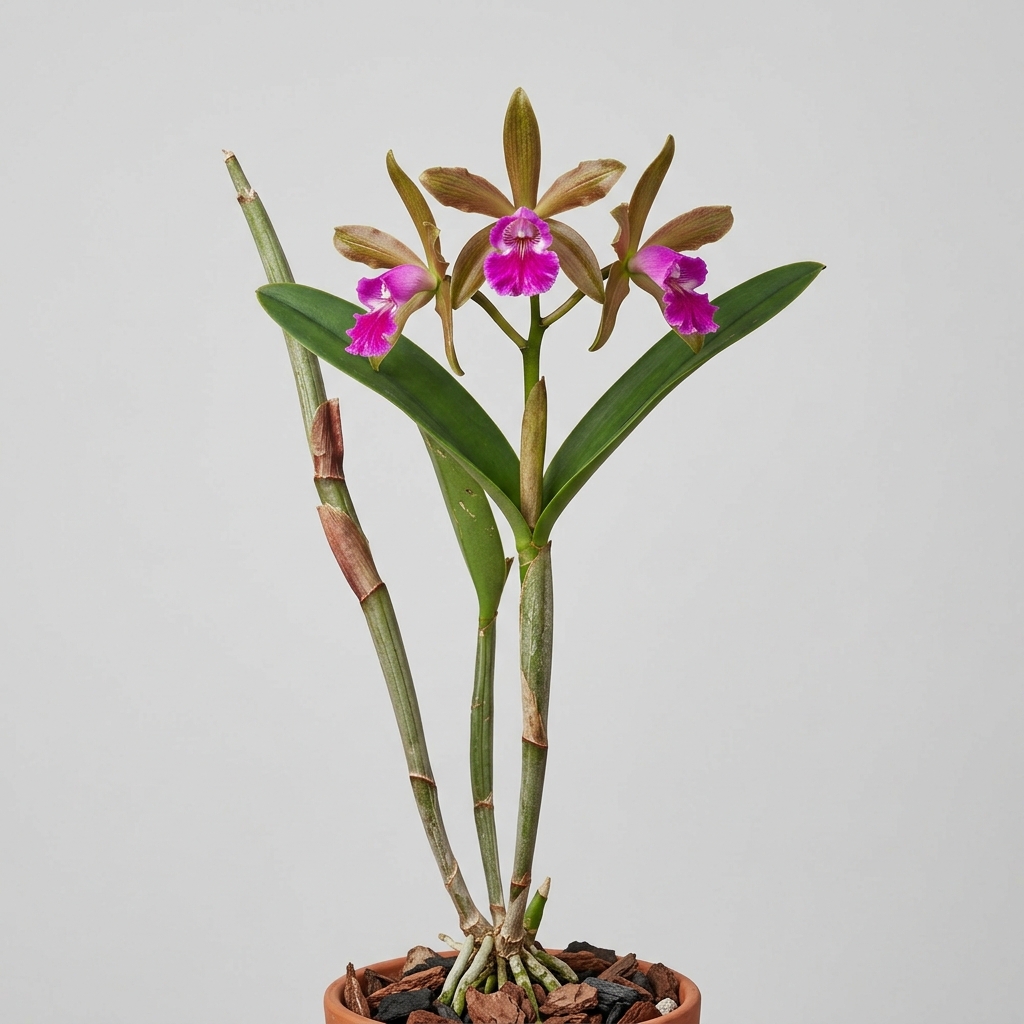
Cattleya Tenuis is a highly prized bifoliate orchid species celebrated by collectors for its elegant, slender growth habit and uniquely colored blossoms. Originating from the seasonally dry forest regions of Brazil, this orchid stands out within the Cattleya genus due to its tall, cane-like pseudobulbs and its striking contrast of bronze-green petals against a vibrant magenta lip.
Cultivating this orchid offers a rewarding challenge for intermediate to advanced growers who appreciate its distinct seasonal growth cycle. With its warm-temperature preferences and requirement for excellent root aeration, Cattleya Tenuis brings a touch of exotic sophistication to any indoor greenhouse or specialized growing space.
💡 Did You Know?
Cattleya Tenuis is named for its exceptionally slender pseudobulbs, with 'tenuis' translating to thin or slender in Latin. This unique growth habit allows the orchid to sway gracefully in the gentle breezes of its native Brazilian canopy, minimizing wind resistance while maximizing its exposure to vital sunlight.
🌿 Botanical Overview
Cattleya Tenuis is characterized by its exceptionally slender, cylindrical pseudobulbs that can reach impressive heights, often growing up to 18 to 24 inches tall. Unlike unifoliate Cattleyas that bear a single leaf, this species is bifoliate, typically producing two rigid, leathery, oblong leaves at the apex of each pseudobulb. This upright, cane-like growth habit gives the plant a distinct architectural silhouette even when it is not in bloom.
In its native Brazilian habitats, the species grows epiphytically on trees or occasionally lithophytically on rocky outcrops. It has adapted to survive in environments that experience pronounced wet and dry seasons. This natural adaptation influences its root structure, which consists of thick, velamen-covered roots designed to rapidly absorb moisture and cling securely to rough surfaces.
🌸 Flower Characteristics
The flowers of Cattleya Tenuis are a masterclass in natural color contrast. Each inflorescence typically carries between two and six flowers, which emerge from a green sheath at the top of the mature pseudobulb. The petals and sepals are relatively narrow and star-shaped, displaying shades ranging from olive green and bronze to a rich copper-brown, often adorned with subtle mahogany spots.
The defining feature of the bloom is its prominent, deeply trilobed lip, or labellum. The lateral lobes wrap neatly around the column, while the mid-lobe flares outward in a brilliant shade of magenta, amethyst, or rose-pink. The surface of the lip often features delicate veining and a slightly ruffled margin, creating a stunning visual focal point against the darker, earth-toned petals.
Fragrance & Bloom Profile
This orchid is known to produce a delicate, pleasing fragrance that is most noticeable during the morning hours when light and temperature levels begin to rise. The scent is generally described as sweet and floral, with subtle spicy undertones, though the intensity can vary depending on individual clone genetics and environmental conditions.
The blooms are relatively long-lasting for a Cattleya species, often remaining fresh and vibrant for three to five weeks if kept in a cool, draft-free environment. To maximize the lifespan of the flowers, growers should avoid getting water directly on the petals during routine watering, as excess moisture can encourage fungal spotting or premature wilting.
Parentage & Hybrid Lineage
Cattleya Tenuis is recognized as a distinct, naturally occurring species rather than a man-made hybrid. While it is sometimes confused with Cattleya bicolor due to its similar lip structure and growth habit, taxonomists classify it separately based on its more slender pseudobulbs, distinct floral morphology, and specific geographic distribution.
In orchid breeding, Cattleya Tenuis has been utilized in hybridizing programs to introduce its desirable traits, such as its tall, elegant stature, unusual bronze-green coloration, and contrasting magenta lip. When researching registered hybrids, growers will find it listed as a parent in several complex bifoliate Cattleya crosses, though pure species specimens remain highly sought after by purists.
🌱 Growing Conditions
To cultivate Cattleya Tenuis successfully, replicating its native tropical environment is key. This orchid thrives in bright, indirect light, similar to the conditions preferred by most bifoliate Cattleyas. A location with strong morning sun and filtered afternoon light, such as an east- or shaded south-facing window, is ideal. High light levels are crucial for stimulating healthy pseudobulb development and later flowering.
💡 Care Tip
Provide your Cattleya Tenuis with strong, filtered morning sunlight. If the leaves turn a , grassy green, the orchid is receiving the ideal amount of ; dark green leaves indicate it needs more to bloom successfully.
Temperature ranges should be kept warm to intermediate, with daytime temperatures between 75°F and 85°F, and a nighttime drop to around 60°F to 65°F. Adequate air movement is absolutely essential for this species; constant, gentle airflow helps prevent stagnant moisture on the leaves and roots, significantly reducing the risk of bacterial and fungal infections.
Watering, Feeding & Potting Media
During its active growing phase in the spring and summer, Cattleya Tenuis requires regular, thorough watering. The potting medium should be allowed to dry out almost completely between waterings, as the roots are highly sensitive to prolonged saturation. A coarse, fast-draining potting mix consisting of large fir bark, horticultural charcoal, and perlite is highly recommended to ensure rapid drainage.
Feeding should be aligned with the active growth cycle. Apply a balanced, water-soluble orchid fertilizer at quarter or half strength every two weeks. As the new pseudobulbs mature in late summer, gradually reduce fertilizer applications. Many growers find success mounting this species on cork bark or tree fern plaques, provided they can maintain high humidity levels and water the plant daily during hot weather.
Blooming Season & Care Notes
Cattleya Tenuis typically initiates its blooming cycle in late summer or early autumn, with flowers emerging from the newly matured pseudobulbs. Once the flowering period concludes, the orchid enters a semi-dormant rest phase during the cooler winter months. During this rest period, watering must be significantly reduced, providing only enough moisture to prevent the pseudobulbs from shriveling.
Repotting should only be performed when absolutely necessary, as this species dislikes root disturbance. The ideal time to repot or divide the plant is in the early spring, just as new root tips begin to emerge from the base of the newest pseudobulb. Handling the roots gently during this process ensures the plant establishes quickly in its new container.
⚠️ Common Issues
⚠️ Common Mistake
A common mistake is overwatering Cattleya Tenuis during its winter rest period. Excessive moisture when the plant is semi-dormant easily leads to root rot, which can severely weaken or kill the orchid before the spring growing season begins.
- Root Rot:
Caused by overwatering or compacted, decaying potting media that retains too much moisture around the sensitive root system. - Dehydration:
Indicated by shriveled pseudobulbs and wrinkled leaves, often resulting from underwatering or a loss of functional roots due to rot. - Scale and Mealybugs: Common sap-sucking pests that hide in the crevices of the pseudobulb sheaths and under leaves; treat promptly with insecticidal soap or neem oil.
- Fungal Leaf Spotting: Dark spots on the foliage caused by high humidity combined with poor air circulation or water droplets remaining on leaves overnight.
❓ Frequently Asked Questions
How often should I water my Cattleya Tenuis?
Water thoroughly when the potting medium is almost completely dry. During the active spring and summer growing season, this may be every 5 to 7 days, while the winter rest period requires much less frequent watering, typically every 10 to 14 days.
Why is my Cattleya Tenuis not blooming?
The most common reason for a lack of flowers is insufficient light. Ensure your orchid receives bright, indirect light. Additionally, a distinct temperature drop between day and night is often necessary to trigger the bud initiation process.
Can I grow Cattleya Tenuis mounted on wood?
Yes, mounting this species on cork bark or tree fern plaques is highly effective because it mimics its natural epiphytic growth habit. However, mounted plants dry out very quickly and require daily watering and high ambient humidity to thrive.
What should I do with the flower spike after blooming?
Once the flowers have faded and fallen off, you can cut the dry, brown flower spike back to the base of the sheath using sterilized cutting tools. Be careful not to damage the main pseudobulb or leaves during this process.
⭐ Final Growing Notes
Cattleya Tenuis is a magnificent representation of Brazil’s rich orchid flora, offering a rewarding experience for growers who can accommodate its seasonal needs. By providing bright light, excellent drainage, and a drier winter rest, you will be rewarded with an annual display of exotic, bronze-and-magenta blossoms that stand as a testament to your horticultural care.
⚕️ Health, Safety & Edibility
Understanding how a plant interacts with people, pets, and the surrounding environment is an important part of responsible cultivation. The information below reflects current horticultural knowledge and should not be considered a substitute for professional medical or veterinary advice.
Human Safety: No published evidence currently identifies Cattleya tenuis as toxic to humans. As with most ornamental plants, it is not intended for consumption, and accidental ingestion may cause mild digestive discomfort in sensitive individuals.
Pet Safety: Cattleya tenuis is not known to be toxic to cats or dogs. However, chewing leaves, flowers, or potting media may cause temporary gastrointestinal upset, so pets should be discouraged from eating any part of the plant.
Edibility: Ornamental orchids are cultivated for display rather than food and should not be considered edible. Although they are not generally regarded as poisonous, consuming any part of the plant is not recommended.
Skin Contact: Direct contact with the plant rarely causes skin irritation under normal handling. Individuals with sensitive skin may prefer to wear gloves when repotting, pruning, or working with potting media.
🌱 Propagation Tip
Propagate this species by division only when the plant has outgrown its container and has at least six healthy pseudobulbs. Ensure each new division contains at least three active pseudobulbs with a viable lead growth to support rapid recovery.
⭐ Expert Advice
When repotting, secure the tall pseudobulbs with a rhizome clip or stake. Because Cattleya Tenuis is top-heavy, any movement of the plant in its new pot can damage the tender, emerging root tips and delay establishment.




Leave A Comment