
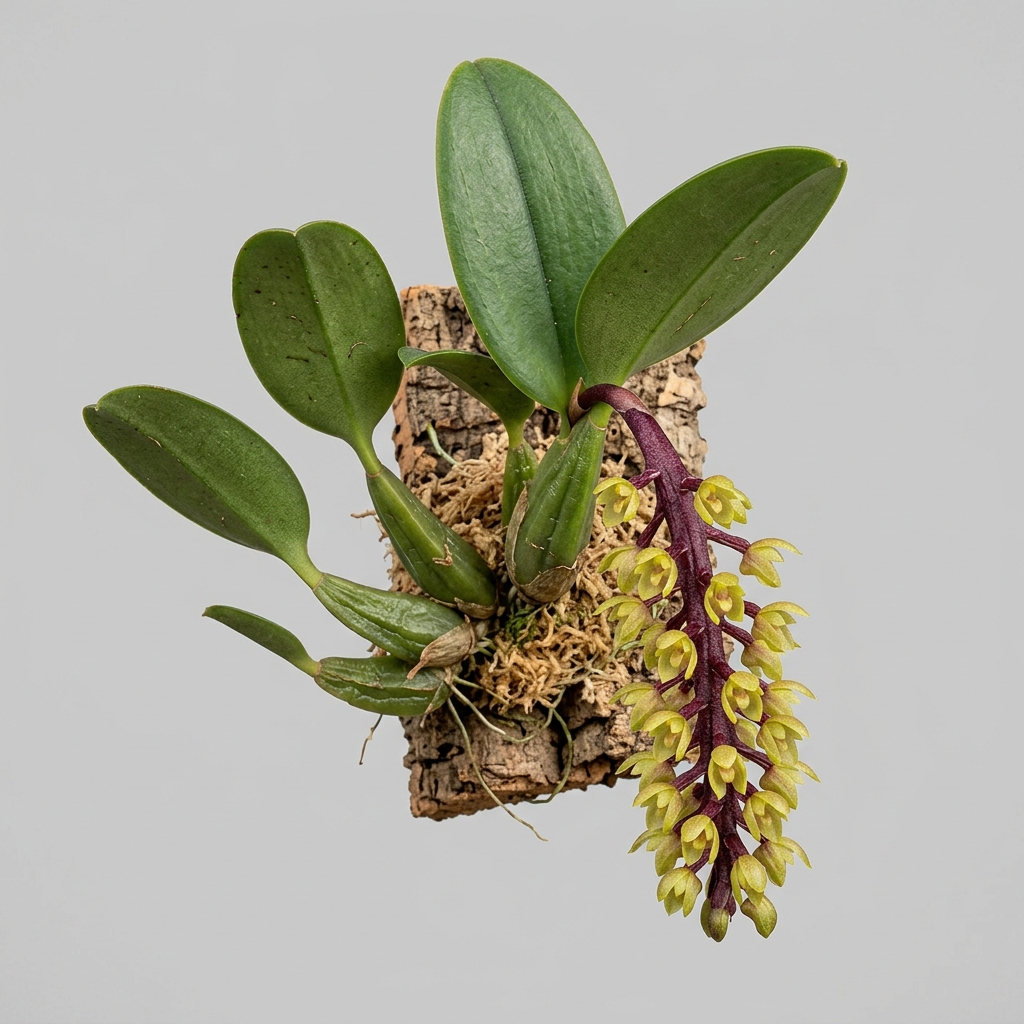
Bulbophyllum Saurocephalum, commonly known as the lizard-headed Bulbophyllum, is a highly unusual epiphytic orchid species native to the Philippines. Highly prized by collectors of botanical oddities, this orchid is famous for its distinctive, fleshy inflorescence that closely resembles a reptilian head. It features stout, single-leaved pseudobulbs connected by a creeping rhizome, making it an excellent candidate for basket culture or mounting where its unique growth habit can be fully appreciated.
While it may not possess the classic, showy petals of more mainstream orchid genera, this species captivates growers with its architectural form and complex evolutionary adaptations. Cultivating this orchid successfully requires an understanding of its tropical forest origins, demanding consistent moisture, high humidity, and moderate warmth. For the dedicated enthusiast, it offers a rewarding glimpse into the highly specialized world of fly-pollinated orchids.
💡 Did You Know?
Bulbophyllum Saurocephalum is part of the Bulbophyllum orchid group, a favorite among growers because its flowers, growth habit, and care needs make it useful for comparing cultivated orchids within the same . Observing its leaves, roots, and bloom spikes can help growers understand how this cultivar responds to indoor conditions.
🌿 Botanical Overview
Bulbophyllum Saurocephalum is a medium-sized epiphyte characterized by its prominent, angled pseudobulbs that grow along a creeping rhizome. Each pseudobulb bears a single, thick, leathery leaf that is oblong to elliptic in shape. This robust vegetative structure allows the plant to store moisture and nutrients, helping it survive short periods of dryness in its native canopy habitats.
The growth habit of this species is distinctly spreading. Over time, the rhizomes branch out to form dense mats or cascading specimens when grown in hanging baskets. This vegetative growth is typical of many montane Bulbophyllum species, which rely on rapid horizontal spread to secure themselves to mossy tree branches in humid forest environments.
🌸 Flower Characteristics
The defining feature of Bulbophyllum Saurocephalum is its remarkable inflorescence. Emerging from the base of the mature pseudobulb, the flower spike develops into a thick, fleshy, club-shaped rachis that is typically dark red, purple, or maroon. This swollen structure is densely packed with numerous small, sessile flowers that open progressively or nearly simultaneously along its length.
The individual flowers are relatively small and structurally complex. They feature fleshy sepals and petals that are often yellowish-green with reddish-purple striping or flushing. The lip, or labellum, is highly mobile—a classic trait of the genus—and is designed to move with the slightest breeze to assist in attracting and guiding insect pollinators toward the reproductive column.
Fragrance & Bloom Profile
The fragrance of Bulbophyllum Saurocephalum is a subject of much discussion among orchid growers. Like many members of its genus that rely on dipteran (fly) pollinators, the flowers often emit a distinct, somewhat musky or slightly unpleasant odor. This scent is an evolutionary adaptation designed to mimic decaying organic matter, attracting specific insect species to facilitate pollination.
However, the intensity of the fragrance can vary significantly depending on environmental factors such as temperature, humidity, and the time of day. Some growers report a faint, almost imperceptible scent, while others note a more pronounced aroma in warm, enclosed growing spaces. The blooms typically last for several weeks, providing an extended period of botanical interest.
Parentage & Hybrid Lineage
As a naturally occurring species rather than a man-made hybrid, Bulbophyllum Saurocephalum does not have a complex lineage of parental cultivars. It is classified within the megadiverse genus Bulbophyllum, which comprises over 2,000 species distributed across the tropical regions of the world.
While it is occasionally used in specialized breeding programs to introduce its unique rachis structure and dark coloration to new hybrids, such crosses remain relatively rare in the commercial market. Most specimens available to hobbyists are propagated through division or grown from seed sourced from selfed or outcrossed parent plants.
🌱 Growing Conditions
To cultivate Bulbophyllum Saurocephalum successfully, growers should aim to replicate the warm, humid conditions of its native Philippine forests. It thrives in intermediate to warm temperatures, ideally ranging from 65°F to 85°F (18°C to 29°C) during the day, with a slight drop at night to stimulate healthy growth and eventual blooming.
💡 Care Tip
For best results, grow Bulbophyllum Saurocephalum in bright filtered with steady and gentle airflow. Avoid placing the plant in harsh midday sun, but do not keep it in a dark corner; weak is one of the most common reasons cultivated orchids refuse to rebloom.
Light levels should be kept moderate to low, mimicking the dappled shade of a forest canopy. Bright, indirect light is ideal, while direct afternoon sunlight must be avoided to prevent the leathery leaves from scorching. Strong, continuous air movement is also critical, as it helps prevent fungal pathogens from establishing on the damp foliage and pseudobulbs.
Watering, Feeding & Potting Media
This orchid prefers to remain consistently moist but never waterlogged. Because of its creeping rhizome, it is best grown in shallow, wide wooden baskets or mounted on cork bark slabs with a pad of high-quality sphagnum moss. If potted, a highly porous, moisture-retentive medium such as a mix of fine fir bark, perlite, and chopped sphagnum moss should be used.
Watering should be frequent, especially during the active growing season in spring and summer. During this time, apply a balanced, highly diluted orchid fertilizer weekly or bi-weekly. In the cooler winter months, watering can be slightly reduced, allowing the medium to dry out just slightly between waterings, though the plant should never be allowed to shrivel or dry out completely.
Blooming Season & Care Notes
Bulbophyllum Saurocephalum typically produces its unusual flower spikes in the spring or early summer, coinciding with the onset of warmer temperatures and increased light levels. The development of the fleshy rachis can take several weeks, during which time consistent humidity and moisture are crucial to prevent the developing buds from blasting.
Once the blooming cycle is complete, the old flower spikes can be cut back to the base of the pseudobulb. Repotting or dividing should ideally be performed in the spring, just as new vegetative growths and fresh root tips begin to emerge. This minimizes transplant shock and allows the plant to quickly establish itself in its new medium.
⚠️ Common Issues
⚠️ Common Mistake
The most common mistake is by calendar instead of root and potting-media condition. Bulbophyllum roots need moisture and air at the same time, so constantly wet bark or sphagnum can lead to root loss even when the leaves still look healthy.
- Root Rot:
Caused by compacted, poorly draining media or overwatering, leading to the rapid decline of the root system. - Leaf Spotting: Fungal or bacterial spots can develop if water is allowed to sit on the leaves in stagnant air.
- Bud Blast:
Sudden drops in humidity or extreme temperature fluctuations can cause developing flower spikes to wither and die before opening. - Dehydration:
Shriveled pseudobulbs and wrinkled leaves indicate insufficient watering or low ambient humidity. - Pests:
Mealybugs, scale, and spider mites can occasionally target the crevices of the pseudobulbs and the undersides of the leaves.
❓ Frequently Asked Questions
How often should I water Bulbophyllum Saurocephalum?
This orchid should be watered frequently to keep the growing medium consistently moist. Mounted specimens may require daily watering or misting in warm weather, while potted plants should be watered as soon as the top layer of media begins to feel slightly dry.
Does this orchid have a bad smell?
Yes, the flowers of this species can emit a musky, slightly unpleasant odor designed to attract fly pollinators. However, the scent is typically not overpowering unless the plant is kept in a very warm, unventilated space.
Can I grow Bulbophyllum Saurocephalum under LED lights?
Yes, this species adapts well to artificial lighting. Position the plant under moderate-intensity LED grow lights, ensuring it receives about 12 to 14 hours of light daily, while keeping it far enough from the light source to avoid leaf burn.
Why are the pseudobulbs on my orchid shriveling?
Shriveled pseudobulbs are usually a sign of dehydration, which can result from underwatering, extremely low ambient humidity, or a compromised root system that can no longer absorb water effectively.
⭐ Final Growing Notes
Bulbophyllum Saurocephalum is a captivating species that rewards the patient grower with one of the most unusual floral displays in the orchid world. By providing consistent warmth, high humidity, and a well-drained, moist root environment, enthusiasts can successfully cultivate this remarkable Philippine native. It stands as a testament to the diverse and fascinating evolutionary paths found within the orchid family.
⚕️ Health, Safety & Edibility
Understanding how a plant interacts with people, pets, and the surrounding environment is an important part of responsible cultivation. The information below reflects current horticultural knowledge and should not be considered a substitute for professional medical or veterinary advice.
Human Safety: This plant is generally considered low risk during normal handling, although species-specific safety documentation may be limited. As with most ornamental plants, accidental ingestion may cause mild gastrointestinal discomfort in sensitive individuals.
Pet Safety: This orchid is not known to be toxic to cats or dogs. However, chewing leaves, flowers, roots, or potting media may cause temporary gastrointestinal upset, so pets should be discouraged from consuming any part of the plant.
Edibility: Ornamental orchids are cultivated for display rather than food and are not intended for human or animal consumption. Although they are not generally regarded as poisonous, consuming any part of the plant is not recommended.
Skin Contact: Direct skin contact rarely causes irritation under normal handling. Individuals with sensitive skin may prefer to wear gloves when repotting, pruning, or handling potting media.
🌱 Propagation Tip
Propagation should be approached patiently. Most home growers should wait for natural keikis or divide only mature, healthy plants when the orchid type allows it. Never remove a young growth until it has strong roots and enough leaves to support itself away from the parent plant.
⭐ Expert Advice
Repot after flowering when fresh root tips begin to appear. This timing helps the plant anchor quickly into new bark or sphagnum and reduces stress, especially for orchids grown indoors where airflow, , and drying speed can change from season to season.




Leave A Comment