
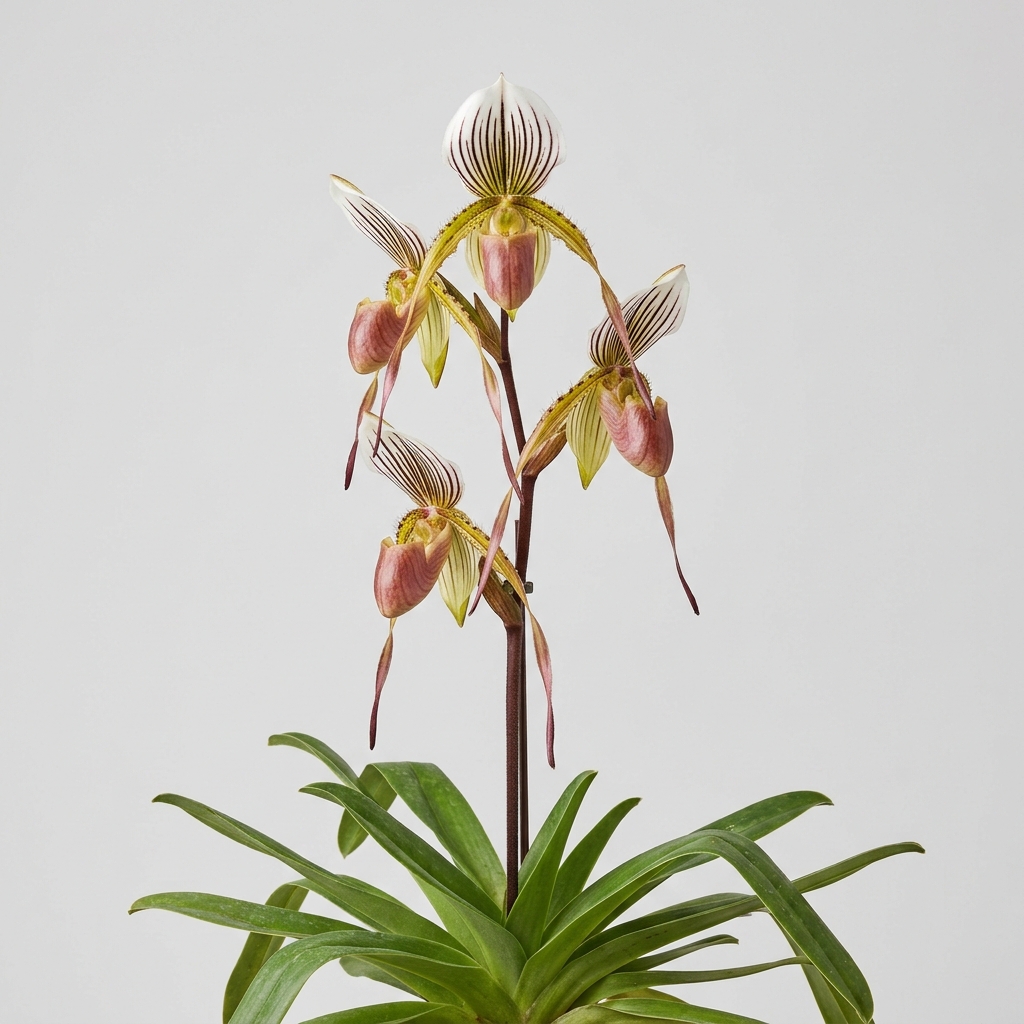
Paphiopedilum Stonei is a highly revered multi-floral slipper orchid native to the limestone cliffs of Borneo. Highlighted by its striking visual appeal, this species is characterized by long, pendulous, ribbon-like lateral petals and a stately, upright dorsal sepal. It is widely considered a crown jewel among orchid enthusiasts, bringing a touch of dramatic, wild elegance to any serious indoor collection.
As a slow-growing terrestrial or lithophytic orchid, this species requires a bit of patience and attentive care to reach its full potential. However, the reward of its majestic, multi-flowered spikes makes it one of the most sought-after and satisfying species to cultivate within the genus Paphiopedilum. With the right balance of humidity, light, and moisture, it can thrive and bloom reliably for decades.
💡 Did You Know?
In its native habitat of Sarawak, Borneo, Paphiopedilum Stonei is often found growing as a lithophyte on steep, shaded limestone cliffs. It thrives in the organic debris collected in rock crevices, receiving constant moisture and excellent drainage from the tropical rainfall.
🌿 Botanical Overview
Paphiopedilum Stonei is a legendary multi-floral slipper orchid native to the limestone hills of Sarawak, Borneo. In its natural habitat, it grows primarily as a lithophyte in pockets of leaf litter and organic debris accumulated on steep, shaded cliffs. This unique ecological niche dictates much of its care requirements in cultivation, particularly its preference for excellent drainage and calcium-rich substrates.
Unlike single-flowered slipper orchids, this species produces large, impressive growths with strap-like, leathery green leaves that can reach up to twelve inches in length. It is a slow-growing orchid, often taking several years to mature from a young seedling into a blooming-sized specimen. However, its architectural foliage and stately growth habit make it an attractive plant even when not in flower.
🌸 Flower Characteristics
The blossoms of Paphiopedilum Stonei are widely celebrated for their dramatic and elegant form. A single, upright inflorescence can bear between three and five large flowers, presenting them in a majestic, tiered display. The most striking feature is the pair of long, lateral petals that arch outward and twist downward, often reaching several inches in length. These petals are typically pale yellow or greenish-white, adorned with dark mahogany-red stripes and spots.
The dorsal sepal is broad and triangular, presenting a clean white background contrasted by bold, vertical dark purple or blackish-brown stripes. Completing the classic slipper orchid look, the labellum, or pouch, is shaped like a delicate shoe, colored in shades of dull pinkish-red to brownish-yellow with subtle veining. This complex color palette and structural elegance make it a standout species in any orchid exhibition.
Fragrance & Bloom Profile
While some orchids are grown primarily for their sweet scents, Paphiopedilum Stonei is generally noted for having little to no discernible fragrance. Its appeal lies entirely in its visual grandeur and the exceptional longevity of its flowers. Once the buds open, the blossoms can remain in pristine condition for six to eight weeks, provided the plant is kept in a cool, stable environment away from direct drafts.
The blooming process is a slow and rewarding spectacle. The flower spike emerges from the center of a mature leaf fan, gradually elongating over several weeks before the individual buds slowly unfurl one by one. This slow opening ensures that the entire display remains fresh and vibrant for an extended period.
Parentage & Hybrid Lineage
Paphiopedilum Stonei is a naturally occurring species rather than a man-made hybrid. First described in the 19th century, it has played a monumental role in the history of orchid hybridization. Breeders have long valued this species for its ability to pass down its multi-floral habit, long twisting petals, and robust growth to its offspring.
It is a primary parent in several famous primary hybrids, such as Paphiopedilum Lady Isabel (a cross between stonei and rothschildianum) and Paphiopedilum Mount Toro (stonei crossed with philippinense). When researching or purchasing this orchid, growers should note that while line-bred cultivars selected for superior flower size and color intensity exist, the fundamental care requirements remain identical to the wild species.
🌱 Growing Conditions
To cultivate Paphiopedilum Stonei successfully, growers must replicate the warm, humid, and shaded conditions of its native Bornean forests. It thrives in intermediate to warm temperatures, ideally ranging from 75°F to 85°F during the day, with a slight drop to 65°F at night. Maintaining a distinct day-night temperature differential can help stimulate blooming in mature plants.
💡 Care Tip
Provide this orchid with slightly brighter than standard single-flowered slipper orchids. A location with bright, filtered morning and strong air circulation will encourage robust growth and successful blooming.
Light levels should be bright but strictly indirect. While it requires more light than mottled-leaf Paphiopedilum species to trigger flowering, direct sunlight will quickly scorch the thick, leathery leaves. A location with filtered morning light or high-quality LED grow lights is ideal. Air movement is also critical; constant, gentle air circulation helps prevent fungal pathogens from settling on the foliage.
Watering, Feeding & Potting Media
Consistent moisture is key to keeping Paphiopedilum Stonei healthy. Unlike epiphytic orchids with large pseudobulbs, slipper orchids do not store vast amounts of water and should never be allowed to dry out completely. Water the plant thoroughly just as the potting medium approaches dryness, ensuring that excess water drains away freely. Avoid letting the pot sit in standing water, as this will quickly lead to root suffocation and rot.
The ideal potting medium should be highly porous yet moisture-retentive. A mix of medium-grade fir bark, perlite, and charcoal works well. Because this species is a natural lithophyte on limestone, incorporating a handful of agricultural limestone chips or crushed oyster shells into the mix is highly recommended to maintain a slightly alkaline to neutral pH and provide essential calcium. Feed weekly with a highly diluted, balanced orchid fertilizer, flushing the pot with pure water once a month to prevent salt buildup.
Blooming Season & Care Notes
The typical blooming season for Paphiopedilum Stonei spans from late spring through the summer months. As the days lengthen and temperatures rise, mature fans will begin to produce flower spikes from their centers. During this active growth and blooming phase, ensure the plant receives consistent watering and high humidity to support the developing flowers.
Once the blooms have finally faded, cut the flower spike down near the base of the fan using a sterile cutting tool. The blooming fan will not flower again; instead, the plant will direct its energy into producing new vegetative leads from the base. Repotting should be performed every two years, ideally in the autumn after flowering has finished, to refresh the decomposing media and inspect the root system.
⚠️ Common Issues
⚠️ Common Mistake
Avoid letting water pool in the center of the leaf fans or the crown, especially during cooler evening hours. Standing water easily leads to crown rot, which can quickly destroy the entire plant.
- Root Rot:
Caused by overwatering or compacted, poorly draining potting media. Affected plants will show limp, dehydrated leaves despite frequent watering. - Crown Rot:
Occurs when water is allowed to sit in the center of the leaf fans, especially overnight. Keep the foliage dry and water only the potting medium. - Bud Blast:
The sudden drying and dropping of flower buds before they open, usually triggered by rapid changes in temperature, low humidity, or drafts. - Mealybugs and Scale: Common pests that hide in the tight crevices of the leaf bases. Treat infestations promptly with insecticidal soap or horticultural oil.
❓ Frequently Asked Questions
How long does it take for Paphiopedilum Stonei to bloom?
As a slow-growing multi-floral species, it can take several years for a young plant to reach blooming size. Once mature, a new leaf fan typically takes two to three years of growth before it is ready to produce a flower spike.
Can I grow Paphiopedilum Stonei under artificial LED lights?
Yes, this species adapts very well to indoor cultivation under LED grow lights. Position the plant so it receives bright, indirect light for 12 to 14 hours a day, ensuring the lights are not close enough to heat or burn the foliage.
Why are the leaf tips of my orchid turning brown?
Brown leaf tips are usually a sign of low humidity, underwatering, or a buildup of fertilizer salts in the potting medium. Ensure humidity remains above 60% and flush the pot thoroughly with pure water monthly.
Does Paphiopedilum Stonei need a cold period to trigger blooms?
No, this is a warm-growing tropical species that does not require a cold winter rest. Instead, a slight drop in night temperatures during the autumn and winter is sufficient to encourage spike development.
⭐ Final Growing Notes
Cultivating Paphiopedilum Stonei requires a blend of patience and consistent care, but the reward of its spectacular, multi-floral display is unmatched. By providing bright indirect light, high humidity, and a well-draining, calcium-enriched medium, growers can enjoy the majestic beauty of this Bornean treasure for decades. It remains an essential and deeply rewarding species for any dedicated orchid enthusiast.
⚕️ Health, Safety & Edibility
Understanding how a plant interacts with people, pets, and the surrounding environment is part of responsible cultivation. This section uses conservative, general guidance and does not replace professional medical or veterinary advice.
Human Safety: No species-specific toxicity concern is commonly documented for Paphiopedilum Stonei during normal handling. It should still be treated as an ornamental plant rather than a food source.
Pet Safety: Ornamental orchids are generally treated as low-risk around cats and dogs, but chewing leaves, flowers, roots, or may still cause mild digestive upset.
Edibility: Ornamental orchids are grown for display rather than food. Cultivated plants may.
Skin Contact: Routine handling rarely causes skin irritation for most growers, but gloves are sensible when repotting, pruning, or handling potting media.
🌱 Propagation Tip
Propagation is best achieved through division during repotting. Ensure each division has at least three mature, healthy fans with active root systems to give the new plants the best chance of survival.
⭐ Expert Advice
Incorporate a small amount of agricultural limestone or crushed oyster shells into your potting mix. This slowly buffers the pH and provides the calcium this lithophytic species naturally craves.




Leave A Comment