
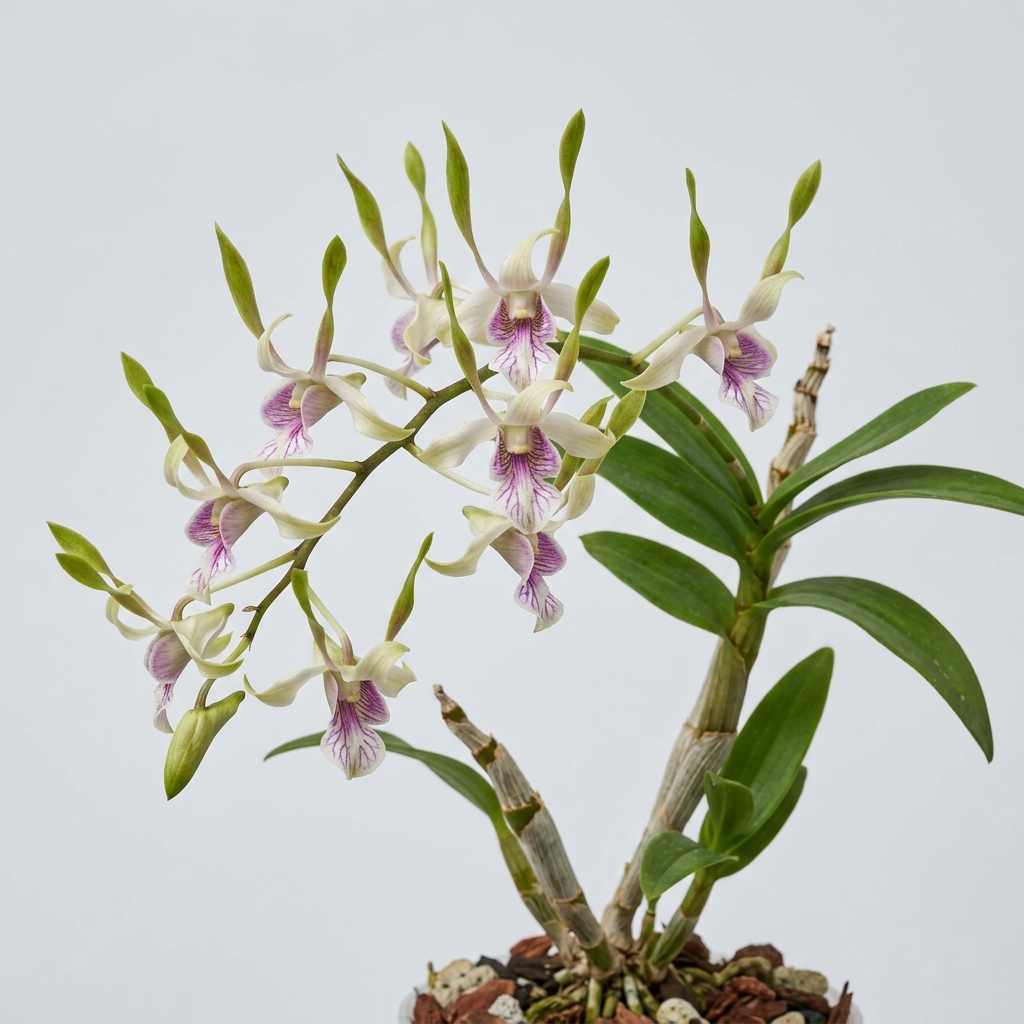
Dendrobium Antennatum, commonly known as the antelope orchid, is a striking epiphytic species celebrated for its uniquely shaped, long-lasting blossoms. Native to the warm, humid lowlands of New Guinea, Queensland, and neighboring Pacific islands, this orchid stands out in any collection due to its architectural growth habit and exotic floral display. It belongs to the Spatulata section of the Dendrobium genus, a group characterized by upright, twisted petals that mimic the horns of an antelope.
Growers highly value this species for its robust nature and free-flowering habit under the right conditions. Unlike some delicate orchids, a mature specimen can produce multiple arching flower spikes simultaneously, with individual blooms remaining fresh for several months. Its ease of care and dramatic appearance make it an excellent choice for intermediate hobbyists looking to expand their tropical orchid collection.
💡 Did You Know?
Dendrobium Antennatum belongs to the Dendrobium orchid group, where flower presentation is often just as important as . White-flowered cultivars are especially valued indoors because their pale blooms reflect well and pair easily with many home, greenhouse, and display settings.
🌿 Botanical Overview
In its native habitat, Dendrobium Antennatum grows as an epiphyte on tree branches or occasionally as a lithophyte on rocks, typically in coastal forests, mangrove swamps, and low-elevation woodlands. These environments provide the plant with warm temperatures, high humidity, and frequent rainfall, followed by rapid drying due to constant coastal breezes. Understanding these natural conditions is key to successfully cultivating the species at home.
The plant features slender, cane-like pseudobulbs that grow vertically and can reach heights of 60 to 80 centimeters under optimal conditions. These canes are leafy along the upper half, bearing narrow, leathery, lanceolate leaves that remain evergreen for several seasons. The root system is robust, consisting of thick, fleshy roots covered in velamen, designed to cling tightly to bark and rapidly absorb moisture and nutrients from the air.
🌸 Flower Characteristics
The defining feature of Dendrobium Antennatum is its remarkable floral structure. The flowers are medium-sized, typically measuring between 5 and 8 centimeters across, and are produced on arching racemes that emerge from the upper nodes of mature canes. Each inflorescence can carry up to 15 flowers, creating a graceful, multi-tiered display.
The petals are long, narrow, and twisted, standing upright like the horns of an antelope. These petals are usually a pale green or yellowish-green color. In contrast, the sepals are pure white and reflexed backward, framing the central lip. The labellum, or lip, is white with striking, intricate purple or magenta veins radiating from the throat, serving as a visual guide for natural pollinators.
Fragrance & Bloom Profile
The fragrance of Dendrobium Antennatum is a subject of some variation among growers. While many specimens produce a delicate, sweet, or slightly citrusy scent during the warmest hours of the day, other clones are virtually unscented. This fragrance profile is highly cultivar-dependent and heavily influenced by environmental factors such as light intensity and ambient humidity.
Regardless of scent, the bloom profile is exceptionally rewarding. The flowers are remarkably long-lasting, often remaining pristine on the plant for eight to twelve weeks. Because the plant can bloom from both new and older canes, a healthy specimen can remain in flower for a significant portion of the year, making it a standout performer in any orchid collection.
Parentage & Hybrid Lineage
Dendrobium Antennatum is a true species rather than a man-made hybrid, meaning its lineage is direct and naturally occurring in the wild. Within the genus Dendrobium, it is classified under the Spatulata section, commonly referred to as the antelope dendrobiums. This section is highly prized by hybridizers for its dominant floral traits, particularly the twisted petals and long-lasting flowers.
While the species itself is genetically stable, it has been widely used as a parent in hybridization programs to create popular antelope-type hybrids. These crosses aim to combine the unique petal structure of Dendrobium Antennatum with the larger flowers or varied color palettes of other Dendrobium species. Exact parentage and registration details for specific commercial clones are not always consistently documented in general grower references, so purchasing from reputable nurseries is recommended for verified lineages.
🌱 Growing Conditions
To cultivate Dendrobium Antennatum successfully, growers must replicate its warm, tropical origin. It requires bright, indirect light to thrive. While it can tolerate some direct morning sun, intense midday sunlight will scorch the foliage. Insufficient light, on the other hand, results in weak, spindly canes and a failure to initiate flower spikes.
💡 Care Tip
For best results, grow Dendrobium Antennatum in bright filtered with steady and gentle airflow. Avoid placing the plant in harsh midday sun, but do not keep it in a dark corner; weak is one of the most common reasons cultivated orchids refuse to rebloom.
Temperature management is crucial for this warm-growing species. Ideal daytime temperatures should range between 75°F and 85°F (24°C to 29°C), with a modest drop at night to around 65°F to 70°F (18°C to 21°C). The plant should be protected from cold drafts and temperatures below 55°F (13°C), as prolonged exposure to cold can cause rapid leaf drop and systemic shock.
Watering, Feeding & Potting Media
During the active growing season in spring and summer, Dendrobium Antennatum requires frequent and thorough watering. The potting medium should be allowed to dry out slightly between waterings, but never to the point of bone-dry dehydration. In the winter months, when growth naturally slows, reduce the watering frequency, allowing the medium to dry out more thoroughly between applications.
Feeding should be consistent during the active growth phase. Apply a balanced, water-soluble orchid fertilizer diluted to quarter or half strength every week or two. It is highly beneficial to flush the potting medium with pure water once a month to wash away accumulated fertilizer salts, which can damage the sensitive root tips.
The potting medium must provide exceptional drainage and aeration. A coarse mix consisting of fir bark, horticultural charcoal, and perlite is ideal. Alternatively, because of its epiphytic nature, this species thrives when mounted on cork bark or tree fern plaques, provided the grower can maintain high humidity and water the plant daily.
Blooming Season & Care Notes
While Dendrobium Antennatum can produce flowers at almost any time of the year, its peak blooming season typically spans from spring through autumn. Flower spikes emerge from the upper nodes of the canes. It is important to note that old, leafless canes should never be removed unless they are completely dry, brown, and hollow. These backbulbs serve as vital energy and water reservoirs for the plant and can continue to produce flower spikes for several seasons.
Repotting should be done sparingly, as this species prefers to be slightly pot-bound. The best time to repot is in the spring, just as new growth begins to emerge from the base of the pseudobulbs and new green root tips become visible. This timing ensures the plant establishes itself quickly in the fresh medium with minimal transplant shock.
⚠️ Common Issues
⚠️ Common Mistake
The most common mistake is by calendar instead of root and potting-media condition. Dendrobium roots need moisture and air at the same time, so constantly wet bark or sphagnum can lead to root loss even when the leaves still look healthy.
- Root rot:
This is almost always caused by overwatering or a compacted potting medium that retains too much moisture, suffocating the roots. - Bud blast:
The sudden yellowing and dropping of flower buds before they open is typically triggered by rapid temperature fluctuations, low humidity, or cold drafts. - Dehydration:
Shriveled, wrinkled pseudobulbs and limp leaves indicate that the plant is not receiving enough water, or that the root system has rotted and can no longer absorb moisture. - Pests:
Mealybugs, scale, and spider mites can occasionally target the plant, particularly in dry indoor environments with low humidity. - Leaf spotting: Fungal or bacterial spots can develop on the foliage if water is allowed to sit on the leaves overnight without adequate air circulation.
❓ Frequently Asked Questions
How do I encourage my Dendrobium Antennatum to bloom?
To stimulate blooming, ensure your orchid receives bright, indirect light and consistent warmth. A slight drop in night temperatures combined with regular fertilization during the active growing season will encourage the development of flower spikes from mature canes.
Why are the leaves on my antelope orchid turning yellow and dropping?
While it is normal for older canes to shed leaves over time, widespread leaf loss on newer growth is often a sign of overwatering, root rot, or exposure to cold temperatures. Check the roots immediately to ensure they are firm and healthy.
Can I grow Dendrobium Antennatum mounted on bark?
Yes, this species is well-suited to mounted culture on cork bark or tree fern plaques. However, mounted orchids dry out very quickly and typically require daily watering and high ambient humidity to prevent dehydration.
How often should I repot this orchid?
Repotting should only be done every two to three years, or when the potting medium begins to break down. Always wait until you see new root growth emerging from the base of the pseudobulbs before repotting to minimize stress.
⭐ Final Growing Notes
Dendrobium Antennatum is a highly rewarding species that brings a unique, exotic elegance to any orchid collection. By providing warm temperatures, bright filtered light, and a well-draining medium that mimics its native coastal habitats, growers can enjoy its spectacular, antelope-like blooms for months on end. With a little patience and attention to its basic needs, this resilient orchid will thrive and bloom reliably year after year.
⚕️ Health, Safety & Edibility
Understanding how a plant interacts with people, pets, and the surrounding environment is part of responsible cultivation. This section uses conservative, general guidance and does not replace professional medical or veterinary advice.
Human Safety: No published evidence currently identifies species-specific toxicity concerns for Dendrobium Antennatum during normal handling. As with most ornamental plants, it should not be intentionally consumed.
Pet Safety: Published information does not indicate that this orchid commonly poses a toxicity concern for cats or dogs. However, chewing leaves, flowers, roots, or potting media may still cause mild digestive upset.
Edibility: This orchid is cultivated for ornamental display rather than food. Ornamental plants may carry fertilizers, pesticides, or other horticultural treatments that make them unsuitable for consumption.
Skin Contact: Routine handling is not generally associated with skin irritation. Gardeners with sensitive skin may prefer wearing gloves when repotting, pruning, or handling potting media.
🌱 Propagation Tip
Propagation should be approached patiently. Most home growers should wait for natural keikis or divide only mature, healthy plants when the orchid type allows it. Never remove a young growth until it has strong roots and enough leaves to support itself away from the parent plant.
⭐ Expert Advice
Repot after flowering when fresh root tips begin to appear. This timing helps the plant anchor quickly into new bark or sphagnum and reduces stress, especially for orchids grown indoors where airflow, , and drying speed can change from season to season.




Leave A Comment