
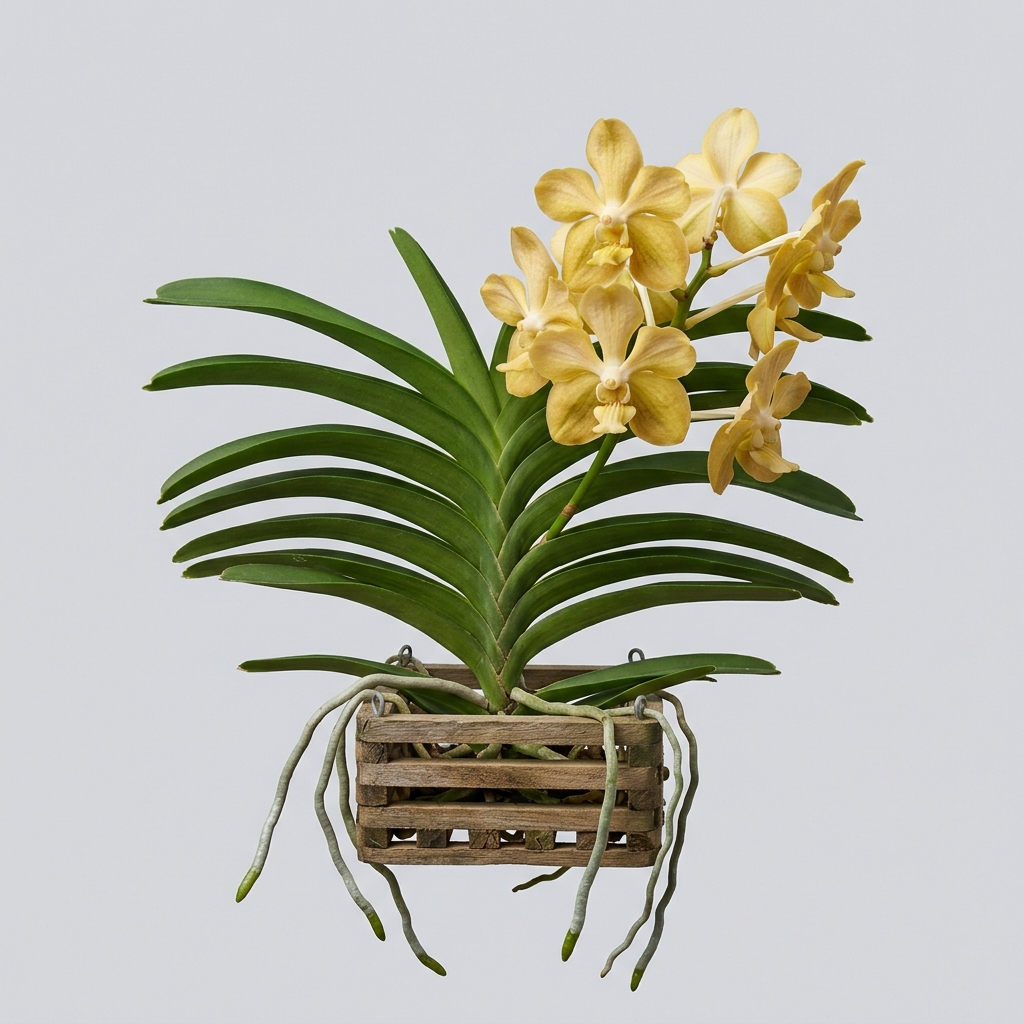
Vanda Dearei is a highly prized monopodial orchid species native to the tropical rainforests of Borneo, celebrated among collectors for its striking yellow blooms and intense fragrance. As a warm-growing epiphyte, this orchid shows a classic Vanda growth habit, featuring strap-like leaves arranged in a neat, fan-shaped pattern along a sturdy central stem. Its robust nature and magnificent floral display make it a standout addition to any tropical orchid collection.
Cultivating this orchid successfully requires an understanding of its native canopy environment, where it thrives on abundant light, high humidity, and constant air movement. While it demands consistent care and attention to watering cycles, the reward of its long-lasting, sweetly scented blossoms makes it a highly sought-after specimen for intermediate and advanced orchid enthusiasts alike.
💡 Did You Know?
Vanda Dearei is native to the island of Borneo, where it grows as an epiphyte in hot, humid lowlands. Unlike many modern hybrids, this species retains its intense, natural , which has made it a foundational parent in breeding yellow-flowered Vandas for over a century.
🌿 Botanical Overview
Vanda Dearei is a robust, large-statured epiphytic orchid native to the lowlands of Borneo. It grows monopodially, meaning it climbs upward from a single vegetative stem, producing thick, leathery, strap-shaped leaves that overlap at the base. The root system is exceptionally vigorous, producing thick, fleshy aerial roots covered in velamen to absorb moisture and nutrients directly from the humid air.
In its natural habitat, this orchid clings to the branches of tall trees, often near rivers or in peat swamp forests, where it is exposed to warm temperatures and high humidity year-round. This evolutionary background dictates its growth requirements in cultivation, particularly its need for unrestricted root space and excellent air circulation.
🌸 Flower Characteristics
The flowers of Vanda Dearei are renowned for their substantial, waxy texture and elegant presentation. Borne on short, axillary inflorescences that emerge from between the leaf joints, each spike typically carries several closely spaced blossoms. The individual flowers are relatively large, often measuring up to three inches in diameter, with broad, overlapping petals and sepals.
The coloration is a sophisticated palette of soft yellow, cream, and warm gold, sometimes accented with subtle green undertones near the base of the segments. The lip, or labellum, is intricately structured, featuring a white or pale yellow mid-lobe with distinctive side lobes that guide pollinators toward the column.
Fragrance & Bloom Profile
One of the most compelling attributes of Vanda Dearei is its powerful and complex fragrance. The scent is commonly described as a sweet blend of citrus, honey, and apricot, which becomes particularly intense during the warm daylight hours. This strong aroma is a key evolutionary adaptation designed to attract specific pollinators in the dense Bornean canopy.
The blooms are remarkably long-lasting, often remaining fresh on the plant for several weeks if kept in stable environmental conditions. Unlike some hybrids that bloom continuously throughout the year, this species typically concentrates its flowering energy into a single, spectacular summer display.
Parentage & Hybrid Lineage
Vanda Dearei is a naturally occurring species rather than a man-made hybrid, though it has been used extensively as a parent in Vanda breeding programs. Hybridizers value it highly for its ability to pass down its intense fragrance, warm-yellow coloration, and robust growth habit to its progeny.
While its historical role in creating famous yellow Vanda hybrids is well-acknowledged in horticultural circles, individual specimens sold today are typically line-bred selections aimed at improving flower size and color saturation. When purchasing, growers should look for reputable sources to ensure they are obtaining a true-to-type representation of this classic species.
🌱 Growing Conditions
To cultivate Vanda Dearei successfully, growers must replicate the bright, warm, and airy conditions of the tropical canopy. It requires very bright, filtered light; while it can tolerate some direct morning sun, hot afternoon sunlight can scorch the foliage. Providing a shade cloth or placing the plant in a bright east- or south-facing window is ideal.
💡 Care Tip
Always water your Vanda Dearei early in the morning. This allows the water on the leaves and in the crown to evaporate during the day, significantly reducing the risk of crown rot and fungal infections.
Temperatures should remain warm year-round, ideally ranging between 70°F and 85°F (21°C to 29°C) during the day, with a slight drop at night that does not fall below 60°F (15°C). High humidity of at least 70% is crucial to prevent the exposed aerial roots from desiccating, and constant, gentle air movement is essential to prevent stagnant air from harboring fungal pathogens.
Watering, Feeding & Potting Media
Because Vanda Dearei is traditionally grown bare-root in wooden slat baskets, its watering regimen differs significantly from terrestrial or potted orchids. The roots must be thoroughly soaked—often daily during the hot summer months—until they turn a vibrant green, indicating they have absorbed maximum moisture. However, they must dry out completely within a few hours to prevent root rot.
Feeding should be frequent but light, using a balanced orchid fertilizer diluted to quarter-strength applied weekly during the active growing season. Growing the plant without any traditional potting media, or with only a few large chunks of charcoal or coarse fir bark in a basket, allows the roots to breathe and dry rapidly, mimicking its natural epiphytic state.
Blooming Season & Care Notes
The primary blooming season for Vanda Dearei occurs during the warm summer months, though occasional blooms can appear in late spring or early autumn. As the flower spike begins to emerge from the leaf axils, it is important to maintain stable conditions and avoid moving the plant, as sudden changes in light or temperature can cause the developing buds to blast.
Once the flowering cycle is complete, the old flower spike should be cut back close to the stem using sterilized shears. Repotting or basket maintenance is rarely needed and should only be performed when the wooden basket begins to decay, preferably during the spring when active root growth resumes.
⚠️ Common Issues
⚠️ Common Mistake
A frequent mistake is potting this orchid in standard, dense potting soil or fine bark. Vanda Dearei roots require constant exposure to air and will quickly suffocate and rot if buried in dense media.
- Root Rot: Caused by stagnant water or compacted potting media that prevents the roots from drying quickly.
- Bud Blast: The sudden drop or drying of flower buds, often triggered by low humidity, drafty conditions, or sudden temperature fluctuations.
- Leaf Spotting: Fungal or bacterial spots arising from water sitting on the foliage overnight; always water early in the day.
- Dehydration: Indicated by shriveled, leathery leaves and dry, silvery roots, usually due to insufficient watering or low ambient humidity.
- Pests: Scale insects, mealybugs, and thrips can occasionally hide in the leaf axils or feed on the tender flower buds.
❓ Frequently Asked Questions
How often should I water my Vanda Dearei?
In warm weather, bare-root Vanda Dearei orchids should be watered daily, preferably in the morning. Mist or soak the roots thoroughly until they turn green, ensuring they dry completely by nightfall. During cooler winter months, reduce watering to every two to three days.
Why are the flower buds on my Vanda Dearei falling off before opening?
This issue, known as bud blast, is typically caused by environmental stress. Sudden drops in humidity, cold drafts, or moving the plant to a new location with different light levels while the spike is developing are the most common culprits.
Can I grow Vanda Dearei indoors without a greenhouse?
Yes, but it requires careful attention to humidity and light. Grow it near a bright south- or east-facing window, use a humidifier to maintain humidity above sixty percent, and consider using a fan to ensure adequate air circulation around the roots.
What is the best potting mix for Vanda Dearei?
Vanda Dearei performs best when grown bare-root in open wooden baskets without any potting mix. If your growing environment is dry, you can add a few large pieces of horticultural charcoal or coarse bark to help retain a small amount of moisture.
⭐ Final Growing Notes
Vanda Dearei remains a crown jewel of the orchid world, offering a sensory reward of beautiful yellow blossoms and an unforgettable fragrance. While its strict requirements for high light, warmth, and daily watering demand a dedicated grower, its robust growth and reliable summer blooms make it an exceptionally rewarding species to master.
⚕️ Health, Safety & Edibility
Understanding how a plant interacts with people, pets, and the surrounding environment is part of responsible cultivation. This section uses conservative, general guidance and does not replace professional medical or veterinary advice.
Human Safety: No published evidence currently identifies species-specific toxicity concerns for Vanda Dearei during normal handling. As with most ornamental plants, it should not be intentionally consumed.
Pet Safety: Published information does not indicate that this orchid commonly poses a toxicity concern for cats or dogs. However, chewing leaves, flowers, roots, or potting media may still cause mild digestive upset.
Edibility: This orchid is cultivated for ornamental display rather than food. Ornamental plants may carry fertilizers, pesticides, or other horticultural treatments that make them unsuitable for consumption.
Skin Contact: Routine handling is not generally associated with skin irritation. Gardeners with sensitive skin may prefer wearing gloves when repotting, pruning, or handling potting media.
🌱 Propagation Tip
Propagation is typically achieved through the division of offshoots, known as keikis, which occasionally form at the base of mature stems. Wait until the keiki has developed several robust roots of its own before carefully detaching and basket-mounting it.
⭐ Expert Advice
To encourage optimal blooming, maintain a high- environment and feed weekly with a highly diluted, balanced fertilizer. A slight drop in nighttime temperatures during the spring can also help trigger the initiation of summer flower spikes.




Leave A Comment