
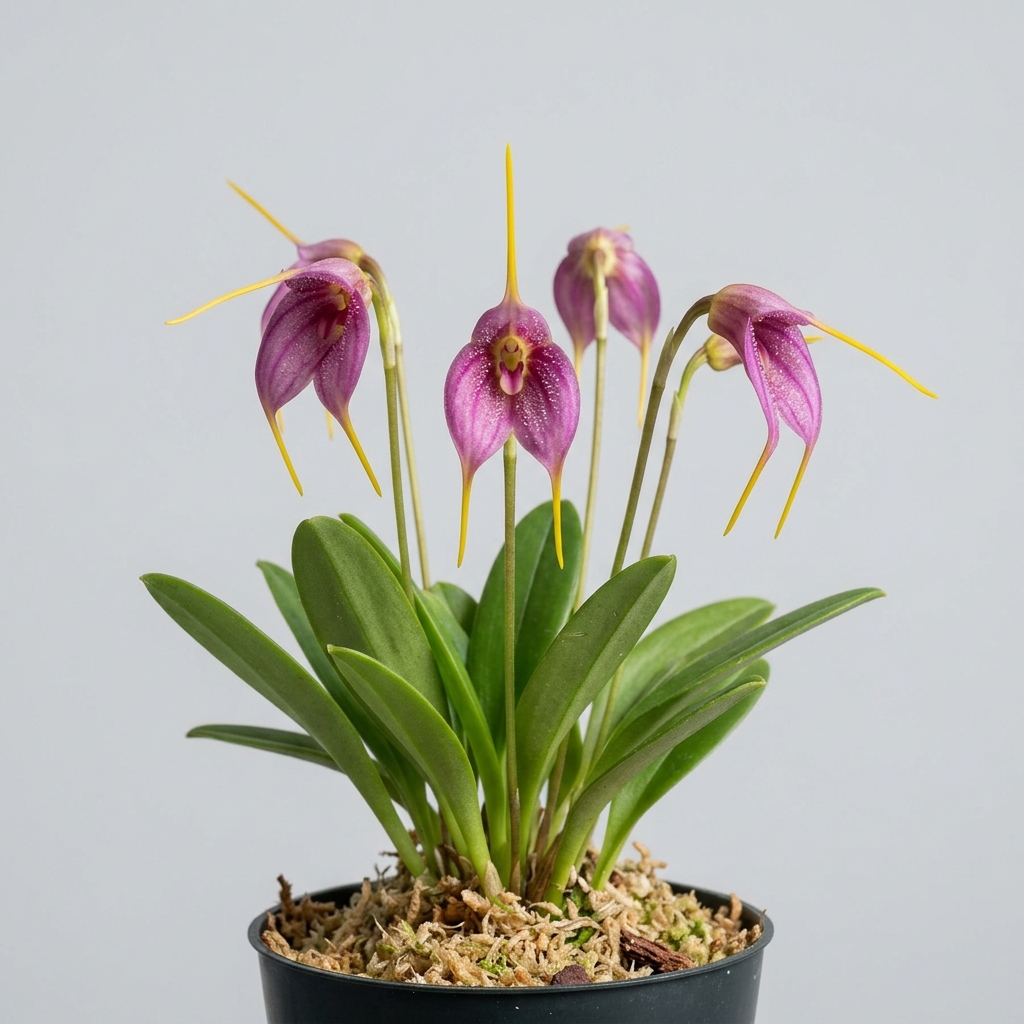
Masdevallia Glandulosa is a highly prized miniature orchid species celebrated for its striking, bell-shaped flowers and surprisingly intense fragrance. Native to the cool, misty cloud forests of South America, this epiphytic gem belongs to the Pleurothallidinae subtribe and is a favorite among specialized growers who appreciate intricate floral structures and compact growth habits.
Unlike many of its relatives in the genus, this orchid is particularly famous for the tiny, glistening glandular structures that cover the interior of its blossoms. These glands not only give the species its botanical name but also release a delightful, sweet aroma that fills the growing area, making it a standout addition to any indoor collection, orchidarium, or terrarium.
💡 Did You Know?
The specific epithet glandulosa refers to the tiny, glistening glands that cover the interior of the flower sepals. These microscopic structures act like miniature perfume dispensers, releasing the orchid's intense, clove-like to attract specific pollinators in its native cloud forest habitat.
🌿 Botanical Overview
Masdevallia Glandulosa is a miniature tufted epiphyte native to the cool, moist cloud forests of Ecuador and Peru, typically found at elevations between 1,200 and 1,800 meters. The plant lacks pseudobulbs, instead producing erect, single-leaved ramicauls that form dense, grassy clumps. The leaves are thick, leathery, and narrowly obovate, providing a lush green backdrop for the vibrant blooms.
Because it lacks water-storing pseudobulbs, this species relies on its roots and foliage to absorb and retain moisture from the humid mountain air. In its natural habitat, it grows on moss-covered branches where it receives constant moisture, excellent air circulation, and dappled, filtered sunlight. Understanding these cloud forest origins is key to successfully cultivating this delicate orchid at home.
🌸 Flower Characteristics
The flowers of Masdevallia Glandulosa are relatively large compared to the size of the plant, typically measuring around 1 to 2 centimeters across, excluding the long, slender sepaline tails. The sepals are fused at the base to form a tubular, bell-shaped flower that flares outward. The color is a striking magenta or purplish-pink, fading to a lighter shade near the throat, with the tips of the sepals extending into bright yellow or orange tails.
The defining feature of the blossom is the presence of numerous tiny, glistening glands lining the inner surface of the sepals. These glands catch the light, giving the flower a sparkling, textured appearance. The tiny petals and lip are hidden deep within the sepaline tube, directing pollinators toward the reproductive structures.
Fragrance & Bloom Profile
One of the most remarkable attributes of Masdevallia Glandulosa is its fragrance, which is unusually strong and sweet for a member of this genus. Growers frequently describe the scent as a rich blend of cloves, spice, and sweet honey. The fragrance is most pronounced during the warmer hours of the day when humidity and light levels rise, filling a small grow room or terrarium with its spicy aroma.
The flowers are borne singly on slender, erect to suberect inflorescences that emerge from the base of the leaves, rising just above or level with the foliage. Each bloom is long-lasting, often remaining fresh for several weeks if cool temperatures and high humidity are maintained.
Parentage & Hybrid Lineage
Masdevallia Glandulosa is a naturally occurring species rather than a man-made hybrid. First described botanically in the late 20th century, it has been used by orchid hybridizers to introduce its intense fragrance, compact growth habit, and vibrant color into new Masdevallia grexes.
While its exact hybrid descendants are numerous, breeding with this species can sometimes be challenging due to its specific cool-growing requirements. Hybridizers often cross it with warmer-growing Masdevallia species to create more resilient, temperature-tolerant cultivars that retain the signature sparkling texture and sweet scent of the parent.
🌱 Growing Conditions
Replicating the cool, humid cloud forest environment is essential for keeping Masdevallia Glandulosa healthy. It thrives in cool to intermediate temperatures, ideally ranging from 50°F to 65°F (10°C to 18°C) at night, with daytime temperatures not exceeding 75°F (24°C). Prolonged exposure to high temperatures can quickly stress the plant, leading to leaf drop and root decline.
💡 Care Tip
Always prioritize air movement when growing this orchid in high . A small, low-voltage fan running nearby will prevent stagnant air pockets, significantly reducing the risk of fungal leaf spots and crown rot without drying out the potting medium.
Light should be kept low to moderate, similar to the conditions preferred by Phalaenopsis orchids. Avoid direct sunlight, which can easily scorch the thin leaves. High humidity of 70% to 80% is critical, and it must be accompanied by constant, gentle air movement to prevent fungal pathogens from settling on the damp foliage.
Watering, Feeding & Potting Media
Because this orchid lacks pseudobulbs, it has no capacity to store water and must never be allowed to dry out completely. The potting medium should remain evenly moist but not waterlogged. Water the plant thoroughly using pure water, such as rainwater, distilled water, or reverse osmosis water, as Masdevallia species are highly sensitive to dissolved salts and minerals.
A potting medium of high-quality New Zealand sphagnum moss or a fine-grade bark mix works best to retain moisture while allowing air to reach the roots. If grown in pots, plastic or clay pots with excellent drainage are ideal. Fertilize very sparingly with a highly diluted, balanced orchid fertilizer (about one-quarter strength) every two to three waterings, flushing the pot with pure water in between to prevent salt buildup.
Blooming Season & Care Notes
The primary blooming season for Masdevallia Glandulosa typically occurs in the autumn and winter months, though healthy plants may produce flowers sporadically at other times of the year. To encourage a robust bloom cycle, ensure the plant experiences a slight drop in night temperatures during the late summer and early autumn.
Once the flowers fade, the old flower spikes can be cut back to the base of the leaf. Repotting is best done in the spring when new root growth is active. Avoid disturbing the root system unnecessarily, but repot promptly if the sphagnum moss begins to break down and lose its airy structure, as compacted media will quickly suffocate the delicate roots.
⚠️ Common Issues
⚠️ Common Mistake
A frequent mistake is letting the potting medium dry out completely between waterings. Lacking pseudobulbs, this species cannot store water, and even a single day of complete dryness can severely damage the roots and lead to rapid leaf drop.
- Root Rot:
Caused by compacted, decaying potting media or poor drainage. Ensure the medium remains airy and fresh. - Leaf Spotting: Often a result of high humidity combined with stagnant air. Increase air circulation around the plant.
- Heat Stress: Indicated by rapid leaf drop and yellowing. Keep temperatures within the recommended cool range.
- Pest Infestations: Spider mites and aphids can occasionally target the tender new growth. Treat promptly with a gentle insecticidal soap or neem oil.
- Bud Blast:
Occurs when sudden drops in humidity or drafts cause developing buds to dry up and fall off before opening.
❓ Frequently Asked Questions
Can Masdevallia Glandulosa be grown in a terrarium?
Yes, its miniature size and high humidity requirements make it an excellent candidate for a climate-controlled terrarium or vivarium, provided there is adequate ventilation and temperatures do not run too warm.
How do I know if my orchid is getting too much light?
If the leaves begin to turn yellow, develop red or purple tinting, or show dry, brown scorch marks, the plant is receiving too much light and should be moved to a more shaded location immediately.
What type of water is best for this orchid?
This species is highly sensitive to mineral salts. It is best to use rainwater, distilled water, or reverse osmosis water rather than municipal tap water to prevent root burn.
Why are the leaves on my Masdevallia falling off?
Leaf drop is commonly caused by heat stress, underwatering, or root rot. Ensure the plant is kept cool, the media is consistently moist, and the roots are healthy and aerated.
⭐ Final Growing Notes
While Masdevallia Glandulosa requires a bit more attention to temperature and humidity than standard windowsill orchids, its rewarding fragrance and sparkling, jewel-like flowers make it well worth the effort. By providing cool conditions, pure water, and high humidity, growers can enjoy the captivating beauty and spicy aroma of this exquisite cloud forest treasure for years to come.
⚕️ Health, Safety & Edibility
Understanding how a plant interacts with people, pets, and the surrounding environment is part of responsible cultivation. This section uses conservative, general guidance and does not replace professional medical or veterinary advice.
Human Safety: No published evidence currently identifies species-specific toxicity concerns for Masdevallia Glandulosa during normal handling. As with most ornamental plants, it should not be intentionally consumed.
Pet Safety: Published information does not indicate that this orchid commonly poses a toxicity concern for cats or dogs. However, chewing leaves, flowers, roots, or potting media may still cause mild digestive upset.
Edibility: This orchid is cultivated for ornamental display rather than food. Ornamental plants may carry fertilizers, pesticides, or other horticultural treatments that make them unsuitable for consumption.
Skin Contact: Routine handling is not generally associated with skin irritation. Gardeners with sensitive skin may prefer wearing gloves when repotting, pruning, or handling potting media.
🌱 Propagation Tip
This miniature orchid is best propagated by careful division during spring repotting. Ensure each division has at least five to eight healthy leaves and a robust root system to ensure quick recovery and minimize transplant shock.
⭐ Expert Advice
If your growing area runs warm in the summer, place the orchid's pot inside a larger clay pot filled with damp sphagnum moss. The evaporative cooling effect will help lower the around the root zone, keeping the plant safe during warm spells.




Leave A Comment