
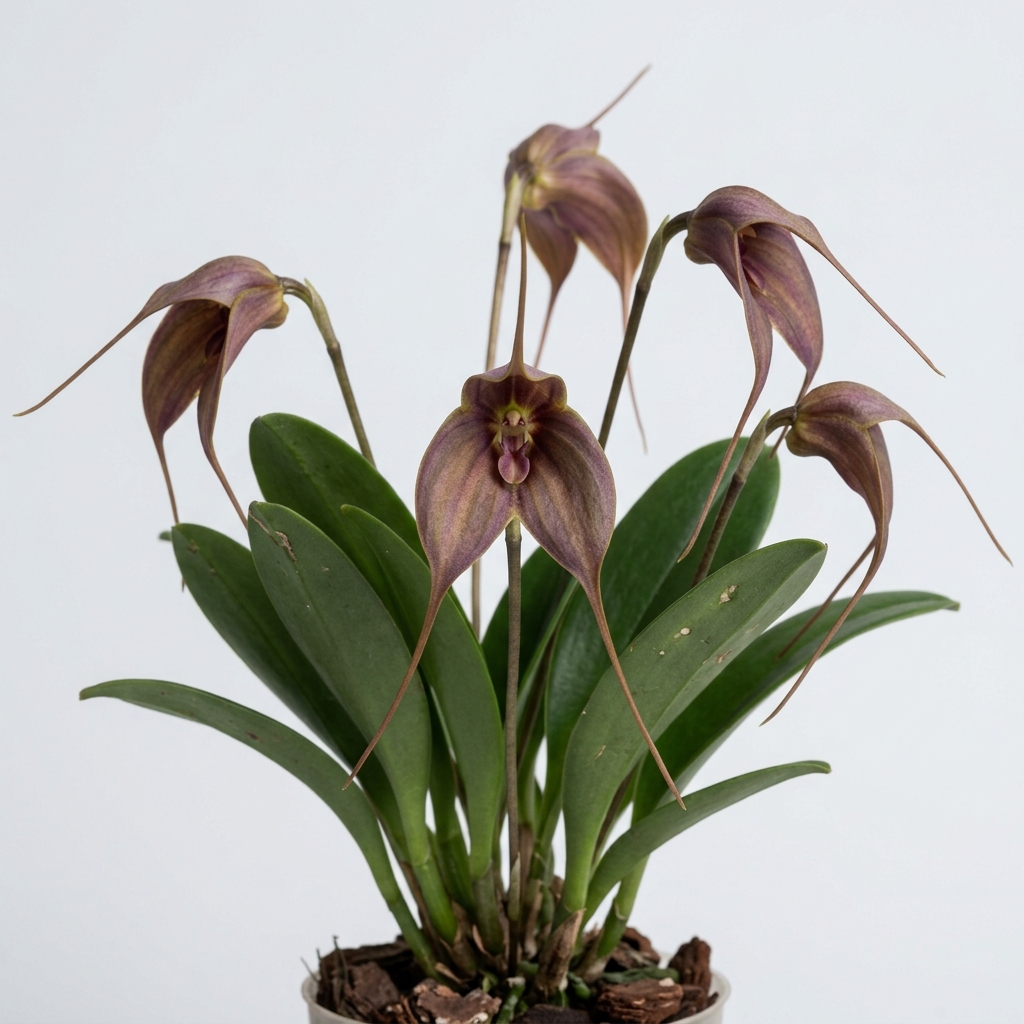
Masdevallia Infracta is a captivating orchid species highly valued by collectors for its unique, bell-shaped blossoms and remarkable resilience compared to other members of its genus. Originating from the organ-pipe mountains and forested regions of Brazil, this compact epiphyte produces striking, hooded flowers featuring elongated sepaline tails that lend an exotic architectural quality to any indoor collection. Its ability to adapt to a wider range of temperatures makes it an excellent introductory species for growers eager to explore the diverse world of pleurothallid orchids.
Unlike many of its high-altitude relatives that demand strictly cool conditions, Masdevallia Infracta shows a commendable tolerance for intermediate climates. This adaptability, combined with its compact growth habit and reliable blooming cycle, has secured its place as a favorite among hobbyists who manage mixed-collection greenhouses or terrariums. When provided with consistent moisture and high humidity, this orchid rewards growers with a succession of intriguing blooms that showcase the intricate beauty of the Pleurothallidinae subtribe.
💡 Did You Know?
Masdevallia Infracta is part of the Masdevallia orchid group, a favorite among growers because its flowers, growth habit, and care needs make it useful for comparing cultivated orchids within the same . Observing its leaves, roots, and bloom spikes can help growers understand how this cultivar responds to indoor conditions.
🌿 Botanical Overview
Masdevallia Infracta is a small-sized, caespitose epiphyte or occasional lithophyte. Lacking pseudobulbs, the plant relies on its thick, leathery, obovate-lanceolate leaves to store moisture and nutrients. These erect leaves grow in dense tufts from short ramicauls, creating a compact, lush green canopy that remains attractive even when the plant is not in flower.
In its native Brazilian habitats, the species thrives in humid, shaded environments where air movement is constant. The structural absence of pseudobulbs means the plant has limited water storage capacity, which dictates its physiological need for continuous ambient humidity and consistent moisture at the root zone.
🌸 Flower Characteristics
The inflorescence of Masdevallia Infracta is typically erect to ascending, bearing a single flower (or occasionally successive flowers) held near or just above the foliage. The flowers are characterized by fused sepals that form a distinct, bell-like or campanulate tube, which partially conceals the tiny petals and lip. The sepals terminate in long, slender, tail-like extensions known as caudae, which can curve gracefully outward or downward.
Coloration is highly variable within the species, ranging from deep, glossy purplish-brown and copper tones to pale yellow or cream flushed with rose. The interior of the sepaline tube often features delicate veining or a velvety texture, adding depth to the bloom’s appearance. The overall presentation is architectural and dramatic, despite the compact size of the individual flowers.
Fragrance & Bloom Profile
Fragrance is not a primary characteristic of Masdevallia Infracta, and most cultivated specimens are reported to be unscented or to possess a very faint, earthy aroma that is barely perceptible. The primary appeal of the bloom lies entirely in its structural form and rich, variable coloration.
The blooming profile is notable for its successive habit under optimal conditions. A single flower spike can produce multiple blooms sequentially over several weeks, extending the overall display. Individual flowers are relatively long-lasting, often remaining pristine for three to four weeks if kept in a cool, humid environment free from drafts.
Parentage & Hybrid Lineage
As a naturally occurring species rather than a man-made hybrid, Masdevallia Infracta does not have a complex lineage of parental cultivars. It is classified within the genus Masdevallia, section Coriaceae. While its wild origins are well-established in the moist forests of Brazil, its genetic stability has made it a useful parent in hybridizing programs aiming to introduce temperature tolerance into cool-growing Masdevallia lines.
When researching specimens, growers should note that variations in flower color and size are common due to the wide geographical distribution of the species in nature. These variations are generally considered natural forms rather than distinct cultivars, though select clones may occasionally carry informal cultivar names assigned by individual growers or nurseries.
🌱 Growing Conditions
Successful cultivation of Masdevallia Infracta depends on mimicking its native cloud forest habitat. It thrives in low to medium light conditions, equivalent to bright shade or filtered sunlight. Direct afternoon sun must be avoided, as it can quickly scorch the thin leaves and overheat the root system.
💡 Care Tip
For best results, grow Masdevallia Infracta in bright filtered with steady and gentle airflow. Avoid placing the plant in harsh midday sun, but do not keep it in a dark corner; weak is one of the most common reasons cultivated orchids refuse to rebloom.
Temperature management is simpler with this species than with many of its congeners. It prefers intermediate conditions, with daytime temperatures ranging from 65°F to 75°F (18°C to 24°C) and a nocturnal drop of 10°F to 15°F. High humidity, ideally between 60% and 80%, is crucial. To prevent fungal pathogens in such humid conditions, continuous, gentle air movement must be maintained around the plant.
Watering, Feeding & Potting Media
Because Masdevallia Infracta lacks pseudobulbs, the potting medium should never be allowed to dry out completely. The roots should remain evenly moist but never waterlogged. Watering frequency will depend on the medium used; high-quality New Zealand sphagnum moss or a fine-grade fir bark mix blended with perlite are excellent choices for retaining moisture while ensuring adequate drainage.
Fertilization should be approached with caution, as the fine, sensitive roots are highly susceptible to salt buildup. Use a balanced, water-soluble orchid fertilizer diluted to one-quarter or one-eighth strength every two to three weeks. Flushing the pot with pure, mineral-free water (such as rainwater, distilled water, or reverse osmosis water) between fertilizer applications is highly recommended to protect the root system.
Blooming Season & Care Notes
While Masdevallia Infracta can produce flowers at almost any time of the year, its primary blooming seasons are typically spring and autumn when temperature fluctuations stimulate spike development. During the active blooming phase, maintain stable humidity and avoid moving the plant to prevent premature bud drop.
Once blooming has concluded, the old flower spikes should be left intact until they turn brown and dry naturally, as they can occasionally produce secondary flowers. Repotting is best performed in late winter or early spring, just as new vegetative growth begins, ensuring the plant has time to establish its delicate root system before the heat of summer arrives.
⚠️ Common Issues
⚠️ Common Mistake
The most common mistake is by calendar instead of root and potting-media condition. Masdevallia roots need moisture and air at the same time, so constantly wet bark or sphagnum can lead to root loss even when the leaves still look healthy.
- Leaf Spotting: Often caused by high humidity combined with stagnant air; ensure adequate ventilation to prevent fungal pathogens.
- Root Rot:
Occurs when the potting medium degrades or lacks sufficient drainage; repot annually to keep the media fresh. - Bud Blast:
Premature dropping of buds, usually triggered by sudden drops in humidity, drafts, or extreme temperature spikes. - Dehydration:
Indicated by wrinkled, pleated leaves or dry, brittle roots; increase watering frequency and ambient humidity immediately. - Pests:
Spider mites, aphids, and mealybugs can occasionally target the tender new growth; treat promptly with gentle insecticidal soap or horticultural oil.
❓ Frequently Asked Questions
Can Masdevallia Infracta be grown under artificial LED lights?
Yes, Masdevallia Infracta adapts exceptionally well to artificial LED setups. Because it requires low to moderate light, position the plant toward the periphery of the light footprint or adjust the intensity to mimic bright shade, ensuring the leaves do not overheat.
Why are the leaf tips of my Masdevallia Infracta turning black?
Black leaf tips are commonly caused by a buildup of fertilizer salts in the potting medium or the use of water with high mineral content. Switch to pure rainwater, distilled water, or reverse osmosis water, and flush the medium thoroughly to resolve the issue.
How often should I repot this orchid?
It is best to repot Masdevallia Infracta every one to two years. Because the fine roots require constant moisture, the potting medium (especially sphagnum moss) can degrade quickly, leading to compaction and root rot if not refreshed regularly.
Is Masdevallia Infracta suitable for a beginner orchid grower?
While Masdevallia species are generally considered challenging, Masdevallia Infracta is one of the best choices for beginners due to its intermediate temperature tolerance. If you can maintain high humidity and consistent moisture, this species is highly rewarding.
⭐ Final Growing Notes
Masdevallia Infracta stands out as an exceptionally rewarding orchid that bridges the gap between challenging cool-growing pleurothallids and standard intermediate indoor collections. By focusing on consistent moisture, high humidity, and excellent air circulation, growers can enjoy its unique, architectural blooms year after year. Its forgiving nature and striking floral presentation make it a worthy and distinctive addition to any serious orchid collection.
⚕️ Health, Safety & Edibility
Understanding how a plant interacts with people, pets, and the surrounding environment is part of responsible cultivation. This section uses conservative, general guidance and does not replace professional medical or veterinary advice.
Human Safety: No published evidence currently identifies species-specific toxicity concerns for Masdevallia Infracta during normal handling. As with most ornamental plants, it should not be intentionally consumed.
Pet Safety: Published information does not indicate that this orchid commonly poses a toxicity concern for cats or dogs. However, chewing leaves, flowers, roots, or potting media may still cause mild digestive upset.
Edibility: This orchid is cultivated for ornamental display rather than food. Ornamental plants may carry fertilizers, pesticides, or other horticultural treatments that make them unsuitable for consumption.
Skin Contact: Routine handling is not generally associated with skin irritation. Gardeners with sensitive skin may prefer wearing gloves when repotting, pruning, or handling potting media.
🌱 Propagation Tip
Propagation should be approached patiently. Most home growers should wait for natural keikis or divide only mature, healthy plants when the orchid type allows it. Never remove a young growth until it has strong roots and enough leaves to support itself away from the parent plant.
⭐ Expert Advice
Repot after flowering when fresh root tips begin to appear. This timing helps the plant anchor quickly into new bark or sphagnum and reduces stress, especially for orchids grown indoors where airflow, , and drying speed can change from season to season.




Leave A Comment