
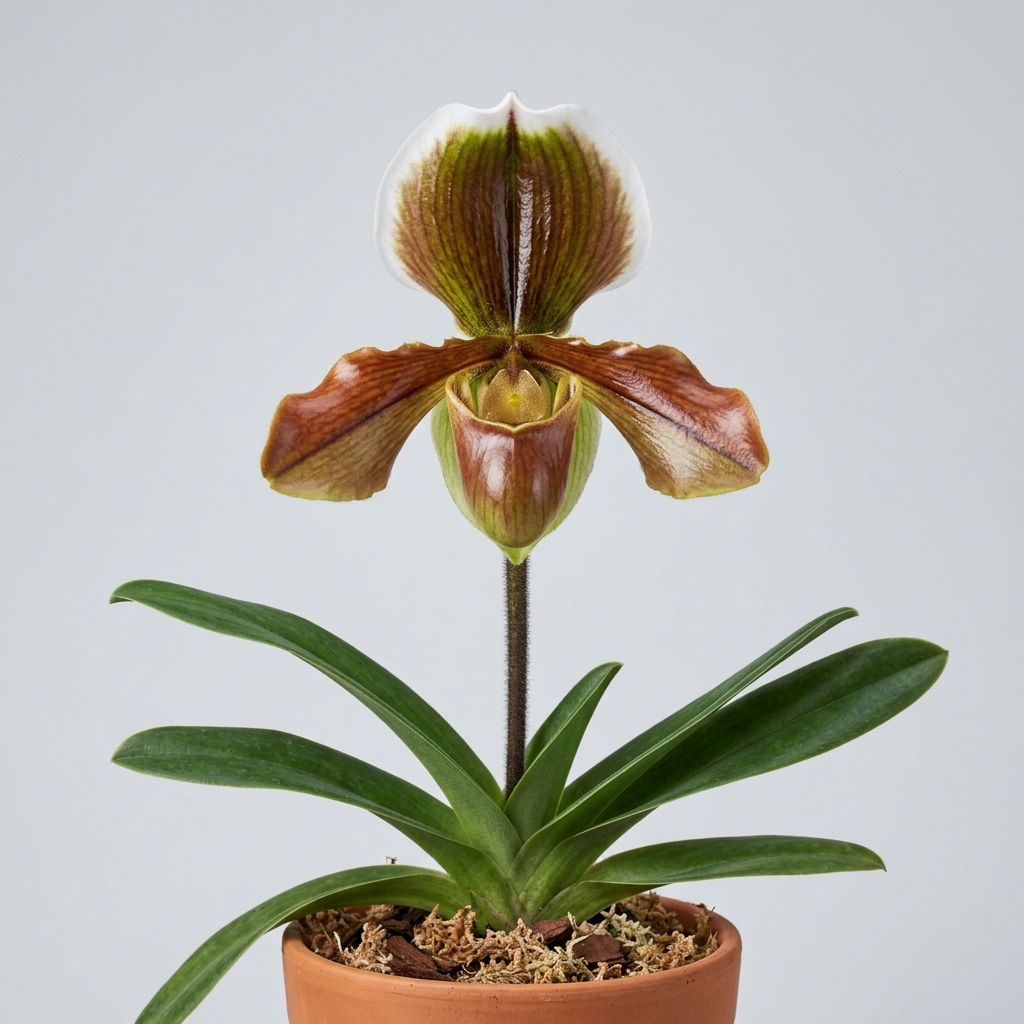
Paphiopedilum Villosum is a highly esteemed species within the slipper orchid group, celebrated by collectors for its distinctive, glossy blossoms and elegant growth habit. Characterized by its fan-shaped foliage and striking, long-lasting flowers, this orchid brings a touch of exotic sophistication to indoor collections and greenhouse displays alike. Its unique, varnished appearance makes it a standout specimen that immediately draws the eye.
Growers particularly appreciate this orchid for its relatively straightforward care requirements compared to more temperamental slipper orchids. Its tolerance for intermediate temperatures and its reliable blooming cycle make it an excellent choice for enthusiasts looking to expand their collection with a classic, visually arresting species that has stood the test of time in orchid cultivation.
💡 Did You Know?
The specific epithet villosum translates to shaggy or hairy, referencing the distinctly fuzzy nature of the orchid's flower spikes and bracts. This physical characteristic helps protect the developing flower buds from excess moisture and pests in its native humid forest habitats.
🌿 Botanical Overview
Paphiopedilum Villosum is a naturally occurring species native to the mountainous regions of Southeast Asia, including parts of northeastern India, Myanmar, Thailand, and southern China. In its native habitat, it typically grows as an epiphyte on mossy tree trunks or as a lithophyte on damp, shaded rocks. This adaptability to different growing surfaces makes it a resilient subject when transitioned into home cultivation.
Unlike many other popular orchid genera, Paphiopedilum species lack pseudobulbs, which are water-storing organs. Instead, they produce fans of strap-shaped, leathery leaves that are solid green in color, occasionally featuring light purple spotting near the base. Because they cannot store large reserves of water, their root systems and foliage require consistent moisture and a stable environment to thrive.
🌸 Flower Characteristics
The defining feature of Paphiopedilum Villosum is its remarkably glossy, single flower, which appears to have been coated in a layer of fresh varnish. Each bloom is supported by a sturdy, upright, and distinctly hairy inflorescence. The dorsal sepal is typically large and upright, displaying a rich mahogany or dark brown center that transitions to green or yellow, finished with a clean white margin.
The lateral petals are spatulate, slightly wavy along the edges, and often divided horizontally by a dark central vein, creating a striking bi-colored effect. The labellum, or pouch, is helmet-shaped and ranges in color from a warm copper to a brownish-yellow. The entire flower structure is designed to attract specific pollinators in the wild, but in the home, it provides a fascinating sculptural display that can last for several months.
Fragrance & Bloom Profile
This species is not known for its scent; fragrance is generally absent or not consistently documented among cultivated specimens. However, what it lacks in aroma, it more than makes up for in the longevity of its display. A single flower can remain in pristine condition on the plant for six to ten weeks, depending on the ambient temperature and humidity of the growing area.
The blooming cycle typically begins in late autumn and can extend through the spring months. Because the flowers open slowly and hold their shape exceptionally well, they provide reliable color during the darker winter months when many other houseplants are dormant.
Parentage & Hybrid Lineage
As a primary species rather than a complex hybrid, Paphiopedilum Villosum carries a pure genetic lineage that has been foundational in orchid breeding. Since its introduction to western horticulture in the nineteenth century, it has been widely used by hybridizers to introduce high-gloss textures, robust growth habits, and rich mahogany tones to complex slipper orchid hybrids.
While many modern cultivars available today are the result of selective sibling crosses aimed at improving flower size and color intensity, the fundamental characteristics of the wild species remain intact. When purchasing this orchid, growers are acquiring a piece of botanical history that has influenced generations of hybrid slipper orchids.
🌱 Growing Conditions
To grow Paphiopedilum Villosum successfully, it is important to replicate the dappled light of its native forest canopy. It thrives in low to moderate indirect light, such as that provided by an east-facing window or a shaded south-facing window. Direct afternoon sunlight must be avoided, as it can easily scorch the tender green foliage.
💡 Care Tip
To mimic its natural habitat, provide a slight drop in night temperatures to around 55°F (13°C) during the autumn months. This cool down acts as a natural trigger to encourage the orchid to initiate its winter flower spikes.
Temperature: wise, this species prefers intermediate to cool conditions. Daytime temperatures should ideally range between 65°F and 75°F, with a nighttime drop to around 55°F to 60°F. This nocturnal temperature drop is particularly important in the autumn, as it serves as the primary environmental cue for the plant to initiate its flower spikes. Adequate air movement is also essential to prevent fungal issues in humid environments.
Watering, Feeding & Potting Media
Because Paphiopedilum Villosum lacks pseudobulbs, its potting medium should never be allowed to dry out completely. Water the plant thoroughly just as the top layer of the medium begins to feel slightly damp. Use rainwater, distilled water, or reverse osmosis water whenever possible, as slipper orchids can be sensitive to mineral buildup from hard tap water.
A well-draining yet moisture-retentive potting mix is crucial. A blend of fine-grade fir bark, perlite, horticultural charcoal, and a small amount of chopped sphagnum moss works exceptionally well. Feed the orchid with a highly diluted, balanced orchid fertilizer every two to three waterings during the active growing season, and flush the pot with pure water periodically to remove any accumulated salts.
Blooming Season & Care Notes
The primary blooming season occurs from late autumn through winter. Once the flower spike begins to emerge from the center of the leaf fan, avoid changing the plant’s orientation to the light source, as this can cause the developing bud to twist or grow at an awkward angle. Staking the spike gently can help support the heavy, glossy bloom.
After the flower eventually fades, cut the spike down close to the base of the foliage using sterile shears. Repotting should be performed every one to two years, ideally in the spring after flowering has concluded. This refreshes the decomposing bark and ensures the root system remains healthy and well-oxygenated.
⚠️ Common Issues
⚠️ Common Mistake
Avoid letting water pool in the center of the leaf fans, especially during cooler evening hours. Trapped water can quickly lead to crown rot, a fatal condition that can destroy the entire growth point of the orchid.
- Root Rot:
Caused by overwatering or compacted media that prevents oxygen from reaching the roots. Affected plants may show limp, wrinkled leaves despite frequent watering. - Bud Blast:
The premature drying and dropping of flower buds, often triggered by sudden temperature drops, low humidity, or drafty conditions. - Leaf Tip Burn: Typically a sign of excessive fertilizer salt accumulation in the media or underwatering.
- Pests:
Mealybugs and scale insects can occasionally hide in the tight crevices at the base of the leaf fans. Treat promptly with horticultural soap or neem oil.
❓ Frequently Asked Questions
How often should I water my Paphiopedilum Villosum?
Watering frequency depends on your home’s environment, but as a general rule, you should water when the top layer of the potting medium feels slightly dry to the touch. Unlike many other orchids, slipper orchids do not have pseudobulbs to store water, meaning they should never be allowed to dry out completely.
Why are the leaf tips of my slipper orchid turning brown?
Brown leaf tips are commonly caused by a buildup of fertilizer salts in the potting medium or by excessively low humidity. To resolve this, flush the pot thoroughly with pure rainwater or distilled water once a month, and ensure the ambient humidity remains above fifty percent.
Does Paphiopedilum Villosum require a winter rest period?
It does not require a dry winter rest, but it does benefit from a slight reduction in watering and a drop in nighttime temperatures during the autumn. This seasonal shift mimics its natural environment and helps stimulate the development of flower buds.
Can I grow this orchid under artificial LED lights?
Yes, this species adapts very well to artificial lighting. Place the orchid under broad-spectrum LED grow lights, ensuring the light intensity is moderate and the leaves do not become warm to the touch. If the foliage begins to turn pale yellow, the light may be too intense.
⭐ Final Growing Notes
Paphiopedilum Villosum remains a cornerstone of the orchid hobby for good reason. Its ease of care, tolerance for cooler home temperatures, and spectacularly glossy, long-lasting flowers make it a highly rewarding plant for both novice and experienced growers. By providing consistent moisture, moderate light, and a seasonal temperature drop, you can enjoy the unique, varnished beauty of this classic slipper orchid year after year.
⚕️ Health, Safety & Edibility
Understanding how a plant interacts with people, pets, and the surrounding environment is part of responsible cultivation. This section uses conservative, general guidance and does not replace professional medical or veterinary advice.
Human Safety: No published evidence currently identifies species-specific toxicity concerns for Paphiopedilum Villosum during normal handling. As with most ornamental plants, it should not be intentionally consumed.
Pet Safety: Published information does not indicate that this orchid commonly poses a toxicity concern for cats or dogs. However, chewing leaves, flowers, roots, or potting media may still cause mild digestive upset.
Edibility: This orchid is cultivated for ornamental display rather than food. Ornamental plants may carry fertilizers, pesticides, or other horticultural treatments that make them unsuitable for consumption.
Skin Contact: Routine handling is not generally associated with skin irritation. Gardeners with sensitive skin may prefer wearing gloves when repotting, pruning, or handling potting media.
🌱 Propagation Tip
Slipper orchids are best propagated by division during repotting. Ensure each division has at least three healthy, mature growths (fans) with active root systems to guarantee the survival and rapid recovery of the new plants.
⭐ Expert Advice
When repotting, choose a pot that just snugly fits the root mass. Paphiopedilums prefer slightly tight quarters, and an oversized pot retains too much moisture, significantly increasing the risk of root rot.




Leave A Comment