
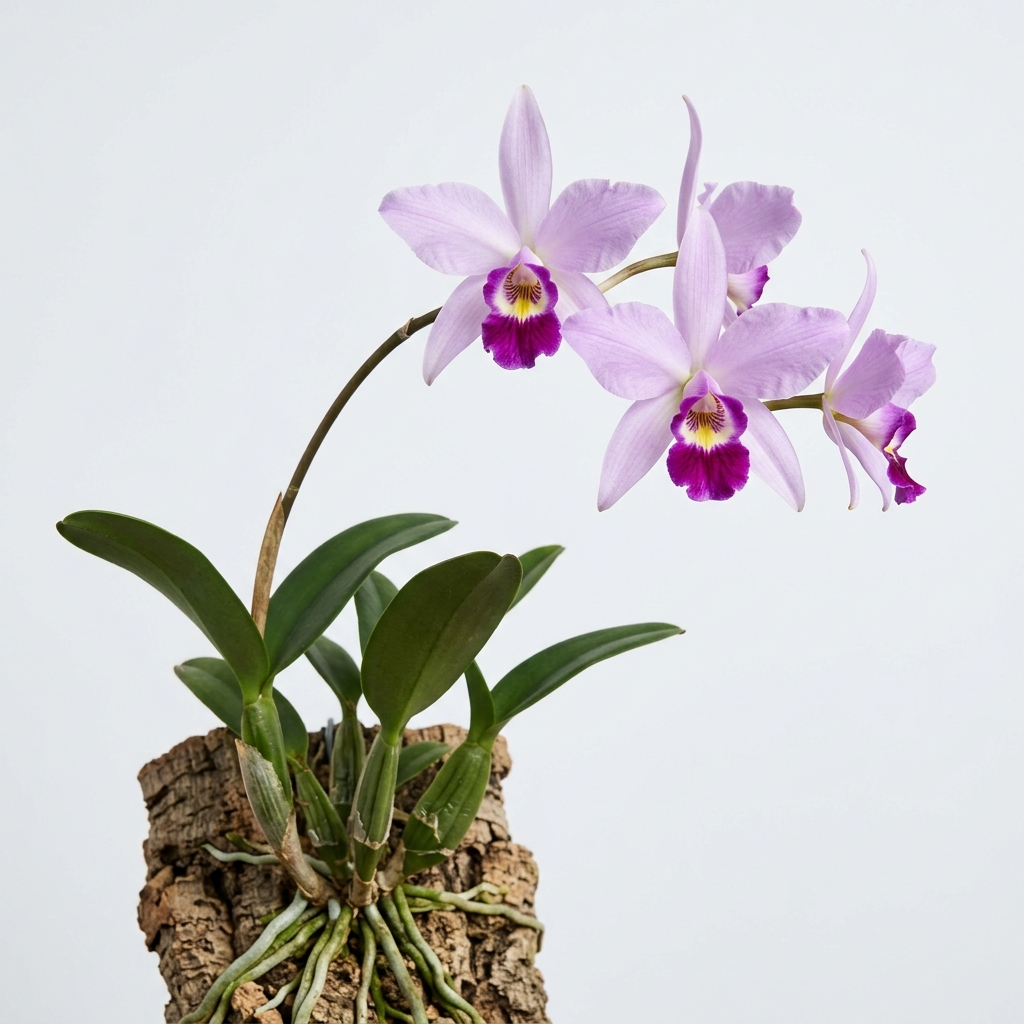
Laelia Anceps is a highly resilient and exceptionally beautiful orchid species belonging to the Cattleya alliance. Native to the mountainous regions of Mexico and parts of Central America, this epiphytic or lithophytic orchid is celebrated for its remarkable ability to tolerate temperature extremes that would severely damage more delicate tropical orchids. It is a favorite among collectors for its striking architectural form and reliable winter displays.
In cultivation, this species is highly valued for its adaptability, making it an excellent choice for both greenhouse growers and those in temperate climates who wish to cultivate orchids outdoors. Its long, arching flower spikes produce star-shaped blooms that bring vibrant color to the winter greenhouse, establishing its reputation as a cornerstone species in classical orchid collections.
💡 Did You Know?
Laelia Anceps is incredibly resilient and is one of the few epiphytic orchids that can survive frosts. In regions with mild Mediterranean climates, such as Southern California, growers frequently mount this species on garden trees, where it thrives year-round with minimal intervention, producing spectacular winter displays.
🌿 Botanical Overview
Laelia Anceps shows a classic sympodial growth habit, producing distinct, hard pseudobulbs that are laterally compressed and quadrangular in shape. Each pseudobulb typically bears a single, leathery, oblong leaf, though occasionally two leaves may develop on exceptionally robust specimens. These tough leaves are designed to conserve moisture, reflecting the plant’s adaptation to seasonally dry habitats in the wild.
The root system of this orchid is exceptionally vigorous, producing thick, velamen-covered roots that excel at anchoring the plant to tree bark or rocky surfaces. In its native habitat, it grows as an epiphyte on oak trees or as a lithophyte on exposed cliffs, where it is subjected to strong winds, intense sunlight, and rapid wet-dry cycles. This evolutionary background makes the plant highly resilient in cultivation.
🌸 Flower Characteristics
The flowers of Laelia Anceps are renowned for their elegant, star-like presentation. Individual blooms typically measure between 3 and 4 inches in diameter, featuring narrow, spreading sepals and slightly broader petals. The most striking feature is the prominent three-lobed lip, or labellum, which usually displays a deep purple or magenta forelobe, a yellow throat, and intricate dark purple veining that guides pollinators.
What makes the flowering display truly dramatic is the inflorescence. The flowers are produced at the apex of a long, slender, arching spike that can reach lengths of 2 to 4 feet. This spike lifts the blooms high above the foliage, presenting them in a graceful, airy manner. A single spike can carry anywhere from two to five flowers, creating a striking focal point when in full bloom.
Fragrance & Bloom Profile
The fragrance of Laelia Anceps is generally described as mild, sweet, and floral, often carrying subtle notes reminiscent of clover or honey. However, fragrance intensity is highly cultivar-dependent and is most noticeable during warm, sunny mornings. Some individual plants may have a very pronounced scent, while others are only faintly fragrant.
The blooms typically open sequentially or nearly simultaneously in late autumn and can last for two to four weeks, depending on environmental conditions. To maximize the lifespan of the flowers, growers should keep the plant in a cool, dry location once the buds have fully opened, avoiding excessive humidity or direct water contact on the petals.
Parentage & Hybrid Lineage
Laelia Anceps is a naturally occurring species rather than an artificial hybrid. Because of its outstanding vigor, temperature tolerance, and long flower spikes, it has been widely used by orchid breeders for over a century. It is a key parent in many intergeneric hybrids within the Cattleya alliance, passing on its cold hardiness and elegant growth habit to its progeny.
Within the species itself, there are numerous recognized botanical varieties and select horticultural cultivars. These range from the pure white forms, known as variety alba, to semi-albas with white petals and colored lips, as well as deeply colored coerulea (blue-toned) and rubra (dark red-purple) selections. These variations allow collectors to enjoy a diverse range of colors within a single species group.
🌱 Growing Conditions
To grow Laelia Anceps successfully, providing bright light is essential. The foliage should ideally be a light olive-green; dark green leaves indicate insufficient light, which will likely prevent the plant from blooming. It can tolerate some direct morning sunlight, but protection should be provided during the harshest afternoon hours to prevent leaf scorch.
💡 Care Tip
Provide this orchid with high levels, similar to what you would give a Cattleya. The leaves should be a olive-green color; dark green leaves usually indicate that the plant is not receiving enough to trigger optimal winter blooming.
Temperature tolerance is one of this orchid’s greatest assets. It can comfortably tolerate summer highs of up to 90 degrees Fahrenheit, provided humidity and air movement are high, and can survive winter drops down to the mid-30s or even light, brief frosts if kept dry. Excellent air circulation is critical at all times to prevent stagnant air from harboring fungal pathogens.
Watering, Feeding & Potting Media
During the active spring and summer growing season, Laelia Anceps should be watered generously, allowing the potting medium to dry out almost completely between waterings. When the plant is actively growing new roots and pseudobulbs, a balanced orchid fertilizer diluted to quarter or half strength can be applied every second or third watering.
The choice of potting medium must prioritize rapid drainage. Coarse fir bark, tree fern fiber, or charcoal mixes work well in clay pots. However, because of its rambling growth habit and need for dry roots, this species is an useful selection for mounting on cork bark or growing in open wooden baskets. Mounted plants will require more frequent watering during the heat of summer.
Blooming Season & Care Notes
The primary blooming season for Laelia Anceps occurs from late autumn through winter. The development of the flower spike begins in mid-summer, emerging from the apex of the newly matured pseudobulb. During this long development phase, it is important to keep the spike stable and avoid changing the plant’s orientation to light, which can cause the buds to twist or develop unevenly.
After flowering is complete, the orchid enters a semi-dormant period during the coldest months of winter. During this time, watering should be significantly reduced, providing just enough moisture to prevent the pseudobulbs from shriveling excessively. Repotting or dividing should only be performed in early spring when new green root tips begin to emerge from the base of the newest pseudobulb.
⚠️ Common Issues
⚠️ Common Mistake
A frequent error is failing to provide a drier rest period during the winter months. Overwatering during this dormant phase can quickly lead to root rot, which severely weakens the orchid and prevents successful flowering in the subsequent season.
- Root Rot:
Caused by overwatering or compacted, decomposing potting media that retains too much moisture around the roots. - Bud Blast:
The sudden yellowing and dropping of flower buds, often triggered by rapid temperature fluctuations, low humidity, or drafts. - Scale and Mealybugs: Pests that frequently hide under the dry, papery sheaths surrounding the pseudobulbs.
- Pseudobulb Shriveling: A sign of dehydration, which can be caused by either underwatering or a loss of roots due to rot.
❓ Frequently Asked Questions
How do I get my Laelia Anceps to bloom?
To trigger blooming, ensure the orchid receives very bright light throughout the growing season and a distinct, cooler, drier rest period in the autumn and winter. Insufficient light is the most common reason for a healthy-looking plant failing to produce spikes.
Can Laelia Anceps be grown outdoors year-round?
Yes, in mild, frost-free or nearly frost-free temperate climates such as coastal Southern California, Laelia Anceps can be grown outdoors year-round. It is often mounted on garden trees where it tolerates winter rains and cool nights beautifully.
When is the best time to repot this orchid?
The ideal time to repot or divide Laelia Anceps is in the spring, just as the plant is initiating new root growth at the base of the newest pseudobulbs. Avoid repotting during the winter bloom cycle or when the plant is dormant.
Why are the leaves on my orchid turning yellow?
Yellowing leaves can indicate overexposure to direct sunlight, which may lead to sunburn, or it can be a symptom of root loss due to overwatering. Check the root system to ensure it is firm and healthy rather than mushy and brown.
⭐ Final Growing Notes
Laelia Anceps remains one of the most rewarding and forgiving orchids for growers of all experience levels. Its exceptional tolerance to temperature fluctuations, combined with its spectacular, architectural winter blooms, makes it a highly desirable addition to any collection. By respecting its need for bright light, excellent drainage, and a dry winter rest, you can enjoy its elegant, star-shaped flowers year after year.
⚕️ Health, Safety & Edibility
Understanding how a plant interacts with people, pets, and the surrounding environment is part of responsible cultivation. This section uses conservative, general guidance and does not replace professional medical or veterinary advice.
Human Safety: No published evidence currently identifies species-specific toxicity concerns for Laelia Anceps during normal handling. As with most ornamental plants, it should not be intentionally consumed.
Pet Safety: Published information does not indicate that this orchid commonly poses a toxicity concern for cats or dogs. However, chewing leaves, flowers, roots, or potting media may still cause mild digestive upset.
Edibility: This orchid is cultivated for ornamental display rather than food. Ornamental plants may carry fertilizers, pesticides, or other horticultural treatments that make them unsuitable for consumption.
Skin Contact: Routine handling is not generally associated with skin irritation. Gardeners with sensitive skin may prefer wearing gloves when repotting, pruning, or handling potting media.
🌱 Propagation Tip
Propagate Laelia Anceps by division during the spring when new root growth is just beginning. Ensure each division has at least three to four healthy, mature pseudobulbs with an active lead eye to guarantee successful establishment in its new container.
⭐ Expert Advice
When growing this species on a mount or in a wooden basket, ensure excellent air circulation around the root zone. Mounted plants can be watered daily during hot summer spells, mimicking their natural wet-and-dry daily cycle in the wild.




Leave A Comment