
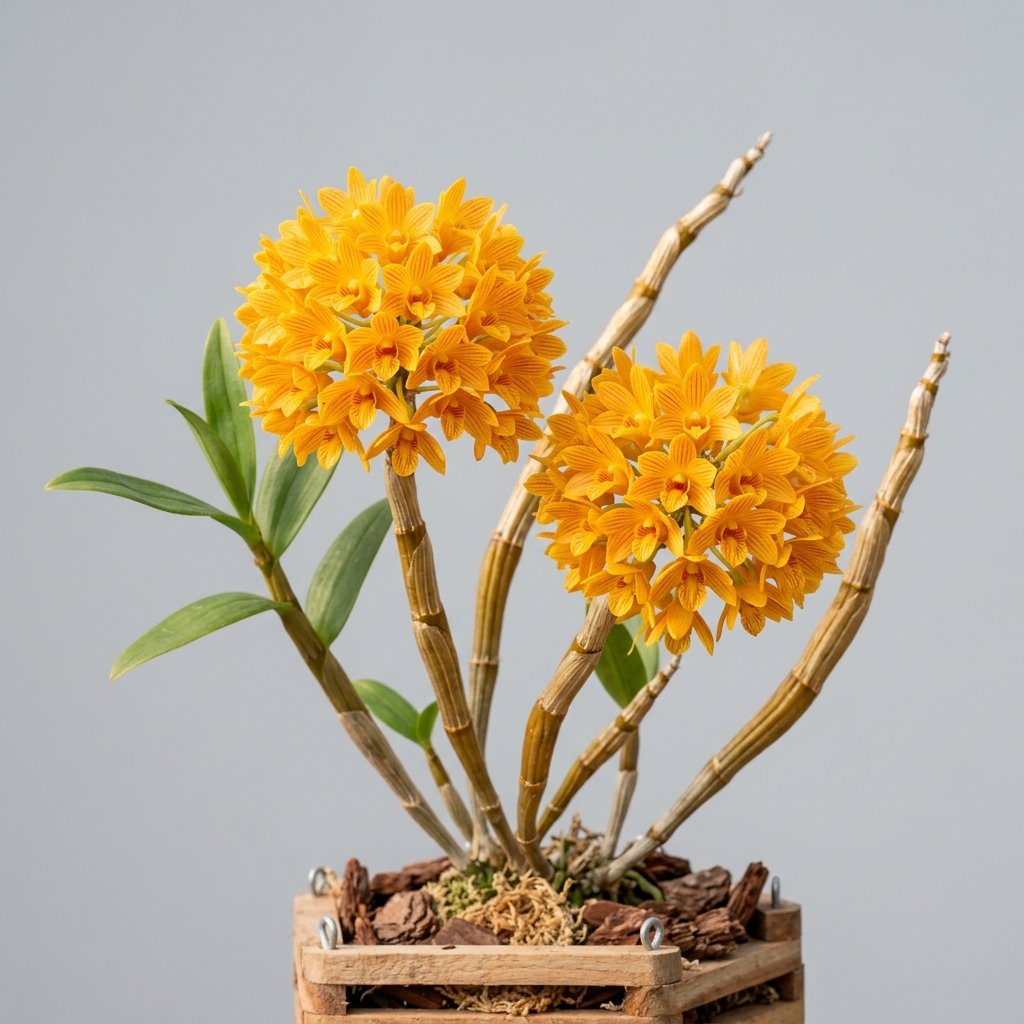
Dendrobium Bullenianum is a highly distinctive epiphytic orchid species native to the Philippines, cherished by collectors for its striking, globose flower clusters. Unlike many orchids that produce long, arching sprays, this species develops dense, spherical bundles of bright orange-yellow blossoms directly from the nodes of its mature, often leafless canes. This unique flowering habit, combined with its cane-like growth, makes it a standout addition to intermediate and warm greenhouse collections.
In its natural habitat, this orchid thrives in low-elevation forests, adapting to seasonal shifts in moisture. Cultivators value the plant for its dramatic seasonal transformation, where deciduous canes shed their leaves before bursting into vibrant, colorful pom-poms of color. Successful cultivation relies on understanding its growth cycle, particularly the transition between the active summer growing phase and the cooler, drier winter rest period.
💡 Did You Know?
Dendrobium Bullenianum is known for its capitate inflorescence, a botanical term describing flowers that grow in a tight, spherical head. This growth habit is relatively uncommon in the Dendrobium, making the species highly sought after by collectors who appreciate unusual floral structures that mimic miniature orange globes.
🌿 Botanical Overview
Dendrobium Bullenianum is characterized by its long, slender, cane-like pseudobulbs that can grow semi-pendulous or upright, often reaching lengths of up to two feet under optimal conditions. The leaves are lanceolate, arranged alternately along the upper portion of the canes during the active growing season. As the canes mature, they typically shed their leaves, a natural deciduous process that prepares the plant for its reproductive cycle.
The root system is relatively fine and fibrous, typical of epiphytic orchids that anchor themselves to tree trunks and branches in humid forest canopies. New growth emerges from the base of the older pseudobulbs in the spring, rapidly developing new canes that will store water and nutrients for the later year’s blooms.
🌸 Flower Characteristics
The inflorescence of Dendrobium Bullenianum is its most defining feature, presenting as a tight, capitate cluster that resembles a small sphere or pom-pom. Each cluster contains numerous small, tubular flowers, typically measuring about half an inch to three-quarters of an inch in diameter. The petals and sepals are a brilliant golden-yellow to deep orange, adorned with fine, longitudinal red or purple stripes that draw the eye inward.
The lip, or labellum, is narrow and closely aligned with the column, contributing to the tubular shape of the individual blossoms. These clusters emerge from the nodes along the leafless, mature canes, often producing multiple globes of color simultaneously along a single cane, creating a spectacular, multi-tiered display.
Fragrance & Bloom Profile
The fragrance of Dendrobium Bullenianum is a subject of some variation among growers, with reports ranging from a mild, sweet scent to a subtle, citrus-like aroma. In many cultivation environments, the fragrance is most noticeable during the morning hours when warmth and light stimulate the release of volatile compounds. However, because fragrance intensity can be highly dependent on temperature, humidity, and individual plant clones, some specimens may seem virtually unscented.
The blooms are relatively long-lasting for the genus, often remaining fresh for three to four weeks if kept in cool, stable conditions. The dense clustering of the flowers helps protect the delicate inner structures, ensuring a prolonged and reliable display once the buds open.
Parentage & Hybrid Lineage
As a naturally occurring species rather than a man-made hybrid, Dendrobium Bullenianum possesses a pure lineage that has evolved to suit its specific ecological niche in the Philippine archipelago. While it is occasionally used in breeding programs to introduce its unique capitate flowering habit and intense orange coloration to new hybrid lines, such crosses are relatively specialized.
In commercial trade and hobbyist circles, plants are typically propagated from seed or tissue culture to preserve the species’ natural characteristics. When purchasing this orchid, growers should look for reputable nurseries that offer ethically propagated specimens rather than wild-collected plants, ensuring both conservation and plant vigor.
🌱 Growing Conditions
To cultivate Dendrobium Bullenianum successfully, growers must replicate its warm, tropical origin. It thrives in bright, filtered light, similar to the conditions found in the medium canopy of a forest. Direct midday sun should be avoided to prevent leaf scorch, but high light levels are essential during the active growing season to build the energy reserves necessary for flowering.
💡 Care Tip
Position this orchid in a spot with excellent air circulation, especially if grown in high . Stagnant air combined with wet foliage can quickly lead to fungal spotting on the leaves or rot in the emerging new shoots.
Temperature ranges should ideally remain warm to intermediate, with daytime temperatures between 75°F and 85°F and a slight drop at night to around 60°F to 65°F. High humidity, ideally between 60% and 80%, coupled with strong, continuous air movement, is critical to prevent fungal pathogens and mimic the breezy forest canopy.
Watering, Feeding & Potting Media
During the active spring and summer growing season, Dendrobium Bullenianum requires frequent, copious watering. The potting medium should be allowed to approach dryness but not dry out completely between waterings. A balanced, diluted orchid fertilizer should be applied weekly or bi-weekly during this period of rapid growth to support cane development.
The choice of potting medium is crucial; a highly draining mix of medium-grade fir bark, perlite, and charcoal works well in pots. Alternatively, because of its semi-pendulous growth habit, this species is an excellent candidate for mounting on cork bark or tree fern plaques, provided the grower can maintain high humidity and water the plant daily during hot weather.
Blooming Season & Care Notes
Blooming typically occurs in the late winter or spring, arising from the mature canes produced during the previous summer. To trigger successful bud initiation, a distinct winter rest period is required. Once the new canes have fully matured in late autumn, watering should be significantly reduced, and fertilizer should be withheld entirely.
During this rest phase, the plant should receive only enough water to prevent the pseudobulbs from shriveling excessively. Cooler night temperatures during winter also help stimulate the nodes to produce flower buds rather than vegetative offsets, known as keikis. Once the flower buds begin to swell at the nodes, regular watering can gradually resume.
⚠️ Common Issues
⚠️ Common Mistake
The most common mistake is continuing to water and fertilize heavily throughout the winter. Without a distinct dry, cool rest period, Dendrobium Bullenianum will fail to bloom and may instead produce excessive vegetative growth or suffer from root rot.
- Bud Blast:
Sudden drops in humidity or drafts of cold air can cause developing flower buds to yellow and drop before opening. - Pseudobulb Shriveling: While some shriveling is normal during the winter rest, excessive wrinkling indicates severe dehydration, requiring a light misting or watering.
- Root Rot:
Overwatering during the winter rest period or using a degraded, waterlogged potting medium will quickly destroy the fine root system. - Pests:
Spider mites and mealybugs can occasionally target the tender new growth or hide within the dense flower clusters; regular inspection is recommended. - Keiki Production: Excessive nitrogen fertilizer or a lack of a dry winter rest can cause the plant to produce vegetative offsets instead of flower buds.
❓ Frequently Asked Questions
Why is my Dendrobium Bullenianum losing its leaves?
Leaf loss is a natural, deciduous phase for this species. As the canes mature in autumn, they typically shed their leaves to prepare for the winter rest and later spring blooming. Do not panic; this is normal behavior.
How do I trigger my orchid to bloom?
To induce blooming, provide a distinct dry rest period in late autumn and winter. Reduce watering significantly, stop fertilizing, and ensure the plant experiences cooler night temperatures and bright light until flower buds appear.
Can I grow this orchid mounted?
Yes, its semi-pendulous growth habit makes it ideal for mounting on cork bark or tree fern plaques. However, mounted plants dry out quickly and require daily watering and high humidity during the active growing season.
What should I do if my orchid produces keikis instead of flowers?
Keikis often form when the winter rest is too wet or warm, or if too much nitrogen fertilizer is applied late in the season. Enjoy the new plants, but adjust your care routine next winter to encourage blooms.
⭐ Final Growing Notes
Dendrobium Bullenianum is a rewarding species for intermediate to advanced orchid enthusiasts willing to accommodate its seasonal growth cycle. By providing bright light, ample summer moisture, and a disciplined winter rest, growers are rewarded with a spectacular, architectural display of vibrant orange pom-poms that few other orchids can match.
⚕️ Health, Safety & Edibility
Understanding how a plant interacts with people, pets, and the surrounding environment is part of responsible cultivation. This section uses conservative, general guidance and does not replace professional medical or veterinary advice.
Human Safety: No published evidence currently identifies species-specific toxicity concerns for Dendrobium Bullenianum during normal handling. As with most ornamental plants, it should not be intentionally consumed.
Pet Safety: Published information does not indicate that this orchid commonly poses a toxicity concern for cats or dogs. However, chewing leaves, flowers, roots, or potting media may still cause mild digestive upset.
Edibility: This orchid is cultivated for ornamental display rather than food. Ornamental plants may carry fertilizers, pesticides, or other horticultural treatments that make them unsuitable for consumption.
Skin Contact: Routine handling is not generally associated with skin irritation. Gardeners with sensitive skin may prefer wearing gloves when repotting, pruning, or handling potting media.
🌱 Propagation Tip
While division of large clumps is possible during repotting, this species frequently produces keikis on older canes if environmental conditions shift. These keikis can be carefully detached and potted once they have developed several roots at least two inches long.
⭐ Expert Advice
When repotting, choose a container that seems slightly too small. This species prefers to have its roots snug and confined. Repot only when the potting medium has degraded or new growth is spilling over the edge, ideally just as new root tips emerge in spring.




Leave A Comment