
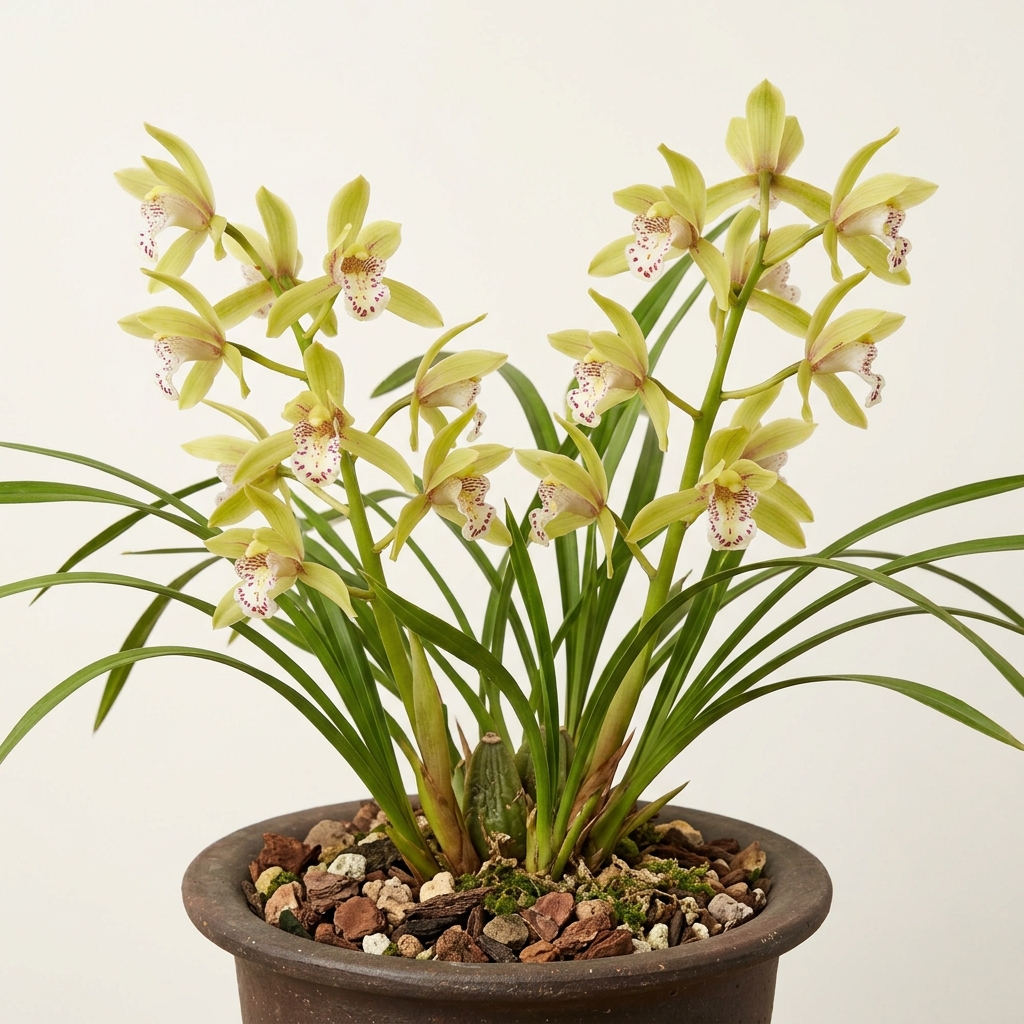
Cymbidium Faberi is a highly revered orchid with a rich history rooted deeply in East Asian horticultural traditions. Prized for its elegant, grass-like foliage and delicate, multi-flowered spikes, this terrestrial orchid brings a classic, minimalist aesthetic to indoor plant collections. Unlike many showy tropical hybrids, this species is celebrated for its understated beauty and refined growth habit.
Growers value this orchid particularly for its sweet, clean fragrance and its relative cold-hardiness compared to tropical varieties. While it requires a bit of patience and specific seasonal temperature drops to initiate blooming, the reward of its gracefully arching flower spikes makes it a highly sought-after addition for dedicated orchid enthusiasts and collectors of traditional Chinese orchids.
💡 Did You Know?
In traditional Chinese culture, Cymbidium Faberi is historically classified as a Jiulan, which translates to nine-flower orchid. This term was used to describe cymbidiums that produce multiple blossoms on a single stem, distinguishing them from single-flowered species and marking them as symbols of nobility and friendship.
🌿 Botanical Overview
Naturally occurring in the temperate, mountainous regions of China and neighboring East Asian countries, Cymbidium Faberi grows primarily as a terrestrial or lithophytic plant. It is typically found on moist, shaded slopes, in forest understories, or along rocky ravines where organic debris accumulates. This natural habitat dictates its preference for cool, airy conditions and excellent drainage.
The growth habit of this orchid is characterized by small, tightly clustered pseudobulbs that remain largely concealed by the bases of its leaves. The foliage is exceptionally long, narrow, and strap-like, often reaching up to twenty inches in length. These arching leaves feature finely serrated margins, which feel slightly rough to the touch and add to the plant’s elegant, grass-like appearance even when it is not in bloom.
🌸 Flower Characteristics
The inflorescence of Cymbidium Faberi is a tall, upright to slightly arching spike that emerges from the base of the pseudobulb. Each spike can carry anywhere from five to over fifteen flowers, presenting a beautiful, tiered display. The individual flowers typically measure between five and nine centimeters in diameter, making them moderately sized but highly striking due to their quantity.
The petals and sepals are narrow and lanceolate, usually displaying shades of pale green, yellow-green, or soft cream. The most dramatic feature of the blossom is the lip, or labellum, which is typically cream-colored and adorned with intricate spots, blotches, and streaks of deep red, purple, or maroon. This contrasting coloration serves as a visual guide for natural pollinators.
Fragrance & Bloom Profile
One of the primary reasons growers cultivate Cymbidium Faberi is its exceptional fragrance. The scent is highly celebrated in traditional orchid culture, characterized as a clean, sweet, and moderately intense floral perfume that easily fills a room without becoming overpowering. The fragrance is most pronounced during warm, bright mornings when the flowers first open for the day.
The blooming cycle occurs in the spring, typically starting in March and extending into May. Individual flowers are remarkably long-lasting, often remaining fresh on the plant for four to six weeks if environmental conditions are kept cool and stable. This extended bloom period ensures that growers can enjoy the visual and olfactory rewards of their care for a significant portion of the spring season.
Parentage & Hybrid Lineage
Botanically, Cymbidium Faberi is recognized as a distinct species rather than a modern artificial hybrid. Within the orchid trade, however, there are numerous selected regional variants, cultivars, and historical clones that have been propagated for centuries. These selections are often categorized by flower color, leaf variegation, or geographical origin in traditional Chinese classification systems.
While it is primarily grown as a species selection, it has occasionally been utilized in modern hybridizing programs. Hybridizers value it for its cold tolerance, multi-flowered spike habit, and sweet fragrance, seeking to pass these desirable traits onto complex modern Cymbidium hybrids. Because many historical cultivars have been maintained through vegetative division for generations, exact pedigree records are often based on traditional grower documentation rather than modern registration databases.
🌱 Growing Conditions
To cultivate Cymbidium Faberi successfully, growers must mimic its native mountain habitat. It thrives in bright, filtered indirect light, such as that provided by an east-facing window or a shaded south-facing window. Direct afternoon sun should be avoided, as it can easily scorch the thin, grass-like foliage.
💡 Care Tip
To ensure reliable spring blooms, place your orchid in an unheated room or a protected porch during autumn to experience the natural nighttime drops necessary for spike initiation.
Temperature management is the most critical factor for this orchid’s health and blooming success. It requires cool to intermediate temperatures, with summer highs ideally staying below eighty-five degrees Fahrenheit. Crucially, the plant needs a distinct temperature drop in the autumn and winter, with night temperatures falling to between forty and fifty degrees Fahrenheit, to trigger the development of flower spikes.
Watering, Feeding & Potting Media
During the active growing season in spring and summer, Cymbidium Faberi should be watered regularly to keep the potting medium evenly moist but never waterlogged. As temperatures cool in the autumn and winter, watering should be reduced, allowing the medium to dry out slightly more between waterings while ensuring the pseudobulbs do not shrivel.
This orchid is a relatively light feeder. A balanced, water-soluble orchid fertilizer diluted to one-quarter strength should be applied every two to three weeks during the active growing phase. Traditional tall, narrow clay pots are highly recommended for this species, as they accommodate the long, fleshy, downward-growing roots while allowing the root zone to breathe. The potting medium should be highly aerated, typically consisting of fine fir bark, pumice, charcoal, or specialized orchid clay pebbles.
Blooming Season & Care Notes
As the flower spikes begin to emerge in late winter or early spring, it is important to maintain stable environmental conditions. Avoid moving the plant to a new location with drastically different light or temperature levels, as sudden changes can cause the developing buds to blast and drop off before opening.
Once the blooming period has concluded, the flower spikes should be cut back to the base of the pseudobulb using sterile cutting tools. Repotting is best performed immediately after flowering, typically every two to three years. This timing allows the plant to recover and establish new roots in fresh media during the peak summer growing season.
⚠️ Common Issues
⚠️ Common Mistake
Avoid planting this orchid in standard, shallow pots. Its long, fleshy roots grow straight downward and require deep, narrow containers to prevent root restriction and subsequent rot.
- Root Rot:
Caused by overwatering or compacted, poorly draining potting media, leading to mushy, black roots and yellowing leaves. - Failure to Bloom: Usually the result of insufficient light during the summer or a lack of a distinct cool-down period in the autumn.
- Leaf Tip Burn: Often caused by mineral buildup from tap water or excessive fertilizer; using distilled or rainwater can prevent this.
- Pests:
Spider mites and scale insects can occasionally target the long foliage, particularly in dry indoor environments with low humidity.
❓ Frequently Asked Questions
How do I trigger my Cymbidium Faberi to bloom?
To trigger blooming, you must provide a distinct temperature drop in the autumn. Ensure night temperatures fall to between forty and fifty degrees Fahrenheit for several weeks, combined with bright, filtered day light, which signals the plant to initiate flower spikes.
What is the best pot for this orchid?
Traditional tall, narrow clay pots are ideal. These pots accommodate the deep, downward-growing root system of terrestrial cymbidiums while providing excellent aeration and weight to prevent the tall foliage from tipping the pot over.
Why are the tips of the leaves turning brown?
Brown leaf tips are commonly caused by mineral buildup from hard water or over-fertilizing. Flush the potting medium thoroughly with pure water once a month, and ensure you are using a highly diluted fertilizer solution.
Can Cymbidium Faberi be grown outdoors?
Yes, in temperate climates with mild summers and cool, frost-free winters, it can be grown outdoors in a shaded location. However, it must be protected from freezing temperatures and intense, direct afternoon sunlight.
⭐ Final Growing Notes
Cymbidium Faberi remains a timeless classic in the orchid world, offering a perfect blend of elegant foliage, sweet fragrance, and historical charm. While its specific temperature requirements for blooming demand a bit more attention than common tropical orchids, the exquisite spring display of multi-flowered spikes makes the effort entirely worthwhile for any dedicated grower.
⚕️ Health, Safety & Edibility
Understanding how a plant interacts with people, pets, and the surrounding environment is part of responsible cultivation. This section uses conservative, general guidance and does not replace professional medical or veterinary advice.
Human Safety: No published evidence currently identifies species-specific toxicity concerns for Cymbidium Faberi during normal handling. As with most ornamental plants, it should not be intentionally consumed.
Pet Safety: Published information does not indicate that this orchid commonly poses a toxicity concern for cats or dogs. However, chewing leaves, flowers, roots, or potting media may still cause mild digestive upset.
Edibility: This orchid is cultivated for ornamental display rather than food. Ornamental plants may carry fertilizers, pesticides, or other horticultural treatments that make them unsuitable for consumption.
Skin Contact: Routine handling is not generally associated with skin irritation. Gardeners with sensitive skin may prefer wearing gloves when repotting, pruning, or handling potting media.
🌱 Propagation Tip
Propagate mature plants during spring repotting by carefully dividing the clump, ensuring each new division has at least three healthy, leafy pseudobulbs and an active root system.
⭐ Expert Advice
Flush the potting medium with pure distilled water or rainwater once a month to wash away accumulated fertilizer salts, which can quickly damage the sensitive root tips of this species.




Leave A Comment