
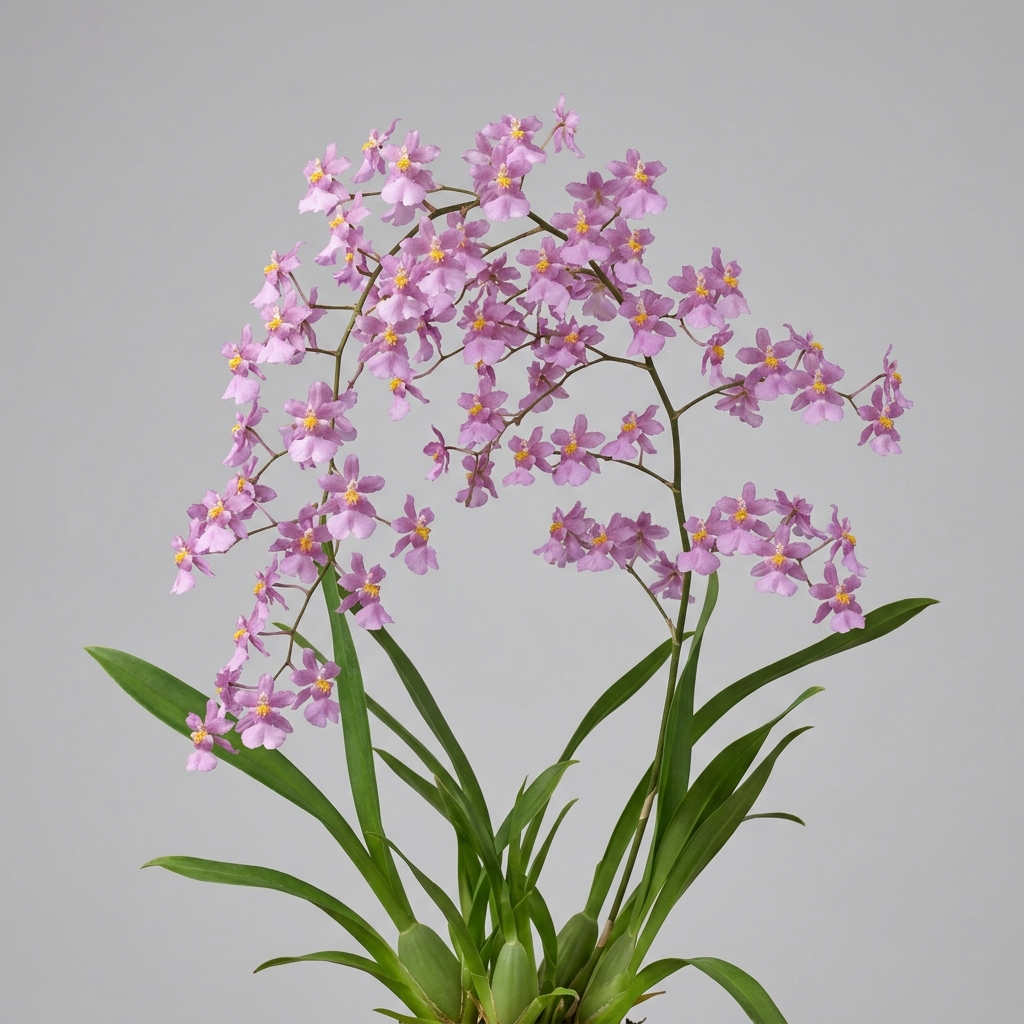
Oncidium Ornithorhynchum is a highly celebrated species orchid within the Oncidiinae subtribe, cherished by collectors for its spectacular, cascading displays of delicate blooms and its remarkably sweet fragrance. Often referred to in historical literature as the bird-beaked Oncidium due to the unique shape of its flower column, this orchid brings an elegant, wild aesthetic to indoor growing spaces. Its compact growth habit and generous blooming nature make it an excellent representative of the genus for both intermediate growers and dedicated orchid enthusiasts.
In horticultural circles, this plant has been the subject of significant taxonomic discussion, with many specimens historically labeled under this name now classified by botanists as Oncidium sotoanum. Regardless of the formal botanical nomenclature used by taxonomists, growers continue to seek out this orchid for its reliable growth, arching multi-flowered spikes, and sensory appeal. Cultivating this species successfully requires an understanding of its preference for moderate temperatures and consistent moisture levels throughout the active growing season.
💡 Did You Know?
The intense chocolate-vanilla of this orchid is a classic example of evolutionary adaptation designed to attract specific nocturnal or crepuscular pollinators in its native Central American habitats. While many orchids rely on visual cues alone, this species uses its powerful scent profile to guide pollinators through the dense, misty canopy of montane cloud forests.
🌿 Botanical Overview
Oncidium Ornithorhynchum is native to the montane forests of Central America, where it typically grows as an epiphyte on moss-covered tree branches. This natural habitat provides the plant with excellent air circulation, high humidity, and dappled sunlight. The plant features clustered, ovate pseudobulbs that are slightly compressed, each topped with two thin, arching, lanceolate leaves of a rich green hue.
The root system is relatively fine and fibrous, adapted for rapidly absorbing moisture and nutrients from passing rain before drying out quickly. Understanding this epiphytic lifestyle is key to managing its root health in a home or greenhouse environment, where stagnant conditions can quickly lead to decline.
🌸 Flower Characteristics
The flowers of Oncidium Ornithorhynchum are relatively small, usually measuring between one-half to one inch in diameter, but they make up for their size with sheer abundance. Hundreds of blossoms can crowd a single, heavily branched, arching or pendulous inflorescence that can reach up to two feet in length. The petals and sepals typically exhibit soft shades of lilac, pink, or light magenta, contrasting beautifully with a yellow-crested lip or labellum. The column features a distinct, curved projection resembling a bird’s beak, which historically inspired the specific epithet of the species.
Fragrance & Bloom Profile
One of the primary reasons growers cultivate this orchid is its intense, sweet fragrance, which is commonly described as resembling chocolate, vanilla, or cocoa powder. The scent is typically most pronounced during the morning hours when warmth and light stimulate the release of volatile compounds from the flowers. A single well-grown specimen in full bloom can easily fill an entire room with its confectionery aroma. The blooms are relatively long-lasting, often remaining fresh for four to six weeks if kept in cool, stable conditions away from direct drafts.
Parentage & Hybrid Lineage
As a naturally occurring species rather than a man-made hybrid, Oncidium Ornithorhynchum carries a pure genetic lineage that has been used extensively in orchid breeding. It is a primary ancestor of many modern, fragrant Oncidium hybrids, passing down its multi-branching spike habit, compact size, and desirable sweet scent to its progeny. Because of historical confusion between this species and Oncidium sotoanum, some older hybrid registrations may list O. ornithorhynchum as a parent when the actual parent used was the pink-flowered O. sotoanum. Modern registration authorities continue to work on clarifying these historical records.
🌱 Growing Conditions
To replicate its native montane environment, this orchid prefers cool to intermediate temperatures, ideally ranging from 60°F to 75°F during the day, with a drop of 10°F to 15°F at night to encourage spike initiation. It thrives in bright, filtered light, such as that provided by an east-facing window or a shaded south-facing window; direct midday sun will quickly scorch the thin foliage. Relative humidity should ideally be maintained between 50% and 70%, accompanied by continuous, gentle air movement to prevent fungal pathogens from settling on the leaves.
💡 Care Tip
To maintain the ideal balance of moisture for this orchid's fine root system, try using a plastic pot with ample drainage holes nested inside a decorative clay pot. The clay pot helps cool the roots through evaporation, while the plastic liner retains just enough moisture to prevent the pseudobulbs from shriveling between waterings.
Watering, Feeding & Potting Media
This orchid does not possess the large, water-storing pseudobulbs of some other Oncidium species, meaning it has less tolerance for prolonged drought. The potting medium should be kept evenly moist but never waterlogged. A high-quality, fine-grade fir bark mix blended with perlite and a small amount of sphagnum moss works exceptionally well to retain moisture while ensuring excellent drainage. During the active spring and summer growing season, apply a balanced, highly diluted orchid fertilizer weekly, flushing the pot with pure water once a month to prevent harmful mineral salt buildup.
Blooming Season & Care Notes
The primary blooming season typically occurs in autumn or early winter, triggered by the natural shortening of daylight hours and cooler night temperatures. As the flower spikes begin to emerge from the base of the newest mature pseudobulbs, growers should avoid moving the plant to a drastically different environment, which can cause bud drop. Once the blooming cycle is complete, the old spikes can be cut back to the base. Repotting is best performed in the spring when new root tips are just beginning to emerge from the base of the new growths, allowing the plant to establish quickly in its fresh medium.
⚠️ Common Issues
⚠️ Common Mistake
A frequent mistake is allowing the potting medium to break down completely before repotting. Because this orchid has very fine roots, a decomposed, muddy medium will quickly suffocate them, leading to root rot and shriveled pseudobulbs. Plan to repot every twelve to eighteen months to keep the root zone fresh and airy.
- Root Rot: Caused by overwatering or a decomposing potting medium that suffocates the fine roots.
- Leaf Spotting: Often appears as small black spots on the thin leaves, usually resulting from cold water droplets remaining on the foliage in stagnant air.
- Bud Blast: The sudden yellowing and dropping of unopened buds, typically triggered by low humidity, sudden temperature swings, or drafts.
- Pseudobulb Shriveling: A sign of dehydration, which can be caused by either underwatering or a loss of roots due to overwatering.
- Pests: Spider mites and mealybugs can occasionally target the tender new growths and flower buds.
❓ Frequently Asked Questions
How do I encourage my Oncidium Ornithorhynchum to bloom?
To trigger blooming, ensure the plant experiences a distinct drop in night temperatures of about 10 to 15 degrees Fahrenheit in the late summer and early autumn. This temperature differential, combined with bright filtered light and a slight reduction in watering, signals the plant to initiate flower spikes from the base of its mature pseudobulbs.
Why are the leaves on my orchid turning yellow or developing black spots?
Yellowing leaves can indicate overwatering or insufficient light, while small black spots are often fungal in nature, caused by water droplets sitting on the foliage in cool, stagnant air. To resolve this, water only in the morning, avoid wetting the leaves, and increase air circulation around the growing area using a small fan.
How often should I repot this orchid?
This species should generally be repotted every twelve to eighteen months. Because it has very fine roots, it is highly sensitive to decomposing media that retains too much water and lacks oxygen. Always repot in the spring when you see active new root growth emerging from the base of the newest pseudobulbs.
Can this orchid be grown mounted instead of in a pot?
Yes, Oncidium Ornithorhynchum can be grown successfully on a cork bark or tree fern mount, which mimics its natural epiphytic habit. However, mounted plants dry out much faster than potted ones and will require daily misting or watering in most home environments to maintain adequate moisture levels.
⭐ Final Growing Notes
Oncidium Ornithorhynchum remains a classic and rewarding choice for orchid growers who appreciate fragrant, floriferous species. By providing it with bright filtered light, consistent moisture, and buoyant, humid air, you can enjoy its spectacular, chocolate-scented pink cascades year after year.
⚕️ Health, Safety & Edibility
Understanding how a plant interacts with people, pets, and the surrounding environment is part of responsible cultivation. This section uses conservative, general guidance and does not replace professional medical or veterinary advice.
Human Safety: No published evidence currently identifies species-specific toxicity concerns for Oncidium Ornithorhynchum during normal handling. As with most ornamental plants, it should not be intentionally consumed.
Pet Safety: Published information does not indicate that this orchid commonly poses a toxicity concern for cats or dogs. However, chewing leaves, flowers, roots, or potting media may still cause mild digestive upset.
Edibility: This orchid is cultivated for ornamental display rather than food. Ornamental plants may carry fertilizers, pesticides, or other horticultural treatments that make them unsuitable for consumption.
Skin Contact: Routine handling is not generally associated with skin irritation. Gardeners with sensitive skin may prefer wearing gloves when repotting, pruning, or handling potting media.
🌱 Propagation Tip
Propagation is most successful through division during the spring repotting cycle. Ensure that each division contains at least three to four healthy, mature pseudobulbs with an active lead growth. Avoid dividing the plant too small, as larger clumps recover much faster and are far more likely to bloom during the following autumn season.
⭐ Expert Advice
If you notice the leaves of your orchid crinkling like an accordion as they grow, this is a clear indicator of inconsistent or low . To prevent this unsightly growth habit, increase the ambient around the plant and ensure the medium never dries out completely during the active summer growing phase.




Leave A Comment