
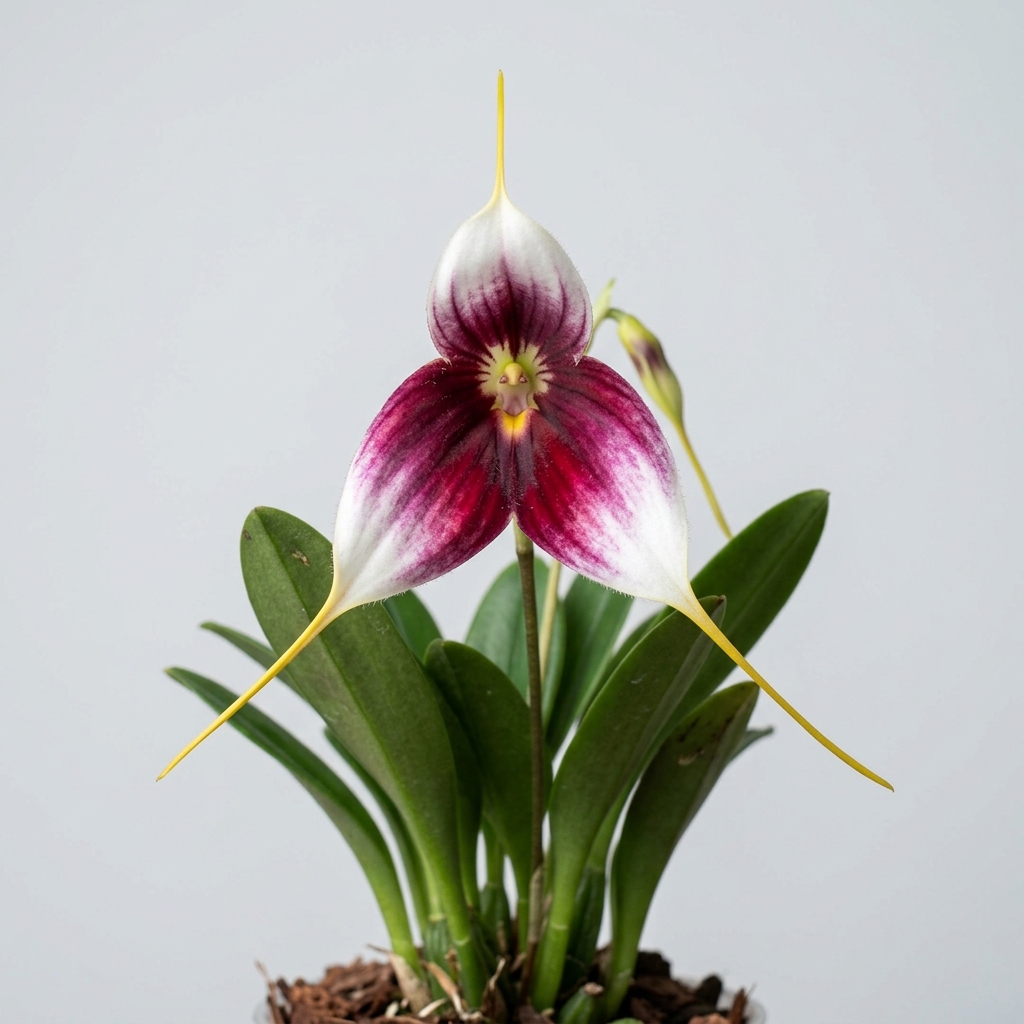
Masdevallia Schroderiana is a highly prized high-altitude orchid species celebrated among collectors for its striking, contrast-rich blooms and compact growth habit. Originating from the cool, moisture-laden cloud forests of the Andes, this miniature to small-sized epiphytic orchid produces dramatic flowers characterized by long, slender sepal tails and a bold color palette of deep burgundy, white, and yellow.
Growers value this orchid for its frequent blooming potential and its ability to thrive in cool, shaded indoor environments or specialized terrariums. While it requires specific attention to humidity and temperature, its unique, geometric floral presentation makes it a rewarding centerpiece for dedicated orchid enthusiasts seeking to master cool-growing cloud forest species.
💡 Did You Know?
Unlike many common orchids like Phalaenopsis, Masdevallia Schroderiana lacks pseudobulbs for storing water. Instead, it relies on its thick, fleshy leaves and constant environmental moisture to survive, making consistent and high absolutely critical for its cultivation.
🌿 Botanical Overview
Masdevallia Schroderiana is an epiphytic orchid native to the high-altitude cloud forests of South America, primarily found growing on moss-covered tree trunks and branches. In these montane environments, the plants are constantly bathed in cool mists, high humidity, and gentle breezes. This specific ecological niche dictates much of the plant’s unique growth habits and physiological requirements under cultivation.
Unlike many other popular orchid genera, members of the genus Masdevallia do not possess pseudobulbs, which are water-storing organs. Instead, they grow from short, erect ramicauls that produce a single, leathery, oblanceolate leaf. Because they lack the ability to store significant moisture or nutrients, these orchids are highly susceptible to dry spells and require a consistently damp root zone to prevent dehydration.
🌸 Flower Characteristics
The flowers of Masdevallia Schroderiana are a masterclass in geometric contrast. What appear to be the petals are actually highly modified sepals, which are fused at the base to form a short sepaline tube. The true petals and the lip are tiny, inconspicuous structures hidden deep within this tube. The lateral sepals are a rich, velvety reddish-purple or deep burgundy, while the dorsal sepal is a clean, contrasting white or pale yellow.
Each of the three sepals terminates in a long, slender, thread-like tail, known as a cauda, which is typically bright yellow. These tails can extend several inches, giving the flower an elegant, star-like silhouette. The flowers are produced singly on slender, erect inflorescences that rise just above the foliage, presenting the blooms beautifully to pollinators and growers alike.
Fragrance & Bloom Profile
Fragrance is not consistently documented for Masdevallia Schroderiana, and most growers report that the flowers have little to no detectable scent. The primary appeal of this species lies entirely in its striking visual presentation rather than its olfactory profile. The blooms are long-lasting, often remaining in pristine condition for several weeks if environmental conditions remain cool and humid.
The blooming cycle typically peaks in the spring and autumn, though well-established plants grown under optimal conditions may produce sporadic flowers at other times of the year. Because the flower spikes emerge individually from the base of the leaves, a mature specimen can display multiple blooms simultaneously, creating a spectacular contrast against the dark green foliage.
Parentage & Hybrid Lineage
Masdevallia Schroderiana is a naturally occurring species rather than an artificial hybrid. It belongs to the subtribe Pleurothallidinae, a diverse group of orchids known for their unique floral structures and cool-growing habits. While it is a distinct species in its own right, it has been used by hybridizers to introduce its intense coloration, compact growth habit, and prominent sepal tails into various Masdevallia hybrids.
Because it is a species, plants sold under this name should exhibit the characteristic traits of the wild population, though slight variations in color intensity and tail length can occur among different clones. When purchasing, growers should look for reputable nurseries that propagate these plants from seed or division rather than wild-collected specimens to ensure conservation-friendly sourcing.
🌱 Growing Conditions
Replicating the cool, humid cloud forest environment is the key to successfully growing Masdevallia Schroderiana. Temperature control is critical; this orchid prefers daytime temperatures between 65°F and 72°F, with a nightly drop to 50°F to 55°F. Prolonged exposure to temperatures above 80°F can cause severe heat stress, leading to rapid leaf drop and eventual decline.
💡 Care Tip
Always use pure water, such as rainwater, distilled water, or reverse osmosis water, for your Masdevallia Schroderiana. This species is highly sensitive to dissolved minerals and salts, which can quickly cause root dieback and leaf tip burn.
Light levels should be kept moderate to low, similar to the dappled shade of a forest understory. Bright, indirect light or shaded grow lights are ideal, while direct sunlight must be avoided to prevent leaf scorching. Humidity must remain high, ideally between 70% and 80%, accompanied by gentle, continuous air movement to prevent stagnant air from encouraging fungal pathogens.
Watering, Feeding & Potting Media
Watering is the most active part of Masdevallia Schroderiana care. The potting medium must remain damp at all times and should never be allowed to dry out completely. However, the roots must not sit in stagnant water, which can quickly lead to rot. Using pure water, such as rainwater, distilled water, or reverse osmosis water, is highly recommended, as this species is extremely sensitive to mineral salts.
The ideal potting medium is one that retains moisture while allowing excellent drainage and aeration. High-quality New Zealand sphagnum moss or a fine-grade fir bark mix containing perlite and charcoal works exceptionally well. Fertilization should be minimal and highly diluted; use a balanced orchid fertilizer at one-quarter or one-eighth strength every two to three weeks, flushing the pot with pure water between feedings to prevent salt buildup.
Blooming Season & Care Notes
The primary blooming seasons for Masdevallia Schroderiana are spring and autumn, aligning with the cooler transitional periods of the year. During these times, maintaining a consistent day-to-night temperature differential is particularly important, as this thermal shift often triggers the development of flower spikes. Once a spike begins to emerge, avoid moving the plant or changing its orientation to prevent bud blast.
After the flowers fade, the spikes can be cut back to the base of the plant once they have completely dried and turned brown. Repotting is best performed in the autumn or early spring when the plant is actively producing new roots and temperatures are cool. Avoid repotting during the heat of summer, as the combined stress of root disturbance and high temperatures can be fatal.
⚠️ Common Issues
⚠️ Common Mistake
The most common mistake is allowing the potting medium to dry out completely or exposing the plant to temperatures above eighty degrees Fahrenheit. Heat stress combined with dry roots can cause rapid leaf drop and plant decline within days.
- Leaf Spotting: Black or brown spots on the leaves are often caused by fungal or bacterial pathogens thriving in high humidity with insufficient air circulation.
- Root Rot:
Mushy, black roots occur when the potting medium degrades, loses its aeration, or is kept oversaturated. - Bud Blast:
Developing buds may turn yellow and drop before opening due to sudden drops in humidity, drafts, or temperature spikes. - Heat Stress: Rapid yellowing and dropping of healthy leaves is a classic sign that the plant is experiencing temperatures that are too warm.
- Pests:
Spider mites, aphids, and mealybugs can occasionally target the tender new growth and should be treated with gentle, orchid-safe insecticidal soaps.
❓ Frequently Asked Questions
How do I prevent leaf dropping on my Masdevallia Schroderiana?
Leaf dropping is almost always a response to heat stress or severe dehydration. Ensure daytime temperatures do not exceed eighty degrees Fahrenheit, maintain humidity above seventy percent, and never let the potting medium dry out completely.
What is the best potting medium for this orchid?
High-quality New Zealand sphagnum moss or a fine-grade bark mix with perlite is ideal. The medium must retain moisture consistently while still allowing oxygen to reach the roots to prevent rot.
Can I grow Masdevallia Schroderiana under LED lights?
Yes, this orchid adapts well to LED grow lights. Keep the light intensity moderate to low, mimicking shaded forest conditions, and ensure the lights do not emit excess heat that could warm the growing area.
Why are the tips of my orchid’s leaves turning black?
Black leaf tips are typically caused by mineral salt buildup from tap water or over-fertilization. Always use pure water, such as distilled or rainwater, and flush the potting medium regularly to prevent salt accumulation.
⭐ Final Growing Notes
While Masdevallia Schroderiana requires a disciplined approach to temperature, humidity, and watering, it remains one of the most rewarding cool-growing orchids for the dedicated hobbyist. Its spectacular, geometric blooms and compact growth habit make it a standout addition to any cool greenhouse, terrarium, or dedicated indoor growing space. By respecting its cloud forest origins and providing pure water and cool air, you can enjoy its dramatic floral display year after year.
⚕️ Health, Safety & Edibility
Understanding how a plant interacts with people, pets, and the surrounding environment is part of responsible cultivation. This section uses conservative, general guidance and does not replace professional medical or veterinary advice.
Human Safety: No published evidence currently identifies species-specific toxicity concerns for Masdevallia Schroderiana during normal handling. As with most ornamental plants, it should not be intentionally consumed.
Pet Safety: Published information does not indicate that this orchid commonly poses a toxicity concern for cats or dogs. However, chewing leaves, flowers, roots, or potting media may still cause mild digestive upset.
Edibility: This orchid is cultivated for ornamental display rather than food. Ornamental plants may carry fertilizers, pesticides, or other horticultural treatments that make them unsuitable for consumption.
Skin Contact: Routine handling is not generally associated with skin irritation. Gardeners with sensitive skin may prefer wearing gloves when repotting, pruning, or handling potting media.
🌱 Propagation Tip
Propagation is typically achieved through division of mature clumps during repotting. Ensure each division has at least five to eight healthy leaves and an active root system to give the new plant the best chance of survival.
⭐ Expert Advice
To encourage robust blooming, maintain a distinct day-to-night drop of ten to fifteen degrees Fahrenheit. Providing gentle, continuous air movement using a small fan will prevent fungal leaf spots in high- environments.




Leave A Comment