
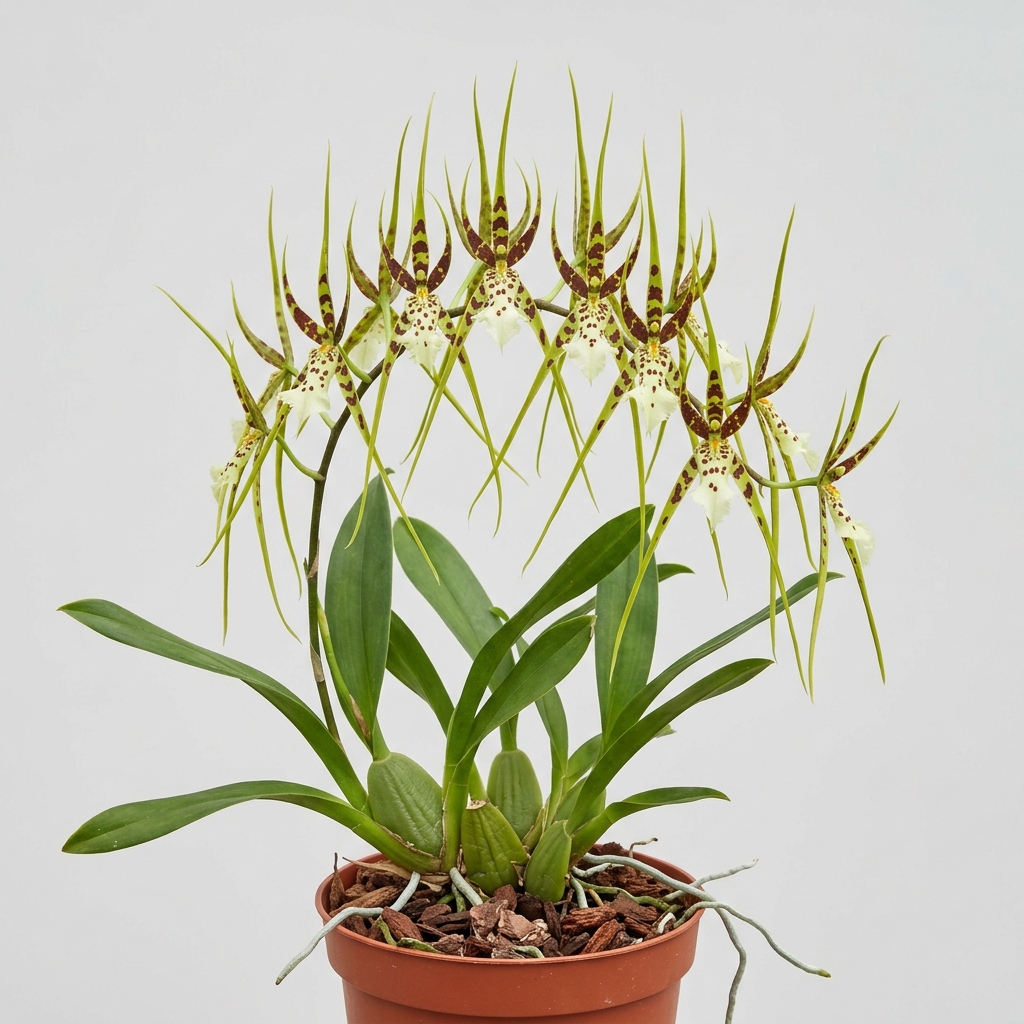
Brassia Caudata, commonly known as the tailed spider orchid, is a captivating orchid species celebrated for its dramatic, spider-like floral display. Native to the tropical regions of the Americas, including parts of Florida, the West Indies, and Central America, this epiphytic orchid is highly prized by collectors for its long, trailing sepals and exotic appearance. Its robust growth habit and striking architectural form make it a standout addition to any intermediate orchid collection.
Cultivating this species successfully relies on mimicking its natural canopy environment, where it enjoys bright, filtered light and high humidity. While it presents a unique aesthetic that appears highly delicate, Brassia Caudata is relatively resilient when its basic cultural requirements are met. Growers appreciate its reliable seasonal blooming and the distinctive, wild elegance it brings to indoor growing spaces and greenhouses alike.
💡 Did You Know?
The dramatic, spider-like shape of Brassia Caudata flowers is an evolutionary adaptation known as pseudocopulation or mimicry. In their native habitats, these flowers mimic the appearance of spiders to attract spider-hunting wasps. The female wasps attempt to sting the flower lip, and in doing so, inadvertently collect or deposit pollen, facilitating the orchid's reproduction.
🌿 Botanical Overview
Brassia Caudata is an epiphytic species characterized by its prominent, flattened pseudobulbs that grow in tight clusters along a short rhizome. Each mature pseudobulb typically produces one or two oblong, leathery leaves that are rich green and semi-erect. These pseudobulbs serve as vital water and nutrient storage organs, helping the plant survive brief periods of dry weather in its native tropical habitats.
The root system of this orchid is highly adapted to clinging to tree bark and absorbing moisture rapidly from the surrounding air. In a home or greenhouse setting, these roots often wander outside the pot as aerial roots, which is a normal and healthy growth habit. Understanding this epiphytic nature is key to providing the proper physical support and airflow required for long-term health.
🌸 Flower Characteristics
The defining feature of Brassia Caudata is its spectacular, elongated flowers, which closely mimic the appearance of a spider to attract specific insect pollinators. The sepals and petals are exceptionally long and thread-like, often reaching several inches in length, and are typically greenish-yellow or pale orange, heavily marked with dark reddish-brown spots or bars. The lip, or labellum, is broad, pointed, and lighter in color, providing a landing platform for pollinators.
These flowers are produced on arching, multi-flowered inflorescences that emerge from the base of the newly matured pseudobulbs. A single flower spike can carry up to a dozen or more individual blooms, arranged in a neat, double-rowed presentation. The overall effect is a striking, geometric display that stands out in any orchid collection.
Fragrance & Bloom Profile
The fragrance of Brassia Caudata is a subject of variation among growers, as environmental factors and individual plant genetics can influence the scent profile. Many growers report a pleasant, mildly sweet, or slightly spicy floral fragrance that is most noticeable during the morning hours when temperatures begin to rise. However, some specimens may exhibit a more musky or earthy scent, which is designed to attract its natural pollinators.
The blooms are relatively long-lasting, typically remaining in pristine condition for three to five weeks, provided the plant is kept in a cool, stable environment. To maximize the lifespan of the flowers, it is advisable to avoid moving the plant excessively or exposing it to sudden drafts once the buds have begun to open.
Parentage & Hybrid Lineage
Unlike many modern orchid cultivars that are the result of complex artificial hybridization, Brassia Caudata is a naturally occurring species. It belongs to the Oncidiinae subtribe, making it closely related to Miltonia, Oncidium, and Odontoglossum. Because of its unique floral shape and vigor, it has been widely used by hybridizers to introduce the “spider orchid” form into various intergeneric hybrids, such as Brassidium and Aliceara.
When purchasing this orchid, growers should note that while some line-bred selections exist to improve flower size or color intensity, the fundamental growth habits remain true to the wild species. This makes it an excellent choice for enthusiasts who appreciate the preservation of natural species orchids.
🌱 Growing Conditions
To cultivate Brassia Caudata successfully, growers should aim for intermediate to warm temperatures, ideally ranging from 65°F to 85°F during the day, with a slight drop of 10°F at night to encourage healthy growth and eventual blooming. Bright, filtered light is essential; an east- or shaded south-facing window is usually ideal. Direct, unfiltered midday sun should be avoided, as it can easily scorch the thin leaves.
💡 Care Tip
To keep your Brassia Caudata thriving, ensure it receives excellent air movement. Placing a small, low-powered fan near your growing area helps mimic the natural breezes of its native forest canopy, which prevents stagnant moisture from sitting on the leaves and significantly reduces the risk of fungal infections.
Humidity is another critical factor, with a target range of 50% to 70%. In dry indoor environments, this can be achieved using humidity trays, room humidifiers, or by grouping plants together. Good air circulation is equally important to prevent stagnant air from settling around the foliage, which can lead to fungal or bacterial issues.
Watering, Feeding & Potting Media
Watering should be frequent and thorough during the active growing season, which typically spans from spring through autumn. The potting medium should be allowed to approach dryness but not dry out completely before watering again. When watering, flush the pot thoroughly with tepid water to wash away any accumulated mineral salts.
A balanced, water-soluble orchid fertilizer diluted to quarter or half strength should be applied every two to three weeks during active growth. For potting media, a coarse, well-draining mix composed of fir bark, perlite, and charcoal works exceptionally well. Alternatively, experienced growers in high-humidity environments may choose to mount the plant on cork bark or tree fern slabs to mimic its natural epiphytic habit.
Blooming Season & Care Notes
Brassia Caudata typically initiates its blooming cycle in the spring or summer, though occasional autumn blooms are not uncommon depending on local growing conditions. The development of the flower spike begins at the base of the newest, fully formed pseudobulb. During this period, it is important to maintain consistent moisture and avoid dry spells, which can cause the developing buds to blast.
Once the blooming cycle is complete, the old flower spike can be cut back close to the base of the pseudobulb using sterilized cutting tools. Repotting is best done immediately after flowering, just as new root growth begins to emerge from the base of the newest pseudobulb. This minimizes transplant shock and allows the plant to establish quickly in its new medium.
⚠️ Common Issues
⚠️ Common Mistake
A frequent mistake is overpotting this orchid in a container that is too large. Brassia Caudata prefers to be slightly root-bound, and excess retains too much moisture, which can quickly lead to root rot. Choose a pot that allows for only one to two years of new pseudobulb growth.
- Root Rot:
Caused by overwatering or a degraded, compacted potting medium that suffocates the roots. - Leaf Spotting: Fungal or bacterial spots can develop if water is allowed to sit on the leaves overnight or if air circulation is inadequate.
- Bud Blast:
The sudden drying and dropping of flower buds, often triggered by low humidity, sudden temperature drops, or drafty conditions. - Dehydration:
Indicated by shriveled pseudobulbs and accordion-like pleating on new leaves, usually due to underwatering or a compromised root system. - Pests:
Mealybugs, scale, and spider mites can occasionally target the crevices of the pseudobulbs and the undersides of leaves.
❓ Frequently Asked Questions
How often should I water my Brassia Caudata?
Watering frequency depends on your specific growing environment, but generally, Brassia Caudata should be watered every 5 to 7 days during the active growing season. Allow the potting medium to become almost dry before watering again, and always ensure the pot drains fully to prevent standing water.
Why are the leaves on my Brassia Caudata growing with accordion-like wrinkles?
Accordion-like pleating on new leaves is a classic sign of moisture stress, usually caused by inconsistent watering or low humidity during the leaf development phase. Once the leaves wrinkle, they will not flatten out, but maintaining steady moisture and higher humidity will prevent this on future growth.
Can Brassia Caudata be grown under artificial LED lights?
Yes, Brassia Caudata adapts well to indoor cultivation under high-quality LED grow lights. Position the plant so it receives bright, indirect light for 12 to 14 hours a day, ensuring the lights are not close enough to generate heat that could scorch the foliage.
When is the best time to repot this orchid?
The ideal time to repot Brassia Caudata is during the spring, immediately after the blooming cycle has finished and as new green root tips begin to emerge from the base of the newest pseudobulb. Repotting at this stage ensures the fastest recovery and establishment.
⭐ Final Growing Notes
Brassia Caudata is a rewarding and visually stunning orchid that brings a touch of the tropical wild into the home. By focusing on bright indirect light, consistent moisture without waterlogging, and high humidity, growers can enjoy its dramatic, spider-like blooms year after year. Its architectural growth and unique floral presentation make it a true classic among species orchid enthusiasts.
⚕️ Health, Safety & Edibility
Understanding how a plant interacts with people, pets, and the surrounding environment is part of responsible cultivation. This section uses conservative, general guidance and does not replace professional medical or veterinary advice.
Human Safety: No published evidence currently identifies species-specific toxicity concerns for Brassia Caudata during normal handling. As with most ornamental plants, it should not be intentionally consumed.
Pet Safety: Published information does not indicate that this orchid commonly poses a toxicity concern for cats or dogs. However, chewing leaves, flowers, roots, or potting media may still cause mild digestive upset.
Edibility: This orchid is cultivated for ornamental display rather than food. Ornamental plants may carry fertilizers, pesticides, or other horticultural treatments that make them unsuitable for consumption.
Skin Contact: Routine handling is not generally associated with skin irritation. Gardeners with sensitive skin may prefer wearing gloves when repotting, pruning, or handling potting media.
🌱 Propagation Tip
Propagation is best achieved through division during the repotting process. Ensure that each division has at least three to four healthy, mature pseudobulbs with an active lead growth. Use a sterile blade to cut the rhizome, and pot each division into a fresh, high-drainage orchid mix, keeping them slightly shaded until new roots establish.
⭐ Expert Advice
For the best blooming results, provide a distinct but gentle cooling period in the late autumn or winter. Dropping the night temperatures by about ten degrees Fahrenheit while slightly reducing will signal the plant to initiate flower spikes, leading to a more robust and synchronized spring bloom.




Leave A Comment