
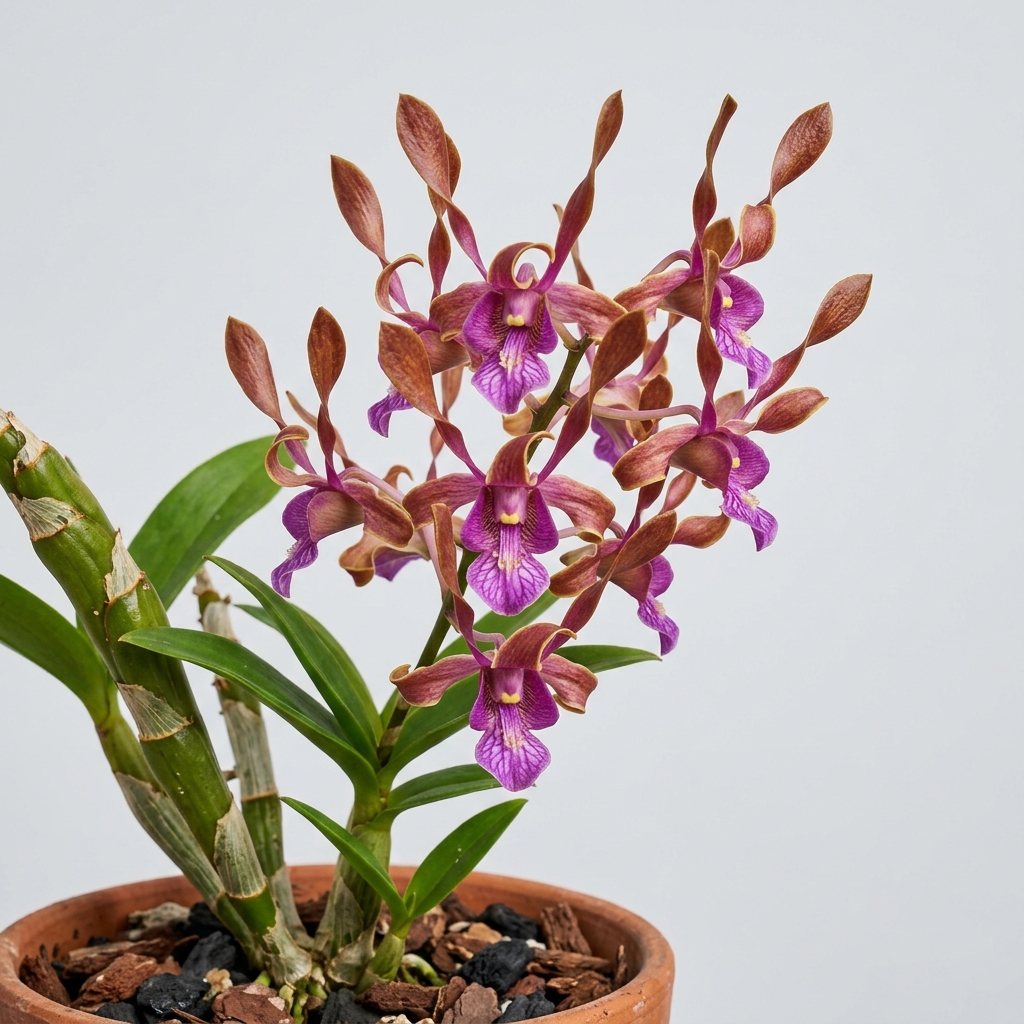
Dendrobium Lasianthera is a striking and highly prized member of the Dendrobium genus, specifically belonging to the Spatulata, or antelope-type, section. Known for its dramatic, twisted petals that resemble the horns of an antelope, this majestic epiphyte is native to the warm, humid lowlands of New Guinea. Orchid collectors highly value this species for its architectural growth habit and its ability to produce long-lasting, vibrantly colored blooms that command attention in any collection.
Under optimal conditions, this robust orchid develops tall, cane-like pseudobulbs that can reach impressive heights. While its specific requirements for warmth, high light, and humidity make it best suited for intermediate to advanced growers, the reward of its spectacular, multi-flowered inflorescences makes it a true crown jewel of the orchid world.
💡 Did You Know?
Dendrobium Lasianthera is often referred to as an antelope orchid due to its long, vertically twisted petals that mimic the horns of an antelope. In its native New Guinea, it grows high in the canopy of swamp forests, where it relies on constant warm breezes and high to thrive.
🌿 Botanical Overview
Dendrobium Lasianthera is native to the tropical lowlands of New Guinea, where it grows as an epiphyte on trees in swampy, warm forests, often near watercourses. This natural habitat provides clues to its cultural preferences, particularly its need for constant warmth, high atmospheric humidity, and excellent air movement around its root system.
Vegetatively, the plant is characterized by its robust, cane-like pseudobulbs that grow vertically and can reach several feet in height under ideal conditions. The leaves are leathery, elliptic, and arranged alternately along the upper portion of the canes, providing a sturdy framework that supports the heavy flower spikes.
🌸 Flower Characteristics
The flowers of Dendrobium Lasianthera are celebrated for their unique, architectural form. The petals are long, narrow, and twisted upward, closely resembling the horns of an antelope. The sepals are typically wavy and slightly reflexed, creating a beautiful contrast with the upright petals.
Coloration is highly striking, often featuring a blend of coppery-brown, rich magenta, and deep purple, with a prominent, heavily veined lip. The flowers are produced on upright to arching inflorescences that emerge from the upper nodes of mature canes, with each spike carrying numerous blooms that open sequentially.
Fragrance & Bloom Profile
While some growers report a mild, sweet fragrance when the plant is exposed to warm morning sunlight, the scent profile of Dendrobium Lasianthera is not consistently documented and can be highly variable. Many specimens are virtually unscented, meaning the primary appeal of this orchid lies in its visual impact.
The blooms are exceptionally long-lasting, often remaining fresh on the plant for two to three months. This extended display makes the species a highly rewarding choice for display in greenhouses or indoor growing areas where environmental conditions can be maintained.
Parentage & Hybrid Lineage
Dendrobium Lasianthera is a distinct, naturally occurring species rather than a man-made hybrid. However, it has played a monumental role in orchid hybridization, particularly within the Spatulata section. Hybridizers value it for passing on its intense coloration, twisted petal form, and robust growth habit to its progeny.
When purchasing this orchid, growers should ensure they are acquiring a true species specimen, as many similar-looking plants in cultivation are actually complex hybrids. True species plants are highly prized by collectors who wish to preserve the natural characteristics of this New Guinea native.
🌱 Growing Conditions
To grow Dendrobium Lasianthera successfully, you must replicate its warm, tropical native environment. It requires bright, indirect light, similar to the levels provided for Cattleyas. While it can tolerate some direct morning sun, protection from intense midday and afternoon sun is necessary to prevent leaf scorch.
💡 Care Tip
Provide strong, continuous air circulation around your orchid. High combined with stagnant air is a recipe for fungal infections, so a small fan running nearby can make a significant difference in plant health.
Temperature control is critical, as this species is strictly warm-to-hot growing. Daytime temperatures should ideally range between 80 and 90 degrees Fahrenheit, with night temperatures remaining above 60 to 65 degrees Fahrenheit. It does not tolerate cold drafts or prolonged exposure to cool temperatures.
Watering, Feeding & Potting Media
During the active growing season in spring and summer, Dendrobium Lasianthera requires frequent watering. The potting medium should be kept consistently moist but never waterlogged. In winter, when growth slows, reduce watering frequency slightly, but do not allow the medium to dry out completely for long periods.
Feed the plant weekly with a balanced orchid fertilizer at quarter or half strength during the active growth phase. A coarse, highly draining potting medium is essential; a mix of large fir bark, charcoal, and perlite works well. Clay pots are highly recommended because they provide the necessary weight to prevent the tall canes from tipping over.
Blooming Season & Care Notes
While blooming can occur at various times of the year, the peak flowering season for Dendrobium Lasianthera is typically from late spring through autumn. The flower spikes emerge from the upper nodes of mature, leafy canes and should be supported with stakes if they become too heavy.
Do not cut back old, leafless canes unless they are completely shriveled and dead, as they store water and nutrients that support new growth. Repotting should only be done when the plant has outgrown its container or the medium has degraded, preferably just as new root growth begins in the spring.
⚠️ Common Issues
⚠️ Common Mistake
The most common mistake is allowing the plant to experience cold drafts or temperatures below 60 degrees Fahrenheit. Exposure to cold can cause rapid leaf drop, bud blast, and severe systemic stress that can take months to recover from.
- Root rot: This is almost always caused by a compacted potting medium that retains too much moisture. Ensure excellent drainage and allow the medium to dry slightly between waterings.
- Bud blast: Developing buds may turn yellow and drop off before opening if the plant experiences sudden temperature drops, low humidity, or drafty conditions.
- Pests: Spider mites, scale, and mealybugs can occasionally target the foliage and canes. Regular inspection and treatment with horticultural soap or neem oil can keep these pests under control.
- Leaf spotting: Fungal or bacterial spots can occur if water is allowed to sit on the leaves overnight. Always water early in the day and maintain good air circulation.
❓ Frequently Asked Questions
How often should I water my Dendrobium Lasianthera?
Water your orchid frequently during the spring and summer when it is actively growing, typically two to three times a week. Ensure the potting medium drains rapidly so the roots are never sitting in stagnant water.
Why are the buds on my orchid dropping before they open?
This is known as bud blast and is usually caused by environmental stress, such as a sudden drop in temperature, low humidity levels, or exposure to cold drafts. Maintaining stable, warm conditions will help prevent this issue.
Can I grow this orchid under LED grow lights?
Yes, Dendrobium Lasianthera can be grown under high-output LED grow lights. Because it requires bright light, place the plant close to the light source, but monitor the leaves closely for any signs of yellowing or scorching.
Does Dendrobium Lasianthera require a winter rest?
No, unlike some deciduous Dendrobium species, this evergreen orchid does not require a dry winter rest. However, you should moderately reduce watering and withhold fertilizer during the cooler, darker winter months when growth naturally slows.
⭐ Final Growing Notes
Dendrobium Lasianthera is a magnificent orchid that rewards the patient grower with some of the most dramatic and long-lasting blooms in the botanical world. While its tall stature and strict warmth requirements demand a bit of space and attention, its striking antelope-like flowers and robust growth make it an exceptionally satisfying species to cultivate and display.
⚕️ Health, Safety & Edibility
Understanding how a plant interacts with people, pets, and the surrounding environment is part of responsible cultivation. This section uses conservative, general guidance and does not replace professional medical or veterinary advice.
Human Safety: No published evidence currently identifies species-specific toxicity concerns for Dendrobium Lasianthera during normal handling. As with most ornamental plants, it should not be intentionally consumed.
Pet Safety: Published information does not indicate that this orchid commonly poses a toxicity concern for cats or dogs. However, chewing leaves, flowers, roots, or potting media may still cause mild digestive upset.
Edibility: This orchid is cultivated for ornamental display rather than food. Ornamental plants may carry fertilizers, pesticides, or other horticultural treatments that make them unsuitable for consumption.
Skin Contact: Routine handling is not generally associated with skin irritation. Gardeners with sensitive skin may prefer wearing gloves when repotting, pruning, or handling potting media.
🌱 Propagation Tip
This species can be propagated by dividing large, mature clumps, ensuring each division has at least three to four healthy pseudobulbs. Occasionally, it may produce adventitious offsets known as keikis along the canes, which can be potted up once they develop several inches of roots.
⭐ Expert Advice
To support the exceptionally tall, top-heavy canes of mature specimens, use heavy clay pots and secure the canes with sturdy stakes. This prevents the pot from tipping over and damaging the fragile growing tips of the roots.




Leave A Comment