
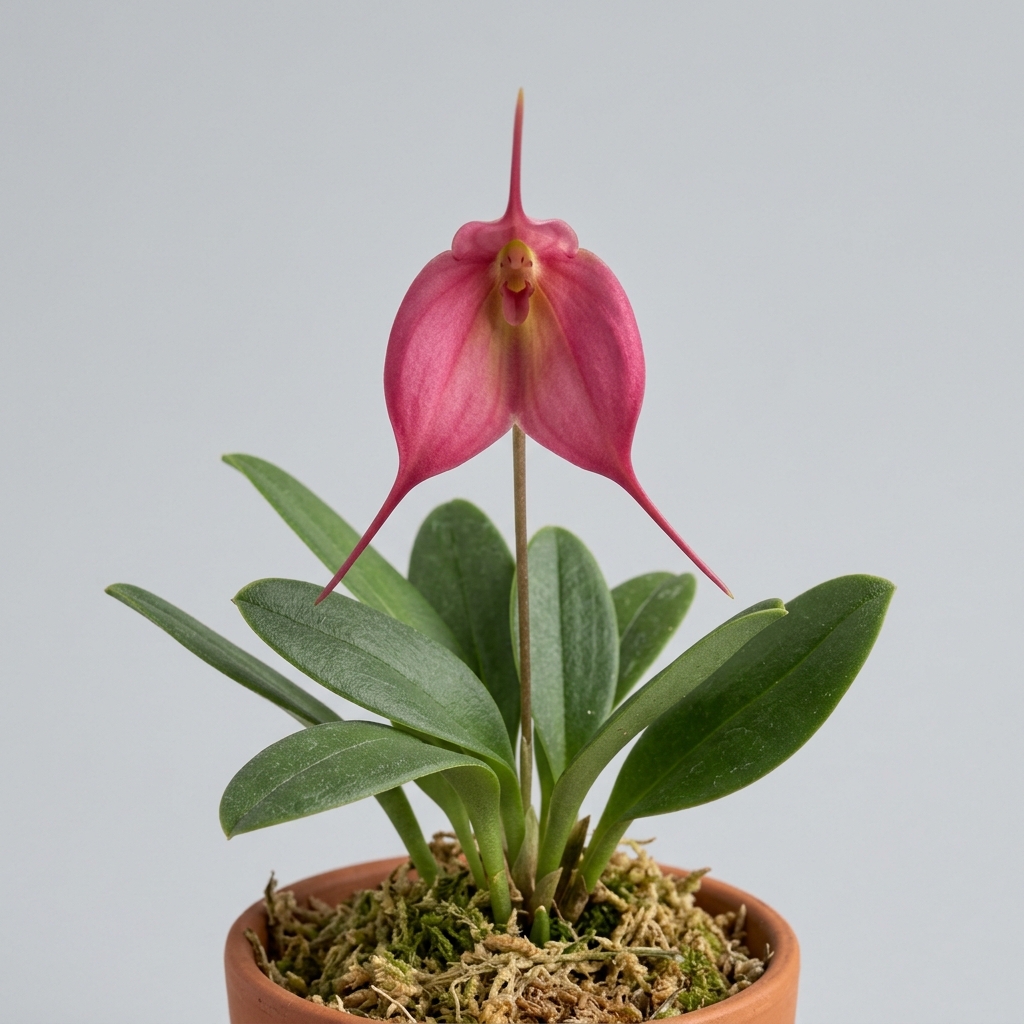
Masdevallia Uniflora is a highly prized, historically significant orchid species native to the high-altitude cloud forests of the Peruvian Andes. As the type species for the genus Masdevallia, this miniature to small-sized epiphytic orchid holds a legendary status among collectors. It is widely celebrated for its striking, single-flowered inflorescences that showcase vibrant pink-to-magenta, bell-shaped blooms rising elegantly above a tuft of leathery, deep green leaves.
Cultivating this exquisite orchid requires a commitment to replicating its cool, humid mountain habitat. While it presents a rewarding challenge for intermediate to advanced growers, providing the correct balance of low-to-medium light, constant moisture, and cool temperatures ensures a spectacular display of its unique, long-lasting flowers. Its compact growth habit makes it an excellent candidate for specialized indoor grow cases, terrariums, or dedicated cool-greenhouse collections.
💡 Did You Know?
Masdevallia Uniflora holds a special place in botanical history as the type species for the entire Masdevallia . It was first described in the late eighteenth century by Spanish botanists Hipólito Ruiz López and José Antonio Pavón during their historic expedition to the Andes of Peru and Chile.
🌿 Botanical Overview
Masdevallia Uniflora is a tufted, caespitose orchid that lacks pseudobulbs, a defining characteristic of the Pleurothallidinae subtribe. Instead of storing water in fleshy pseudobulbs, the plant relies on its thick, leathery, oblanceolate leaves to manage moisture. Each leaf arises from a short, erect ramicaul enclosed by protective tubular sheaths. This compact growth form allows the plant to form dense, attractive clumps over time.
In its native Peruvian habitat, Masdevallia Uniflora grows as an epiphyte on moss-covered tree branches or occasionally as a lithophyte on damp, shaded rock faces. These environments are characterized by perpetual mists, high rainfall, and cool breezes. Because the roots are constantly exposed to humid, moving air, they are highly sensitive to stagnation, compaction, and dry conditions in cultivation.
🌸 Flower Characteristics
The defining feature of Masdevallia Uniflora is its striking, solitary flower, which gives the species its name. The inflorescence is erect to suberect, typically matching or slightly exceeding the height of the foliage. Unlike many other orchid genera where the petals and lip are the most prominent features, Masdevallia flowers are dominated by their highly modified, fused sepals.
The three sepals fuse at the base to form a distinct, somewhat inflated tube that flares outward into a bell shape. The tips of the sepals terminate in slender, tail-like appendages known as caudae, which add a delicate, architectural elegance to the bloom. The coloration is typically a rich, glowing rose-pink or magenta, often accented by a lighter, yellowish, or white throat inside the tube. The true petals and the tiny lip are concealed deep within the sepaline tube, visible only upon close inspection.
Fragrance & Bloom Profile
Fragrance is not a primary trait of Masdevallia Uniflora, and the species is generally considered unscented by most growers. Its evolutionary strategy relies on its vivid color and unique tubular shape to attract specific pollinators, such as small flies or birds, rather than relying on aromatic compounds.
The blooms are remarkably long-lasting, often remaining pristine for several weeks due to the cool temperatures in which the plant thrives. A well-established specimen can produce multiple flower spikes sequentially or simultaneously during its peak blooming cycle, creating a captivating display of color against the dark green foliage.
Parentage & Hybrid Lineage
Masdevallia Uniflora is a naturally occurring species rather than a man-made hybrid. First described in the late 18th century, it serves as the botanical anchor for the entire genus. Because of its historical significance and desirable traits, it has been used selectively in hybridizing programs.
Hybridizers value Masdevallia Uniflora for its compact growth habit, single-flowered presentation, and intense pink coloration. When crossed with other species within the genus, it tends to pass on its robust, bell-shaped flower form and rich pigmentation. However, because it is a cool-growing species, its hybrids often retain a preference for cooler cultural conditions.
🌱 Growing Conditions
Replicating the cool, buoyant atmosphere of the Andean cloud forests is the key to success with Masdevallia Uniflora. Temperature control is paramount; the plant thrives in cool to cold conditions, with daytime temperatures ideally ranging between 60°F and 70°F (15°C to 21°C) and a nightly drop to 50°F to 55°F (10°C to 13°C). Prolonged exposure to temperatures above 75°F (24°C) can cause rapid decline, leaf drop, and vulnerability to pests.
💡 Care Tip
To keep Masdevallia Uniflora cool during warm summer months, use unglazed clay pots. The natural evaporation of moisture through the clay walls lowers the root zone by several degrees, mimicking the cool mountain breezes of its native habitat.
Light levels should be kept moderate to low, similar to the conditions preferred by Phalaenopsis or miltoniopsis orchids. Bright, filtered light is ideal, but direct sunlight must be avoided to prevent leaf scorching and overheating. High relative humidity of 70% to 90% is essential. To prevent fungal issues in such humid conditions, constant, gentle air movement must be provided at all times.
Watering, Feeding & Potting Media
Because Masdevallia Uniflora lacks pseudobulbs, it has no capacity to store water for dry periods. The potting medium must remain consistently moist but never waterlogged or stagnant. Water quality is critical; this species is highly sensitive to dissolved minerals, salts, and chlorine. Growers should use rainwater, distilled water, or reverse osmosis water to prevent root burn.
A high-quality, long-fibered New Zealand sphagnum moss or a fine-grade bark mix blended with perlite or tree fern fiber works best. Net pots or plastic pots with ample drainage holes are preferred, though some growers successfully use unglazed clay pots to help cool the root zone through evaporative cooling. Fertilizing should be done with extreme caution. Use a balanced, urea-free orchid fertilizer diluted to one-quarter strength, applying it only once every two to three weeks during periods of active growth, followed by a thorough flush with pure water.
Blooming Season & Care Notes
The primary blooming season for Masdevallia Uniflora is from late winter through spring, coinciding with the natural increase in day length. However, under stable, cool greenhouse or terrarium conditions, occasional blooms can appear at other times of the year. Bud development is a slow process, and maintaining stable temperatures and high humidity during this phase is crucial to prevent bud blast.
Once the flowers fade, the spikes should be cut back to the base of the leaf ramicaul. Repotting is best performed in the autumn when temperatures begin to cool, allowing the plant to establish new roots before the stress of the following summer. Avoid repotting during the heat of summer or when the plant is actively in bud.
⚠️ Common Issues
While rewarding, Masdevallia Uniflora can be sensitive to cultural missteps. Watch for the following common issues:
⚠️ Common Mistake
The most common mistake is letting the potting medium dry out completely. Unlike orchids with water-storing pseudobulbs, Masdevallia Uniflora has thin leaves and minimal water storage, meaning even a brief period of complete dryness can cause severe leaf drop and root death.
- Heat Stress: Rapid dropping of healthy green leaves is a classic sign that ambient temperatures are too high or humidity is too low.
- Root Rot:
Stale, compacted media that retains too much water will quickly suffocate the fine, hair-like roots, leading to plant decline. - Leaf Spotting: Black or brown spots on the leaves often indicate fungal or bacterial pathogens, usually caused by high humidity combined with inadequate air circulation.
- Tip Burn: Browning of the leaf tips is typically a sign of salt accumulation from tap water or over-fertilizing.
❓ Frequently Asked Questions
Why are the leaves on my Masdevallia Uniflora turning yellow and dropping?
Yellowing and dropping leaves are most commonly caused by heat stress or root rot. If temperatures have exceeded 75°F (24°C), the plant may drop leaves as a survival mechanism. Alternatively, check the potting medium; if it is broken down and soggy, the roots may be rotting, preventing the plant from absorbing moisture.
Can I grow Masdevallia Uniflora under artificial LED lights?
Yes, Masdevallia Uniflora adapts very well to artificial LED setups, such as those in indoor terrariums or grow tents. Position the plant under low-to-medium intensity, cool-running LEDs, ensuring the lights do not emit excess heat that could warm the growing environment beyond the plant’s tolerance.
How often should I water this orchid?
There is no set calendar schedule, as watering frequency depends on your ambient humidity, temperature, and potting medium. The key is to water just as the medium begins to approach dryness, keeping it evenly moist. Never allow the medium to dry out completely, as this can cause immediate damage to the root system.
Is Masdevallia Uniflora suitable for a beginner orchid grower?
Generally, Masdevallia Uniflora is considered moderate to challenging and may not be ideal for absolute beginners unless they have a specialized cool-growing setup. However, for growers who can reliably provide cool temperatures, high humidity, and pure water, it can be grown successfully alongside other cool-climate species.
⭐ Final Growing Notes
Masdevallia Uniflora remains a true classic of the orchid world, offering a window into the delicate, mist-shrouded ecosystems of the high Andes. While its environmental demands for cool temperatures, high humidity, and pristine water quality require diligent attention, the reward of its vibrant, architectural pink blooms is unmatched. For the dedicated enthusiast, mastering the care of this historic type species is a highly satisfying milestone in the art of orchid cultivation.
⚕️ Health, Safety & Edibility
Understanding how a plant interacts with people, pets, and the surrounding environment is part of responsible cultivation. This section uses conservative, general guidance and does not replace professional medical or veterinary advice.
Human Safety: No published evidence currently identifies species-specific toxicity concerns for Masdevallia Uniflora during normal handling. As with most ornamental plants, it should not be intentionally consumed.
Pet Safety: Published information does not indicate that this orchid commonly poses a toxicity concern for cats or dogs. However, chewing leaves, flowers, roots, or potting media may still cause mild digestive upset.
Edibility: This orchid is cultivated for ornamental display rather than food. Ornamental plants may carry fertilizers, pesticides, or other horticultural treatments that make them unsuitable for consumption.
Skin Contact: Routine handling is not generally associated with skin irritation. Gardeners with sensitive skin may prefer wearing gloves when repotting, pruning, or handling potting media.
🌱 Propagation Tip
Propagation is best achieved through division during spring repotting. Ensure each division has at least five to eight healthy leaves and a robust root system. Avoid dividing the plant too small, as larger clumps recover much faster and bloom more reliably.
⭐ Expert Advice
Always prioritize water quality. Masdevallia Uniflora is highly sensitive to dissolved minerals and salts in tap water. Using pure rainwater, distilled water, or reverse osmosis water will prevent leaf tip burn and keep the delicate root system healthy over the long term.




Leave A Comment